Windows Errors? Fix Them Before They Spread
Repair common Windows errors and clear accumulated junk for a smoother, more stable PC - no reinstall needed.Free scan · no reinstallCrashes, No Sound, or Screen Glitches?
Random freezes, missing sound and display glitches usually trace back to one bad driver. Find and replace yours safely.Free scan · under a minuteAs of August 10, 2026: Donald Trump’s election did not end the U.S. electric-vehicle market, but it did remove much of the federal policy support that accelerated it. The 2025 tax law ended the federal new-EV, used-EV, and commercial clean-vehicle purchase credits after September 30, 2025. The federal home and commercial charger credit ended for qualifying property placed in service after June 30, 2026. The administration also rescinded the federal greenhouse-gas framework that had pressured automakers to produce more efficient and electric vehicles.
The result is uneven. EV buyers face higher effective purchase prices and fewer federal incentives. Charging investment has continued, but with delays and stricter domestic-content requirements. Domestic auto and battery manufacturing may receive protection from tariffs and industrial policy, even as those policies raise component costs. For Tesla and Elon Musk, the outcome is especially contradictory: Tesla lost important demand and regulatory-credit benefits, while Musk’s autonomous-vehicle ambitions may benefit from a less restrictive federal framework.
As an Amazon Associate I earn from qualifying purchases.
The short answer
Trump’s election changed the economics and policy environment around EVs in five major ways:
- Federal purchase subsidies ended. Sections 30D, 25E, and 45W no longer apply to vehicles acquired after September 30, 2025, subject to a narrow transition rule.
- The federal emissions push was substantially weakened. On February 12, 2026, the EPA finalized a rule rescinding the 2009 greenhouse-gas endangerment finding and repealing subsequent federal greenhouse-gas standards for highway vehicles and engines.
- California’s authority became more legally uncertain. Congress disapproved three Biden-era California vehicle-waiver rules in June 2025, while California continued to challenge the federal actions in court.
- Charging funding was slowed and redirected rather than simply canceled. Courts required the release of obligated National Electric Vehicle Infrastructure funds, and the Department of Transportation revised the program to emphasize Buy America and domestic-content requirements.
- Tesla’s business mix became more important. The company’s vehicle business lost federal incentives and some regulatory-credit demand, but its autonomy, energy-storage, charging, AI, and robotics ambitions may benefit from other parts of the administration’s agenda.
That is why both “Trump killed EVs” and “Musk’s access to Trump guarantees Tesla’s victory” are misleading. The federal market signal moved against mass-market EV adoption, but the market itself remains shaped by state policy, private investment, fleet economics, automaker strategy, charging availability, battery costs, court decisions, and consumer preferences.
#1 Best Overall

- Flex Level 1 EV Charger - The EVDANCE Level 1 electric car charger is compatible with J1772 electric vehicles and plug-in hybrid vehicles (North American Standard). *Tesla requires a SAE J1772 adapter.
- Convenient to Use - This charger has both NEMA 6-20 plug for 16A 240V charging (3.68kW, 10-12 mi/h) and a NEMA 6-20 to 5-15 plug adapter for 12A 120V charging (1.44kW, 2-5 mi/h). The included bag makes it easier to carry on the go. It also has a 25ft cable length, you can use it flexibly from anywhere in the garage or driveway.
- Check Your Outlet Type -This charger works with standard 120V NEMA 5-15/5-20 outlets (2-5 mph charging speed) and 240V NEMA 6-20 outlets (10-12 mph) . It's not compatible with NEMA 6-15/10-30/14-30/14-50/6-50 outlets – you'll need a NEMA 14-50/14-30/10-30/6-50 to 6-20 adapter (sold separately) to connect.
- Compatible EV Models -This EV charger works with most major electric vehicles, including Ford, Chevrolet, Hyundai, Audi, Nissan Ariya, Rivian R1S, Kia, and others. However, it's not compatible with Mini Cooper Electric Hardtop,Toyota Prus Prime/Z4X/RAV4Prime, Porsche Taycan Base/4S/Turbo/Turbo S or Tesla models (Tesla requires a J1772 to Tesla Adapter, sold separately). For a full list of compatible models, check out the Full Compatibility List on our product page.
- Indication Displays - LED display that can tell you the status as well as indicate errors while charging your electric vehicle.
What Trump meant by the “EV mandate”
During the campaign, Trump promised to eliminate what he called the Biden administration’s “EV mandate.” That phrase was politically effective but technically imprecise. The federal government did not send consumers an individual order requiring them to buy an electric vehicle.
The Biden-era structure worked indirectly through several policies:
- Consumer tax credits that lowered the purchase price of qualifying new and used EVs.
- Commercial-vehicle credits that reduced the cost of electric fleet vehicles.
- EPA greenhouse-gas standards and NHTSA fuel-economy rules that influenced the mix of vehicles automakers produced.
- Federal grants for charging infrastructure.
- Incentives for domestic batteries, components, and vehicle manufacturing.
Fleet-level emissions and fuel-economy rules could make it more expensive for an automaker to sell a lineup dominated by inefficient gasoline vehicles. That is not the same as requiring every driver to purchase an EV. Likewise, a tax credit makes an EV cheaper; it does not compel anyone to claim it.
Free tools Windows power users keep installed
One-click scans. No signup required.
On January 20, 2025, Trump signed the “Unleashing American Energy” executive order. It directed federal agencies to work toward eliminating the “EV mandate,” consider ending subsidies that favor EVs, and review state emissions waivers. The order began a policy process; it did not by itself erase every tax credit, emissions rule, state program, or charging grant.
What changed for ordinary EV buyers?
Federal vehicle credits ended on different transactions after September 30, 2025
The One Big Beautiful Bill Act, signed on July 4, 2025, changed the timing of the principal federal clean-vehicle credits. The IRS summarizes the current rules on its clean-vehicle tax-credit page and in its OBBB frequently asked questions.
| Credit | What changed | What shoppers and businesses should know |
|---|---|---|
| Section 30D | New clean-vehicle credit ended for vehicles acquired after September 30, 2025. | This is the federal credit commonly associated with a qualifying new EV, historically worth up to $7,500 under the IRA-era rules. |
| Section 25E | Used clean-vehicle credit ended for vehicles acquired after September 30, 2025. | A used EV can still be a good value, but the federal used-vehicle discount should not be assumed. |
| Section 45W | Commercial clean-vehicle credit ended for vehicles acquired after September 30, 2025. | The previous maximum could reach $40,000 depending on the vehicle. New commercial acquisitions generally do not receive this terminated federal credit. |
| Section 30C | EV and alternative-fuel refueling-property credit ended for qualifying property placed in service after June 30, 2026. | The installation date and the location rules matter. Property placed in service before the deadline may be treated differently from equipment merely ordered before it. |
The important word is acquired. A shopper who clicked an online order button before September 30, 2025 did not automatically preserve the credit. Under the IRS transition guidance, the transaction generally needed a binding written contract and payment by the deadline. A vehicle acquired by the deadline could potentially qualify even if delivery happened later, provided the transition requirements were satisfied and the vehicle was ultimately placed in service.
That creates several practical edge cases:
- Order without a binding contract: An order that could be canceled or did not satisfy the IRS contract-and-payment requirements may not preserve the credit.
- Late delivery: A qualifying transaction completed by the deadline may still qualify if the vehicle was delivered and placed in service later under the transition rule.
- Leasing: The lessor generally claims the clean-vehicle credit rather than the lessee. A leasing company may reflect some or all of that value in the lease economics, but a customer should inspect the actual lease calculation instead of assuming the old consumer credit applies directly.
- Dealer advertising: A displayed price may no longer include a federal credit. Ask for an itemized buyer’s order showing whether any incentive is federal, state, manufacturer-funded, or conditional.
- Tesla purchases: Tesla’s U.S. motor-vehicle order agreement warns buyers not to assume that an incentive will be available. The contract and IRS rules control, not an old search result or an informal sales statement.
State, utility, employer, local, and manufacturer incentives can still exist. They may have income limits, vehicle-price caps, first-time-buyer requirements, geographic restrictions, domestic-content rules, or limited funding. The end of the federal credits does not mean every EV incentive disappeared, but it does mean a buyer must check the program that applies to a particular address, vehicle, and transaction date.
Do these 3 things before closing this tab:
1Fix the driver behind crashes, sound loss and screen glitches2Clear out junk files and repair common Windows errors3Scan for outdated or missing drivers - takes under a minuteDoes an EV still make financial sense without the federal credit?
There is no universal answer. Ending a purchase credit makes the decision harder for a marginal buyer, particularly when the credit was the difference between an EV and a similarly priced gasoline vehicle. It does not eliminate the possible operating-cost advantage of an EV.
A buyer should compare total cost of ownership rather than only the sticker price:
- Upfront price and financing: Losing a credit raises the amount financed and can increase interest costs.
- Energy: Compare the cost of gasoline with the cost of home, workplace, public, or fast charging. Electricity rates can vary substantially, and commercial sites may face demand charges.
- Mileage: A driver covering many miles each year has more opportunity to recover a higher purchase price through energy savings.
- Maintenance: EV drivetrains generally have fewer routine powertrain-service requirements, but tires, repairs, insurance, and collision costs still matter.
- Depreciation: Rapid model changes, price cuts, used-EV supply, battery concerns, and incentives can affect resale value.
- Charging access: A homeowner with reliable overnight charging has a different financial calculation from an apartment resident who relies on expensive public fast charging.
- Battery warranty and vehicle use: Warranty coverage, climate, towing, cold-weather performance, and expected ownership period can change the result.
A simple way to begin is to estimate annual fuel savings as the gasoline cost for the miles driven minus the electricity cost for charging those miles, then add expected maintenance savings and subtract differences in financing, insurance, depreciation, and charging equipment. The federal credit was one input in that calculation—not the entire calculation.
The regulatory rollback: what changed and what did not
EPA greenhouse-gas rules
The largest federal regulatory reversal came on February 12, 2026, when the EPA finalized its rescission of the 2009 greenhouse-gas endangerment finding and repealed subsequent federal greenhouse-gas standards for highway vehicles and engines, including light-, medium-, and heavy-duty vehicles.
Recommended Free Tools
Those rules mattered to EV adoption because they influenced automakers’ product planning. When federal standards require lower fleet emissions, an automaker has a stronger reason to add efficient hybrids and EVs, improve gasoline efficiency, or buy compliance credits. Removing that pressure can make a gasoline-heavy product strategy less costly in the short run.
But “the EPA repealed all EV rules” would be too broad. The February 2026 action concerned greenhouse gases and the endangerment finding. It did not, by that action alone, eliminate every traditional pollutant regulation, every NHTSA fuel-economy requirement, every state rule, or every local clean-transportation policy. EPA greenhouse-gas standards, NHTSA Corporate Average Fuel Economy rules, California Clean Air Act waivers, and state zero-emission-vehicle mandates are related but legally distinct systems.
The final rule can also be challenged in court or changed by a later administration. A final agency rule is a major current-policy fact, not a guarantee that the underlying legal dispute is finished permanently.
California’s mandate and waiver fight
California’s position involves at least four separate questions:
- What California state law and regulations require.
- Whether California has a valid waiver under the federal Clean Air Act to set more stringent vehicle-emissions rules.
- Whether Congress can disapprove particular waivers through the Congressional Review Act.
- How courts resolve the resulting disputes over federal and state authority.
Congress disapproved three Biden-era California vehicle-waiver rules in June 2025, and the EPA celebrated the action as ending California’s special authority. California disputed that approach and continued litigation. On June 25, 2026, California Attorney General Rob Bonta filed a motion for a preliminary injunction challenging federal actions aimed at four Clean Air Act waivers; the state’s account is available in this California legal filing announcement.
The accurate consumer takeaway is not that California’s 2035 policy is simply “dead” or unquestionably untouched. Federal actions have attacked key waivers, California is contesting them, and the legal status of particular state requirements must be evaluated separately. California can also use state funding and other state-level tools even while the waiver dispute continues. The same uncertainty affects automakers that sell vehicles across multiple states and must plan for potentially different regulatory regimes.
California demonstrated that state policy remains an important counterweight when it announced a 2026 first-time-buyer zero-emission-vehicle incentive program involving 13 automakers. The program, described by the governor’s office, illustrates why “federal credit ended” does not mean “no public incentive exists anywhere.”
Charging infrastructure did not simply disappear
The federal charging story is better described as delayed, contested, and redesigned than canceled.
The Tool Desk
Outbyte Driver Updater FREEScan for outdated or missing drivers - takes under a minuteDriver Scan →Outbyte PC Repair FREEClear out junk files and repair common Windows errorsFree Scan →Rank #2

- ✅【Fast and Efficient Charging】 The eTimxon level 2 EV charger is equipped with NEMA 6-20 Plug, supports 240V, 16A, 3.84kW output current, approximately 4x faster than 8A level 1 ev chargers, shorten the electric vehicle charging time,so you can quickly get back on the road. Perfect for those early morning commutes, last-minute errands, or spontaneous weekend getaways—your car will be charged and ready to go when you are.
- ✅【Charge anywhere & anytime】Designed for maximum flexibility, eTimxon Level 1 & 2 EV charger features both NEMA 5-15 and 6-20 plug compatibility. Whether you're charging in your garage, at a friend's house, or at a roadside motel. NEMA 6-20 plug for Level 2 ev charging (240V, 16A, 3.84kW) and a NEMA 5-15 adapter for Level 1 ev charging (120V, 12A, 1.44kW) NOTE: In compliance with North American electrical safety standards, when use NEMA 5-15 Plug, you need to adjust the Current to 12A by manual to protecting both your vehicle and your home’s electrical system
- ✅【Dual-Level Charging】This portable J1772 ev charger offers true dual-level compatibility. For Level 2 fast charging (240V), it comes with a fixed NEMA 6-20 plug which must be used with a dedicated NEMA 6-20 outlet. For Level 1 charging (120V), it includes a NEMA 5-15 adapter that plugs into a standard 3-prong household outlet (NEMA 5-15 receptacle).Before You Order: Please verify you have the correct outlet
- ✅【Before Make Order】 1. This Mobile charging cable includes a fixed NEMA 6-20 plug and a NEMA 5-15 adapter. You must have access to the corresponding outlet type for the charger to work. Please confirm your outlet type before purchasing 2. You can set the current and delay time before plug in the charger into your car . 3. For an 87kWh battery pack, using the NEMA 6-20 plug (240V, Level 2) delivers a full charge in approximately 22.4 hours, while using the NEMA 5-15 adapter (120V, Level 1) takes over 60 hours for a full charge. Actual charging speed depends on your vehicle and circuit
- ✅【Multiple protection】 When the charging temperature exceeds 158°F, our EV charging station will activate the protection function and reduce the charging power. If the temperature remains too high, charging will be temporarily suspended. once the temperature back to normal, charging will automatically resume. perfect to protect your device and car at any time.
The Infrastructure Investment and Jobs Act authorized a $5 billion National Electric Vehicle Infrastructure program over the relevant funding period. The Trump administration initially paused or restricted the release of federal EV-charging funds. Lawsuits followed, and courts later required the government to release obligated NEVI money. The Department of Transportation then revised NEVI guidance to place greater emphasis on Buy America and domestic-content requirements. The department’s position is described in its NEVI update; the Government Accountability Office has also reviewed federal EV infrastructure programs in its EV-program report.
That process can slow construction even when funding remains available. States and charging developers still must complete site selection, permitting, utility interconnection, procurement, construction, and federal compliance reviews. If compliant domestic equipment is difficult to source, Buy America rules can increase costs or extend project timelines. The practical effect for drivers may be slower expansion on some corridors, particularly rural routes, rather than the disappearance of the national charging plan.
The separate federal 30C credit for EV and alternative-fuel refueling property also ended for qualifying property placed in service after June 30, 2026. Under the IRA-era version, location mattered, including whether the property was in an eligible low-income or nonurban census tract. The IRS 30C guidance explains the location and timing rules.
Private charging investment, utility programs, workplace and apartment charging, fleet depots, state grants, and highway networks can continue without the federal 30C credit. However, the loss of the credit and uncertainty around NEVI reduce the number of federal tools supporting deployment at the same time that the market is being asked to grow without a purchase subsidy.
Domestic manufacturing: protection and higher costs at the same time
Trump’s auto policy is not uniformly anti-EV. It places greater emphasis on domestic production, tariffs, and supply-chain localization rather than on subsidizing consumer purchases.
The White House announced a 25% tariff on imported automobiles and certain automobile parts beginning in 2025, with treatment varying according to vehicle content and trade-agreement status. Tariffs may protect U.S. assembly and encourage automakers to localize production. They can also raise the cost of imported batteries, cells, components, machinery, and raw materials.
The same tension applies to charging equipment. Buy America requirements may create demand for U.S.-made chargers and components, but projects can be delayed if domestic suppliers cannot provide enough compliant equipment at competitive prices.
Some IRA-era manufacturing incentives survived or remained available in modified form. Ending consumer vehicle credits did not automatically erase every federal incentive for batteries, factories, or clean-energy manufacturing. This creates a policy combination that can support domestic production while making EVs more expensive for consumers. In other words, the government can simultaneously encourage an EV supply chain and reduce the subsidy that helps people buy the products coming out of that supply chain.
Quick wins for a faster PC:
Clear out junk files and repair common Windows errorsFree Scan →Scan for outdated or missing drivers - takes under a minuteDriver Scan →Why the policy change can hurt Tesla
Tesla is often treated as if it were synonymous with the EV market. It is not. Tesla is an EV manufacturer, a regulatory-credit seller, a charging-network operator, an energy-storage company, and an autonomy and AI business. Each part responds differently to Trump’s policies.
1. The loss of purchase credits weakens demand
When the federal new-EV credit disappears, a qualifying Tesla becomes more expensive at the point of purchase unless Tesla, a leasing company, a state, or another party absorbs the difference. That can matter even if Tesla’s vehicles remain competitive on operating cost.
The impact is not necessarily identical across the lineup. A higher-income buyer considering a premium vehicle may be less sensitive to the lost credit than a household comparing a lower-priced EV with a gasoline car. The effect also depends on financing rates, local incentives, inventory, lease pricing, and competing models.
2. Other automakers may need fewer credits from Tesla
Tesla has historically earned revenue by selling automotive regulatory credits to other manufacturers. Those credits can have unusually high margins because Tesla does not incur a comparable incremental manufacturing cost for each credit sold.
What’s actually slowing this PC down?
Pick the symptom - the matching free tool is one click away.
Tesla’s 2025 Form 10-K reported $1.993 billion in automotive regulatory-credit revenue in 2025, down from $2.763 billion in 2024—a decline of about 28%. Tesla said government and regulatory actions, including the OBBB, restricted certain credit programs. The figures are reported in the company’s 2025 Form 10-K filed with the SEC.
This does not mean every dollar of Tesla’s regulatory-credit revenue came from one U.S. federal program or that all credit revenue disappeared. Tesla sells credits under multiple regulatory systems globally, and the decline reflects a range of market and policy conditions. The important point is that weakening emissions pressure can reduce the need for competitors to buy credits from Tesla, removing a profitable source of earnings.
3. Tariffs can raise Tesla’s costs
Tariffs may help Tesla relative to an automaker that imports more finished vehicles, especially where Tesla has domestic assembly capacity. But Tesla’s supply chain remains international. Tariffs on vehicles or parts can increase the cost of batteries, components, equipment, or materials, and the company may have to absorb those costs, raise prices, or redesign sourcing.
4. Musk’s political activity became a brand risk
Musk’s political identity became closely associated with Tesla. That can attract some buyers and alienate others. Tesla’s own filings identify political, regulatory, geopolitical, and consumer-trend risks, but a corporate risk disclosure does not establish how much any one factor affected sales.
The commercial risk is real even if it cannot be reduced to a single number. Protests, boycotts, vandalism, employee concerns, negative publicity, and investor unease can affect customer consideration and the amount of management attention devoted to the automobile business.
Why the same policy changes could help Tesla
The bullish case for Tesla is not primarily that ending EV credits helps its car sales. It is that Tesla may be better equipped than smaller EV companies to operate without subsidies and may gain regulatory room for its autonomy strategy.
- Relative resilience: Tesla has an established manufacturing and charging footprint, a recognized brand, and several businesses beyond new-car sales. That may make it more resilient than a startup whose economics depend heavily on incentives.
- Less competition from mandated EV launches: If automakers face less federal pressure to introduce EVs, some may slow launches or reduce investment. That could reduce competition for Tesla—but it also reduces Tesla’s regulatory-credit revenue and the overall pace of market growth.
- Autonomy policy: A less restrictive federal framework could make it easier to test or deploy vehicles designed around autonomous operation.
- Domestic production: Tariffs and localization rules may protect some U.S.-based operations from imported competition, although the benefit depends on Tesla’s actual exposure to imported inputs.
- Business diversification: Tesla’s investment thesis increasingly includes energy storage, software and Full Self-Driving subscriptions, robotaxis, AI compute, and robotics—not only conventional EV deliveries.
These are potential advantages, not guaranteed outcomes. A slower EV market can be bad for a company that still derives most of its current automotive identity and revenue from selling electric cars.
Rank #3

- 【Efficient Charging】VDLPOWERVP level 2/level 1 EV charger is equipped with NEMA 6-20 Plug(220V/240V), it offers 16A current and up 3.5kW output. Two charging options, low current charging can effectively reduce battery wear and prolong service life. Choosing to connect the conversion line for charging can realize a full day's commute mileage in one night.
- 【Level 1 & Level 2 EV Charger Adapter】This portable ev charger is equipped with NEMA 6-20 plug (Level 2, 240V, 16A) and NEMA 5-15 adapter (Level 1, 110V, 12A), you can connect our electric vehicle chargers to a standard household socket or a dedicated industrial socket, use it flexibly from anywhere in the garage or driveway.
- 【Intelligent Charging-Durable and Safe】The intelligent chip design of its control box can keep monitoring the charging status at any time, provides multiple safety protections such as lightning protection and leakage protection. This electric vehicle charger is made of premuim and sturdy materials and is FCC certified. EV Control box is IP65 waterproof and dustproof.
- 【Easy Charging and Indication Displays】Just connect to the outlet and the car, the ev charger can work properly. LED indicators that can tell you the status as well as indicate errors while charging your electric vehicle. It can help you get the charging station status information quickly.
- 【Portable Design】The ev charger has a 20ft charge cable, which is long enough for you to charge without getting tangled.The appropriate cord length and weight allow you to easily put it in the trunk of an electric car whether you are visiting friends or renting a vacation house.
Musk’s political bet: access, influence, and conflicts
Musk spent heavily to support Trump’s 2024 campaign and gained unusual access to the White House after the election. He became associated with the Department of Government Efficiency, or DOGE, as a senior adviser and special government employee.
That arrangement reflected a tension in Musk’s objectives. He wanted fewer government barriers, particularly for autonomous vehicles and other technology businesses. Tesla, however, has benefited from government-created markets and rules, including consumer incentives, emissions-credit systems, charging programs, and manufacturing policy.
Trump publicly displayed Teslas at the White House with Musk on March 11, 2025, an unusually direct example of a president promoting a private company. The White House photo record documents the event.
Musk’s formal government role did not last through the Trump term. His special-government-employee period ended in May 2025; a May 30 presidential record discussed his departure. The GovInfo transcript and reporting on his departure from the administration distinguish that formal role from any continuing political influence, contacts, or public alignment.
The alliance initially appeared to improve Musk’s access to policymakers and Tesla’s political visibility. It later became a source of volatility, including conflict between Musk and Trump. Musk’s departure did not undo agency actions, legislation, tariffs, or regulatory changes made while he was involved. It also did not remove Musk’s continuing importance to Tesla’s public identity.
Windows Errors? Fix Them Before They Spread
Repair common Windows errors and clear accumulated junk for a smoother, more stable PC - no reinstall needed.Free scan · no reinstallCrashes, No Sound, or Screen Glitches?
Random freezes, missing sound and display glitches usually trace back to one bad driver. Find and replace yours safely.Free scan · under a minuteDid Musk’s politics damage Tesla sales?
The careful answer is: probably as one factor, but no credible analysis should assign the entire sales decline to politics.
Tesla’s 2025 performance weakened amid several overlapping pressures: an aging product lineup, stronger competition, pricing changes, the end of federal credits, changing interest rates and fuel prices, regional demand, and consumer backlash against Musk. These factors are difficult to separate because they occurred at the same time.
A Yale working paper estimated that Musk’s political behavior may have cost Tesla more than one million U.S. car sales since late 2022. That is a model-based estimate, not an audited count of customers who changed their minds because of Musk. It should be used as evidence that a partisan or brand effect may be material—not as proof that politics caused a specific number of lost sales. The Yale research release describes the estimate and its limitations.
Tesla’s reported deliveries also show why a simple “backlash destroyed Tesla” narrative is inadequate. Tesla reported:
| Period | Reported deliveries | What it shows |
|---|---|---|
| Q1 2026 | 358,023 | A weak quarter before the later rebound. |
| Q2 2025 | 384,122 | Comparison period for the Q2 2026 result. |
| Q2 2026 | 480,126 | About 25% higher than Q2 2025; Model 3/Y deliveries accounted for 467,762. |
The figures come from Tesla’s Q1 2026 update and its Q2 2026 production and delivery report. The Associated Press reported that Tesla’s 2025 deliveries fell and that the company lost the global battery-electric sales crown to BYD before the 2026 rebound.
A rebound does not prove that Musk’s politics stopped mattering. Nor does a prior decline prove that politics was the sole cause. Delivery data cannot cleanly distinguish product timing, discounts, inventory, regional demand, fuel prices, competition, tax-credit changes, and political sentiment. The strongest defensible conclusion is that Musk’s politics became a material commercial risk operating alongside product-cycle, pricing, market, and policy factors.
The autonomy wildcard
Autonomous vehicles are the clearest area where Trump’s policy direction could benefit Tesla more directly.
NHTSA announced a framework involving exemptions, modernization of the Federal Motor Vehicle Safety Standards, and the development of national competency standards. NHTSA also announced rulemaking to remove manual brake-pedal requirements for vehicles designed never to be operated by a human, while retaining stopping-distance requirements and defect-enforcement authority. The agency’s AV framework announcement and brake-pedal rulemaking announcement explain the changes.
This could be relevant to Tesla’s Cybercab and robotaxi ambitions because a vehicle without a conventional human-driving interface may not fit neatly within rules written for manually operated cars. Reducing federal design barriers could lower one obstacle to development and deployment.
It is not, however, a Tesla approval or a finding that Tesla’s autonomous-driving system is safe. A robotaxi business still requires:
- Safety validation in real-world operating conditions.
- Compliance with federal vehicle standards or an applicable exemption.
- State and local authority to operate passenger services.
- Insurance, liability, maintenance, remote-assistance, and fleet-management systems.
- Consumer trust and reliable performance across weather, road, and traffic conditions.
- A commercially viable operating model.
Federal deregulation can reduce regulatory friction, but it cannot substitute for software performance, safety evidence, legal authorization, or execution. For Tesla investors, autonomy is therefore an option with potentially large upside and substantial technical, regulatory, liability, and capital risks.
Independent reader supportYour contribution helps us test, update, and keep practical guides available for everyone.What this means for Tesla as a business
It is more useful to analyze Tesla by business line than to ask whether Trump is simply “good” or “bad” for Tesla.
What’s actually slowing this PC down?
Pick the symptom - the matching free tool is one click away.
| Tesla business line | Potential effect of Trump-era policy | Main uncertainty |
|---|---|---|
| Vehicle sales | Negative from the loss of federal purchase credits; potentially positive from protection against some imported competition. | Pricing, model launches, competition, interest rates, and consumer reaction to Musk. |
| Regulatory credits | Negative if weaker emissions rules reduce competitors’ need to buy credits. | Credits are global and depend on multiple regulatory systems, not one U.S. program. |
| Supercharging | Mixed: continued private and state demand, but federal charging delays and the end of 30C are headwinds. | Network utilization, NACS adoption, private capital, and state deployment. |
| Energy storage | Less directly tied to EV purchase credits and potentially supported by domestic manufacturing priorities. | Tariffs, battery supply, project economics, and broader energy policy. |
| Software and FSD | Potentially helped by a federal preference for autonomy modernization. | Safety, regulatory approval, subscription demand, and whether capabilities match marketing and customer expectations. |
| Robotaxis, AI, and robotics | Potential upside from fewer design barriers and a more permissive federal framework. | Technical execution, state rules, liability, capital requirements, and commercial scale. |
Tesla’s 2025 Form 10-K also said the company expected 2026 capital expenditures to exceed $20 billion. That makes execution and capital allocation central investor questions: Tesla must fund factories, AI and autonomy infrastructure, new products, and other growth plans while its vehicle margins and regulatory-credit revenue face pressure.
What remains outside Trump’s control?
The White House can influence federal taxes, agency rules, grants, tariffs, and enforcement. It does not control every factor that determines whether an EV is a sensible purchase or whether Tesla succeeds.
Rank #4
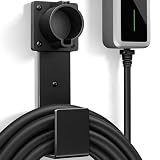
- Fit J1772 Connector: Designed to securely hold standard J1772 charging connectors, keeping them stable, properly positioned, and protected when not in use.
- Heavy-Duty Construction: Made from solid stainless steel for strong load-bearing support, rust resistance, and long-lasting durability.
- Cable Protection: The integrated hook design supports and organizes the charging cable, preventing tangles and reducing bending or strain over time.
- Keep Garage Tidy: Provides a dedicated storage solution for your EV charger, keeping the plug and cable off the floor while maintaining a clean and organized charging area.
- Easy Installation: Comes with all necessary mounting screws for quick and secure wall installation, suitable for garage walls, studs, or other solid surfaces.
- States: States can offer purchase rebates, tax credits, fleet programs, building rules, parking requirements, utility regulation, and other transportation policies. Their authority may be constrained by federal litigation, but it has not vanished.
- Utilities: Utility rebates, time-of-use rates, managed charging, and grid-connection policies can materially change the cost of owning and charging an EV.
- Courts: Litigation can delay, uphold, or overturn federal actions involving California waivers, charging funds, and agency rules.
- Congress and future administrations: Tax-credit legislation is more durable than an executive-order preference, but Congress and later administrations can change the policy again.
- Automakers: Companies decide which models to launch, how to price them, whether to offer leases, and how much to invest in batteries and charging.
- Consumers: Fuel prices, home-charging access, environmental preferences, brand sentiment, and total-cost calculations determine actual demand.
- Fleets: Delivery companies, taxis, commercial operators, and government fleets often make decisions based on utilization, fuel savings, maintenance, uptime, and route predictability rather than only the consumer tax credit.
- Global competition: Battery costs, Chinese EV manufacturers, international emissions rules, and overseas demand affect U.S.-based automakers even when Washington changes domestic policy.
- Private charging networks: Companies can continue building chargers with private capital, state support, utility investment, workplace demand, and fleet contracts.
Practical guidance for an EV shopper
If you are buying an EV after the federal credits ended, use this checklist before signing:
- Verify the advertised price. Ask whether it includes a federal credit, a state incentive, a lease subsidy, a manufacturer discount, or a dealer discount.
- Check your exact state and utility programs. Confirm eligibility, income limits, vehicle MSRP limits, residency rules, income-tax treatment, and whether funds remain available.
- Inspect the transaction date. If you believe you preserved an old federal credit through the transition rule, keep the binding written contract, payment records, delivery documents, and placed-in-service evidence.
- Compare buying with leasing. The lessor generally claims the federal clean-vehicle credit on a lease, but the customer should confirm how the lessor applied that value to the monthly payment and capitalized cost.
- Calculate charging costs. Obtain the home electricity rate, estimate public-charging prices, and account for installation, parking, and possible demand charges.
- Check connector and network access. Confirm that the vehicle’s charging connector works with the stations you expect to use and identify whether an adapter is required.
- Price insurance and depreciation. A lower energy bill does not guarantee lower total ownership cost.
- Consider a used EV on its own merits. The disappearance of the federal used-EV credit may lower the incentive but does not erase the possibility that a used EV offers attractive value.
- Separate the product from the personality. If you are considering a Tesla, evaluate range, charging access, service, insurance, resale value, software, and price independently from your view of Musk.
What charging companies and policymakers should watch
Charging companies face a more fragmented market. Federal-funding delays, Buy America compliance, the loss of 30C, permitting, utility interconnection, and slower near-term vehicle growth can all reduce project certainty. State programs, utility-owned infrastructure, apartment and workplace charging, fleet depots, private highway charging, and Tesla’s Supercharger network may become more important.
For policymakers, the trade-off is straightforward but not one-sided. Ending consumer credits can reduce federal spending and remove a policy that critics view as distorting consumer choice. It can also slow adoption, reduce scale economies, weaken domestic battery investment, and make U.S. manufacturers less competitive against countries that continue supporting EVs.
Removing greenhouse-gas pressure may expand short-term consumer choice and allow automakers to sell more gasoline vehicles. It may also reduce the incentive to invest in U.S. EV supply chains and charging infrastructure. Tariffs can support domestic assembly, but they can raise the price of cars and the components needed to build them. The policy outcome depends on which effect dominates—and for which company, state, vehicle, or consumer.
What happens next: five plausible paths
1. EV adoption slows but does not reverse
Federal purchase credits disappear, but state incentives, private investment, lower battery costs, fleet economics, existing EV owners, and continued model launches support gradual growth. EVs become more dependent on their own price and operating economics.
2. The market bifurcates by state
States with aggressive incentives and emissions policies develop a different EV market from states that favor gasoline vehicles and have fewer charging programs. Automakers and consumers face more complicated eligibility and product decisions.
3. Tesla pivots successfully to autonomy
Tesla’s conventional vehicle business grows slowly, but autonomy, software, energy, AI, and robotics become more important. In this scenario, federal rule modernization helps—but only if Tesla proves its systems are safe, obtains operating permissions, and creates a profitable service.
4. Musk’s political brand remains a liability
New products, price competition, and an aging lineup continue to pressure Tesla while Musk’s political activity discourages some customers and distracts management. The company may retain a large installed base but lose share in a more competitive EV market.
5. Courts or a future Congress reverse parts of the rollback
Executive actions and agency rules are not necessarily permanent. Courts may reject parts of the California-waiver strategy or other regulatory changes, while a future Congress or administration could restore or redesign incentives. Businesses making multibillion-dollar investments must plan for that policy risk.
The bottom line for Tesla and Musk
Trump’s election was not a simple victory for either EV opponents or Tesla. It was a retreat from federal consumer subsidies and greenhouse-gas pressure, combined with stronger emphasis on domestic production, tariffs, and autonomous-vehicle deregulation.
Recommended Free Tools
For EV shoppers, the immediate change is concrete: the federal new-, used-, and commercial-vehicle credits ended for post-September 30, 2025 acquisitions, and the charger credit ended for qualifying property placed in service after June 30, 2026. Check state and utility alternatives, and judge an EV by total cost of ownership rather than by a tax-credit headline.
For Tesla, the administration removed part of the company’s demand support and reduced the regulatory environment that helped it sell credits to competitors. At the same time, it may have opened a path for Tesla’s autonomy ambitions and protected portions of domestic manufacturing. Musk gained unprecedented political access but also made his personal politics a business variable—and his formal government role ended in May 2025.
The decisive question is no longer simply whether Washington supports EVs. It is whether Tesla can maintain a competitive vehicle lineup, protect its brand, replace declining regulatory-credit value, and turn easier access to autonomous-vehicle regulation into safe, commercially viable autonomy.
Frequently Asked Questions
Can I still claim the federal $7,500 EV credit if I ordered a vehicle before September 30, 2025?
Not automatically. The IRS transition rule generally requires a binding written contract and payment by September 30, 2025. A vehicle ordered without meeting those requirements may not qualify. A qualifying transaction could still be eligible if delivery occurred later, but the vehicle must ultimately be placed in service and all IRS conditions must be met. Keep the contract, payment, delivery, and registration records.
Free tools Windows power users keep installed
One-click scans. No signup required.
Is California’s EV mandate gone?
That is too broad. Congress disapproved three Biden-era California vehicle-waiver rules in June 2025, and the federal government challenged key waiver authority. California continued litigation and state-level incentive programs, including a 2026 first-time-buyer program. The legal status of each California rule or related state program must be considered separately.
Does Trump’s autonomous-vehicle policy approve Tesla’s robotaxi?
No. NHTSA rulemaking could remove some design barriers for vehicles intended never to be human-driven, and its AV framework could modernize federal safety standards. Those changes do not certify Tesla’s software, authorize robotaxi operations in every state, resolve liability or insurance issues, or establish that a Tesla autonomous system is safe.
Is Elon Musk still working for President Trump?
Musk’s formal role as a senior adviser and special government employee associated with DOGE ended in May 2025. That is different from continuing political influence, public contact, or alignment with Trump. His departure did not undo the policies adopted during his time in government.
The Bottom Line
Bottom line: Trump’s election weakened the federal financial and regulatory case for EVs, but it did not eliminate the market. Tesla lost consumer-credit and regulatory-credit support while gaining a possible autonomy-policy advantage. Musk’s political access helped him influence the policy environment, but his politics also became a potential liability for Tesla’s customers, investors, and management. The winners from here will depend less on campaign slogans than on vehicle prices, charging reliability, state policy, fleet economics, competition, and whether autonomy can move from regulatory possibility to safe commercial reality.
Quick wins for a faster PC:
Clear out junk files and repair common Windows errorsFree Scan →Scan for outdated or missing drivers - takes under a minuteDriver Scan →Quick Recap
Product prices and availability are accurate as of the date/time indicated and are subject to change. Any price and availability information displayed on Amazon at the time of purchase will apply.




