Quick wins for a faster PC:
Repair Windows errors before they cause bigger problemsFix Now →Scan for outdated or missing drivers - takes under a minuteDriver Scan →Clear out junk files and repair common Windows errorsFree Scan →If you expect to miss a credit card payment, contact the card issuer as soon as possible—even if the due date has not passed. First work out what you can realistically afford, then explain your situation and ask what payment or account terms the issuer may be able to change. Options depend on your issuer, account, and circumstances; no particular hardship arrangement is guaranteed.
What should I do if I can’t pay my credit card bills?
Take these steps in order. You do not need to wait until you are behind to ask for help. The Consumer Financial Protection Bureau (CFPB) says, “You do not need to be behind on your payments to ask for help!” (CFPB guidance)

As an Amazon Associate I earn from qualifying purchases.
- Work out what you can afford. Add up your income and essential expenses, and consider whether any costs can be reduced. Decide what you can pay without leaving basic needs uncovered. If you know how long the shortfall may last, note when you think normal payments could resume.
- Call the issuer promptly. Use the number on the back of your card or on your statement. Explain why the minimum payment is unaffordable, what you can pay, how long the difficulty may last, and what payment amount and duration you are asking for.
- Ask what terms may be available. Ask whether the issuer can adjust the payment amount, due date, interest, or other terms. Get the actual terms from the issuer rather than relying on assumptions about what a hardship program includes.
- Get the arrangement confirmed. Ask how the agreement will affect fees, interest, account use, and credit reporting; how to make the agreed payment; and whether the issuer can provide the terms in writing. The CFPB advises getting written confirmation of alternative repayment options. (CFPB credit-card guidance)
When you call, be direct and specific. For example: “I can’t afford the current minimum because my income has fallen. I can pay $___ each month for the next ___ months. Can you tell me whether you can adjust my payment or due date, and explain the fees, interest, and other account terms?” Fill in only an amount and timeline you can realistically meet.
Before calling, it can help to write down the reason for the shortfall, the amount you can pay now or each month, and when you expect your finances might improve. If you are unsure when normal payments could resume, say so rather than promising a date you cannot meet. The goal is to give the issuer an accurate picture and ask about an arrangement that fits your actual budget—not to accept a payment that makes essentials unaffordable.
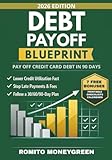
#1 Best Overall

- Comprehensive Debt Management Tool:The debt payoff planner log offers a detailed table design to help users manage debt information comprehensively. Each page includes creditor details, target payoff dates, credit types, starting balances, minimum payments, interest rates, and other key data, ensuring users have a clear overview of each debt. With systematic tracking, users can create effective repayment plans and work towards becoming debt-free.
- High-Quality Materials and Practical Design:Featuring 110 pages of 80gsm high-quality paper with double-sided printing and a sturdy copperplate cover, this debt payoff tracker is both durable and professional. The 8.5 x 11-inch large page size is perfect for desktop use and portable enough to carry around. The spiral-bound design allows the debt payoff planner spiral bound to lay flat at 180 degrees for easy writing, and it works seamlessly with gel pens, ink pens, or pencils without smudging.
- User-Friendly Table Design:The credit card debt payoff planner features a simple and intuitive table layout, making it easy to add entries and track repayment progress. Each page includes columns for dates, starting and ending balances, payment amounts, confirmation numbers, and notes, enabling users to efficiently monitor every payment. This straightforward design simplifies debt management, even for first-time users.
- Versatile Use Cases:Whether for personal debt management, family financial planning, or small business cash flow tracking, the debt snowball planner is a versatile tool. Finance planner is ideal for students, professionals, freelancers, and small business owners, helping them clearly record and track debt in various scenarios. By staying organized, users can better manage their finances and reduce financial stress.
- Improve Credit Scores and Reduce Stress:With systematic debt tracking and repayment planning, the fbill tracker notebook helps users reduce their debt burden and improve credit scores over time. Clear repayment progress and goal-setting features provide peace of mind, empowering users to tackle financial challenges with confidence and work towards financial freedom.
During the call, take notes: record the date, whom you spoke with, the terms discussed, and any next steps. Ask how and when to make any agreed payment. If you do not understand an answer about fees, interest, reporting, or account use, ask the representative to explain it before you agree. A verbal description or an advertisement is not a substitute for confirming the terms that apply to your account.
What can I ask the card issuer to change?
Ask whether the issuer can lower the payment, change the due date, or adjust interest or another account term. CFPB guidance notes that some creditors may accept lower monthly payments or change a due date, but that does not mean every issuer will do so or that every option will be available for your account. (CFPB credit-card guidance)
Do not treat a proposed arrangement as agreed until the issuer explains its terms. In particular, clarify:
Recommended Free Tools
- the payment amount and when each payment is due;
- how long the arrangement lasts and what happens afterward;
- whether interest or fees will continue, change, or be handled differently;
- whether your account’s charging privileges will change; and
- how the arrangement and any missed payments will be reported.
Also ask whether there are steps you must take to keep the arrangement in effect and what to do if you cannot make one of the agreed payments. These are questions to clarify, not terms every issuer is required to offer. If the issuer makes an alternative repayment offer, request written confirmation and keep it with your notes or statements.
The exact amount, duration, rate, fee treatment, and eligibility for any arrangement depend on your issuer and account. The available guidance does not establish a universal fee waiver, reduced interest rate, payment pause, or standard hardship plan. Ask for the actual terms rather than assuming that a lower payment means interest stops or that the card will remain available for purchases.
What happens if I do nothing?
A late or missed payment can lead to late fees and added interest, making the balance grow. Depending on the account, timing, creditor, and applicable law, missed payments can also harm credit, affect charging privileges, prompt collection efforts, or lead to a lawsuit. No single outcome or timetable applies to every account. The CFPB advises acting right away if you cannot pay. (CFPB guidance)
Ignoring calls or letters does not resolve the debt. If you receive court papers, do not ignore them: court deadlines and procedures depend on where you live and the facts of your case. Seek timely local legal assistance rather than assuming the creditor will or will not sue, or that a particular defense applies.
The effects depend on factors such as your account terms, how many payments are missed and when, the creditor’s actions, applicable law, and your circumstances. Do not rely on a general online claim about a particular reporting threshold or legal timetable as a guarantee for your situation. If a company advises you to stop paying or to stop communicating with the issuer, consider the possible fees, interest, credit consequences, collection activity, and lawsuit risk before acting.
Could credit counseling or a debt management plan help?
A credit counselor may help you understand your budget and debt, and some counseling organizations offer debt management plans that organize repayment. Counseling is different from debt settlement: it focuses on money management or a structured repayment approach, not necessarily negotiating to pay less than the full debt. Services, fees, and plan terms vary; nonprofit status alone does not establish that a service is free or right for you.
Before enrolling, ask what services are included, whether there is a charge, how much it is, and what the plan would require. A counselor should take time to understand your financial circumstances before recommending a course of action. You can also ask whether a proposed plan changes what you pay to creditors and what happens if you cannot keep up with it. (CFPB credit-card guidance)
Rank #3

- Organize Debts with a Debt Payoff Planner - Track all your debts efficiently using this debt payoff planner, including starting balances, minimum payments, due dates, and interest rates.
- Monitor Payments with a Debt Payoff Tracker - Log each payment, track end balances, and store confirmation numbers in this debt payoff tracker to stay on top of your finances.
- Plan Your Strategy with a Debt Snowball Planner - Prioritize debts, set goals, and create repayment strategies with this debt snowball planner for faster debt elimination.
- Track Bills with a Bill Tracker Notebook - Keep track of recurring bills, payment dates, and amounts with this bill tracker notebook, ensuring nothing is missed.
- Stay Motivated with a Debt Management Planner - Celebrate milestones and monitor progress using this debt management planner, perfect for anyone seeking control over their finances and achieving debt freedom.
Compare a plan’s payment requirements and fees with what you can afford, and make sure you understand how the counselor or organization will handle payments to creditors. Do not assume a plan is free, guarantees a lower balance, or works the same way as every other counseling service. You can still contact your card issuer directly to ask about your account while evaluating counseling.
What is a debt relief program, and how do I know if I should use one?
“Debt relief” can describe different services, so find out exactly what a company does before signing up. Debt settlement is distinct from credit counseling or a debt management plan. A settlement company may try to negotiate with creditors to resolve debts for less than the full amount, and may encourage you to stop paying creditors while it does so. That strategy can add late fees, penalty interest, and other charges; increase collection activity; harm credit; and lead to a lawsuit. A creditor may refuse to work with a particular settlement company, and not all debts are necessarily settled. Forgiven debt may also have tax consequences. (CFPB on debt relief programs) (Federal Trade Commission guidance)
Be wary of a company that promises guaranteed debt elimination, a fixed percentage reduction, a government bailout, an end to all collection calls or lawsuits, or tells you to stop communicating with your issuer. Do not pay an advance fee for promised settlement: CFPB guidance says a debt settlement company may not collect fees before settling or resolving your debt, and the FTC warns against advance-fee promises. (CFPB guidance) (FTC guidance)
Before considering settlement, compare its possible fees and risks with contacting the issuer directly or speaking with a credit counselor. Ask what debts the company intends to address, what it charges, and what happens while it negotiates. Do not assume an advertised outcome is guaranteed or that a company can prevent a creditor from collecting or filing suit. If a debt is forgiven, ask about possible tax consequences and seek appropriate tax guidance for your circumstances.
Are companies that consolidate credit card debt legitimate?
Some businesses marketed as debt-consolidation providers may actually sell debt settlement, so ask what service is being offered and whether you would keep paying creditors. A consolidation loan combines debts into a new loan; a balance transfer moves debt to another credit-card account. Neither automatically fixes a budget shortfall, and new borrowing can create new costs or risks.
The Tool Desk
Outbyte Driver Updater FREEFix the driver behind crashes, sound loss and screen glitchesFind Drivers →Outbyte PC Repair FREEClear out junk files and repair common Windows errorsFree Scan →Before accepting a loan or transfer, compare the total cost, fees, rate terms, payment affordability, and what happens if you default. If a loan is secured by property or another asset, missed payments can put that collateral at risk. Confirm the lender’s terms and eligibility directly; they vary by provider and product. (CFPB on consolidation advertisements)
Ask whether the advertised offer is actually a new loan, a balance transfer, or a settlement service, and whether it requires you to stop paying your current creditors. Compare what you would pay overall and whether the new payment fits your budget; a lower advertised payment alone does not show that a product solves the shortfall. Read the terms and understand the consequences of default, especially when an asset secures the borrowing.
Independent reader supportYour contribution helps us test, update, and keep practical guides available for everyone.How the options differ
| Option | Who takes the lead | Payments to creditors | Costs and risks to check |
|---|---|---|---|
| Contact the card issuer | You ask your creditor directly about possible changes to payment or account terms. | Follow the terms you and the issuer actually agree on; do not assume a payment pause. | Ask how the arrangement affects payment amounts, due dates, interest, fees, account use, and reporting. Availability varies by issuer and account. |
| Credit counseling or debt management | A counselor may help with budgeting or a structured repayment plan. | Ask how the plan handles payments to creditors; do not assume it is the same as settlement. | Ask what services are included, whether there is a fee, and whether the plan fits your budget. Fees and terms vary. |
| Debt settlement | A settlement company attempts to negotiate with creditors. | Some programs encourage stopping payments, which can worsen the situation while negotiations are pending. | Possible fees, added interest and charges, collection activity, credit harm, lawsuits, unsettled debts, and tax consequences for forgiven debt. |
| Consolidation loan or balance transfer | A lender provides a new loan or a card issuer allows a transfer. | You repay the new lender or account under its terms; confirm what happens to the old debt. | Compare total cost, fees, rate terms, payment affordability, eligibility, and default consequences. Secured borrowing can put collateral at risk. |
These options are not interchangeable. Direct issuer contact lets you ask about your own account; counseling can help you review a budget or structured repayment; settlement involves negotiation and may involve stopping payments; and consolidation replaces or transfers debt under new product terms. Confirm the provider’s actual service and terms before deciding.
Frequently Asked Questions
Should I wait until I miss a payment before contacting my card issuer?
No. Contact the issuer as soon as you think you may not be able to make the minimum payment. You do not need to be behind to ask for help, and the issuer can explain what options, if any, are available for your account.
What should I tell the credit card company if I can’t pay?
Explain why the minimum is unaffordable, how much you can realistically pay, how long the difficulty may last, and when you think normal payments could resume. Ask what payment, due-date, interest, or other term changes may be available, and confirm fees, reporting, account use, payment instructions, and the terms in writing.
Best Value
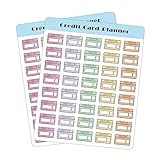
- 【Functional】:Credit card bill stickers are useful and effective to keep track of your credit card bills and payments on your planner and also functional decoration for any planner, calendar or agenda
- 【Premium materials】: All stickers are printed on premium removable matt adhesive paper. Easy to write and any pen will work. If you ruin it, just peel off the sticker again and position it.
- 【Colorful】: Various colors on one sticker sheet. The invoices are not fun but I have included 5 different colours so it is not an internal dimmer to remind yourself to pay your credit card bill.
- 【Payable size】:The space for the amount paid is 0.79 inch x 0.2 inch. Enough space for your writing. Page size is 15cm x 18.5cm and Individual Sticker is approximately 0.67" x 0.98"
- 【Include】: You will receive 2 pages of 80 Credit Card Invoice Terms Labels. The stickers are cut individually and are ready to peel and stick to your planner, calendar or agenda.
Will my issuer lower my payment or interest rate?
Some creditors may accept a lower monthly payment or change a due date, but no particular offer is guaranteed. Ask your issuer directly for the terms available on your account; do not assume a payment change also pauses interest or fees.
Are debt-consolidation companies legitimate?
Some businesses marketed as consolidation providers may actually offer settlement. Ask whether the product is a loan, balance transfer, or settlement service, whether you must keep paying creditors, and what the total costs and default consequences are. Be wary of guaranteed results, government-bailout claims, and upfront fees for promised settlement.
What should I do if I receive court papers about the debt?
Do not ignore them. Deadlines and procedures depend on your location and circumstances, so seek timely local legal assistance rather than assuming a particular outcome or defense applies.
Do these 3 things before closing this tab:
1Fix the driver behind crashes, sound loss and screen glitches2Clear out junk files and repair common Windows errors3Scan for outdated or missing drivers - takes under a minuteThe Bottom Line
If you may miss a payment, contact your issuer promptly with a realistic amount and timeline. Ask for the actual terms in writing, and compare any counseling, settlement, or consolidation offer by its costs, payment requirements, and risks—not by promises alone.
Quick Recap
Product prices and availability are accurate as of the date/time indicated and are subject to change. Any price and availability information displayed on Amazon at the time of purchase will apply.




