Quick wins for a faster PC:
Fix the driver behind crashes, sound loss and screen glitchesFind Drivers →Repair Windows errors before they cause bigger problemsFix Now →Scan for outdated or missing drivers - takes under a minuteDriver Scan →If your credit card posted a charge for more than you agreed to pay, call your card issuer right away, then send a written billing-error notice to the issuer’s billing-dispute address within 60 days of the date the first statement showing the error was sent. The phone call starts the process; the letter is what protects your billing-error rights under U.S. federal rules. The steps below apply to U.S. credit cards and covered open-end credit accounts. Debit cards and other payment methods follow different rules, covered in the last section.
Step by step: what to do now
- Call the issuer and report the charge. Use the phone number on the back of the card or on your statement. Write down the date, the representative’s name, and any reference number. A call alone does not preserve your formal dispute rights, so treat it as the first step, not the last.
- Find the written-notice address. Look for a billing-inquiries or billing-disputes address in the “billing rights” or “billing errors” section of your statement or cardholder agreement. Use that address, not the payment address printed on the coupon stub. Issuers’ online dispute forms and addresses differ, so confirm the correct channel on your own statement.
- Write the notice within the deadline. The Federal Trade Commission states that by law, credit card billing errors must be disputed in writing within 60 days of the date that the first statement with the billing error is sent to you. The Consumer Financial Protection Bureau describes the same window as 60 calendar days after the charge appeared on the statement. Use the earlier of the two dates as your working deadline, and do not wait for the seller to respond.
- Send proof and keep a record. Enclose copies (not originals) of the receipt, order confirmation, or other documents that show the amount you agreed to pay. Keep a complete copy of the letter and every enclosure.
- Use a delivery method that proves receipt. The FTC recommends certified mail with a return receipt, if possible, as evidence of when the issuer received your letter. The FTC does not say these are required, but a return receipt is useful if the issuer later claims it never received your notice.
- Keep paying the undisputed part of the bill on time. Your dispute covers only the amount you contest. Everything else on the statement still needs its minimum payment by the due date.
What your written notice should contain
- Your full name, account number, and the mailing address on the account.
- The transaction date and the exact posted amount that is wrong.
- The amount you expected to be charged, and a short explanation of why it differs (for example, a price quoted at checkout, a cancelled order, or a duplicate charge).
- A clear statement that you are disputing the amount as a billing error and asking the issuer to investigate.
- A list of the enclosed documents, with copies of each.
- The date and your signature.
Keep the letter factual. Describe what happened and what you expected; avoid speculation about why the merchant made the error.
Timeline: what the issuer must do after it receives your notice
The FTC and CFPB both describe the following federal timeline for credit-card billing errors. These are the general procedural rules; your issuer’s own agreement may offer faster or additional steps, but it cannot give you less protection than the rules require.
| Stage | Deadline or requirement | What it means for you |
|---|---|---|
| Your written notice | Must reach the issuer within 60 days after the first statement with the error was sent | Count from the statement date, not the date you noticed the charge. Late notice can forfeit these protections. |
| Issuer acknowledgment | Generally within 30 days of receipt, unless the issuer resolves the matter first | Expect a written acknowledgment. If none arrives, follow up in writing. |
| Investigation | Completed within two billing cycles, and no more than 90 days after receiving the notice | The issuer must decide the dispute within this window. |
| Explanation of decision | If the issuer finds that some or all of the amount is owed, it must explain why, what is owed, and when payment is due | Check the amount carefully. A partial finding is still a decision you can question in writing. |
While the issuer investigates: what you can withhold
| Part of the balance | Can you withhold it? | Rule during the investigation |
|---|---|---|
| Disputed amount | Yes | You may withhold it. The issuer may not charge interest on that amount while the investigation is pending. |
| Finance charges tied to the disputed amount | Yes | These are also protected while the dispute is open, under the FTC and CFPB guidance. |
| Undisputed balance | No | You must pay it on time. If you do, the issuer may not report you late because of the dispute. |
If you already paid the charge
A charge you have already paid can still be disputed. A refund may not arrive until the issuer decides you were right, so do not assume money will return the day you file. Paying the charge does not waive your right to send the written notice, provided you still meet the 60-day window.
Do these 3 things before closing this tab:
1Repair Windows errors before they cause bigger problems2Scan for outdated or missing drivers - takes under a minute3Clear out junk files and repair common Windows errors#1 Best Overall

- Advanced RFID secure sleeve designed to protect credit cards, money cards, identification cards from electronic fraud or theft; RFID shields are a superb debit card protector, RFID blocking to provide superior travel security.
- Made from special RFID blocking material, this credit cards holder is thin and lightweight. certified secure sleeves for credit cards protect against scanning of digital and electronic chips by thieves, tear- and water-resistant
- RFID sleeve with electronic armor is the identity theft protection for your bank cards. this credit card and ID holder prevents electronic access to your cards. valuable credit card protection, an ID card protector. RFID to block scanning and skimming
- Credit card protection sleeve designed with color coding system to find each card easily and quickly. RFID credit card holder have different colors for superior convenience. the special high quality rigid aluminum foil coating of these tiny slim RFID blocking wallets ensures you will never be a victim of high-tech crime
- Includes 12x RFID credit card protector sleeves for ultimate fraud prevention and travel safety
Should you contact the merchant first?
Contacting the seller can resolve simple mistakes quickly, such as a duplicate charge that the merchant can reverse. However, the CFPB’s regulation interpretation states that contacting the merchant is not a prerequisite to sending the issuer a qualifying billing-error notice. Do not let merchant negotiations use up the 60-day window. If the merchant refunds you while the issuer dispute is open, tell the issuer so the account can be corrected.
Wrong amount versus other complaints
Federal billing-error rules are designed for a transaction posted for the wrong amount, or for charges you did not authorize or did not agree to. The FTC’s sample-letter guidance asks readers whether they were charged without permission for more than they agreed to pay, or for things they did not buy. A product that arrived damaged or did not meet your expectations is a different kind of problem. The FTC treats it differently, so do not label every merchant disagreement a billing error. For quality complaints, pursue the merchant first and keep the dispute process for the amount itself.
Rank #2
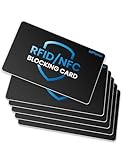
- Secure Your Information: Simply insert the RFID blocking card into your wallet to protect against digital pickpocketing. Block unauthorized scanning of your contactless cards, including credit/debit cards, passports, driver's licenses - to safeguard your identity and financial security
- Effective Protection: Our RFID blocking card utilizes advanced electromagnetic shielding technology, which features an embedded antenna mesh and chip that instantly detects and scrambles scanning attempts, providing consistent and reliable protection for the entire wallet
- Ultra Slim & Easy to Use: Credit-card-sized and just 0.03 inches (0.76 mm) thick, it slips easily into your wallet, purse or card holder adding no bulk. No charging or batteries needed. It will not demagnetize other cards, nor interfere with your phone signals
- A Thoughtful Gift: Give the practical gift of security. Effortlessly protecting your loved ones from digital theft – offering instant peace of mind, which is a truly meaningful way to show your care
- Test the Card: Test our RFID blocking card at self-checkout: Layer your contactless card with our RFID card on the reader - payment fails instantly, error message pops up
Debit cards and other payment methods
The process described here concerns credit cards and covered open-end credit. Debit-card protections differ. If your bank debited the wrong amount from your checking account, contact the bank promptly and ask what its error-resolution procedure requires. Do not apply the credit-card deadlines and letter requirements to a debit transaction without checking that rule.
Limits of this guidance
This article covers U.S. federal rules. It does not describe foreign law, and it does not describe how any individual issuer’s online dispute interface, account terms, or voluntary protections work today. Your statement and cardholder agreement are the authoritative sources for your issuer’s address and procedures. No outcome, refund, or provisional credit is guaranteed by the rules, so the most reliable thing you can control is meeting the deadlines and keeping a complete paper trail.
Free tools Windows power users keep installed
One-click scans. No signup required.
Rank #3

- ONE CARD PROTECTS YOUR WHOLE WALLET: Drop a single KF-Premium card into your wallet, purse, or card holder and every card sitting near it is shielded from contactless RFID and NFC scans, so you do not need a separate sleeve on each card. This 2-pack covers a second wallet, a passport holder, or a family member.
- ULTRA THIN AT 0.9MM, BARELY THERE: Each blocking card is only 0.9mm thick, about as slim as one of your bank cards, so it slides into any wallet slot without the bulk of foil sleeves or switching to a new wallet. Slim enough that you forget it is working.
- STOPS FRAUD BEFORE IT STARTS: The armoured shield design sends out an interfering counter-signal that blocks unauthorized RFID and NFC readers from skimming your debit cards, credit cards, and IDs. It guards against contactless payment fraud, identity theft, and digital pickpocketing in crowds, on transit, and while you travel.
- WORKS THE MOMENT IT IS IN YOUR WALLET: No batteries, no charging, no app, and nothing to switch on. Protection is automatic and continuous for the life of the card, and the durable, high-quality build holds up to daily wear in a back pocket or bag.
- A PRACTICAL GIFT THEY WILL ACTUALLY USE: The sleek black finish gives it a premium look that suits travelers, students, parents, and anyone who carries contactless cards. Boxed as a 2-pack, it works for birthdays, holidays, or a stocking filler that quietly protects the people you care about.
Sample wording you can adapt
Start your letter with a plain statement such as: “I am writing to dispute a billing error on my account. The transaction dated [date] posted as [amount]. I agreed to pay [amount] because [reason]. I enclose copies of [documents].” Then give your contact details and request written confirmation that the dispute has been received.
Use simple language. You do not need legal terms to make a valid notice; you need the date, the amounts, the reason, and the proof.
Quick Recap
Best Value

- RFID/NFC SECURITY: Works on 13.56MHz frequency, protect your credit cards, debit cards and ID cards away from fraud scanning.
- SMART IDEA & HARDCORE FEATURES: Advanced RFID blocking technology 24/7/365 alll days working. No batteries required, no charging, no manual operation.
- CARD PROTECTION VALID RANGE: Effective within diameter of 2.4inches/ 6cm of the card protector. One card protector for one wallet. Recommend one per side if you use a bulky bi-fold/tri-fold wallet.
- SLIM SIZE FOR BUSINESS & TRAVEL: ONLY 0.09 cm thick. Fits well for slim wallets, card holders, badge holders or passport wallets.
- GIFT IDEAS: Premium matte textured apperance, stable and powerful function, packaged with VULKIT gift package. The best gift for you.
Rank #4
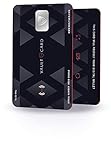
- SECURITY - Protects your RFID enabled cards, passport, driving license, etc from RFID skimming (electronic pickpocketing).
- TECHNOLOGY - Uses sophisticated electromagnetic jamming technology frequently used in military applications.
- CONVENIENCE - You no longer need to wrap your credit card in foil. Just keep VAULTCARD together with your cards in your wallet to ensure RFID security.
- NO BATTERY - VAULTCARD lasts forever. The card has an extremely efficient energy harnessing technology which allows it to be powered by energy from RFID scanner.
- AUTO-ADJUST POWER - VAULTCARD automatically adjust power of its jamming signal to ensure your RFID enabled cards, passport etc remain protected even against very powerful RFID skimming systems.
Product prices and availability are accurate as of the date/time indicated and are subject to change. Any price and availability information displayed on Amazon at the time of purchase will apply.




