Do these 3 things before closing this tab:
1Clear out junk files and repair common Windows errors2Fix the driver behind crashes, sound loss and screen glitches3Repair Windows errors before they cause bigger problemsIf you expect to miss a credit card minimum, contact the card issuer now—even if you are not behind yet. Work out what you can realistically pay, ask about hardship options, and get any agreement’s terms in writing. A partial payment is not automatically enough to keep the account current, so confirm exactly what the issuer will do and what it expects from you.
What to do first
The Consumer Financial Protection Bureau (CFPB) advises consumers to contact their credit card company immediately when they cannot pay a bill. You do not have to wait until you miss a payment to ask for help. The CFPB’s handout puts it plainly: “You do not need to be behind on your payments to ask for help!” Before calling, prepare a clear picture of your budget and a specific request.

As an Amazon Associate I earn from qualifying purchases.
- Calculate what you can pay. Add up take-home income and essential expenses, then determine what amount—if any—you can reliably put toward the card. Do not offer an amount that leaves you unable to cover necessities or that you cannot sustain. If your income or expenses may change, make a note of when and how much you expect them to change.
- Call the number on your card or statement. Explain why the minimum is unaffordable, how much you can pay, and when you think you may be able to resume regular payments. Ask for the department that handles hardship or payment assistance if needed.
- Make a specific request. Ask whether the issuer can lower the payment, move the due date, reduce the interest rate, or offer a temporary or longer-term hardship arrangement. If you have a preferred payment amount or timeline, state it clearly and ask what alternatives are available if the issuer cannot approve it.
- Clarify the consequences before agreeing. Ask how the arrangement affects interest, fees, account access or charging privileges, credit reporting, and the amount and timing of future payments. Ask what happens if you cannot meet a revised payment.
- Keep a record. Write down the date, the representative’s name, and what was discussed. Ask for the final terms in writing and review them before relying on the arrangement.
The CFPB’s current consumer guidance, last reviewed September 2, 2026, says issuers may be willing to work with people facing a financial emergency. That does not mean every issuer will offer assistance, or that making a smaller payment by itself prevents delinquency or other account consequences. Confirm whether the issuer has accepted a proposal and what payment it requires. If it has not accepted the proposal, ask what amount is due and when, rather than assuming your offer changed the account terms.
What to say when you call
A short, factual explanation helps keep the discussion focused on a workable amount and timeline. For example:
#1 Best Overall

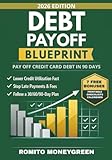
- Comprehensive Debt Management Tool:The debt payoff planner log offers a detailed table design to help users manage debt information comprehensively. Each page includes creditor details, target payoff dates, credit types, starting balances, minimum payments, interest rates, and other key data, ensuring users have a clear overview of each debt. With systematic tracking, users can create effective repayment plans and work towards becoming debt-free.
- High-Quality Materials and Practical Design:Featuring 110 pages of 80gsm high-quality paper with double-sided printing and a sturdy copperplate cover, this debt payoff tracker is both durable and professional. The 8.5 x 11-inch large page size is perfect for desktop use and portable enough to carry around. The spiral-bound design allows the debt payoff planner spiral bound to lay flat at 180 degrees for easy writing, and it works seamlessly with gel pens, ink pens, or pencils without smudging.
- User-Friendly Table Design:The credit card debt payoff planner features a simple and intuitive table layout, making it easy to add entries and track repayment progress. Each page includes columns for dates, starting and ending balances, payment amounts, confirmation numbers, and notes, enabling users to efficiently monitor every payment. This straightforward design simplifies debt management, even for first-time users.
- Versatile Use Cases:Whether for personal debt management, family financial planning, or small business cash flow tracking, the debt snowball planner is a versatile tool. Finance planner is ideal for students, professionals, freelancers, and small business owners, helping them clearly record and track debt in various scenarios. By staying organized, users can better manage their finances and reduce financial stress.
- Improve Credit Scores and Reduce Stress:With systematic debt tracking and repayment planning, the fbill tracker notebook helps users reduce their debt burden and improve credit scores over time. Clear repayment progress and goal-setting features provide peace of mind, empowering users to tackle financial challenges with confidence and work towards financial freedom.
“I’m having a financial shortfall and can’t afford the current minimum. I’ve reviewed my budget and can pay $___ on ___. I expect my situation to change around ___. Are there hardship options, such as a lower payment, reduced interest, or a different due date? Please explain how any option affects fees, interest, my account, and credit reporting, and send the terms in writing.”
Fill in only figures and dates you believe you can meet. If your circumstances are uncertain, say so rather than promising a return to regular payments on a date you cannot predict. You can also ask whether a temporary arrangement can be reviewed later if your circumstances change, and whether the issuer needs any information from you to evaluate the request.
Compare the main ways to get help
Options differ in how they change payments, cost, account access, and risk. Ask for the details that apply to your account; a general description of a program is not a guarantee of its terms. Compare the payment you would owe each month with your budget, but also look at the total cost and the length of repayment. A smaller payment may be easier to manage now while costing more over time, depending on interest, fees, and duration.
What’s actually slowing this PC down?
Pick the symptom - the matching free tool is one click away.
| Option | What it may do | Costs and risks to check |
|---|---|---|
| Issuer hardship arrangement | The issuer may lower the payment, move the due date, reduce interest, or allow postponed or reduced payments. Programs and eligibility vary by issuer and account. | Confirm interest, fees, duration, account use, credit reporting, and what happens if you miss a revised payment. Get the terms in writing if possible. |
| Credit counseling or a debt management plan | A counselor can help with budgeting and debts and may help arrange a plan that consolidates payments to participating creditors. CFPB says such plans typically lower monthly payments and interest charges. | Fees may apply and terms vary. Confirm what services and fees are included, whether the counselor is certified or accredited, and whether each creditor has accepted the plan before sending payments to an organization administering it. |
| Debt settlement | A settlement company may claim it can negotiate a reduced amount, but a promised result is not assured. | Be wary of guarantees, “pennies on the dollar” promises, upfront-fee demands, or advice to stop paying or communicating with creditors. Nonpayment can add interest and fees, intensify collection activity, harm credit, and expose you to lawsuits. CFPB says settlement companies cannot collect fees before settling or resolving the debt. |
| Debt consolidation | A new loan may combine multiple debts into one payment. | Compare total repayment cost, interest, fees, repayment length, and the consequences of missed payments. A loan does not fix a budget that cannot support the payment; borrowing against home equity puts your home at risk. |
When weighing the choices, ask whether the account will remain usable or close, whether you must stop paying an existing creditor, and whether the option adds new or secured debt. The monthly payment alone does not tell you whether an arrangement is affordable or safe. Confirm the payment, duration, and conditions with the issuer or counselor and keep the terms for reference.
When a credit counselor may help
A credit counselor can review your income, expenses, and debts and help you understand possible next steps. If a debt management plan is proposed, it may combine payments to creditors that enroll in the plan. That can simplify payment administration, but it is important to know which creditors have agreed and what the plan costs before you commit. A plan is not automatically accepted by every creditor, so ask whether each one has accepted the proposed terms.
- Ask which services are included and whether there are setup or ongoing fees.
- Ask whether the counselor is certified or accredited and how the organization is funded.
- Get the proposed payment, duration, and creditor terms in writing.
- Confirm that each creditor has accepted the plan before sending payments to an organization that will distribute them.
The CFPB points consumers to the National Foundation for Credit Counseling and the Financial Counseling Association of America as directories for finding counseling. These listings are not an endorsement of a particular provider. The CFPB’s counseling guidance was last reviewed August 2, 2023, so verify current services and fees directly.
Why to be cautious about debt settlement
Debt settlement is not the same as an issuer hardship arrangement or a credit counseling plan. A settlement company may encourage you to stop paying creditors while it tries to negotiate. That can leave interest and fees accumulating and may lead to more collection activity, credit damage, or a lawsuit. A company’s promise that it will eliminate debt or settle for a guaranteed amount is not proof that it can do so.
Before hiring a settlement company, consider asking the issuer directly about hardship options or speaking with a nonprofit credit counselor. If you evaluate a settlement service, understand when fees can be charged and what happens to your accounts while negotiations are underway. CFPB guidance on debt relief was last reviewed August 28, 2023.
Rank #3

- Organize Debts with a Debt Payoff Planner - Track all your debts efficiently using this debt payoff planner, including starting balances, minimum payments, due dates, and interest rates.
- Monitor Payments with a Debt Payoff Tracker - Log each payment, track end balances, and store confirmation numbers in this debt payoff tracker to stay on top of your finances.
- Plan Your Strategy with a Debt Snowball Planner - Prioritize debts, set goals, and create repayment strategies with this debt snowball planner for faster debt elimination.
- Track Bills with a Bill Tracker Notebook - Keep track of recurring bills, payment dates, and amounts with this bill tracker notebook, ensuring nothing is missed.
- Stay Motivated with a Debt Management Planner - Celebrate milestones and monitor progress using this debt management planner, perfect for anyone seeking control over their finances and achieving debt freedom.
What to know about consolidation
Consolidation can simplify several balances into one loan payment, but it replaces existing debt with new borrowing; it does not make an unaffordable monthly budget affordable by itself. Compare the full amount you would repay—not just the new monthly payment—including interest, fees, and the length of repayment. Also understand what happens if you miss payments. Using home equity to pay card debt is particularly consequential because the home is at risk if you cannot repay the secured borrowing.
Explore the card issuer’s options and counseling before taking on a new loan. The CFPB’s consolidation guidance was last reviewed September 2, 2026.
If the due date is near or you already paid late
Use the due date and payment instructions on your billing statement. A payment generally needs to be received by the due date; mailing it that day may not be enough. CFPB says an issuer generally cannot treat a payment as late if it receives it by 5 p.m. on the due date in the time zone shown on the billing statement. If the due date falls on a Sunday or holiday, the next-business-day rule applies. Online and in-person payment cutoffs can differ, so follow the statement’s instructions. CFPB’s timing guidance was last reviewed December 9, 2024.
Outdated Drivers Are Slowing You Down
One free scan finds every outdated or missing driver and matches the right update for your exact hardware.Free scan · exact hardware matchPC Slower Than It Used to Be?
A free scan shows the junk files, broken settings and background clutter dragging Windows down - then fixes them in one click.Free scan · Windows 10 & 11If you have already missed the due date, contact the issuer promptly. Ask what amount is needed to bring the account current, whether any hardship option is available, and whether it will waive the late fee. Do not assume that paying only part of the minimum makes the payment timely or protects the account. If you are close to the due date, use the payment method and cutoff listed on your statement and ask the issuer how it will treat a payment received after the cutoff.
What can happen if you cannot pay
Depending on the account and timing, an unaffordable or missed payment can lead to late fees, higher rates or minimums, loss of charging privileges, and credit-score damage. Delinquency may be reported to credit bureaus, and collection activity or litigation may follow. These outcomes are not identical for every account; ask the issuer what applies to your situation and what steps could prevent the problem from getting worse. The possibility of these consequences is a reason to contact the issuer early, not a reason to promise a payment that your budget cannot support.
Independent reader supportYour contribution helps us test, update, and keep practical guides available for everyone.How to choose a workable option
Compare any proposed arrangement against your actual budget, not an optimistic estimate. Before you agree, make sure you can answer these questions:
- What payment is due, when is it due, and for how long?
- What is the total cost, including interest and fees?
- Will the card remain usable, or will charging privileges change?
- How will missed payments affect the account, credit reporting, or collections?
- Does the option require stopping payments, taking on new debt, or putting property at risk?
- Have the issuer or all relevant creditors accepted the arrangement, and are the terms documented?
If no proposal fits your budget, tell the issuer rather than agreeing to payments you will likely miss. Revisit your income and expenses, ask what other assistance is available, and consider speaking with a credit counselor about your overall debt picture. The goal is to understand the real terms and choose a payment you can sustain, not simply to accept the first offer.
Sources and dates
- CFPB: What should I do if I can’t pay my credit card bills? (last reviewed September 2, 2026)
- CFPB: Key terms for credit cards
- CFPB: What to do if you’re struggling to make your credit card payments (April 3, 2019)
- CFPB: What is credit counseling? (last reviewed August 2, 2023)
- CFPB: What is a debt settlement company? (last reviewed August 28, 2023)
- CFPB: What is a debt consolidation loan? (last reviewed September 2, 2026)
- CFPB: What happens if I am late making a credit card payment? (last reviewed December 9, 2024)
Frequently Asked Questions
What should I do if I can’t pay my credit card minimum payment?
Contact your card issuer as soon as you expect a shortfall, even if you are not behind. Review your income and expenses first, state what you can realistically pay and when, and ask about hardship options. Confirm the terms and consequences before relying on an arrangement.
Best Value
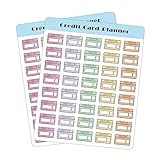
- 【Functional】:Credit card bill stickers are useful and effective to keep track of your credit card bills and payments on your planner and also functional decoration for any planner, calendar or agenda
- 【Premium materials】: All stickers are printed on premium removable matt adhesive paper. Easy to write and any pen will work. If you ruin it, just peel off the sticker again and position it.
- 【Colorful】: Various colors on one sticker sheet. The invoices are not fun but I have included 5 different colours so it is not an internal dimmer to remind yourself to pay your credit card bill.
- 【Payable size】:The space for the amount paid is 0.79 inch x 0.2 inch. Enough space for your writing. Page size is 15cm x 18.5cm and Individual Sticker is approximately 0.67" x 0.98"
- 【Include】: You will receive 2 pages of 80 Credit Card Invoice Terms Labels. The stickers are cut individually and are ready to peel and stick to your planner, calendar or agenda.
Can I ask my credit card company for help before I miss a payment?
Yes. CFPB guidance says you do not need to be behind to ask for help. Contact the issuer early and ask what options it offers; availability and terms depend on the issuer and account.
Will paying part of the minimum keep my account current?
Not necessarily. A partial payment is not automatically timely or enough to prevent delinquency or other consequences. Ask the issuer what payment is required and whether it has accepted any revised arrangement.
What if I already missed my credit card due date?
Call the issuer promptly. Ask what amount is needed to bring the account current, whether hardship help is available, and whether it will waive the late fee. Check your billing statement for the due date and payment cutoff instructions.
The Tool Desk
Outbyte Driver Updater FREEFix the driver behind crashes, sound loss and screen glitchesFind Drivers →Outbyte PC Repair FREERepair Windows errors before they cause bigger problemsFix Now →The Bottom Line
If you can’t afford the minimum, contact the issuer before you fall behind, offer only an amount you can sustain, and ask for all hardship terms in writing. Compare any alternative by its full cost, duration, account effects, and risks—not just its monthly payment.
Quick Recap
Product prices and availability are accurate as of the date/time indicated and are subject to change. Any price and availability information displayed on Amazon at the time of purchase will apply.




