First identify whether the problem is KYC, beneficiary setup, a rejected payment, or money debited but not credited. Record the bank, account type, currency, amount, date and time, exact error, payment rail if known, and transaction reference or UTR. For KYC, ask the account-holding bank to name the specific rejected item and accepted remedy. For a transfer, ask the sending bank to trace the reference and confirm the payment’s status before you try again.
Start by identifying where the process stopped
“GIFT City account” does not identify one bank workflow or one payment route. GIFT City’s International Financial Services Centre has banking units, but the relevant steps depend on the sending bank, receiving IBU, currency, account type, and payment rail. The IFSCA banking page provides the institutional context; it does not establish a universal customer transfer route or KYC checklist. See IFSCA banking.
| What happened | Who to contact first | What to ask |
|---|---|---|
| You could not add the beneficiary | The bank or service where you tried to add it | Which beneficiary field or validation failed, and which routing details and format are required? |
| The payment was rejected before debit | The sending bank | Was the instruction rejected, and what must be corrected before resubmission? |
| Your account was debited but the beneficiary was not credited | The sending bank | Trace the reference and confirm whether the payment was sent, is pending, or has been returned. |
| The payment was returned | The sending bank; contact the receiving bank too if the return reason is unclear | What return reason was received, and when will the debit be reversed? |
| The payment is pending or under review | The bank currently handling the instruction | Is it still pending, under compliance review, or awaiting another bank or intermediary? |
| Account activity is restricted while KYC is outstanding | The account-holding bank | Is the restriction related to onboarding, periodic re-KYC, or another review, and what is required to resolve it? |
Do not repeat a transfer just because the status is unclear. A second instruction could create a duplicate payment if the first one is still pending.
What to do when GIFT City account KYC fails
Ask for the exact deficiency
Use the bank’s official secure channel, branch, or relationship-manager contact for that IBU. Do not send identity documents to an email address or phone number supplied in an unsolicited message. Ask the bank to identify the specific rejected field, document, or verification step, and whether the issue is initial onboarding, periodic re-KYC, or a restriction on an existing account.
#1 Best Overall

- POWERFUL SECURITY KEY: The Security Key C NFC is the essential physical passkey for protecting your digital life from phishing attacks. It ensures only you can access your accounts.
- WORKS WITH 1000+ ACCOUNTS: Compatible with Google, Microsoft, and Apple. A single Security Key C NFC secures 100 of your favorite accounts, including email, password managers, and more.
- FAST & CONVENIENT LOGIN: Plug in your Security Key C NFC via USB-C and tap it, or tap it against your phone (NFC) to authenticate. No batteries, no internet connection, and no extra fees required.
- TRUSTED PASSKEY TECHNOLOGY: Uses the latest passkey standards (FIDO2/WebAuthn & FIDO U2F) but does not support One-Time Passwords. For complex needs, check out the YubiKey 5 Series.
- BUILT TO LAST: Made from tough, waterproof, and crush-resistant materials. Manufactured in Sweden and programmed in the USA with the highest security standards.
Possible questions to raise include whether a document is missing, expired, unclear, inconsistent with another record, or not accepted in the form submitted; whether certification or a signature is required; and whether the issue concerns photo or video identification or tax-residency information such as FATCA-CRS. These are diagnostic possibilities, not a determination of why a particular application failed.
Get the acceptable replacement and submission route in writing
Request the accepted document type, file format, certification route, and submission channel. IFSCA’s KYC FAQ describes offline identity verification by examining original documents or using certified true copies. For non-resident individuals, it lists potential certifiers such as an authorized bank official in a FATF-compliant jurisdiction, a notary, a court magistrate or judge, a certified public or professional accountant, a lawyer, or the relevant embassy or consulate. Those examples do not mean every bank accepts every route for every account; confirm the applicable option with your bank. See IFSCA KYC FAQs.
Rank #2

- FIDO-ONLY FUNCTIONALITY: Supports FIDO2 (passkeys) and FIDO U2F protocols for passwordless and second-factor authentication. Does not support OTP, TOTP, Smart Card (PIV), or other advanced features - upgrade to YubiKey 5 Series for extended functionality
- SECURE AND CONVENIENT: Passwordless MFA login with the YubiKey Bio authenticator and biometric information using a fingerprint, with a PIN as a fallback. Simply plug in via USB and use your fingerprint to authenticate
- DEVICE & OS COMPATIBILITY: Compatible with Windows, macOS, ChromeOS, and Linux. Works seamlessly with supported services like Google and Microsoft accounts, and major password managers. See the full compatibility list at "Works With YubiKey"
- DURABLE & RELIABLE: Resistant to tampering, water, and crushing. No batteries or network connectivity required, offering dependable authentication without any downtime. Securely manufactured in USA & Sweden
- Yubico Authenticator App - Fingerprint enrollment, passkey management and PIN configuration available via the app app - Upgrade to YubiKey 5 Series to generate one-time-passwords (OTP) via Yubico Authenticator and for advanced compatibility (OATH, PIV)
Understand that account consequences depend on the bank and its terms
Banks may request additional KYC information, but the stated consequences are institution-specific. HDFC Bank’s GIFT City terms say it may request further information or documents, may impose partial freezing for KYC non-compliance, and may freeze or close an account if requirements are not met. Read the terms that apply to your account rather than assuming another IBU follows the same process. See HDFC Bank GIFT City account terms.
Forms also illustrate why one bank’s process should not be treated as universal. ICICI Bank’s GIFT City customer update form says successful KYC verification updates re-KYC status at customer-ID level and regularizes account operations. That describes ICICI’s workflow, not a promise of instant restoration at other banks. See ICICI Bank’s GIFT City customer update form.
The Tool Desk
Outbyte PC Repair FREEClear out junk files and repair common Windows errorsFree Scan →Outbyte Driver Updater FREEScan for outdated or missing drivers - takes under a minuteDriver Scan →Rank #3

- FIDO-ONLY FUNCTIONALITY: Supports FIDO2 (passkeys) and FIDO U2F protocols for passwordless and second-factor authentication. Does not support OTP, TOTP, Smart Card (PIV), or other advanced features - upgrade to YubiKey 5 Series for extended functionality.
- SECURE AND CONVENIENT: Passwordless MFA login with the YubiKey Bio authenticator and biometric information using a fingerprint, with a PIN as a fallback. Simply plug in via USB-A and use your fingerprint to authenticate.
- DEVICE & OS COMPATIBILITY: Compatible with Windows, macOS, ChromeOS, and Linux. Works seamlessly with supported services like Google and Microsoft accounts, and major password managers. See the full compatibility list at "Works With YubiKey."
- DURABLE & RELIABLE: Resistant to tampering, water, and crushing. No batteries or network connectivity required, offering dependable authentication without any downtime. Securely manufactured in USA & Sweden.
- Yubico Authenticator App - Fingerprint enrollment, passkey management and PIN configuration available via the app app - Upgrade to YubiKey 5 Series to generate one-time-passwords (OTP) via Yubico Authenticator and for advanced compatibility (OATH, PIV).
What to do when a GIFT City transfer fails
Preserve the details needed to trace it
- Save the UTR or other bank-generated transaction reference, confirmation or status message, and the debit entry if money left your account.
- Record the date and time, amount, currency, beneficiary details entered, and any return or rejection message.
- Check the account number and the applicable routing information—such as IFSC, SWIFT, or IBAN—against the beneficiary bank’s official instructions. Do not post full account details publicly.
- Ask the sending bank whether the payment was accepted, sent, rejected, returned, or remains under review. If it was sent, ask whether a receiving or intermediary bank has responded and when a return, if any, should reach the originating bank.
Check the beneficiary name where the bank offers a lookup
RBI has directed banks to provide a beneficiary-name lookup facility for RTGS and NEFT using the account number and IFSC. If your bank displays a name before you submit, compare it with the intended beneficiary. Availability and presentation depend on the bank’s implementation, and a matching name does not verify every other detail. See RBI’s beneficiary-name lookup direction.
Use RTGS deadlines only for confirmed RTGS payments
For an RTGS payment that cannot be credited, RBI’s customer FAQ says the receiving member bank should return the funds to the originating bank within one hour of receipt at the payment interface or by the end of the RTGS business day, whichever is earlier. Once the originating bank receives the returned funds, it must reverse the customer’s debit. RBI says a delayed return can attract compensation at the current repo rate plus 2%. If the expected return does not arrive, ask the originating bank or its customer facilitation centre to trace the non-credit. See RBI’s RTGS customer FAQ.
Rank #4

- 100 encrypted contactless cards for security access control
- DESFire technology ensures secure, encrypted communication
- ISO 14443-A compliant (13.56 MHz) for compatibility with most access control systems
- Reliable, fast, and secure contactless entry
- Perfect for use in both residential and commercial settings
Use NEFT deadlines only for confirmed NEFT payments
For an NEFT payment that cannot be credited, RBI’s FAQ says the receiving bank should return it within two hours after settlement of the relevant batch. The FAQ describes penal interest at the current RBI LAF Repo Rate plus 2% for delayed credit or return. Ask your bank to confirm the batch and payment status, and raise a grievance if the return or credit is late. See RBI’s NEFT customer FAQ.
For other rails, confirm the exact transaction category
Card, IMPS, UPI, and bank-specific international wires do not automatically follow RTGS or NEFT timelines. RBI’s failed-transaction circular sets deadlines for specified categories—for example, its table includes T+1 reversal and ₹100 per day beyond the deadline for certain failed card-to-card and IMPS transactions. That framework should not be applied to a different rail or transaction category by analogy. Ask the bank to identify the applicable system and rule. See RBI’s failed-transaction turnaround-time circular.
Recommended Free Tools
Best Value
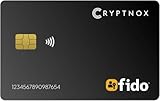
- FIDO2 CERTIFIED: FIDO Alliance Certified FIDO2 v2.1 and CTAP Level 1 for 2FA and MFA on Google Microsoft Apple GitHub login.gov AGOV SwissID and any WebAuthn service
- PASSKEY READY: Works as a hardware passkey for passwordless sign-in where the service enables it and as a U2F and WebAuthn security key everywhere else
- CERTIFIED SECURITY: NXP JCOP 4.5 secure element rated Common Criteria EAL6+ (augmented)
- TAP OR INSERT: Dual NFC ISO 14443 and contact ISO 7816 interface in an ID-1 format smart card that is passive and battery-free
- BUILT TO LAST: Passive smart card made in Switzerland designed by Swiss company Cryptnox and backed by a 2 year manufacturer warranty
Escalate with a complaint number and written record
- Complain to the bank responsible for the failure. For a KYC issue, start with the account-holding bank. For a debit without beneficiary credit, start with the sending bank, which can trace the payment; another bank or intermediary may also need to respond.
- Include the evidence. Provide the transaction reference and debit proof for a payment, or the rejected item and submission details for KYC. Ask for the reason, current status, next action, and expected resolution date.
- Keep the complaint number and response. Save written replies and note when the complaint was filed. If a payment is under review, ask the bank to confirm that status before initiating another payment.
- Check whether RBI’s Integrated Ombudsman route applies. RBI’s RTGS and NEFT FAQs direct customers to the relevant bank grievance channel first and describe escalation under the Reserve Bank-Integrated Ombudsman Scheme if the grievance remains unresolved within 30 days. Eligibility depends on the entity and scheme requirements; confirm those before filing. See RBI’s complaint and Ombudsman guidance.
RBI’s deadlines above apply to the named payment rails and failure conditions; they do not establish a general resolution time for GIFT City KYC or every cross-border transfer. IFSCA lists its payment-services regulations and FAQs on its payment services page. Its February 2026 announcement describes digital-onboarding initiatives including VCIP, e-KYC Setu, DigiLocker passport access, CKYCR 2.0, and PAN verification; it does not establish that a particular bank supports a feature or that using it will resolve an individual case. See IFSCA Payments Forum 2026 release.
Quick Recap
Product prices and availability are accurate as of the date/time indicated and are subject to change. Any price and availability information displayed on Amazon at the time of purchase will apply.




