What’s actually slowing this PC down?
Pick the symptom - the matching free tool is one click away.
The GENIUS Act created a federal and state framework for payment stablecoin issuers, including rules for reserves, redemption, disclosures and compliance. It also preserves existing ethics restrictions on members of Congress and senior executive branch officials issuing payment stablecoins while in public service. The law’s text does not expressly name the president or presidential family; the description of a “Trump exemption” is a characterization of that gap, reported by the Associated Press, rather than wording in the statute.
What the GENIUS Act does
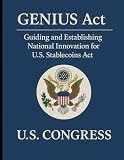
Congress enacted the Guiding and Establishing National Innovation for U.S. Stablecoins Act, known as the GENIUS Act, as Public Law 119-27 on July 18, 2025. It establishes a system under which payment stablecoins may be issued by permitted issuers through federal or state regulatory pathways. The statute sets requirements for reserves and redemption, public disclosures, and anti-money-laundering and sanctions compliance. The enacted law governs payment stablecoin issuers; it should not be read as a rule that every crypto asset or crypto business is automatically subject to the same requirements.




What “Trump exemption” refers to
Section 4(i) preserves existing ethics statutes administered by the Office of Government Ethics and ethics rules of the House and Senate. It clarifies that those laws and rules prohibit “any member of Congress or senior executive branch official from issuing a payment stablecoin during their time in public service.” The clarification does not expressly mention the president or the president’s family. Read in context, the statutory language identifies Congress members and senior executive branch officials, not a separately named presidential category.
The “Trump exemption” label comes from reporting on the scope of that restriction, not from an express statutory sentence granting an exemption. The Associated Press reported that the prohibition on members of Congress and their families profiting from stablecoins “does not extend to the president and his family.” AP also reported that members of the Trump family held a significant stake in World Liberty Financial, a crypto project that launched its own stablecoin. Those are AP’s descriptions; they should not be conflated with the statute’s wording. Associated Press coverage.
When the rules take effect
Signing the Act on July 18, 2025 did not make every requirement immediately effective. The statute’s general effective-date rule is the earlier of 18 months after enactment or 120 days after primary federal payment stablecoin regulators issue final implementing regulations. Some provisions have their own timing rules, so a specific obligation may have a different start date. The statutory deadlines alone do not establish whether final rules have since been issued or which requirements are currently in force. The Act’s text contains the governing timing provisions.
Independent reader supportYour contribution helps us test, update, and keep practical guides available for everyone.What this means for stablecoin users
The Act’s central focus is issuer permissioning and oversight, rather than a general promise that every stablecoin is risk-free or government-guaranteed. For a user, the practical questions are whether an issuer is permitted under the applicable federal or state pathway, what reserve and redemption duties apply, and what disclosures the issuer must provide. The law establishes those categories of obligations, but the available statutory and contemporaneous sources do not establish a complete current implementation status as of October 8, 2026.
Quick Recap
Rank #4
What the statute does—and does not—establish
- Established: Public Law 119-27 was enacted July 18, 2025 and creates federal and state pathways for permitted payment stablecoin issuers.
- Established: The law includes reserve, redemption, disclosure, anti-money-laundering and sanctions compliance requirements.
- Established: The text preserves existing ethics rules and expressly refers to members of Congress and senior executive branch officials issuing payment stablecoins during public service.
- Not stated as an express exemption: The cited ethics provision does not name the president or presidential family. The “Trump exemption” framing is AP’s description of the restriction’s reach.
- Not established here: Whether final implementing regulations have been issued and the full compliance status of each statutory requirement as of October 8, 2026.
Product prices and availability are accurate as of the date/time indicated and are subject to change. Any price and availability information displayed on Amazon at the time of purchase will apply.




