What’s actually slowing this PC down?
Pick the symptom - the matching free tool is one click away.
OpenAI’s Stargate expansion is real, but the headline needs a correction: the more-than-$400 billion figure refers to planned investment across a broader, multi-site U.S. AI-infrastructure platform announced with Oracle and SoftBank. NVIDIA’s later plan to deploy at least 10 gigawatts of systems and invest up to $100 billion in OpenAI is a separate strategic partnership—not proof that NVIDIA, Oracle, and OpenAI jointly launched one fully funded $400 billion project.
For investors, businesses, and policymakers, the key distinction is between announced targets, contracted capacity, construction, operating facilities, and money already spent.
The short answer
- In January 2025, OpenAI and SoftBank announced Stargate as a company intended to invest up to $500 billion over four years in U.S. AI infrastructure, with an initial $100 billion deployment described.
- OpenAI’s later five-site expansion announcement said Stargate’s broader platform—including the new sites, the Abilene campus, and CoreWeave projects—represented nearly 7 gigawatts of planned capacity and more than $400 billion of planned investment over three years.
- Oracle separately announced a 4.5-gigawatt capacity partnership with OpenAI, described by OpenAI as exceeding $300 billion over five years.
- NVIDIA later announced a letter of intent to deploy at least 10 gigawatts of NVIDIA systems and potentially invest up to $100 billion in OpenAI as those systems are deployed.
- These figures should not be added together automatically. They describe different combinations of infrastructure, cloud capacity, hardware deployment, partnership value, and prospective investment.
The original Stargate announcement is available from OpenAI. The five-site expansion is described in OpenAI’s expansion announcement.
How the numbers fit together
| Figure | What it represents | What it does not prove |
|---|---|---|
| $500 billion | Original Stargate target over four years | That $500 billion had already been funded or spent |
| $100 billion | Initial deployment described in the January 2025 announcement | Completed expenditure or fully arranged financing |
| More than $400 billion | Planned investment associated with the expanded Stargate platform over three years | A single cash investment made on announcement day |
| More than $300 billion | OpenAI’s stated value for its five-year Oracle capacity partnership | Upfront cash investment by Oracle |
| Up to $100 billion | NVIDIA’s prospective investment in OpenAI tied to system deployment | A completed $100 billion investment |
| Nearly 7 gigawatts | Planned capacity across the expanded Stargate platform | Operating or fully energized AI capacity |
“Investment” can describe a mixture of equity, debt, leasing, construction spending, hardware procurement, and contracted cloud capacity. Public announcements do not provide a complete site-by-site ledger separating those categories.
Do these 3 things before closing this tab:
1Scan for outdated or missing drivers - takes under a minute2Clear out junk files and repair common Windows errors3Fix the driver behind crashes, sound loss and screen glitches#1 Best Overall

- PLEASE NOTE: Exporting an NVIDIA RTX Pro 6000 GPU outside the US requires strict adherence to the U.S. Export Administration Regulations (EAR) and issuance of an export license from the Bureau of Industry and Security (BIS). Compliance and Know Your Customer (KYC) screening may be required as a condition of order acceptance. [NVIDIA Blackwell Streaming Multiprocessor] The new SM features increased processing throughput, and new neural shaders that integrate neural networks inside of programmable shaders | DLSS 4: Multi Frame Generation ensures ultra-smooth frame pacing for lifelike simulations.
- [Double-Flow-Through Design] The RTX PRO 6000 Blackwell features a double-flow-through cooling design, optimizing efficiency and airflow to sustain peak performance under 600W power loads. | [5th Gen Tensor Cores] Deliver up to 3X the performance of the previous generation and support for FP4 precision for faster AI model processing times with reduced memory usage, enabling local fine-tuning of LLMs and generative AI | [4th Gen Ray Tracing Cores] Double the ray-triangle intersection rate of the previous generation to create photoreal, physically accurate scenes and immersive 3D designs with RTX Mega Geometry, which enables up to 100X more ray-traced triangles.
- [PCIe Gen 5] Support for PCIe Gen 5 provides double the bandwidth of PCIe Gen 4, improving data-transfer speeds from CPU memory and unlocking faster performance for data-intensive tasks like AI, data science, and 3D modeling. | [GDDR7 Memory] With 96 GB of GPU memory and 1.8 TB ps bandwidth, it can tackle massive 3D and AI projects, fine-tune AI models locally, explore large-scale VR environments, and drive larger multi-app workflows.
- [DisplayPort 2.1] Achieve unparalleled visual clarity and performance, driving high resolution displays at up to 8K at 240 Hz and 16K at 60 Hz. Increased bandwidth enables seamless multi-monitor setups while HDR and higher color depth support ensures superior color accuracy for precision work, such as video editing, 3D design, and live broadcasting.
- [Universal MIG] Divide a single RTX PRO 6000 Blackwell into multiple isolated instances, each with dedicated resources, allowing for concurrent execution of multiple workloads, optimized GPU utilization, and secure isolation of different applications or users. [WARRANTY] 3 YR Manufacturer's Warranty. Bulk OEM Packaging. Retail Packaging is NOT included.
Stargate’s timeline
- January 2025: OpenAI and SoftBank announced Stargate as a new company intended to invest up to $500 billion over four years. SoftBank was identified as having financial responsibility, while OpenAI was assigned operational responsibility. Oracle, NVIDIA, Microsoft, Arm, and OpenAI were named key technology partners; SoftBank, OpenAI, Oracle, and MGX were listed as initial equity funders. See OpenAI’s original announcement.
- 2025: OpenAI and Oracle announced an additional 4.5 gigawatts of capacity. OpenAI said this brought stated Stargate capacity under development above 5 gigawatts with Abilene and provided infrastructure for more than 2 million chips. The partnership was described as exceeding $300 billion over five years. See OpenAI’s Oracle update.
- September 2025: OpenAI, Oracle, and SoftBank announced five additional U.S. sites. Including Abilene and ongoing CoreWeave projects, OpenAI said the platform represented nearly 7 gigawatts and more than $400 billion of investment over three years.
- Later in 2025: NVIDIA and OpenAI announced a separate letter of intent covering at least 10 gigawatts of NVIDIA systems and up to $100 billion of prospective investment in OpenAI.
- 2026: Oracle said a Stargate campus in Saline Township, Michigan—known as “The Barn”—was under construction. Separately, reporting indicated that OpenAI abandoned plans for an additional Abilene expansion while the existing project continued and Microsoft pursued a nearby expansion with Crusoe.
Where the announced sites are
| Location | Associated partners or description | Status and qualification |
|---|---|---|
| Abilene, Texas | OpenAI and Oracle; flagship Stargate campus | Parts were described as operating, with NVIDIA GB200 racks delivered and early workloads underway. A later expansion phase was reportedly dropped. |
| Shackelford County, Texas | Oracle-linked | One of the five new sites announced by OpenAI; the announcement did not establish that it was operational. |
| Doña Ana County, New Mexico | Oracle-linked | Announced as part of the five-site expansion; development status may differ from operating capacity. |
| Midwest location | Location initially undisclosed | Included in the five-site announcement, without a complete public site-level capacity or financing breakdown. |
| Lordstown, Ohio | SoftBank-linked | Designed to scale to 1.5 gigawatts with the Milam County, Texas, site. |
| Milam County, Texas | Developed with SB Energy, a SoftBank Group company | Part of the broader announced buildout rather than proof of fully installed capacity. |
| Saline Township, Michigan | OpenAI, Oracle, Related Digital, Blackstone, Walbridge, and financing anchored by PIMCO-managed funds and accounts | Oracle said construction was underway in June 2026. It described more than 700 Michigan tradespeople working on the project and more than 2,500 union construction jobs expected. |
The five-site announcement grouped sites and potential expansions together, so it would be misleading to treat every entry as having the same construction or operating status. Oracle’s Michigan announcement is available here.
Who does what?
- OpenAI: Operational lead and intended primary user of the computing capacity for model training and inference.
- SoftBank: Lead financial partner in the original Stargate structure and participant in infrastructure projects through SB Energy.
- Oracle: Major cloud and infrastructure partner developing several sites through Oracle Cloud Infrastructure.
- NVIDIA: Supplier of GPUs, networking, systems, and infrastructure-optimization technology. Its later 10-gigawatt and up-to-$100-billion announcement was separate from the original Stargate financing structure.
- Microsoft: Continuing cloud partner providing Azure services to OpenAI, including capacity related to Stargate.
- CoreWeave: Specialist infrastructure partner whose ongoing projects were included in the broader Stargate capacity count.
- MGX: Initial equity funder identified in the original announcement.
Where NVIDIA fits
NVIDIA was an initial Stargate technology partner, but it was not identified in the original announcement as Stargate’s lead financial partner. Its later announcement with OpenAI described a separate letter of intent covering at least 10 gigawatts of NVIDIA systems, representing millions of GPUs.
NVIDIA said it intended to invest up to $100 billion in OpenAI progressively as each gigawatt was deployed. The first gigawatt was targeted for the second half of 2026 using NVIDIA’s Vera Rubin platform. The wording matters: “intends to invest up to” is conditional and prospective. The announcement was not evidence that NVIDIA had already invested $100 billion.
The 10-gigawatt figure is a systems-deployment target. It is not automatically an additional 10 gigawatts of power capacity, nor is the prospective investment automatically part of the more-than-$400-billion Stargate figure. The companies said the partnership would complement work with Oracle, SoftBank, Microsoft, and other Stargate partners. Read the NVIDIA announcement for the stated terms.
What a gigawatt means here
A gigawatt is a measure of power or infrastructure scale. It is not a count of AI models, users, or dollars. In data-center announcements, the figure can refer to planned power or computing capacity, but it does not by itself tell readers how much capacity is:
- permitted or under construction;
- connected to the grid and energized;
- filled with GPUs;
- available through a cloud contract; or
- actively serving training and inference workloads.
Those stages matter. A campus can be planned for a particular power load without having that load energized, and an energized facility may still be waiting for hardware, networking, cooling systems, or software deployment. The public announcements do not provide a complete site-by-site breakdown across all five expansion locations.
Rank #2

- NVIDIA Volta GV100 Architecture — 4,608 CUDA Cores, 640 1st-Gen Tensor Cores delivering 14 TFLOPS FP32 and 112 TFLOPS deep learning performance for AI training, inference, HPC, and scientific computing workloads
- 32GB HBM2 ECC Memory — 900 GB/s Bandwidth — High-bandwidth memory on a 4096-bit bus with ECC error correction provides the memory capacity and throughput required for the largest AI models, simulations, and datasets
- PCIe 3.0 x16 Interface — 250W TDP — Standard PCIe Gen3 connectivity with passive cooling designed for enterprise rack server deployment in HPE ProLiant, Dell PowerEdge, and Supermicro platforms with adequate chassis airflow
- NVLink — Scale to 96GB Unified Memory — Connect two V100 GPUs via NVLink at 300 GB/s bi-directional bandwidth to scale GPU memory from 32GB to 96GB for larger AI training and HPC workloads
- Multi-Precision Computing — Supports FP64 (7 TFLOPS), FP32 (14 TFLOPS), FP16 (112 TFLOPS) and INT8 precision modes for flexible deployment across training, inference, and scientific simulation workloads
What has actually happened at Abilene?
Abilene is the clearest example of why Stargate should be understood as a portfolio rather than one uniform construction project. OpenAI and Oracle said Oracle had begun delivering NVIDIA GB200 racks and that early training and inference workloads were underway at the campus. That supports describing portions of the site as operating.
However, a later Associated Press report said OpenAI dropped plans for a further Abilene expansion. The existing project continued, while Microsoft took over a nearby construction expansion with Crusoe. Therefore, Stargate’s overall expansion should not be described as though every announced Abilene phase remains active.
The Tool Desk
Outbyte Driver Updater FREEScan for outdated or missing drivers - takes under a minuteDriver Scan →Outbyte PC Repair FREEClear out junk files and repair common Windows errorsFree Scan →Why Stargate matters
Compute supply
OpenAI needs substantial training and inference capacity as models become more computationally demanding and usage expands. Dedicated infrastructure can give it more control over hardware availability, networking, cooling, and deployment schedules.
Cloud diversification
Oracle and other infrastructure partners broaden OpenAI’s relationships beyond its historical dependence on Microsoft Azure. Microsoft remains a continuing partner, so diversification does not mean that Azure has been replaced.
NVIDIA demand
If the announced systems target is executed, Stargate and related OpenAI infrastructure could represent a major demand pipeline for NVIDIA processors, networking equipment, and software. It is still a target rather than a verified installed count.
U.S. industrial policy
The project was presented as a way to expand domestic data-center construction, power infrastructure, supply chains, and employment. OpenAI’s five-site announcement projected more than 25,000 onsite jobs plus additional indirect employment. Those projections should not be confused with current permanent operating jobs.
Quick wins for a faster PC:
Clear out junk files and repair common Windows errorsFree Scan →Scan for outdated or missing drivers - takes under a minuteDriver Scan →Rank #3
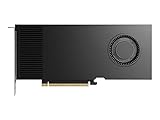
- Professional GPU with Blackwell Architecture
- Blackwell Architecture
- 24GB GDDR7 with PCIe 5.0 & Ray Tracing
- AI Workstation
The trade-offs and execution risks
Scale versus execution
Building multiple AI campuses requires land, permits, utility connections, transmission upgrades, financing, construction labor, cooling systems, hardware deliveries, and network integration. Delays or redesigns at one site do not necessarily end Stargate, but they can change the timing and total capacity.
Capacity versus utilization
A large powered campus does not automatically produce proportional AI output. Utilization depends on GPU availability, networking, cooling, software efficiency, model demand, and the economics of running the facility.
Diversification versus complexity
Using Oracle, Microsoft, SoftBank, CoreWeave, NVIDIA, and other partners can reduce dependence on one provider. It also increases contractual, technical, and financing complexity.
Speed versus local impacts
Large AI campuses require significant electricity, transmission infrastructure, water or other cooling resources, land, and construction materials. The Michigan project announcement highlighted energy, water, labor, and community-benefit commitments, but those local commitments do not eliminate the broader infrastructure trade-offs.
Ambition versus demand risk
The financial case assumes continued growth in AI usage and willingness to pay for model access. If demand, model economics, or hardware efficiency changes, planned capacity may be delayed, relocated, reduced, or repurposed.
How to read future Stargate headlines
- Identify the type of number: Is it equity, debt, a cloud-capacity contract, partnership value, hardware procurement, power capacity, or a long-term target?
- Check the verb: “Invested,” “committed,” “intends to invest,” “plans,” “under construction,” and “operating” describe different levels of certainty.
- Separate power from computing: A gigawatt of planned capacity is not necessarily a gigawatt of energized IT load or installed GPU systems.
- Check for overlap: Oracle’s capacity, NVIDIA’s systems, and construction financing may relate to the same underlying infrastructure. Adding them can double-count the project.
- Check the site: Stargate is a portfolio. One site’s delay or cancellation does not establish that the entire platform has been canceled, while a portfolio target does not prove every site is progressing.
What the public record does not establish
The announcements do not provide a complete audited ledger showing how much capital has been spent, how much equity has been funded, how much debt has been arranged, which facilities are fully energized, how many GPUs are installed at each site, or how much capacity is actively utilized. They also do not establish that the original $500 billion target is fully secured.
That limitation is important for anyone evaluating Stargate as a corporate-finance story. Announced project value can be economically significant without being equivalent to cash on a balance sheet or a legally binding construction budget.
Quick Recap
Product prices and availability are accurate as of the date/time indicated and are subject to change. Any price and availability information displayed on Amazon at the time of purchase will apply.




