The New York Stock Exchange (NYSE) is a U.S. securities exchange where investors trade shares and other listed securities. NYSE also refers informally to NYSE Group, which operates five distinct equities markets; only the main NYSE venue has the well-known trading floor and its particular auction model. The exchange traces its founding to May 17, 1792, when 24 stockbrokers signed the Buttonwood Agreement.
What is the NYSE?
An exchange is a regulated marketplace that brings together buyers and sellers of securities under defined trading rules. The NYSE is one such marketplace. Companies can list securities on an exchange to raise capital, and investors can trade those securities through brokers and other market participants.
In conversation, “NYSE” may mean the main New York Stock Exchange venue or the broader NYSE Group. The distinction matters: NYSE Group operates five equities markets, and their trading systems, schedules, and roles are not identical. The main NYSE venue has a physical trading floor, designated market makers for primary listings, and opening and closing auctions. NYSE Arca, by contrast, is fully electronic.
How the NYSE began and changed
1792: The Buttonwood Agreement
The NYSE identifies May 17, 1792, as its founding milestone. On that date, 24 stockbrokers signed the Buttonwood Agreement, establishing an organized basis for trading securities. The exchange’s early roots were tied to U.S. financing needs: states and municipalities issued bonds for infrastructure, while businesses such as banks, insurance companies, and railroads issued stock to raise money. NYSE’s official history recounts this development.
Free tools Windows power users keep installed
One-click scans. No signup required.
#1 Best Overall
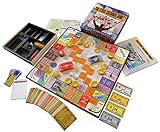
- NOW STEM.org Certified!!! Now being played in over 22+ countries and every state in the USA!!!!
- No Stock Knowledge needed to have a Great Time!!!!! Based on real stock market principles.
- 3 Levels of Play - Family Friendly, Strategy level, and Teams Play
- No financial, economics, or heavy math required. A fun way to learn about finance and money management.
- Ages 10+ to adult / 2-6 Players
1865–1867: A permanent home and faster information
In 1865, the NYSE moved to its first permanent home on part of its current Broad Street site. Two years later, the stock ticker became a major improvement in transmitting market information across the United States, helping traders and investors follow prices beyond the exchange floor.
1886 and 1980: Historical scale milestones
- December 15, 1886: NYSE says trading volume topped 1 million shares for the first time. This is a dated milestone, not a measure of present-day activity.
- February 8, 1980: NYSE says the market capitalization of NYSE-listed securities exceeded $1 trillion. This historical figure should not be read as the exchange’s current market capitalization.
2020: Temporary floor closure
In March 2020, during the COVID-19 emergency, NYSE closed its trading floor and shifted to fully electronic trading. NYSE describes this as the first such closure in its history; it was not a permanent disappearance of the floor.
NYSE Group’s five equities markets
NYSE Group describes five equities markets, each with its own trading and pricing model. A useful comparison is how the venue operates—not which venue is “best” for an individual investor. NYSE’s market overview describes the group’s venues and models.
Rank #2

- 🎓 Educational & Fun for All Ages: Dive into financial freedom with "Paycheck to Billionaire," a strategic board game that imparts skills in cost management and smart investing from startup to empire. Ideal for family game nights and educational play, this game is engaging for adults and kids ages 8 and up. 🌟
- 🎲 Interactive Family Game Time: Bring excitement to your family gatherings and game nights with this engaging board game that offers a fun way to learn about economics without the complexity of bankruptcy or monopoly rules. Ideal for kids, teens, and adults. 🎉
- 🎉 Perfect Party Game: Light up the party with "Paycheck to Billionaire," where young entrepreneurs aged 8-12 and older can strategize and compete to build their business empire. It's a hit at parties, fostering lively interaction and competitive spirit. 🏆
- 🍎 Teacher’s Educational Pick: A must-have for educational environments, this game allows teachers to introduce financial concepts and critical thinking skills in a fun, interactive manner. It's an excellent tool for classrooms and homeschool settings, encouraging students to engage with real-world economic strategies. 📚
- 🎁 Perfect for Building Business Mind: "Paycheck to Billionaire" is the ideal gift for minds keen on entrepreneurship. This engaging board game offers a fun and educational pathway to understanding business and finance, making it a superb choice for nurturing future business leaders during family game nights or as a thoughtful present. 🌐
| Market or feature | What NYSE Group says |
|---|---|
| Main NYSE venue | Has a trading floor, designated market makers for primary listings, and opening and closing auctions in primarily listed symbols; it uses a parity/priority model. |
| NYSE Arca | Fully electronic and a major venue for exchange-traded products. |
| NYSE American | Designed for growing companies. |
| Other NYSE Group equities markets | The group operates five markets in total; the details of each market’s model and schedule should be checked on NYSE’s current market pages rather than inferred from the main NYSE venue. |
These operating distinctions are relevant to how securities are listed and traded. They do not, by themselves, determine whether a particular investment is suitable for an investor.
NYSE trading hours and auctions
For NYSE Tape A, the core trading session is 9:30 a.m. to 4:00 p.m. Eastern Time. Before the core session, order entry begins at 6:30 a.m. ET; orders are queued until the 9:30 a.m. opening auction. The session ends with the closing auction. These hours describe Tape A, not every NYSE Group market or securities tape. NYSE’s trading hours and calendar page lists venue- and tape-specific schedules.
NYSE has also reported that NYSE Arca received SEC approval in February 2025 to pursue expanded hours, with a 2026 launch targeted while market-data, clearing, and trading infrastructure were aligned. The schedule on NYSE’s extended-hours page is described as subject to approval. An announced target is not confirmation that the expanded session is operating; consult the current NYSE notice for the status and applicable hours. NYSE’s extended-hours page provides its announcement.
Rank #3
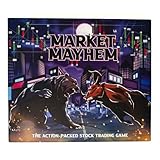
- BECOME A SAVVY INVESTOR: Market Mayhem is a board game that combines the thrill of the stock market with strategic decision-making. You'll navigate a dynamic market, buying low and selling high to build your wealth.
- UNLEASH MARKET MAYHEM!: Land on exciting spaces that trigger unpredictable events, from special dividends to market crashes! These events keep the game dynamic and full of surprises.
- CHALLENGE YOUR FELLOW INVESTORS: Think you can outmaneuver your opponents? Market Mayhem features interactive spaces that allow you to directly impact their financial fortunes. Devise clever strategies to gain the upper hand!
- TRACK THE MARKET: The Pit Board keeps you informed of current stock prices across different industries. Use this information to make informed investment decisions and maximize your profits!
- BASE GAME CONTENTS: Game board, Gold Bar game token, 36 Market Mayhem cards, Pit Board, Pit Board stand, play money, 2 dry erase markers, 4 pencils, sharpener, 4 calculators and 2 Silver Nugget dice.
For a particular trading date, check the live calendar rather than assuming a standard session. NYSE’s calendar identifies an early close at 1:00 p.m. ET on December 24, 2026, and lists market holidays for 2026–2028; calendars can be amended. The NYSE calendar is the reference for current holiday and early-close details.
What the historical statistics do—and do not—tell you
The figures most often quoted about the NYSE’s past are dated milestones: 24 signers in 1792, a first million-share trading day in 1886, and a $1 trillion market-capitalization milestone in 1980. They help show how the exchange developed, but none is a current measure of the market.
Recommended Free Tools
NYSE’s cited history and market pages do not establish a current total market capitalization or a current listed-company count. Those figures change over time and should not be supplied as timeless facts. For current exchange information, use NYSE’s own market pages and identify the date and scope of any statistic.
Quick Recap
Product prices and availability are accurate as of the date/time indicated and are subject to change. Any price and availability information displayed on Amazon at the time of purchase will apply.




