The Tool Desk
Outbyte PC Repair FREERepair Windows errors before they cause bigger problemsFix Now →Outbyte Driver Updater FREEScan for outdated or missing drivers - takes under a minuteDriver Scan →An SR-22 is not insurance. It is a certificate or electronic filing that an insurance company sends to a state licensing or financial-responsibility agency to prove that you carry the liability insurance required after a qualifying driving or financial-responsibility event.
The insurance policy provides coverage; the SR-22 lets the state monitor whether that coverage stays active. The exact form, required limits, filing period, processing time, and consequences of a lapse depend on the state and the specific notice on your driving record. If your notice names an FR-44, SR-22A, or another form, do not substitute an ordinary SR-22 without confirming that the state will accept it.
SR-22 insurance in plain English
People commonly say “SR-22 insurance,” but that phrase is shorthand for two separate things:
- The auto insurance policy: usually a liability policy that pays covered claims for injuries or property damage you cause to others, subject to its limits and terms.
- The SR-22 filing: a certificate from the insurer to the state confirming that the policy meets the state’s required financial-responsibility limits.
California describes the SR-22 as a certificate of financial responsibility, while Texas calls it a financial-responsibility insurance certificate. In either case, the filing is not a standalone insurance product. It is a state-monitored proof-of-insurance filing connected to an eligible policy. See the California DMV explanation of SR-22 certificates and the Texas Department of Public Safety SR-22 guidance.
#1 Best Overall
![ESSENTIAL Car Auto Insurance Registration BLACK Document Wallet Holders 2 Pack - [BUNDLE, 2pcs] - Automobile, Motorcycle, Truck, Trailer Vinyl ID Holder & Visor Storage - Strong Closure On Each -](https://m.media-amazon.com/images/I/41k-QvzFVuL._SL160_.jpg)
- ESSENTIAL Car Auto Insurance Registration BLACK Document Wallet Holders 2 Pieces
The practical translation: Find out exactly what your state requires, buy a policy that meets those requirements, have an insurer authorized in that state file the certificate, and keep the policy active for the entire required period.
Who does what?
| Party | Typical role |
|---|---|
| Court | May impose or communicate obligations arising from a conviction, judgment, or other case. |
| DMV, DPS, Secretary of State, or equivalent agency | Places the requirement on the driving record, processes the filing, and monitors compliance. |
| Insurance company | Issues the policy and submits the SR-22 electronically, by mail, or through another state-approved method. |
| Driver | Must obtain the correct policy, pay the premiums and fees, maintain uninterrupted coverage, complete other reinstatement conditions, and verify when the requirement ends. |
The official notice or driver-eligibility record from the imposing state should control. An insurer’s general explanation may not identify the particular form, limits, dates, or reinstatement conditions that apply to your case.
Why might you need an SR-22?
States use financial-responsibility filings after events that suggest a driver may pose an elevated insurance or financial risk. Common examples include:
- DUI, DWI, DUII, OVI, or a comparable impaired-driving offense;
- driving without required insurance;
- multiple mandatory-insurance convictions;
- driving while a license is suspended, revoked, invalid, or otherwise restricted;
- a serious traffic offense or repeated violations;
- an uninsured crash;
- an unsatisfied judgment arising from a crash;
- a safety-responsibility or financial-responsibility suspension;
- certain hardship, occupational, or restricted-license applications; or
- false, insufficient, or unacceptable proof of insurance.
These are examples, not a nationwide checklist. A DUI does not automatically mean every state will require an SR-22: Florida and Virginia, for example, use an FR-44 for specified DUI-related and comparable offenses. Conversely, some states can require an SR-22 after an uninsured crash, judgment, or insurance violation even when no impaired-driving conviction is involved.
Outdated Drivers Are Slowing You Down
One free scan finds every outdated or missing driver and matches the right update for your exact hardware.Free scan · exact hardware matchWindows Errors? Fix Them Before They Spread
Repair common Windows errors and clear accumulated junk for a smoother, more stable PC - no reinstall needed.Free scan · no reinstallFor example, Texas lists DWI, certain drug offenses, driving while a license is invalid, repeated no-insurance convictions, crashes, judgments, and security-deposit situations among its possible triggers. Illinois identifies safety-responsibility suspensions, unsatisfied judgments, revocations, mandatory-insurance supervision, and repeated mandatory-insurance convictions. Oregon separately lists uninsured crashes, driving uninsured, DUII, certain traffic crimes, and hardship-permit situations. The relevant state agency’s notice—not an internet rule of thumb—determines whether you need one.
What does SR-22 coverage actually cover?
An SR-22 normally certifies that you have the state-required liability coverage. It does not automatically add insurance benefits to your policy. The policy itself determines the covered drivers, vehicles, limits, exclusions, and circumstances.
An SR-22 does not automatically provide:
- collision coverage for damage to your car;
- comprehensive coverage for theft, weather, vandalism, or other non-collision damage;
- medical-payments or personal-injury-protection coverage;
- uninsured- or underinsured-motorist coverage;
- limits higher than the state requires; or
- coverage for every vehicle you own, borrow, rent, or operate.
The National Association of Insurance Commissioners’ auto-insurance overview distinguishes liability, collision, comprehensive, and other types of coverage. An SR-22 is a filing associated with the policy; it is not “full coverage.” A policy can include collision and comprehensive coverage and still lack the SR-22 filing required by the state. Likewise, a policy with an SR-22 may provide only liability protection.
Why the exact policy matters
The filing must match your real vehicle situation. A person who owns a registered car generally needs an owner policy or another form accepted for owned vehicles. Someone who owns no car may qualify for a non-owner policy. A driver who owns a car but buys a non-owner policy to obtain a lower premium may have inadequate coverage or fail to meet the state’s requirement.
Free tools Windows power users keep installed
One-click scans. No signup required.
Tell the insurer whether you own a vehicle, own several vehicles, regularly drive a household member’s car, use an employer’s vehicle, or rent vehicles. Do not describe yourself as a non-owner if you actually own or regularly use a vehicle.
Owner, operator, non-owner, and broad SR-22 policies
States and insurers use slightly different names, so ask for the certificate type that the state accepts. The common categories are:
| Policy or filing type | Usually intended for | Important limitation or disclosure |
|---|---|---|
| Owner policy | A driver who owns one or more vehicles. | The vehicle or vehicles generally must be identified on the policy. Ask whether every owned vehicle must be listed. |
| Operator or non-owner policy | A driver who does not own a vehicle but occasionally operates vehicles belonging to others. | Usually provides the driver’s liability protection, not physical-damage coverage for the borrowed or rented vehicle. Household and regularly used vehicles may be excluded or require the driver to be listed on the owner’s policy. |
| Owner-operator or broad policy | A driver who owns vehicles and may also operate non-owned vehicles. | The scope varies. California recognizes a broad form that can cover vehicles owned and not owned by the driver, subject to the policy terms. |
| “On behalf of” filing | In some states, a vehicle owner, employer, or family member filing for the driver. | The permitted use can be narrow. Oregon says this type of filing may limit the driver to the covered vehicle. |
California’s SR-22 guidance describes owner, operator, and broad forms. Illinois identifies operator, owner, and owner-operator certificates, and Texas specifically tells people without a vehicle to ask about a non-owner SR-22 policy.
Rank #2

- 👁️Quick Accessible: Inside the car insurance and registration card holder, the clear inner material makes you easy to find documents when you open it up, you can see exactly what they are and quickly show them when asked, even no need to take the stuff out.
- 💼Document Well Organized: The car document holder keeps your car documents organized and keep them tidy and secured, which make it easy to quickly identify and reach paper or cards in the folder. The glove box organizer for car has 6 compartments to keep all your car essential auto car essentials organized.
- 🧲Hidden Magnetic Closure: The glove box document holder are built with hidden magnetic closure, which will keep your car paperwork organizer neat and tidy and ensure the certifications stay closely and and completely protective within the registration pouch.
- 💖Premium Material: The car manual holder is made from high-quality ECO-friendly PU leather material. The car insurance holders with the best sewing and crafted is durable, wear-resistant, and has a luxurious look. This material of the registration holders is durable, wear resistant and waterproof. The insurance card holder for car has a clear window so you can easily see all the documents when you open it up.
- 🌷Compact Size: With the perfect size dimensions of 5.0in x 9.4in x 0.4in, this vehicle license and registration holder for car will fit into glove compartments, sun visors, door holders, consoles, etc. The glove box organizer is precisely designed to fit all of your car documents.
Can you get an SR-22 without owning a car?
Usually, yes. The usual solution is a non-owner or operator liability policy with the SR-22 attached, provided the state and insurer accept that form. Texas and Oregon expressly recognize SR-22 situations involving drivers who do not own vehicles.
A non-owner policy generally covers your liability for occasional use of a vehicle you do not own. It generally does not pay to repair the borrowed or rented vehicle. Damage protection may instead come from the vehicle owner’s policy, rental-company protection, or a separate collision-damage waiver. Allstate’s explanation of non-owner car insurance describes these limitations.
There are several important exceptions and traps:
- Regular household use: If you regularly drive a spouse’s, parent’s, roommate’s, or other household member’s car, the insurer may require you to be listed on that vehicle’s policy. A non-owner policy does not automatically replace that requirement.
- Ownership: If you own a vehicle, disclose it. An owner policy may be required, and a non-owner policy may not satisfy the state or protect you adequately.
- Employer vehicles: Ask whether the state permits an “on behalf of” filing and whether the employer’s commercial coverage satisfies the particular requirement. Do not assume it does.
- Rental vehicles: A non-owner policy may provide liability coverage subject to its terms, but it generally does not cover damage to the rental car.
How much does an SR-22 cost?
Separate the price into the filing charge and the insurance premium.
1. The filing charge
Some insurers charge a separate SR-22 filing fee; others include it in the policy transaction. Published insurer examples commonly fall in an approximate range of $15 to $50, but there is no national fee and the range is not a quote for your state or carrier. Ask the insurer:
- What is the one-time or recurring filing fee?
- Is the fee charged again at renewal or when the filing is transferred?
- When does the filing become effective?
- Does the quoted price include the required liability limits?
2. The premium increase
The larger cost is often the premium for the underlying policy. A DUI, uninsured-driving conviction, crash, suspension, age, location, vehicle, prior insurance history, selected limits, and the insurer’s underwriting rules can all affect the quote. The filing itself is usually not the main reason the policy becomes expensive.
Do these 3 things before closing this tab:
1Repair Windows errors before they cause bigger problems2Fix the driver behind crashes, sound loss and screen glitches3Clear out junk files and repair common Windows errorsThere is no reliable national “average SR-22 price.” A comparison is meaningful only when the quotes use the same state, liability limits, vehicle, deductibles, driver history, policy type, and filing status. A non-owner policy may cost less than an owner policy because it does not insure an owned vehicle, but the driver’s violation history can still make it expensive.
When comparing insurers, disclose the SR-22 requirement before accepting a quote. A low-price policy that cannot file in the required state, cannot insure your vehicle, or does not meet the required limits may create a new suspension and cost more in the long run.
How long do you need an SR-22?
There is no nationwide SR-22 period. The answer depends on the state, the event that caused the requirement, and the date from which that state measures the obligation. The clock may run from a conviction, judgment, suspension, reinstatement, offense, or another state-defined event. It does not always begin on the day you buy the policy.
Ask the imposing agency this exact question:
“What is the qualifying event, exact start date, exact end date, and required certificate type for my financial-responsibility filing?”
Special offer. See more information about Outbyte and uninstall instructions. Please review EULA and Privacy policy.
Examples of different state rules
| State or jurisdiction | Illustrative rule |
|---|---|
| Texas | Generally two years from the conviction requiring the filing, or from the judgment date in specified crash cases. Texas lists minimum liability amounts of $30,000/$60,000/$25,000. |
| Illinois | Generally three years. The insurer must notify the state if the filing expires or is canceled. |
| Ohio | An Ohio BMV notice says certain drivers who fail to show financial responsibility must maintain SR-22 coverage for one year. The type of suspension still matters. |
| Oregon | For convictions on or after January 1, 2026, Oregon shortened the SR-22 period for driving-uninsured convictions to one year. Other situations can have different periods, including three years for certain uninsured-accident requirements. |
| Florida | Specified DUI-related financial responsibility uses an FR-44 rather than an ordinary SR-22. The cited requirement is generally at least three years with $100,000/$300,000 bodily-injury and $50,000 property-damage limits. |
| Virginia | Virginia uses SR-22 for some situations and FR-44 for specified DUI-related and comparable convictions. Virginia says FR-44 limits are double the applicable SR-22 limits. |
These examples are not interchangeable national rules. For the source details, consult the Texas DPS SR-22 page, the Illinois Secretary of State guidance, the Ohio BMV notice, and the Oregon DMV December 2025 traffic-law update.
How to get an SR-22
- Read the official notice or obtain your state driver record. Identify the imposing state and agency, qualifying event, certificate type, required liability limits, filing start date, end date, and every separate reinstatement condition.
- Contact your current insurer. Ask whether it files SR-22s in the state that imposed the requirement. Not every insurance company offers the filing.
- Describe your vehicle situation accurately. Say whether you own a car, own multiple cars, need a non-owner policy, regularly drive a household vehicle, or use an employer’s vehicle. If the notice requires an FR-44 or another certificate, name that form.
- Obtain quotes from eligible insurers or an independent agent. Confirm that the insurer is authorized to write coverage in the relevant state, offers the required policy type, and can meet the state’s limits.
- Buy or modify the policy. Check the policy’s effective date, covered vehicles, drivers, liability limits, exclusions, and renewal terms. The policy must be active—not merely quoted or submitted.
- Have the insurer file the certificate. Filing may be electronic, mailed, or completed through another state-approved process. Ask for the filing date, effective date, confirmation number, and a copy of the certificate or electronic confirmation.
- Confirm that the state accepted and processed it. An insurer’s statement that it sent the filing is not necessarily proof that the state has updated your record.
- Complete other reinstatement requirements. Depending on the case, these can include reinstatement fees, court documents, satisfaction of a judgment, an ignition-interlock requirement, an alcohol or education program, or an application for a restricted license.
- Maintain continuous coverage. Pay every premium on time, start renewal early, and do not cancel the policy until the replacement filing is accepted and the state confirms that cancellation will not create a gap.
- Remove the filing only after the state says the obligation has ended. Then ask the insurer to remove the SR-22 and obtain written confirmation of the change.
Processing times and deadlines differ
- Texas: DPS says processing may take up to 21 business days and provides a license-eligibility system for checking status. Texas does not accept an insurance card or policy in place of the SR-22.
- Illinois: The state says processing may take up to 30 days and recommends renewing at least 45 days before expiration.
- Oregon: The filing begins when DMV receives the certificate. Oregon requires receipt before 5:00 p.m. on the last business day before suspension to avoid a filing-related suspension.
- California: A policy copy or application is not a substitute for the required certificate. When changing insurers, California warns drivers to have replacement proof on file before canceling the old policy.
These are state examples, not universal processing guarantees. Start early enough to allow for underwriting, filing, agency processing, weekends, and corrections.
Rank #3

- 【HIGH QUALITY】: made of premium PU leather and durable vinyl PVC, strong and firm enough for your long-term use.
- 【SAFE PROTECTION】: this registration and insurance card holder keeps your document free from tearing, bending or being ruined by moisture.
- 【TIME SAVER】: clear inner pouches design helps you identify the correct document quickly with one glance.
- 【WIDE RANGE OF USES】: can store your bills, insurance cards, vehicle registration and other essential paperwork.
- 【SPECIAL GIFT】: beautiful sleek and trim design. This car document holder is a good gift for yourself, your lover, friends and family.
What happens if your SR-22 policy lapses or is canceled?
The usual sequence is:
- The policy terminates, lapses, or is canceled.
- The insurer reports the cancellation or lapse to the state, often through a cancellation filing such as an SR-26.
- The state may suspend your driver’s license, driving privilege, vehicle registration, or some combination.
- You may need a replacement policy and filing, reinstatement fees, and additional documents before driving legally again.
- The state may extend, restart, or otherwise recalculate the requirement, depending on its law and the underlying case.
Texas says a cancellation, termination, or lapse can result in suspension of the driving privilege and vehicle registration. Illinois says receipt of an SR-26 cancellation certificate suspends the driving record. California advises having replacement proof on file before canceling the old policy.
Do not assume that every lapse automatically restarts the entire filing period. That is not a universal rule. The safe assumption is that a lapse can cause a suspension and additional requirements. If your insurer warns of cancellation, immediately ask whether the policy can be reinstated without a gap, arrange replacement coverage if necessary, and contact the state’s financial-responsibility unit. Do not drive if your privilege has been suspended.
Switching insurers without creating a gap
Before canceling the old policy, confirm that:
- the new policy is active;
- the new insurer is authorized in the state that requires the filing;
- the correct SR-22, FR-44, or other certificate has been filed;
- the state has accepted or processed it; and
- the effective dates do not leave an uninsured or unfiled interval.
Ask both insurers how they handle the transfer and cancellation notification. Keep written proof of the new policy, filing, effective date, and state acceptance.
SR-22 versus FR-44
An FR-44 is a related financial-responsibility filing used in certain circumstances, especially in Florida and Virginia. It is not automatically interchangeable with an SR-22 and should not be described simply as the same form with a higher price.
- Florida: For specified DUI-related financial-responsibility cases, Florida uses an FR-44. The cited limits are $100,000 per person and $300,000 per crash for bodily injury, plus $50,000 for property damage, generally maintained for at least three years. See the Florida DHSMV FR-44 reference guide and Florida Statutes section 324.023.
- Virginia: Virginia requires FR-44 for specified DUI-related and comparable convictions and says the applicable FR-44 liability limits are double the SR-22 limits under Virginia law. Virginia also uses SR-22 for other financial-responsibility situations. Its financial-responsibility certification page explains the distinction.
If your notice says FR-44, tell the insurer that exact form is required. Buying an SR-22 when the state requires an FR-44 can delay reinstatement.
What if your insurer refuses to file?
A refusal does not necessarily mean that no insurer will cover you. Ask why the carrier declined:
Quick wins for a faster PC:
Scan for outdated or missing drivers - takes under a minuteDriver Scan →Clear out junk files and repair common Windows errorsFree Scan →- It may not file SR-22s or FR-44s in that state.
- It may not offer non-owner policies.
- It may not insure your vehicle, location, or driver profile.
- It may be unable to offer the required liability limits.
- The requested certificate or state may be wrong.
Contact multiple licensed insurers or an independent agent, and state the filing requirement before receiving a quote. Confirm that the replacement insurer is authorized to issue the filing in the state imposing it, can provide the required limits, and has a process for electronic filing and cancellation reporting. Texas specifically warns that SR-22s are not offered by all insurance companies.
Price should not be the only selection criterion. A cheaper policy that cannot file the right certificate, excludes an owned vehicle, mishandles a non-owner situation, or creates a coverage gap can lead to another suspension and reinstatement costs.
Rules vary by state
State examples show why a generic “you need an SR-22 for three years” answer is unsafe.
California
California accepts owner, operator, and broad SR-22 policies. An operator policy can cover vehicles the driver does not own, while a broad form can cover vehicles owned and not owned by the driver, subject to the form’s terms. California also lists a $35,000 cash deposit or surety bond as an alternative form of financial responsibility. After certain uninsured-accident suspensions, California requires proof of financial responsibility for three years. When changing insurers, replacement proof should be on file before the old policy is canceled. The California DMV publication contains the state’s specific rules.
Recommended Free Tools
Texas
Texas requires an SR-22 for specified suspensions, convictions, crashes, judgments, and security-deposit situations. Texas DPS lists minimum liability amounts of $30,000/$60,000/$25,000, generally covering bodily injury per person, bodily injury per accident, and property damage. The standard filing period is two years from the relevant conviction or judgment date. Texas does not accept an insurance card or policy in place of the SR-22, offers a non-owner option for drivers without vehicles, and warns that a lapse can suspend the driving privilege and vehicle registration. The listed reinstatement fee is $100. Processing may take up to 21 business days. See the Texas DPS SR-22 page and its SR-22 FAQ.
Rank #4
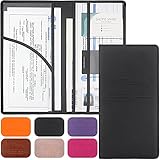
- 💼 CAR ORGANIZER PRACTICALITY: Car registration and insurance holder has multi-function clear compartments which can organize various items very well. The car document holder large pocket for insurance documents and 2 pockets for vehicle registration, 3 small pockets for driver's license, ID cards, AAA cards, business cards, receipt, key contact information cards, etc. It can fully meet your needs
- 👁EASY TO ACCESS AND READ: Car registration and insurance holder keeps your documents organized and keep them tidy and secured, which is stress-free to identify the documents in the folder and quickly reach the document when asked
- 🧲MAGNETIC CLOSURE DESIGN: The car insurance card holder is built with inner magnetic closure, which will keep your vehicle paperwork organizer closed to secure your vehicle documents from humidity and wear and tear. The car insurance holder is your first choice for protecting important car documents and certificates
- ✨PREMIUM MATERIAL: Car registration and insurance holder are made of high-quality PU leather and vinyl PVC. The beautiful cover of 3d embossing provides a comfortable soft touch feeling and professional look. This material is durable, Tolerant, and looks very naturally beautiful
- 💖SECURED & ASSURED: If you have any product problem when you use our car registration and insurance holder. Please feel free to contact us by email, we will do our best to offer a satisfactory solution for you within 24 hours
Illinois
Illinois uses SR-22 monitoring for specified suspensions, revocations, judgments, and repeated insurance violations. It recognizes operator, owner, and owner-operator certificates. The filing period is generally three years; an SR-26 cancellation or expiration can trigger a suspension. Illinois says processing may take up to 30 days and recommends renewing at least 45 days before expiration. Alternatives include a $70,000 cash or securities deposit, surety bond, or approved real-estate bond. An out-of-state resident may request a waiver of Illinois requirements, but the waiver applies only to Illinois and can be reinstated if the person returns within three years. Details are in the Illinois Secretary of State guidance.
Florida and Virginia
Florida uses FR-44 rather than an ordinary SR-22 for the specified DUI-related requirement described above. Virginia uses both forms: SR-22 for some financial-responsibility situations and FR-44 for specified DUI-related and comparable convictions. Use the exact certificate named by the relevant agency.
Oregon
Oregon requires an SR-22 even when the driver does not own a vehicle. An Oregon filing for an out-of-state resident must be issued by an insurer doing business in Oregon and must meet Oregon requirements. Oregon also recognizes owner, operator, and “on behalf of” filing situations, with potentially different scopes. Effective January 1, 2026, Oregon shortened the filing requirement for driving-uninsured convictions to one year; other events can still require different periods, including three years for certain uninsured-accident requirements. Oregon’s SR-22 information page explains filing timing and forms.
Ohio
An Ohio BMV notice says certain drivers who fail to show financial responsibility may lose driving privileges, pay reinstatement fees, and have to maintain SR-22 coverage for one year. The particular suspension type still matters. Ohio also recognizes alternatives such as a surety bond, BMV bond, cash deposit, and self-insurance for qualifying owners. The Ohio notice identifies a $30,000 bond or cash-deposit option in the circumstances it describes. Review the Ohio BMV financial-responsibility notice for the applicable suspension.
Independent reader supportYour contribution helps us test, update, and keep practical guides available for everyone.Moving to another state while an SR-22 is active
Moving does not necessarily end the original state’s requirement. The state that imposed the filing may still require its certificate, a filing from an insurer authorized there, or a state-approved waiver.
Before moving or changing your license, ask the original state:
- Does the SR-22 remain required after I become a resident elsewhere?
- Must the insurer be licensed in the original state?
- Can the state accept proof from my new state?
- Is an out-of-state waiver available?
- What happens if I surrender the old license or register a vehicle elsewhere?
Oregon expressly requires an Oregon SR-22 in some situations even when the driver lives outside Oregon, and the filing must come from an insurer doing business in Oregon and meet Oregon requirements. Illinois has a specific out-of-state waiver process; the waiver applies only to Illinois requirements and may be reinstated if the person returns within three years.
What’s actually slowing this PC down?
Pick the symptom - the matching free tool is one click away.
Do not assume that a new state’s insurance policy automatically satisfies the old state’s filing. Tell the insurer about both states and obtain the original state’s instructions in writing.
When can you remove an SR-22?
Do not remove the filing simply because you believe the required number of months or years has passed. The insurer may not automatically remove it, and the end date can depend on the qualifying event and state calculation.
- Contact the state agency that imposed the requirement.
- Ask whether the SR-22 obligation has ended and whether any other reinstatement condition remains.
- Obtain written confirmation, a completion notice, or an updated driver record when available.
- Keep the policy active until the state confirms that the filing is no longer required.
- Ask the insurer to remove the filing only after state confirmation.
- Save the state’s confirmation, insurer correspondence, policy documents, and payment records.
The end of the SR-22 requirement does not erase the underlying conviction, crash, suspension, or violation from your driving record. That event may continue affecting premiums and eligibility even after the filing is removed.
Alternatives to an SR-22 filing
Some states permit an approved alternative to insurance, such as:
Best Value

- PREMIUM: A fashionably slim, all-in-one design, the CoBak leather car document holder offers solid protection along with space for your essential documents. The case holder is handcrafted from premium-quality PU leather and present of luxurious lining.
- QUCIK ACCESS: This car document holder is a great way to keep all of your important documents together. Clear inner PVC pouches makes it easy to identify the papers or cards you need, with only one glance you will know exactly where the documents are when asked.
- MAGNETIC CLOSURE: Strong built-in magnets ensure the files and documents will be well protected and closed like a breeze.
- 6 COMPARMENTS: Comes with 3 large pockets for insurance documents, vehicle registrations cards and other valueable information. And 3 small pocket for driver's license, ID cards, business cards, key contact information cards.
- COMPACT SIZE: 9.5" x 5.1"(24cm x 13cm), slim profile and lightweight design, perfect size for any glove box or console compartment, ideal choice to protect your important documents. Also a great gift for yourself, lovers, friends and family.
- a cash or securities deposit;
- a surety bond;
- a real-estate bond;
- a state-specific BMV bond; or
- self-insurance for a person or company meeting asset, vehicle, or other qualification thresholds.
Examples include California’s $35,000 cash deposit or surety bond, Illinois’s $70,000 cash or securities deposit and listed bond alternatives, and Ohio’s bond or cash-deposit options. These alternatives are not available everywhere, may require substantial capital or formal approval, and may not eliminate other reinstatement requirements. Ask the state agency whether an alternative satisfies your particular filing and suspension—not merely whether the state recognizes alternatives generally.
Special situations to handle carefully
The insurer says it filed, but the DMV says the filing is missing
Possible causes include:
- the filing was sent to the wrong state or agency;
- the driver’s name, license number, or identifying information was entered incorrectly;
- the insurer is not authorized in the required state;
- the policy’s effective date is later than the date required;
- the limits or certificate type are wrong;
- the filing is still within the agency’s processing time; or
- the state record has not yet updated.
Ask the insurer for a copy or electronic confirmation showing the destination, submission date, effective date, policy number, and driver information. Then contact the state’s financial-responsibility unit and ask exactly which transaction or document is missing. Keep both conversations in writing when possible.
The policy is approaching renewal
Renewal is a common point of failure. Start early, confirm that the filing will continue into the new term, and ask what happens if the carrier declines renewal. Illinois recommends beginning at least 45 days before expiration; other states may use different deadlines. Do not wait until the last day to discover that the replacement insurer cannot file in time.
You hold a CDL
A CDL holder may face separate federal, state, employer, and commercial-driving consequences after a DUI, suspension, or other serious violation. An SR-22 alone does not necessarily restore commercial-driving privileges or resolve a CDL disqualification. Contact the relevant licensing authority and, where applicable, your employer or commercial-license advisor.
What’s actually slowing this PC down?
Pick the symptom - the matching free tool is one click away.
A court, DMV, and insurer give different instructions
Use this process:
- Obtain the written state notice or official driver record.
- Identify the agency that actually controls the financial-responsibility requirement.
- Ask that agency for the controlling form, limits, dates, and conditions in writing.
- Give the insurer the exact state, form name, limits, and dates.
- Keep every notice, receipt, filing confirmation, and reinstatement record.
SR-22 compliance checklist
Before buying or changing a policy, confirm each item:
- Which state requires the filing?
- Which agency is monitoring it?
- Which form is required: SR-22, FR-44, SR-22A, or another certificate?
- What qualifying event caused the requirement?
- Do you own a vehicle, own multiple vehicles, or drive a household vehicle regularly?
- Do you need an owner, operator/non-owner, owner-operator, broad, or “on behalf of” filing?
- What liability limits are required?
- What are the exact start and end dates?
- Has an insurer authorized in the relevant state filed the certificate?
- Has the state accepted and processed it?
- What other reinstatement requirements remain?
- What is the insurer’s cancellation and renewal process?
- What must you do if you move to another state?
- Has the state confirmed that the obligation has ended before you request removal?
Frequently Asked Questions
Can an ordinary insurance card replace an SR-22?
Not necessarily. Texas and Illinois expressly require the SR-22 filing and do not accept an ordinary insurance card or policy as a substitute. Follow the exact instructions from the state agency imposing the requirement.
Does an SR-22 let me drive any car?
No. Coverage depends on the policy type and its terms. A non-owner policy may cover your liability for occasional use of a borrowed vehicle, but it generally does not cover damage to that vehicle and may not cover a household car you regularly use. An owner policy may be required if you own a vehicle.
Do I still need an SR-22 after moving to another state?
Possibly. The state that imposed the requirement may still require its filing, an insurer authorized in that state, or an approved out-of-state waiver. Moving does not automatically clear the original obligation.
Recommended Free Tools
Does an SR-22 make insurance expensive?
The filing fee is often relatively small, with insurer-published examples commonly around $15 to $50. The larger premium increase usually comes from the underlying DUI, uninsured-driving event, crash, suspension, driving history, vehicle, location, and insurer underwriting.
When should I ask my insurer to remove the SR-22?
First obtain confirmation from the state that the legal filing period has ended and that no other reinstatement condition remains. Keep the policy active until then, and only afterward ask the insurer to remove the filing.
The Bottom Line
Bottom line: An SR-22 is a state-monitored filing attached to liability insurance—not a special kind of insurance. The safest path is to identify the imposing state and exact form, disclose your real vehicle situation, use an insurer authorized to file there, confirm state acceptance, maintain uninterrupted coverage for the state-defined period, and verify completion before removing the filing.
Quick Recap
Product prices and availability are accurate as of the date/time indicated and are subject to change. Any price and availability information displayed on Amazon at the time of purchase will apply.
Quick wins for a faster PC:
Scan for outdated or missing drivers - takes under a minuteDriver Scan →Repair Windows errors before they cause bigger problemsFix Now →



