Short answer: Pi Network is a mobile-first Layer 1 blockchain ecosystem launched on March 14, 2019, by Nicolas Kokkalis and Chengdiao Fan. Its native cryptocurrency is PI. The Pi app calls its daily participation process “mining,” but a phone is not performing Bitcoin-style proof-of-work calculations. Instead, the app records participation and calculates rewards while computer nodes handle the heavier blockchain consensus work.
Pi has a live Mainnet, and its Open Network launched on February 20, 2025. That means selected approved services and exchanges can connect to the network. However, a balance displayed in the Pi mining app is not automatically spendable or sellable cryptocurrency. In general, users must complete KYC, create and secure a Pi Wallet, complete the Mainnet Checklist, and wait for eligible PI to migrate to the Mainnet blockchain.
As an Amazon Associate I earn from qualifying purchases.
This guide explains what Pi Network is, how its mobile reward system works, what KYC and migration mean, where PI can be used, and the practical risks to consider before submitting identity documents or spending money. The latest figures and feature status cited here were reviewed against Pi’s official materials as of August 10, 2026.
Outdated Drivers Are Slowing You Down
One free scan finds every outdated or missing driver and matches the right update for your exact hardware.Free scan · exact hardware matchWindows Errors? Fix Them Before They Spread
Repair common Windows errors and clear accumulated junk for a smoother, more stable PC - no reinstall needed.Free scan · no reinstallPi Network in one minute
Pi Network is best understood as several connected things—not as a single app or simply as a cryptocurrency:
#1 Best Overall

- Proven security at scale: Over 9 years and millions of cards issued with no known remote hacks, while military‑grade EAL6+ security keeps your private keys locked inside the chip. Your cryptocurrencies stay strongly protected from online attackers.
- Tap once to manage your entire crypto wallet across 90 blockchains - no USB cables or Bluetooth, no batteries, no setup. Access 14,100+ coins & tokens, DeFi, NFTs, and staking instantly from your phone
- Smart backup: Use your second Tangem Wallet as your Backup keys with end‑to‑end encryption; no more papers, pictures. If one card is lost, the remaining can still restore full access, with an optional seed phrase available for advanced users.
- Engineered to last up to 25 years: Waterproof (IP69K), shockproof and tested for extreme temperatures from −25°C to 50°C. A durable cold wallet with long‑term protection and independently audited security.
- Trusted by 6 million users worldwide - buy, sell, swap, stake, and spend cryptocurrency directly. The secure offline storage wallet designed for how people actually use crypto wallets
| Term | What it means |
|---|---|
| Pi Network | The blockchain ecosystem, platform, community, applications, and node infrastructure. |
| PI | The native cryptocurrency of the Pi blockchain. It is not the mathematical constant π and is not automatically the same as an unrelated token using the same ticker. |
| Pi mining app | The mobile interface that starts 24-hour participation sessions and tracks reward eligibility. It does not perform conventional proof-of-work mining on the phone. |
| Pi Browser | The access layer for Pi applications, wallet functions, and other ecosystem services. |
| Pi Wallet | A noncustodial wallet intended to hold on-chain Mainnet PI. |
| Pioneer | Pi’s term for a participating user. |
| KYC | Know Your Customer identity verification. Pi uses it to help enforce one account per person and determine eligibility for migration. |
| Mainnet migration | The process of moving eligible PI from Pi’s app-based balance system into a Mainnet wallet. |
| Open Network | The period that permits external connectivity, including approved third-party services and exchange integrations. |
Pi describes its project as a way to make cryptocurrency participation more accessible through mobile devices, social trust relationships, identity verification, Pi applications, and desktop nodes. Those are the project’s stated design goals; they do not by themselves prove that PI will become valuable, broadly used, or as decentralized as older major blockchains.
Pi’s official About page identifies Nicolas Kokkalis and Chengdiao Fan as the founders and gives the official launch date as March 14, 2019. Pi says Kokkalis has a Stanford PhD background in computer science and distributed systems, while Fan has a Stanford PhD background in anthropological sciences and social computing. Founder credentials can help a reader understand who created the project, but they are not evidence that the network will succeed or that PI is a suitable investment.
Why was Pi Network created?
Pi’s stated objective is to lower the barriers that have traditionally made cryptocurrency participation difficult. Bitcoin-style mining requires specialized hardware, electricity, and technical knowledge. Proof-of-stake networks require users to acquire and stake assets or operate infrastructure. Pi instead began with a mobile app designed to let ordinary users participate with a phone.
The Tool Desk
Outbyte PC Repair FREERepair Windows errors before they cause bigger problemsFix Now →Outbyte Driver Updater FREEScan for outdated or missing drivers - takes under a minuteDriver Scan →The project’s stated aims include:
- Making participation accessible without specialized mining hardware.
- Reducing the energy and equipment requirements associated with proof-of-work mining.
- Using a social trust graph to help bootstrap a consensus network.
- Building a user base before opening external blockchain connectivity.
- Encouraging payments, applications, and other forms of utility rather than focusing only on speculative trading.
There is an important distinction between an accessible participation model and a cost-free financial opportunity. There is no required fiat purchase to start using the mining app, but participation can cost time and attention. KYC requires sensitive personal information, referral incentives can create social pressure, and the value and liquidity of PI are not guaranteed.
How does Pi’s mobile mining work?
Pi uses the word mining, but the activity is not conventional proof-of-work mining. Your phone does not continuously calculate hashes to compete with miners, and Pi says the app does not need to remain open after a session starts. The mobile app records participation and applies a reward formula based on several types of activity.
The basic process is:
- Install the official Pi mining app.
- Press the lightning button to begin a mining or participation session.
- Let the 24-hour session run. Pi says the app can be closed after the session starts.
- Return after 24 hours and start another session if you want to continue.
- After becoming eligible, add trusted people to a Security Circle.
- Optionally use Pi applications, select available lockups, or operate a desktop node.
Pi’s support materials describe these actions as inputs to the reward system. The app may show a balance increasing over time, but that display should not be confused with an on-chain wallet balance. It can contain amounts subject to KYC, migration, referral, Security Circle, lockup, or other eligibility conditions.
Security Circles
A Security Circle is a group of users whom a Pioneer personally trusts. Pi says Security Circle rewards begin after three days of mining. Up to five valid, active members count toward the bonus, with each adding 20% of the base rate. The stated maximum Security Circle boost is therefore 100% of the base rate.
Security Circles are also intended to provide trust-graph information for Pi’s node-based consensus system. You should not add strangers simply to increase a displayed reward. Only include people you actually know and trust, and understand that a reward shown in the app remains subject to Pi’s eligibility and migration rules. Pi’s explanation of the feature is available in its Security Circle documentation.
Referrals and Referral Teams
When someone joins using an inviter’s invitation code, that person becomes part of the inviter’s Referral Team. Pi states that the referral bonus is 25% of the base mining rate for each concurrently active referred user. The program is one level deep: people invited by your invitees—sometimes called referral grandchildren—do not create an additional bonus for you.
Pi rejects the description of its referral program as multi-level marketing because there is no required payment and the bonus is limited to one referral level. That is Pi’s stated explanation. It is also understandable why some observers compare the experience to MLM-style promotion: users are encouraged to recruit people they know, and the displayed reward can depend on the activity and verification status of others.
A referral bonus is not automatically guaranteed to migrate. Pi says later migration depends on relevant users completing KYC and satisfying other applicable conditions. Its explanation of second migrations is available in this official migration update.
What the phone does—and does not do
The most accurate description is:
The phone app records and rewards participation; Pi’s computer nodes perform the heavier blockchain consensus and transaction-processing work.
Rank #2

- Proven security at scale: Over 9 years and millions of cards issued with no known remote hacks, while military‑grade EAL6+ security keeps your private keys locked inside the chip. Your cryptocurrencies stay strongly protected from online attackers.
- Tap once to manage your entire crypto wallet across 90 blockchains - no USB cables or Bluetooth, no batteries, no setup. Access 14,100+ coins & tokens, DeFi, NFTs, and staking instantly from your phone
- Smart backup: Use your second Tangem Wallet as your Backup keys with end‑to‑end encryption; no more papers, pictures. If one card is lost, the remaining can still restore full access, with an optional seed phrase available for advanced users.
- Engineered to last up to 25 years: Waterproof (IP69K), shockproof and tested for extreme temperatures from −25°C to 50°C. A durable cold wallet with long‑term protection and independently audited security.
- Trusted by 6 million users worldwide (4.9 App Store, 4.8 Google Play) - buy, sell, swap, stake, and spend cryptocurrency directly. The secure offline storage wallet designed for how people actually use crypto wallets
That distinction matters. Saying that the phone “mines the blockchain” without qualification gives the wrong impression that Pi uses Bitcoin’s proof-of-work model or that every phone is a blockchain validator. Pi says the app can function with little battery or data use because it is not carrying out continuous hash calculations.
How does Pi Network reach consensus?
Pi says its consensus mechanism is adapted from the Stellar Consensus Protocol, or SCP. SCP uses a model called Federated Byzantine Agreement, in which nodes establish trusted relationships and reach agreement through overlapping quorum slices.
In simplified terms:
- Users contribute information about people they trust through Security Circles.
- That information helps form a broader trust graph.
- Desktop nodes use the graph and communicate with other nodes.
- Nodes exchange messages and agree on valid transactions and blockchain state.
Pi is therefore not presented as proof of work or proof of stake. Its design is based on an SCP/FBA-style consensus mechanism and a social trust graph.
Do these 3 things before closing this tab:
1Fix the driver behind crashes, sound loss and screen glitches2Clear out junk files and repair common Windows errors3Scan for outdated or missing drivers - takes under a minute| Model | What primarily secures the network | Pi’s relationship to it |
|---|---|---|
| Proof of work | Computational work, electricity, and competing hardware | Pi’s phone-based participation is not proof-of-work mining. |
| Proof of stake | Capital committed or staked by validators | Pi is not presented as a conventional proof-of-stake network. |
| Pi’s stated model | Federated trust relationships and desktop nodes using an SCP adaptation | Mobile users contribute participation and trust-graph information; computer nodes process consensus. |
The claimed benefit is lower energy use and a lower hardware barrier. The trade-off is a different security model. Users must place trust in Pi’s software, identity-verification process, node-selection and governance arrangements, and evolving protocol. That is not equivalent to Bitcoin’s proof-of-work model or Ethereum’s proof-of-stake model.
Pi’s history: from app prototype to Open Network
| Date | Event |
|---|---|
| December 2018 | Pi’s mobile app was publicly launched as an alpha prototype. |
| March 14, 2019 | Official Pi Network launch and original whitepaper. |
| March 14, 2020 | Pi says its Testnet phase began. |
| December 28, 2021 | Mainnet launched in Enclosed Network form. |
| February 20, 2025 | Open Network launched, allowing external connectivity. |
| March 2026 | Pi announced Protocol 20 rollout and additional migration activity. |
| April 8, 2026 | Pi released a Testnet RPC server and described Mainnet as moving to Protocol 21. |
| April 17, 2026 | Pi announced subscription smart-contract capability on Testnet. |
| July 15, 2026 | Pi announced Protocol 25 as scheduled for July 22, 2026. |
| August 5, 2026 | The latest official blog index reviewed still displayed the Protocol 25 item as upcoming. |
The distinction between Enclosed and Open Network explains why older articles can be misleading. During the Enclosed Network period, external exchange connectivity was restricted. Open Network changed that policy, although access still depends on approved services, local law, platform decisions, and the user’s account and region.
KYC: why does Pi require identity verification?
KYC means Know Your Customer. Pi says its KYC system is intended to:
- Enforce one account per person.
- Exclude bots, duplicate accounts, and fraudulent activity.
- Prevent unverified rewards from migrating to Mainnet.
- Make peer-to-peer activity more accountable.
- Support compliance and integrations with external businesses and services.
KYC is a prerequisite for migrating the relevant mobile balance to Mainnet. Some countries or regions may be restricted where transactions are not permitted under applicable law or regulation. Pi’s roadmap and regional-restrictions FAQ explain the project’s stated requirements.
KYC is not a trivial technical checkbox. It requires submitting identity information and creates a privacy and data-governance trade-off. Completing KYC may make you eligible to migrate PI, but it does not guarantee a valuable balance, successful migration, exchange access, or future profits. Use only the official in-app KYC flow, and consider whether the possible utility or value of your PI justifies disclosing sensitive personal data.
What is Mainnet migration?
Mainnet migration is the process that moves eligible PI from the app’s off-chain or pre-Mainnet balance system into a Pi Wallet on the live blockchain. This is the point at which a displayed app balance can become on-chain PI—but only to the extent that the balance is eligible, verified, and actually migrated.
The balances you should not confuse
| Label | Meaning |
|---|---|
| Mobile balance | The amount displayed in the Pi mining app. It is not automatically an on-chain balance. |
| Transferable balance | Pi’s estimate of the portion that may be eligible to migrate. Pi says this is a simplified, pessimistic estimate and can differ from the final migration calculation. |
| Unverified balance | Rewards that may depend on other users completing KYC or meeting other requirements, including some Security Circle or referral-related amounts. |
| Migrated balance | PI that has actually been transferred to the designated Mainnet wallet. |
| Test-Pi | Tokens used for Testnet experiments. They do not represent the user’s real Mainnet balance and should not be treated as cash. |
Pi describes a first migration as including verified base rewards and certain eligible additional rewards. Second migrations are intended to move further eligible balances, including qualifying referral bonuses. Periodic migrations are part of Pi’s rollout, but timing can change as the project processes KYC, eligibility, and migration phases.
The practical Mainnet Checklist
Menu names and paths can change as Pi updates its apps. The general sequence is:
Free tools Windows power users keep installed
One-click scans. No signup required.
- Complete KYC when eligible. Use the official in-app process, not a link sent by a stranger or an unofficial helper.
- Create or confirm a Pi Wallet in Pi Browser.
- Record the wallet passphrase securely. Store it offline and do not place it in a chat, form, screenshot cloud folder, or untrusted password manager.
- Complete the Mainnet Checklist. Follow each required step and confirm the wallet destination carefully.
- Complete wallet two-factor authentication when prompted. Pi’s current materials state that wallet 2FA through Step 3 of the Mainnet Checklist is required before some first or second migrations.
- Add and verify a trusted email if required. An inaccessible or incorrect trusted email can prevent 2FA and account recovery.
- Wait for migration and any stated pending period. Pi describes a 14-day pending period for certain migration transfers before they become irreversible.
- Verify the result. Check the migrated amount in the wallet or an appropriate Pi block explorer rather than relying only on the mining-app display.
Completing the checklist does not mean every PI shown in the app will migrate. Eligibility can depend on your KYC status, the status of connected users, lockups, account history, and Pi’s migration calculations.
Rank #3
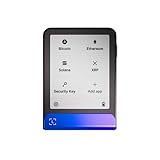
- Simply & securely take control of your digital assets and identity with the all-in-one Ledger Wallet crypto app and Ledger Flex touchscreen signer.
- Digital asset control at your fingertips: manage 15,000+ crypto across multiple chains. Earn rewards. Top up & share with ease. Explore DeFi with confidence. Collect and showcase NFTs. Make informed choices with clarity.
- Connect effortlessly with Ledger Wallet: pair your secure Ledger signer with the all in one Ledger Wallet crypto app to manage thousands of digital assets across multiple devices and accounts with Ledger Sync from a single, secure dashboard.
- Cutting-edge design: monitor the market, compare rates, and Clear Sign transactions on the secure, high resolution, 2.8'' E Ink touchscreen.
- This is what security feels like: Ledger touchscreen signers all come with a private, offline, PIN-protected backup, Ledger Recovery Key, to never lose access to your assets.
What is the Pi Wallet?
Pi describes its wallet as noncustodial. The private key is represented by a passphrase generated locally, and Pi says that passphrase is not sent to its servers. The practical consequence is important: you—not Pi—are responsible for custody.
Never share your Pi Wallet passphrase. No legitimate Pi support agent, KYC validator, moderator, exchange employee, validator, or migration helper needs it. Anyone who obtains it may be able to move the PI in the wallet.
Pi says a lost passphrase cannot be recovered from its servers. If you lose it after PI has migrated, you may permanently lose access to that wallet. This is different from forgetting your Pi account password: trusted-email recovery may help with the account, but it does not recover a lost noncustodial wallet passphrase.
Recommended Free Tools
Other practical failure points include:
- Sending PI to the wrong address can be irreversible.
- An inaccessible trusted email can interfere with required 2FA or account recovery.
- Signing out before a 24-hour session ends may affect the displayed mining balance, according to Pi’s support documentation.
- Phishing sites can imitate Pi’s wallet, KYC, or migration screens.
Pi’s wallet-safety guidance and official safety center should be the starting point for security questions.
What can you do with PI?
PI’s possible uses fall into several categories, but they should not all be treated as equally available or mature.
| Status | Examples | What to understand |
|---|---|---|
| Mainnet use | Peer-to-peer transfers, payments inside selected Pi apps, and goods or services from participating businesses. | Requires on-chain Mainnet PI and a willing counterparty. Availability varies by app, business, and region. |
| Approved external connectivity | Exchange, on-ramp, and payment-service connections listed through Pi’s KYB process. | Listing does not guarantee that deposits, withdrawals, trading, or cash-out are available to every user. |
| Testnet | Pi Launchpad experiments, smart-contract tests, and developer infrastructure such as the Testnet RPC server. | Testnet activity is for testing. Test-Pi is not real economic value. |
| Emerging or announced functionality | Smart-contract-related capabilities, developer payments, and broader application functionality. | Check whether a feature is live on Mainnet, live only on Testnet, announced, or planned. |
Pi’s March 2026 materials said Pi App Studio supported selected Mainnet apps and Mainnet Pi payments. Pi Launchpad was being tested on Testnet. A subscription smart-contract capability was launched on Testnet on April 17, 2026. Protocol 20 provided a foundation for smart-contract capabilities, while an April 8 update referenced Testnet RPC infrastructure and a move toward Protocol 21 on Mainnet. These are different stages of development, not proof that every smart-contract feature is live and usable with real PI.
Pi announced a Protocol 25 upgrade scheduled for July 22, 2026. However, the latest official blog page reviewed on August 10 still displayed the relevant item as upcoming. Unless Pi has published a newer completion notice, it is safer to describe Protocol 25 as announced or scheduled rather than completed. See Pi’s Pi Day 2026 update, RPC update, smart-contract announcement, and Protocol 25 announcement.
Can PI be bought or sold?
Selected users can now access external PI services, but the answer is not universal. Open Network permits external connectivity, and Pi’s current KYB-verified business list names services including Kraken, OKX, Bitget, Gate.io, Pionex, Onramp.money, Onramper, Zypto, LBank, TransFi, MEXC, and Banxa.
OKX separately announced PI/USDT spot trading for May 5, 2026. That is an exchange-specific announcement, not a guarantee that every Pi user can trade. OKX warns that its products may not be available in every state or jurisdiction.
Before attempting to buy, sell, deposit, withdraw, or cash out, check all of the following:
- Whether the service appears on Pi’s current KYB list.
- Whether the service supports your country, state, or region.
- Whether it supports real Mainnet PI deposits and withdrawals rather than an unrelated asset or an internal balance.
- Whether your account has completed the service’s own identity and compliance checks.
- Whether deposits and withdrawals are currently enabled.
- Whether the wallet address and network are correct.
A market price does not prove that you can access that market or transfer your own balance. A user with only mobile PI, incomplete KYC, or no regional service access may not be able to sell anything. Likewise, an exchange or website using the PI ticker is not automatically connected to the Pi blockchain. Confirm the asset, network, and official service status before sending funds.
What’s actually slowing this PC down?
Pick the symptom - the matching free tool is one click away.
Pi Network tokenomics: how much PI can exist?
Pi’s latest official tokenomics statement gives PI a maximum supply of 100 billion coins:
Rank #4

- Superior Security - Elevate the cold storage safety of your digital assets with Arculus's innovative 3-factor authentication system: biometric lock, 6-digit PIN, and the Arculus metal card with private key encryption for multiple layers of security.
- Effortless Transactions - Simplify your crypto management with the Arculus Cold Storage Wallet and Arculus App, to seamlessly send, swap, or receive assets with a simple tap to your mobile device.
- CC EAL6+ Secure Element Technology – Safeguard your keys on the Arculus Card through robust, certified encryption, protecting against unauthorized access.
- Supports 95% of the Cryptocurrency Market Cap, including Bitcoin (BTC), Ethereum (ETH), Tether (USDT), XRP (XRP), and Cardano (ADA), Litecoin (LTC), Polkadot (DOT), and other popular coins.
- Hassle-Free - The Arculus Cold Storage Wallet communicates with your phone using secure tap-to-transact NFC technology. No cords, no connections and no internet required for next-gen levels of security.
| Allocation | Amount | Share of maximum supply |
|---|---|---|
| Community mining rewards | 65 billion PI | 65% |
| Foundation reserves | 10 billion PI | 10% |
| Liquidity | 5 billion PI | 5% |
| Core Team | 20 billion PI | 20% |
| Total maximum supply | 100 billion PI | 100% |
The newer breakdown resolves a potential source of confusion in older material. Earlier whitepaper language described an 80% community and 20% Core Team split. The newer breakdown divides the community’s 80% into 65% for mining rewards, 10% for foundation reserves, and 5% for liquidity.
Maximum supply is not the same as circulating supply. It is also not the same as the amount already migrated, the amount currently tradable, or the amount shown in every user’s mobile app. Migration schedules, lockups, eligibility, and external service access affect how much PI is actually available to a particular user or market. Pi’s migration and tokenomics update is the relevant source for the allocation figures.
How large is Pi Network?
Pi’s size depends on which metric is being measured. These figures must not be merged into a single “users” number:
Quick wins for a faster PC:
Clear out junk files and repair common Windows errorsFree Scan →Scan for outdated or missing drivers - takes under a minuteDriver Scan →Repair Windows errors before they cause bigger problemsFix Now →| Metric | Reported figure | Date or context |
|---|---|---|
| Engaged members | More than 60 million | Pi’s current About page; this is not the same as migrated users or circulating PI. |
| KYC-verified Pioneers on Mainnet | More than 17.7 million | Pi’s March 2026 material. |
| Migrated Pioneers | 16,568,774 | Snapshot cited by Pi on March 5, 2026. |
| Migrated Pioneers | 15.8 million | Pi’s 2025 year-end report. |
| Fully KYC’d Pioneers | More than 17.5 million | Pi’s 2025 year-end report. |
| Second migrations | More than 119,000 completed | Pi report dated March 26, 2026. |
| Testnet nodes | More than 350,000 nodes representing more than one million CPUs | Pi’s 2025 year-end report. |
These numbers are useful for understanding the scale Pi claims, but they are not interchangeable. “Engaged members” may include people who are not KYC-verified or migrated. Testnet nodes are not the same as independent Mainnet validators. None of these figures alone establishes active daily usage, circulating supply, liquidity, or economic demand.
For the underlying reports, see Pi’s About page, March 2026 ecosystem update, second-migration update, and 2025 year-end report.
Independent reader supportYour contribution helps us test, update, and keep practical guides available for everyone.Is Pi Network decentralized?
Pi is designed around distributed nodes and SCP/FBA-style consensus, but “designed to be decentralized” is not the same as proving that the current network has the same independent validator distribution as Bitcoin or Ethereum.
Pi’s own documentation says that during the Enclosed Network period, Mainnet nodes were operated exclusively by the Core Team and protected by a firewall. At Open Network launch, Pi said the firewall was removed, allowing community nodes to connect technically, with invitations and selection initially guided by historical contributions and reliability.
Recommended Free Tools
That history means decentralization should be treated as an evidence question. A large Testnet node count demonstrates interest and available computing capacity, but it does not by itself prove that Mainnet consensus is controlled by a broad, independent set of operators. Important questions include who selects or admits Mainnet nodes, how much influence the Core Team retains, how governance decisions are made, and whether the network can continue operating with limited dependence on its founders.
Pi’s node overview, whitepaper, and Open Network announcement describe the intended architecture and transition. They do not, by themselves, establish that Pi has achieved the same permissionless decentralization profile as Bitcoin or Ethereum.
Is Pi Network legitimate, or is it a scam?
The most defensible answer depends on what legitimate means.
Pi Network is an identifiable project with official applications, published documentation, a live Mainnet, a migration system, a wallet, a stated consensus design, a developing application ecosystem, and selected third-party integrations. Those facts support calling it a real blockchain project rather than merely an imaginary balance in an app.
Quick wins for a faster PC:
Repair Windows errors before they cause bigger problemsFix Now →Scan for outdated or missing drivers - takes under a minuteDriver Scan →They do not prove that:
- PI will retain or increase in value.
- Pi will achieve its stated decentralization goals.
- Every user will successfully migrate all displayed rewards.
- KYC data will carry no privacy or governance risk.
- There will be durable demand for PI.
- Every website, exchange, merchant, or person using the Pi name is genuine.
Independent skeptical coverage has raised concerns about centralization, KYC, referral-driven growth, liquidity, and utility. Those are reasonable due-diligence issues, although some secondary articles can become stale. For example, an older or still-current article may say Pi lacks major exchange listings even though Pi’s current KYB list includes several services and OKX announced PI/USDT spot trading in 2026. Compare secondary analysis with current primary sources such as the Coin Bureau discussion, Pi’s KYB list, and the OKX announcement.
Best Value

- Unparalleled Security: Protect your assets NDA-free EAL 6+ Secure Element, offering robust defense and complete transparency
- Simple & Secure Interface: Manage your digital assets easily with a clear OLED screen for secure on-device confirmations
- Supports 1000s of Coins & Tokens: Securely handle thousands of assets, including Bitcoin, Ethereum, and more, all in one wallet
- Effortless Asset Management: Monitor and transact seamlessly with Trezor Suite, our intuitive desktop and mobile app
- Enhanced Backup Solution: Rest assured with Multi-share Backup, eliminating single points of failure for secure cold wallet recovery
In personal-finance terms, “real project” is not a synonym for “safe investment.” The relevant risks are privacy, liquidity, custody, governance, centralization, utility, migration, and phishing—not just the binary label of scam or not scam.
Common scams and failure modes
Pi users should be especially careful once a balance has migrated and appears valuable. The most consequential mistake may be giving away the wallet passphrase, not failing to press the daily mining button.
- Fake migration fees: Do not pay a person or website to unlock, migrate, validate, or release PI unless you have independently verified the service through official sources. Treat urgent payment demands as a scam warning.
- Passphrase theft: Never enter your wallet passphrase into a support chat, “validator” form, giveaway page, or unofficial migration tool.
- Unofficial KYC links: Begin KYC from the official Pi app and follow the official in-app route.
- Impersonation: A person claiming to be a Pi moderator, validator, exchange worker, or Core Team representative should not need your wallet passphrase.
- Fake or unrelated PI tokens: A token on Ethereum, BNB Chain, or another network that uses the Pi name or ticker is not automatically native Mainnet PI.
- Testnet confusion: Test-Pi, Testnet DEX activity, Launchpad experiments, and Testnet smart contracts are for testing and should not be treated as cash or live economic utility.
- Exchange confusion: Check Pi’s current KYB list and the exchange’s own deposit and withdrawal instructions. A listing elsewhere may be unauthorized, unavailable in your region, or based on an unrelated asset.
- Irreversible transfers: Confirm addresses and networks before sending. Blockchain transfers may not be reversible.
Pi’s official safety center warns about phishing and impersonation. Use official domains and app stores, keep the wallet passphrase offline, and do not assume that a professional-looking Pi logo makes a service official.
Should you participate in Pi Network?
There is no universal yes-or-no answer because the decision is less about buying an asset and more about trading time, attention, personal data, and custody responsibility for uncertain future utility.
Possible reasons to participate
- You can begin app participation without purchasing PI with fiat.
- The hardware barrier is low compared with proof-of-work mining.
- You want to explore a live blockchain and its application ecosystem.
- You may value current or future utility for migrated PI.
- You want to experiment with a desktop node or develop Pi applications.
Costs and risks
- KYC requires disclosure of identity information.
- The daily check-in and ecosystem activity consume time and attention.
- Referral incentives can create pressure to recruit friends and family.
- The value of PI is volatile and not guaranteed.
- Not all app balances migrate.
- Exchange and cash-out access depends on geography and platform support.
- A lost wallet passphrase may be unrecoverable.
- Governance, node distribution, privacy practices, and long-term utility require continuing due diligence.
Pi itself says the system is not “free money” and does not guarantee project success. If you are considering KYC, frame the decision correctly: the potential benefit is eligibility to migrate and use PI on Mainnet; the cost is sharing sensitive identity information. KYC does not guarantee that the resulting balance will be valuable or liquid.
A cautious consumer path
- Download only official applications. Start with Pi’s official safety guidance and avoid unofficial APKs or browser links.
- Start a 24-hour session. Press the lightning button; the app does not need to stay open after the session begins.
- Use Security Circles carefully. Add only people you personally know and trust, not strangers promising a higher reward.
- Complete KYC only through the official route. Review the privacy implications before submitting documents.
- Create the wallet in Pi Browser. Write the passphrase offline and verify that you can access it before migration.
- Complete the Mainnet Checklist and required 2FA. Pay attention to the wallet destination and trusted-email requirements.
- Wait for migration. Do not treat the mobile balance or Transferable Balance as proof that the full amount is on-chain.
- Verify migrated PI in the wallet. Check the on-chain balance or block explorer.
- Check service status before transacting. Compare a business or exchange with Pi’s current KYB list and confirm regional availability.
- Start with a small test transfer if you decide to use PI. Confirm the address, network, destination, and withdrawal rules before moving a larger amount.
Bottom line: what is Pi Network?
Pi Network is a real mobile-first blockchain project with a native cryptocurrency called PI, a mobile participation app, a Pi Browser ecosystem, a noncustodial wallet, KYC-based migration, and a live Mainnet that has allowed external connectivity since February 20, 2025.
Its distinctive feature is not phone-based proof-of-work mining. The app records daily participation and social or ecosystem contributions, while desktop nodes handle the heavier consensus work through an adaptation of Stellar’s SCP/FBA model. The key practical question for an existing user is not how large the app balance looks; it is how much eligible PI has completed KYC, migrated to Mainnet, and become accessible through a secure wallet and supported service.
What’s actually slowing this PC down?
Pick the symptom - the matching free tool is one click away.
Whether Pi becomes broadly useful depends on real transaction demand, developer adoption, liquidity, privacy safeguards, migration completion, governance, and the network’s ability to decentralize beyond its founding team. Treat PI as a speculative and operationally complex crypto asset—not guaranteed money—and protect your identity information and wallet passphrase accordingly.
Frequently Asked Questions
Is Pi Network real or fake?
Pi Network is an identifiable blockchain project with official apps, published documentation, a live Mainnet, wallet and migration infrastructure, and selected third-party integrations. That does not mean PI is guaranteed to be valuable, liquid, decentralized, profitable, or safe. Evaluate the project and each Pi-branded service separately.
Is Pi mining on a phone real mining?
Pi uses the word mining for its mobile participation and reward system, but the phone is not performing Bitcoin-style proof-of-work hashing. The app starts a 24-hour session and tracks activity; Pi says computer nodes perform the heavier consensus and transaction-processing work.
Can I sell the PI shown in my Pi app?
Not automatically. The app balance may not have completed KYC or migrated to Mainnet. Selling or transferring PI generally requires eligible migrated Mainnet PI and access to a supported service. Pi’s current KYB list includes selected exchanges and on-ramps, but regional, account, deposit, withdrawal, and compliance restrictions apply.
The Tool Desk
Outbyte PC Repair FREERepair Windows errors before they cause bigger problemsFix Now →Outbyte Driver Updater FREEScan for outdated or missing drivers - takes under a minuteDriver Scan →What happens if I lose my Pi Wallet passphrase?
Pi describes the wallet as noncustodial and says the passphrase is not recoverable from its servers. Losing it after migration can permanently prevent access to the wallet’s PI. Account-password recovery through a trusted email is a separate matter and does not recover a lost wallet passphrase.
Is Test-Pi worth real money?
No. Test-Pi is for testing the Pi Testnet and does not represent the user’s real Mainnet balance or guaranteed economic value. Testnet apps, DEX activity, Launchpad experiments, and smart-contract testing should be labeled and treated as test activity.
The Bottom Line
Bottom line: Pi Network is a live mobile-first blockchain ecosystem, not conventional phone-based proof-of-work mining. PI becomes relevant for on-chain use only after the eligible balance passes KYC and migrates to Mainnet. Participation may be worth exploring for users who accept the privacy, time, custody, liquidity, and governance risks, but the project’s existence does not guarantee PI’s value or future success.
Quick Recap
Product prices and availability are accurate as of the date/time indicated and are subject to change. Any price and availability information displayed on Amazon at the time of purchase will apply.




