What’s actually slowing this PC down?
Pick the symptom - the matching free tool is one click away.
Personal Finance Management (PFM) refers to the structured process of organizing, monitoring, and directing an individual or household’s financial resources to meet both short-term needs and long-term objectives. At its core, PFM is about understanding how money is earned, spent, saved, borrowed, and allocated over time. It provides a framework for making informed financial decisions rather than reacting to expenses or income changes as they occur.
PFM matters because personal financial outcomes are largely determined by everyday choices, not by rare or complex transactions. Income levels, cost of living, interest rates, and economic conditions all influence financial health, but how those factors are managed ultimately shapes financial stability. PFM creates order and predictability in an area of life that is often fragmented and reactive.
What “management” means in a personal finance context
In personal finance, management does not mean maximizing wealth at all costs or pursuing aggressive strategies. It means deliberately planning how money flows through different uses and ensuring that those uses align with priorities and constraints. This includes balancing present consumption with future needs and recognizing trade-offs between competing financial goals.
Management also implies ongoing oversight. Financial conditions change as income fluctuates, expenses shift, and life circumstances evolve. PFM is therefore not a one-time setup, but a continuous process of tracking, reviewing, and adjusting financial decisions.
Free tools Windows power users keep installed
One-click scans. No signup required.
#1 Best Overall

- Effective Budget Plan Book – Take control of your finances with the SUNEE budget account book. This all-in-one budget planner allows you to plan and track your income, expenses, savings, and financial goals. Its intuitive layout and easy-to-use sections help you stay organized and make smart decisions to reach financial success. Our financial planner also included a comprehensive guidebook with valuable tips and instructions to help you get the most out of your budgeting planner.
- Full-Page Calendars – Each month’s full-page calendar provides plenty of space to track paydays, bills due dates, appointments, and important events. No more cramped boxes or tight writing areas, you can easily plan and organize your schedule at a glance.
- Colorful Pages Layout and Tabs – This vibrant budget planner features a user-friendly design for easy navigation and organization. Each month includes dedicated budget pages to set financial goals, track income, and plan expenses. Additional sections like debt trackers, savings goals, and bill payment trackers make managing your finances a breeze. The colorful backgrounds on each page offer clear, instant visibility.
- Bonus 4 Stickers and Convenient Design – This monthly budget planner is built for convenience and durability. Water-resistant cover protects against spills, while the elastic band keeps everything secure, and the dual-sided pocket offers extra storage. Plus, we’ve included 4 adorable sticker sheets to personalize your planner and make budgeting more enjoyable. Experience a budget planner that combines practicality with lasting quality.
- UNDATED DESIGN & 1 YEAR USE - Undated finance books start with 1 page-financial goals, 1 page-Mind Map, 1 page-Financial Strategy, 1 page-Tactics, 2 pages-Important Dates, 4 pages-Bill Tracker, 4 pages-Saving Tracker, 8 pages-Debt Tracker, followed by 12 Months(10 pages per month, 1 unique color for each month). 2 pages-Christmas Budgeting, 2 pages-Yearly Summary, 2 pages-Check Register and 12 pages-Notes(dotted). It is UNDATED, so you could start at any time, suitable for 1 year use.
The core components of Personal Finance Management
Budgeting is the foundation of PFM. A budget is a structured plan that estimates income and allocates it to expenses, savings, and debt repayment. It clarifies where money is intended to go before it is spent, rather than analyzing spending after the fact.
Cash flow tracking builds on budgeting by recording actual inflows and outflows of money. Cash flow refers to the timing and movement of money in and out of accounts. Tracking it helps identify spending patterns, irregular expenses, and gaps between planned and actual behavior.
Saving is the portion of income intentionally set aside for future use. In PFM, saving supports both short-term needs, such as emergency funds, and longer-term objectives, such as major purchases or retirement. It also acts as a buffer against financial shocks.
Debt management involves understanding and controlling borrowed money, including credit cards, personal loans, student loans, and mortgages. This component focuses on repayment structure, interest costs, and how debt obligations affect cash flow and financial flexibility.
Quick wins for a faster PC:
Scan for outdated or missing drivers - takes under a minuteDriver Scan →Clear out junk files and repair common Windows errorsFree Scan →Fix the driver behind crashes, sound loss and screen glitchesFind Drivers →Goal setting ties all components together. Financial goals translate abstract priorities into measurable targets with time horizons, such as building a cash reserve or paying off a loan. Clear goals provide direction for budgeting, saving, and debt decisions.
How PFM is applied in practice
PFM is implemented through a combination of frameworks and tools. Frameworks include rules or systems for allocating income, such as assigning fixed percentages to spending, saving, and debt. Tools include spreadsheets, budgeting apps, bank dashboards, and financial planning software that aggregate accounts and track transactions.
These tools do not manage finances on their own. They support decision-making by organizing data, highlighting trends, and showing the consequences of financial choices. Effective use depends on accurate inputs and regular review.
Why PFM is essential for financial stability and decision-making
Without PFM, financial decisions are often made in isolation, increasing the risk of overspending, excessive debt, or insufficient savings. PFM provides context, showing how one decision affects the broader financial picture. This is particularly important when facing trade-offs, such as choosing between current consumption and future security.
Over time, consistent PFM supports financial resilience. It improves the ability to handle unexpected expenses, adapt to income changes, and evaluate long-term commitments. Rather than guaranteeing specific outcomes, PFM increases the likelihood that financial decisions are deliberate, informed, and aligned with personal circumstances.
The Core Building Blocks of PFM: Budgeting, Cash Flow, Saving, Debt, and Goals
Personal finance management is structured around five interdependent building blocks. Each component addresses a specific aspect of how money is earned, allocated, preserved, or owed. Together, they create a system for understanding financial position and making decisions with awareness of trade-offs and constraints.
Budgeting: Planned Allocation of Income
Budgeting is the process of planning how income will be allocated across spending, saving, and debt repayment over a defined period, typically monthly. A budget translates financial priorities into numerical limits, making trade-offs explicit rather than implicit. It does not eliminate uncertainty but provides a reference point for evaluating actual behavior.
In PFM, budgets are used as dynamic tools rather than fixed rules. They are adjusted as income, expenses, or goals change. The effectiveness of a budget depends on its alignment with real cash flows and its integration with other financial components.
Windows Errors? Fix Them Before They Spread
Repair common Windows errors and clear accumulated junk for a smoother, more stable PC - no reinstall needed.Free scan · no reinstallOutdated Drivers Are Slowing You Down
One free scan finds every outdated or missing driver and matches the right update for your exact hardware.Free scan · exact hardware matchCash Flow: Timing and Movement of Money
Cash flow refers to the timing and movement of money into and out of accounts. Inflows include wages, benefits, or investment income, while outflows include expenses, transfers, and debt payments. Positive cash flow means inflows exceed outflows over a given period, while negative cash flow indicates the opposite.
Tracking cash flow highlights patterns that a budget alone may not reveal, such as irregular expenses or income volatility. It also shows whether financial obligations can be met when they are due, which is critical for maintaining liquidity, defined as the ability to access cash when needed.
Saving: Building Financial Capacity Over Time
Saving is the portion of income not spent in the present and set aside for future use. Savings serve multiple purposes, including short-term needs, planned purchases, and long-term objectives. In PFM, saving is treated as a deliberate allocation rather than leftover income.
Different savings categories often have different time horizons and risk considerations. Short-term savings prioritize stability and accessibility, while long-term savings may tolerate variability in value. The role of saving within PFM is to increase financial flexibility and reduce reliance on debt.
The Tool Desk
Outbyte Driver Updater FREEScan for outdated or missing drivers - takes under a minuteDriver Scan →Outbyte PC Repair FREERepair Windows errors before they cause bigger problemsFix Now →Debt: Use and Cost of Borrowed Money
Debt represents money borrowed with an obligation to repay principal, defined as the original amount borrowed, plus interest, which is the cost of borrowing. Common forms include credit cards, installment loans, and mortgages. Each type carries different repayment structures, interest rates, and effects on cash flow.
Within PFM, debt management focuses on understanding these terms and their impact on financial capacity. Debt obligations reduce future cash flow and can limit flexibility if they become disproportionate to income. Monitoring debt alongside other components prevents obligations from crowding out saving or essential spending.
Goals: Translating Priorities into Measurable Targets
Financial goals convert abstract preferences into specific, measurable outcomes with defined time frames. Examples include accumulating a set amount of savings, reducing a loan balance, or preparing for a major expense. Goals provide a framework for evaluating whether current financial behavior supports intended outcomes.
In PFM, goals connect budgeting, cash flow, saving, and debt decisions into a coherent system. They establish criteria for prioritization when resources are limited. Without clear goals, financial management tends to focus on short-term transactions rather than long-term direction.
How PFM Works in Real Life: From Paycheck to Priorities
Personal Finance Management becomes concrete when income is translated into structured decisions. Rather than treating money as a series of isolated transactions, PFM organizes each paycheck into a system that supports both current obligations and future objectives. This process connects daily financial behavior to longer-term financial capacity.
Rank #2
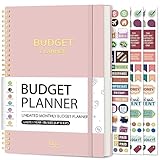
- Effective Budget Planning - Take control of your finances with the budget account book. This comprehensive planner allows you to plan and track your income, expenses, savings, and financial goals in one convenient place. With its intuitive layout and easy-to-use sections, you can stay organized and make informed decisions to achieve financial success.
- User-Friendly Layout - The budget planner features a user-friendly layout designed for easy navigation and organization. Each month, you'll find dedicated budget pages where you can set financial goals, track your income, and plan your expenses. Additional sections include debt trackers, savings goals, bill payment trackers, and more, making it simple to stay on top of your finances.
- Undated Monthly Calendar & Bonus Stickers - Featuring undated calendar each month, you'll have ample space to mark paydays, bills due, appointments, and important dates. Say goodbye to difficult writing spaces. Plus, we've included 3 cute sticker sheets that allow you to personalize your financial organizer and make budgeting more fun. Dates are not pre-printed and are completed by the user.
- Reliable and Convenient Design - Our monthly budget planner is designed for your convenience and built to last. The elastic band keeps everything securely in place, and the dual-sided pocket provides extra storage. Experience a budget planner that combines practicality and durability.
- Master Budgeting with Ease - Our financial planner includes a complete guidebook that provides valuable insights and instructions for optimal usage. From setting financial goals to tracking expenses, this guidebook offers step-by-step guidance and practical tips. Whether you're new to budgeting or an experienced user, this resource will help you make the most of your budget planner, empowering you to achieve financial success.
Step One: Income as the Starting Point
PFM begins with recognizing income as the primary constraint within the system. Income includes wages, salaries, self-employment earnings, and any recurring cash inflows. Because income is finite, every financial decision represents a trade-off among spending, saving, and debt repayment.
Effective PFM does not assume income growth or rely on irregular windfalls. Instead, it evaluates financial choices based on predictable, repeatable income. This approach reduces dependence on uncertainty and increases stability.
Step Two: Allocating Cash Flow Intentionally
Once income is identified, PFM assigns that income across defined categories. This allocation process is commonly referred to as budgeting, which is the planned distribution of income toward expenses, saving, and financial obligations. The purpose is not restriction, but clarity.
Recommended Free Tools
Cash flow tracking supports this step by measuring how money actually moves over time. Cash flow refers to the timing and amount of money entering and leaving an account. Comparing planned allocations with actual cash flow reveals gaps between intention and behavior.
Step Three: Prioritizing Fixed Obligations and Essentials
In real-world application, PFM addresses non-negotiable expenses first. Fixed obligations, such as housing payments, utilities, insurance premiums, and minimum debt payments, require consistent funding to avoid financial disruption. These expenses establish the baseline level of income required to remain financially functional.
By identifying these commitments early, PFM clarifies how much discretionary income remains. Discretionary income is the portion of income available after essential obligations are met. This distinction is critical for making informed choices about saving and optional spending.
Step Four: Integrating Saving and Debt Decisions
PFM treats saving and debt management as parallel uses of cash flow rather than afterthoughts. Saving allocations are assigned deliberately, based on time horizon and purpose, rather than relying on leftover funds. This reinforces the role of saving as a proactive financial function.
Do these 3 things before closing this tab:
1Clear out junk files and repair common Windows errors2Fix the driver behind crashes, sound loss and screen glitches3Repair Windows errors before they cause bigger problemsDebt decisions are evaluated in terms of cost, repayment structure, and impact on future cash flow. Interest rates, repayment periods, and minimum payment requirements are considered together. Integrating these factors prevents debt obligations from undermining longer-term financial goals.
Step Five: Aligning Daily Choices with Financial Goals
Goals serve as the organizing framework that connects short-term actions to long-term outcomes. In practice, this means evaluating spending, saving, and debt decisions based on whether they advance or delay stated objectives. Each financial choice becomes part of a broader sequence rather than a standalone event.
PFM tools, such as budgeting software, spreadsheets, or financial dashboards, are often used to visualize this alignment. These tools do not replace decision-making but support it by providing consistent feedback. Over time, this feedback loop improves financial awareness and consistency.
Why This Process Matters for Financial Stability
The real-life function of PFM is to reduce uncertainty by replacing reactive behavior with structured decision-making. When income, obligations, and goals are clearly defined, financial outcomes become more predictable. This predictability supports resilience when income changes or unexpected expenses arise.
PFM does not eliminate financial risk, but it improves the ability to respond to it. By linking paycheck-level decisions to long-term priorities, PFM transforms money management from a transactional activity into a strategic process.
PFM Tools and Systems: Apps, Spreadsheets, Banks, and Behavioral Frameworks
Once the PFM process is defined, tools and systems are used to execute and monitor it consistently. These tools do not create financial discipline on their own; they translate decisions into visible data and repeatable routines. The effectiveness of any PFM system depends on how well it reflects actual cash flow, obligations, and goals.
Different tools serve different functions within the PFM process. Some emphasize automation and aggregation, while others prioritize customization and behavioral reinforcement. Understanding these distinctions helps consumers select systems that support, rather than complicate, financial decision-making.
PFM Apps and Digital Platforms
PFM apps are software tools designed to aggregate financial data and present it in a structured format. Aggregation refers to the process of pulling account information from multiple sources, such as checking accounts, credit cards, loans, and investment accounts, into a single dashboard. This allows users to observe cash flow, balances, and spending patterns in near real time.
Most PFM apps categorize transactions automatically based on merchant data and historical patterns. Categories are standardized groupings such as housing, food, transportation, and discretionary spending, which enable comparison between planned and actual behavior. While automation improves convenience, category accuracy often requires manual review to ensure meaningful analysis.
These platforms are primarily monitoring tools rather than decision-makers. They highlight trends, deviations, and constraints, but they do not determine priorities or trade-offs. Their value lies in shortening the feedback loop between financial actions and financial outcomes.
Spreadsheets as Custom PFM Systems
Spreadsheets are a flexible alternative to automated PFM apps, allowing full customization of structure and assumptions. A spreadsheet-based PFM system typically includes income tracking, fixed and variable expenses, savings allocations, and debt repayment schedules. Because all inputs are manual, the user controls definitions, timing, and level of detail.
This approach requires more effort but provides greater transparency. Cash flow is modeled explicitly, making it easier to test scenarios such as income changes, expense reductions, or accelerated debt repayment. Scenario analysis, which evaluates how different assumptions affect outcomes, is a core advantage of spreadsheet-based systems.
Spreadsheets are especially useful for goal-oriented planning, where timelines and trade-offs matter. They encourage deliberate engagement with numbers, reinforcing the link between daily choices and longer-term objectives. However, their effectiveness depends on consistent updating and disciplined use.
The Role of Banks and Financial Institutions
Banks play a foundational role in PFM by acting as the primary infrastructure for cash flow. Checking and savings accounts determine how income is received, bills are paid, and funds are allocated. Many banks now offer built-in budgeting and spending analysis tools within their online platforms.
Rank #3

- Budget Planner: Stay on top of your finances and achieve your financial goals with our A5 Budget Planner. This beautifully designed budget book combines functionality and style, empowering you to effectively manage your budget month after month.
- Classic Design: The elegant pink cover with the striking "Budget Planner" in gold adds a touch of sophistication to your financial planner. Carry it with pride and make a statement as you take charge of your financial.
- Comprehensive Layout: Our monthly budget planner features a well-thought-out layout that simplifies your budgeting process. With a dedicated monthly budget page, four expense tracking pages, a monthly summary, and a notes section, you have all the tools you need for effective financial planning.
- 14-Month Duration: Unlike many other planners on the market, ours covers a total of 14 months, giving you an extended period of financial organization. Now you can make income and expense records at any time, ensuring every financial decision aligns with your long-term goals.
- Premium Quality and Convenience: Crafted with attention to detail, this budget planner boasts superior quality. The sturdy pink and gold coil binding allows for effortless flipping, while the A5 size makes it the perfect companion for your daily adventures, fitting into your bag or backpack without taking up too much space.
These tools typically focus on transaction history, balance trends, and basic categorization. Because they are limited to accounts held within the institution, they provide a partial view of the overall financial picture. As a result, bank tools are most effective when used as operational supports rather than comprehensive PFM systems.
Account structure itself is also a PFM tool. Separating accounts for spending, emergency savings, and short-term goals can create functional boundaries that reduce decision friction. This structural approach supports consistency without requiring constant monitoring.
Behavioral Frameworks and Decision Rules
Beyond software and accounts, PFM relies on behavioral frameworks that guide how decisions are made. A behavioral framework is a set of predefined rules or heuristics, which are simplified decision guidelines used to reduce complexity. Examples include allocating savings immediately upon receiving income or limiting discretionary spending to a fixed percentage of cash flow.
These frameworks address common behavioral challenges such as procrastination, present bias, and decision fatigue. Present bias refers to the tendency to prioritize immediate gratification over long-term benefits, which can undermine saving and debt reduction. Decision rules reduce reliance on willpower by embedding priorities into routines.
Behavioral frameworks are most effective when paired with tracking tools. Data provides feedback on whether rules are being followed, while rules give context to the data. Together, they convert abstract goals into repeatable actions.
Integrating Tools into a Coherent PFM System
Effective PFM does not require using every available tool, but it does require consistency across them. Apps, spreadsheets, bank accounts, and behavioral rules should reinforce the same priorities and definitions. Misalignment between tools can obscure cash flow and weaken accountability.
Free tools Windows power users keep installed
One-click scans. No signup required.
A coherent system ensures that monitoring, planning, and execution are connected. Cash flow data informs decisions, decisions are translated into actions, and actions are reviewed against goals. This integration is what allows PFM to function as an ongoing management system rather than a one-time exercise.
Using PFM to Make Better Financial Decisions Short-Term and Long-Term
When tools, accounts, and behavioral rules are integrated into a coherent system, Personal Finance Management (PFM) becomes a decision-support framework rather than a record-keeping exercise. The primary function of PFM at this stage is to improve the quality, timing, and consistency of financial decisions. These decisions operate on two overlapping horizons: short-term financial stability and long-term financial progress.
Short-term and long-term decisions are not separate categories within PFM. Instead, they are connected through cash flow, which represents the movement of income into and out of the household over time. Effective PFM ensures that immediate spending choices do not unintentionally undermine longer-term objectives.
Improving Short-Term Financial Decisions
In the short term, PFM helps manage liquidity, which is the ability to meet financial obligations as they come due. Budgeting and cash flow tracking provide visibility into recurring expenses, variable spending, and timing mismatches between income and bills. This visibility reduces reliance on credit for routine expenses and lowers the risk of missed payments or overdrafts.
Short-term decision-making within PFM often focuses on trade-offs between discretionary spending and near-term priorities. Discretionary spending refers to non-essential expenses that can be adjusted without affecting basic needs. By categorizing and tracking this spending, PFM clarifies which choices are flexible and which are fixed.
PFM also supports short-term decision rules that reduce reactive behavior. Examples include maintaining a minimum account balance, limiting expense growth when income increases, or reviewing spending weekly. These rules convert data into guardrails, helping prevent small, repeated decisions from compounding into financial stress.
Supporting Medium-Term Stability and Risk Management
Beyond immediate cash flow, PFM informs decisions related to financial resilience. Emergency savings, which are funds set aside for unexpected expenses or income disruptions, are a core component of this layer. Tracking progress toward an emergency reserve allows households to assess their exposure to financial shocks.
Debt management decisions are also shaped at this stage. Debt management involves understanding interest rates, repayment schedules, and balances across different obligations. PFM systems make these variables explicit, enabling comparisons between maintaining liquidity, accelerating repayment, or reallocating cash flow.
By consistently monitoring these elements, PFM reduces uncertainty around financial capacity. Decisions such as absorbing a temporary expense increase or adjusting savings rates are made with reference to data rather than assumptions. This reduces the likelihood of overextending resources.
Enabling Long-Term Financial Planning and Goal Alignment
Long-term financial decisions rely on the accumulation and allocation of surplus cash flow over extended periods. Goal setting within PFM provides a structure for directing this surplus toward defined objectives, such as retirement, education funding, or large future purchases. A financial goal is a quantified objective with a time horizon and funding target.
PFM connects daily financial behavior to these long-term goals by tracking progress incrementally. Saving and investing contributions are evaluated not in isolation, but in relation to timelines and expected growth. This alignment helps distinguish between temporary deviations and structural shortfalls.
Importantly, PFM does not eliminate uncertainty in long-term planning. Instead, it provides a framework for adjusting assumptions as circumstances change. Income variability, life events, and economic conditions can be incorporated into updated projections without abandoning the overall strategy.
Recommended Free Tools
Creating Consistency Across Time Horizons
The defining benefit of PFM is consistency. Short-term spending decisions, medium-term risk management, and long-term planning are evaluated using the same underlying data and rules. This reduces contradictions, such as aggressive saving targets alongside unmanaged cash flow deficits.
Consistency also improves decision confidence. When choices are grounded in a transparent system, outcomes can be reviewed and refined rather than guessed. Over time, this feedback loop strengthens financial literacy and reinforces disciplined behavior.
In this way, PFM functions as an ongoing management process. It supports immediate needs while preserving flexibility for future goals, allowing financial decisions to be made with clarity across both short-term constraints and long-term objectives.
Rank #4

- 【Take Control Of Your Money】Easily plan your monthly budget, track income & expenses, and stay on top of your finances. This budget planner helps you clearly see where your money goes and avoid overspending.
- 【Designed For Real Life Use】Perfect for young professionals, families, students, and anyone working toward financial goals. Whether managing daily expenses or planning long-term savings, this budget book keeps everything organized.
- 【All-In-One Budget System:】Our monthly budget planner features a well-thought-out layout that simplifies your budgeting process. Includes monthly budget pages, expense trackers, bill organizers, savings goals, and debt trackers. Everything you need to manage money in one convenient planner.
- 【12-Month Duration】Our budget planner covers a total of 12 months, giving you an extended period of financial organization. Now you can make income and expense records at any time, ensuring every financial decision aligns with your long-term goals.
- 【Premium Quality and Convenience】Crafted with attention to detail, this budget planner boasts superior quality. The sturdy pink and gold coil binding allows for effortless flipping, while the metal corner protectors effectively prevent damage to the cover, ensuring long-lasting durability.
Why PFM Is Essential for Financial Stability, Resilience, and Peace of Mind
Building on the need for consistency across time horizons, Personal Finance Management (PFM) serves as the mechanism through which financial stability is established and maintained. Stability refers to the ability to meet ongoing financial obligations without disruption, while preserving capacity for future needs. PFM achieves this by integrating income, expenses, savings, and liabilities into a single, continuously monitored system.
Supporting Financial Stability Through Visibility and Control
At its core, financial instability often arises from incomplete or delayed information. PFM improves stability by providing real-time visibility into cash flow, defined as the movement of money in and out of a household over a given period. When income and expenses are tracked systematically, imbalances can be identified early rather than after obligations are missed.
Budgeting within PFM translates this visibility into control. A budget is a forward-looking plan that allocates expected income toward categories such as living expenses, savings, and debt repayment. This allocation reduces reliance on reactive decisions and helps ensure that essential obligations are prioritized consistently.
Enhancing Resilience Against Financial Shocks
Financial resilience is the capacity to absorb and recover from unexpected events, such as income interruptions, medical expenses, or economic downturns. PFM supports resilience by formalizing saving behavior and defining liquidity needs. Liquidity refers to the availability of cash or cash-equivalent assets that can be accessed quickly without significant loss of value.
Emergency savings are a direct product of disciplined PFM processes. By treating savings as a recurring allocation rather than a residual outcome, PFM reduces dependence on high-cost debt during disruptions. This structured preparation limits the long-term impact of short-term shocks.
Reducing Risk Through Structured Debt Management
Unmanaged debt is a common source of financial stress and long-term instability. PFM incorporates debt management by tracking balances, interest rates, and repayment schedules in relation to overall cash flow. This allows liabilities to be evaluated not only by size, but by their ongoing cost and opportunity impact.
Interest expense, defined as the cost paid for borrowing, competes directly with saving and investing capacity. By integrating debt obligations into the broader PFM framework, trade-offs become explicit rather than implicit. This clarity supports informed prioritization without requiring constant recalculation.
Improving Decision Quality and Psychological Security
Beyond numerical outcomes, PFM influences the quality of financial decision-making. When financial choices are based on documented data and predefined goals, uncertainty is reduced even when outcomes are not guaranteed. This structured approach limits impulsive behavior driven by incomplete information or short-term emotion.
Peace of mind in a financial context does not imply the absence of constraints or risk. Instead, it reflects confidence that decisions are consistent, intentional, and adaptable. PFM provides this confidence by ensuring that financial actions align with both current realities and long-term objectives within a coherent system.
What’s actually slowing this PC down?
Pick the symptom - the matching free tool is one click away.
Common PFM Mistakes Beginners Make (and How to Avoid Them)
Even when the value of Personal Finance Management (PFM) is understood conceptually, early implementation errors can undermine its effectiveness. These mistakes typically arise not from poor intent, but from incomplete frameworks, unrealistic assumptions, or misinterpretation of financial data. Identifying these patterns is essential to maintaining coherence between financial tracking, decision-making, and long-term stability.
Treating Budgeting as a Static or One-Time Exercise
A frequent mistake is assuming that a budget is a fixed document rather than an adaptive system. Income, expenses, and priorities change over time, making static assumptions quickly outdated. When budgets are not periodically reviewed, they lose relevance and stop informing decisions.
This issue can be avoided by treating budgeting as an ongoing feedback process. In PFM, a budget functions as a planning baseline that is adjusted based on observed cash flow and changing conditions. Regular updates preserve accuracy and maintain alignment with actual financial behavior.
Focusing on Expense Control While Ignoring Cash Flow Timing
Many beginners concentrate exclusively on reducing expenses without considering when cash enters and leaves their accounts. Cash flow refers to the timing and direction of money movement, not just total amounts. A plan that appears balanced on paper may still result in short-term shortfalls if inflows and outflows are misaligned.
Outdated Drivers Are Slowing You Down
One free scan finds every outdated or missing driver and matches the right update for your exact hardware.Free scan · exact hardware matchPC Slower Than It Used to Be?
A free scan shows the junk files, broken settings and background clutter dragging Windows down - then fixes them in one click.Free scan · Windows 10 & 11Effective PFM incorporates cash flow tracking alongside expense categorization. By monitoring timing, individuals can anticipate periods of low liquidity and adjust allocations accordingly. This reduces reliance on short-term borrowing and improves operational stability.
Underestimating Irregular and Non-Monthly Expenses
Another common error is excluding infrequent but predictable costs, such as insurance premiums, maintenance, or annual subscriptions. These expenses are often overlooked because they do not occur monthly, leading to distorted surplus calculations. When they arise, they disrupt savings or force unplanned debt use.
This mistake is avoided by normalizing irregular expenses within the PFM framework. Normalization means spreading the annual cost of an expense across multiple periods for planning purposes. Including these allocations improves accuracy and reduces volatility in financial outcomes.
Confusing Saving With Residual Cash Instead of Planned Allocation
Beginners often treat saving as whatever remains after spending, rather than as a predefined use of funds. This residual approach makes saving inconsistent and highly sensitive to discretionary behavior. Over time, it weakens the link between financial goals and actual progress.
Do these 3 things before closing this tab:
1Repair Windows errors before they cause bigger problems2Scan for outdated or missing drivers - takes under a minute3Clear out junk files and repair common Windows errorsPFM addresses this by defining saving as an intentional allocation tied to specific objectives. Whether the goal is emergency liquidity or long-term capital accumulation, planned saving integrates directly into the cash flow structure. This ensures that saving competes equally with other financial uses.
Managing Debt in Isolation From Overall Financial Capacity
Debt is frequently evaluated only by minimum payment requirements or total balances, without reference to broader financial capacity. This narrow view obscures the true cost of debt, including interest expense and opportunity cost. Opportunity cost refers to the benefits foregone by allocating resources to one use instead of another.
Within PFM, debt is analyzed in relation to income, savings, and goals. Integrating debt into the full financial picture clarifies trade-offs and prevents repayment strategies from undermining liquidity or long-term planning. This systemic view reduces unintended consequences.
Relying on Tools Without Understanding the Underlying Framework
Digital PFM tools can automate tracking and visualization, but they do not replace conceptual understanding. Beginners may assume that using an app alone constitutes effective management, even if categories, assumptions, or goals are poorly defined. This creates an illusion of control without substantive insight.
The Tool Desk
Outbyte PC Repair FREERepair Windows errors before they cause bigger problemsFix Now →Outbyte Driver Updater FREEScan for outdated or missing drivers - takes under a minuteDriver Scan →Best Value

- EFFECTIVELY MANAGE YOUR MONEY - Our budget planner helps you take control of your finances by providing sections for financial goals, savings, debts, daily expenses, monthly budget, monthly budget review. This finance planner is a good finance book and will help you manage your money effectively.
- PREMIUM QUALITY - Our budget planner is made with high-quality 100gsm paper that reduces ink leakage, fraying, and shade issues. The sturdy and flexible cover,, helps protect the pages. The metal lay-flat twin-wire binding ensures durability and longevity.
- ORGANIZED MONTHLY GOALS & BUDGETS - Our 12-month budget planner helps you set monthly goals, budgets, reviews, and develop good monetary habits, strategies, and action plans. Write down monthly financial goals, put reminders of bills and payments on the calendar, plan your monthly budget in each category, track daily expenses, and review the monthly budget at the end of the month.
- FLEXIBLE USAGE - Our undated finance planner allows you to start at any time and place, making it convenient to use. It has a perfect size of 8.6x5.9 inches and fits in every bag, so it's always at hand.
- CREATE FINANCIAL FREEDOM - Our budget planner is your chance to develop monthly habits, monetary strategies, and action plans to start your journey to long-term financial freedom. It allows you to track monetary flow and review each area for improvements. With this 1-Years budget book, you can take the first step towards financial freedom.
PFM tools are most effective when used as extensions of a clear framework. Understanding how budgeting, cash flow, saving, debt management, and goal setting interact ensures that tool outputs are interpreted correctly. The framework, not the software, determines decision quality.
How to Start Your Own Personal Finance Management System Step by Step
Establishing a personal finance management system requires translating the conceptual framework of PFM into an organized, repeatable process. The steps below outline how the core components—cash flow tracking, budgeting, saving, debt management, and goal setting—are integrated into a coherent structure. Each step builds on the previous one, reinforcing consistency and decision clarity.
Step 1: Define the Financial Scope and Time Horizon
A PFM system begins by clearly defining what financial activity is being managed and over what period. Scope refers to the accounts, income sources, expenses, assets, and liabilities included in the system. Time horizon refers to the planning interval, such as monthly cash flow or multi-year goals.
Clarifying scope and time horizon prevents partial or fragmented analysis. It ensures that financial decisions are evaluated within a complete and relevant context rather than in isolation.
Quick wins for a faster PC:
Scan for outdated or missing drivers - takes under a minuteDriver Scan →Repair Windows errors before they cause bigger problemsFix Now →Step 2: Establish a Comprehensive Cash Flow Baseline
Cash flow is the movement of money into and out of the financial system over a defined period. Income sources are identified alongside fixed and variable expenses, creating a baseline view of financial capacity. This step focuses on measurement, not judgment.
A reliable cash flow baseline serves as the foundation for all subsequent decisions. Without it, budgeting and goal alignment lack factual grounding.
Step 3: Organize Spending Through a Budgeting Framework
Budgeting allocates expected cash flow into predefined categories based on function and priority. Categories typically include essential expenses, discretionary spending, saving, and debt repayment. The framework reflects how financial resources are intended to be used rather than how they happen to be spent.
Within PFM, budgeting functions as a planning tool rather than a constraint mechanism. It converts abstract financial intentions into explicit allocations that can be monitored and adjusted.
Do these 3 things before closing this tab:
1Fix the driver behind crashes, sound loss and screen glitches2Repair Windows errors before they cause bigger problems3Scan for outdated or missing drivers - takes under a minuteStep 4: Formalize Saving as a Structural Component
Saving is incorporated as a deliberate use of cash flow tied to specific objectives. Objectives may include short-term liquidity, such as an emergency reserve, or long-term accumulation, such as retirement capital. Each saving category is linked to a defined purpose and time frame.
Treating saving as a structural allocation strengthens consistency and measurability. It aligns present-day cash flow decisions with future financial requirements.
Step 5: Integrate Debt Into the Overall Financial System
Debt management within PFM evaluates obligations in relation to income, savings, and goals. Key variables include interest rates, repayment schedules, and total cost over time. This integrated view highlights trade-offs between debt repayment and alternative uses of funds.
By embedding debt into the broader system, repayment strategies are assessed for sustainability. This reduces the risk of decisions that improve one metric while weakening overall financial stability.
What’s actually slowing this PC down?
Pick the symptom - the matching free tool is one click away.
Step 6: Translate Financial Goals Into Quantifiable Targets
Financial goals define the purpose of the PFM system. Goals are expressed in measurable terms, such as required amounts, deadlines, and contribution rates. This translation converts abstract aspirations into operational targets.
Within PFM, goals function as reference points for evaluating trade-offs. They guide prioritization when resources are limited or competing demands arise.
Step 7: Select and Apply Appropriate PFM Tools
PFM tools include spreadsheets, budgeting software, and financial applications designed to track, categorize, and visualize data. Tools are selected based on their ability to support the defined framework rather than dictate it. Their role is operational support, not conceptual guidance.
Effective tool use depends on accurate inputs and informed interpretation. When aligned with a clear framework, tools enhance visibility and consistency without substituting for understanding.
Step 8: Review, Reconcile, and Adjust Systematically
A PFM system remains effective only through periodic review. Actual outcomes are compared with planned allocations to identify deviations and structural issues. Adjustments are made to categories, assumptions, or goals as financial circumstances evolve.
This review process reinforces feedback and learning. It transforms PFM from a static setup into an adaptive system.
Bringing the System Together
A personal finance management system is not defined by any single tool or tactic. It is defined by how cash flow, saving, debt, and goals are organized into a unified decision-making structure. Each step contributes to financial clarity by replacing reactive behavior with intentional planning.
When applied consistently, PFM supports financial stability and improves long-term decision quality. It enables individuals to evaluate trade-offs explicitly, align daily choices with long-term objectives, and maintain control over financial complexity as circumstances change.
Quick wins for a faster PC:
Clear out junk files and repair common Windows errorsFree Scan →Fix the driver behind crashes, sound loss and screen glitchesFind Drivers →Quick Recap
Product prices and availability are accurate as of the date/time indicated and are subject to change. Any price and availability information displayed on Amazon at the time of purchase will apply.




