KYC means “Know Your Customer.” In banking, it is the process of identifying and verifying customers, understanding why they want an account or service, assessing related risks, and monitoring the relationship over time. It is more than an ID check at account opening. The exact requirements depend on the country, bank, account, and assessed risk.
What KYC means in banking
KYC is a practical umbrella term for steps banks use to understand who they are serving and the risks associated with a customer relationship. In the United States, specific parts of this work are addressed by defined compliance concepts, including a Customer Identification Program (CIP) and Customer Due Diligence (CDD). CIP focuses on identifying and verifying customers; CDD also covers understanding the relationship’s purpose, assessing risk, and monitoring activity. These are part of broader anti-money-laundering and Bank Secrecy Act controls, not the whole of a bank’s compliance program. FFIEC’s CIP guidance and FinCEN’s CDD Rule summary describe the U.S. framework.


What happens during a bank KYC check?
The steps below describe the general shape of the process, not a universal checklist. Banks set procedures under the rules that apply to them and tailor checks to the customer and relationship.
- Collect identifying information. The bank asks for information needed to identify the customer. What it requests depends on the jurisdiction, customer type, and account.
- Verify identity. The bank uses risk-based procedures to determine whether the information and evidence establish the customer’s identity. A particular document is not guaranteed to be accepted by every bank.
- Understand the relationship. The bank considers the nature and purpose of the account or service and the activity it reasonably expects.
- Assess risk. It develops a customer or relationship risk profile to guide appropriate due diligence.
- Monitor and update over time. The bank monitors activity for potentially suspicious transactions and may update information when warranted by risk or changing circumstances.
In the United States, FFIEC describes CDD as helping banks understand customer relationships and monitor for potentially suspicious transactions. FinCEN identifies customer and beneficial-owner identification and verification, understanding the relationship, and ongoing monitoring among the core CDD requirements. See the FFIEC CDD overview.
Free tools Windows power users keep installed
One-click scans. No signup required.
Why does a bank need to verify your identity?
Identity verification helps a bank establish who its customer is. The wider KYC process gives the bank context for the relationship and a basis for assessing whether activity is consistent with what it understands about the customer and account. KYC is therefore not simply a formality completed once: due diligence and monitoring can continue after an account is opened.
What documents does a bank ask for?
There is no single document list that applies to every bank, country, customer, or account. A bank may request identity information or additional evidence under its procedures, but the acceptable forms and amount of information vary. The need for an extra check should not be treated as a universal legal requirement unless the relevant rule establishes it for that situation.
FinCEN says the U.S. CDD Rule does not categorically require media searches or particular screenings for all customers. Banks determine what further information is appropriate through risk-based procedures and applicable requirements. For a specific application, ask the bank which evidence it accepts and why additional information is needed. FinCEN’s CDD Rule FAQs discuss the scope of those requirements.
What is checked when a business opens a bank account?
For a business, the bank may need to understand both the entity and the people behind it. Under applicable U.S. CDD rules, covered legal-entity customers are subject to beneficial-owner identification and verification requirements, alongside the bank’s work to understand the relationship and assess its risks. Coverage, exceptions, and procedures depend on the current rules and the circumstances of the account.
That means company-account checks may extend beyond confirming that a business exists. The bank may seek information about the entity and its beneficial owners, but the exact records and verification process are not identical for every business. FFIEC’s CDD materials discuss verification procedures and entity documentation in the U.S. context.
Does every customer go through the same KYC checks?
No. KYC is risk-based, and applicable law and bank procedures shape what is requested. The customer’s country, whether the customer is an individual or legal entity, the account or service, and the assessed risk all matter. A bank may ask for more information when its assessment or circumstances warrant it; that does not mean every customer must submit the same documents or undergo the same screening.
Independent reader supportYour contribution helps us test, update, and keep practical guides available for everyone.Do KYC rules apply the same way in every country?
No. The Financial Action Task Force (FATF) sets international AML/CFT standards, but countries implement requirements through their own laws and supervisory rules. FATF guidance also discusses risk-based approaches to financial inclusion, including situations where people may not have conventional identity documents. These standards do not create one identical document list for every bank worldwide. For requirements that apply to a particular account, consult the bank or the relevant country’s regulator. See FATF’s Recommendations and its 2017 financial-inclusion and CDD guidance.
Quick Recap
Best Value
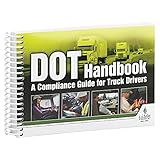
- Handy reference covers critical elements of truck driver training including key FMCSA regulatory compliance topics, general info about orientation & company policies, trip preparation, on-the-road information, and incident/accident handling procedures.
- Filled with truck driver essentials, this handbook helps meet DOT entry-level driver training requirements (49 CFR 380, Subpart E).
- Easy-to-understand, concise DOT compliance resource works great for truck driver education "finishing training," new hire orientation training, and drivers new to the field. Ideal for Driving Training Instructors for use in aiding their curriculum.
- Features quizzes at the end of every chapter.
- 7" x 5" English spiral bound handbook with 192 pages.
Product prices and availability are accurate as of the date/time indicated and are subject to change. Any price and availability information displayed on Amazon at the time of purchase will apply.
Quick wins for a faster PC:
Fix the driver behind crashes, sound loss and screen glitchesFind Drivers →Repair Windows errors before they cause bigger problemsFix Now →Scan for outdated or missing drivers - takes under a minuteDriver Scan →



