The Tool Desk
Outbyte Driver Updater FREEScan for outdated or missing drivers - takes under a minuteDriver Scan →Outbyte PC Repair FREERepair Windows errors before they cause bigger problemsFix Now →Bridging in crypto means using a protocol or service to transfer assets, messages, or other information between blockchain networks that do not communicate natively. The bridge verifies activity on one network and coordinates what happens on another; it does not make the networks identical or guarantee that a token on the destination chain is the same asset as the original.
Why do crypto users bridge between blockchains?
Blockchains operate as separate environments, often with different rules, applications, and capabilities. A bridge provides a connection so a user can move an asset or information to another network—for example, to use an application there or access a network with different transaction-cost or performance characteristics. Ethereum.org summarizes the purpose plainly: “Bridges exist to connect blockchain networks.” Ethereum.org’s bridge documentation describes the broader concept and trade-offs.
A bridge can carry more than tokens. Some systems also pass messages or other data that applications on another chain can use. What a particular bridge supports depends on its design and connected networks.
How does a crypto bridge move assets?
There is no single bridge mechanism. Ethereum.org’s developer documentation describes several common patterns:
Crashes, No Sound, or Screen Glitches?
Random freezes, missing sound and display glitches usually trace back to one bad driver. Find and replace yours safely.Free scan · under a minuteWindows Errors? Fix Them Before They Spread
Repair common Windows errors and clear accumulated junk for a smoother, more stable PC - no reinstall needed.Free scan · no reinstall#1 Best Overall

- Proven security at scale: Over 9 years and millions of cards issued with no known remote hacks, while military‑grade EAL6+ security keeps your private keys locked inside the chip. Your cryptocurrencies stay strongly protected from online attackers.
- Tap once to manage your entire crypto wallet across 90 blockchains - no USB cables or Bluetooth, no batteries, no setup. Access 14,100+ coins & tokens, DeFi, NFTs, and staking instantly from your phone
- Smart backup: Use your second Tangem Wallet as your Backup keys with end‑to‑end encryption; no more papers, pictures. If one card is lost, the remaining can still restore full access, with an optional seed phrase available for advanced users.
- Engineered to last up to 25 years: Waterproof (IP69K), shockproof and tested for extreme temperatures from −25°C to 50°C. A durable cold wallet with long‑term protection and independently audited security.
- Trusted by 6 million users worldwide - buy, sell, swap, stake, and spend cryptocurrency directly. The secure offline storage wallet designed for how people actually use crypto wallets
| Mechanism | What happens | What to understand |
|---|---|---|
| Lock and mint | The asset is locked on the source chain, and a corresponding representation is minted on the destination chain. | The destination token represents the locked asset; it is not necessarily the native token on the source chain. |
| Burn and mint | A source-chain representation is burned, and an asset is minted on the destination chain. | The process depends on the bridge’s mechanism for authorizing and completing minting across the networks. |
| Atomic swap | Parties exchange assets across chains. | This is an exchange between parties rather than necessarily a lock-and-mint transfer. |
These are broad patterns, not a guarantee that every bridge works the same way. Before transferring, check what asset will arrive and how it relates to the asset you send. See Ethereum.org’s explanation of bridge mechanisms.
Is a bridged token the same as the original token?
Not necessarily. In a lock-and-mint route, the destination-chain token may be a representation backed by an asset locked on the source chain. Its value and ability to be redeemed depend on the bridge’s design and continued operation. Other mechanisms, including burn-and-mint, work differently, so the word “bridged” alone does not tell you exactly what you hold.
Rank #2

- Proven security at scale: Over 9 years and millions of cards issued with no known remote hacks, while military‑grade EAL6+ security keeps your private keys locked inside the chip. Your cryptocurrencies stay strongly protected from online attackers.
- Tap once to manage your entire crypto wallet across 90 blockchains - no USB cables or Bluetooth, no batteries, no setup. Access 14,100+ coins & tokens, DeFi, NFTs, and staking instantly from your phone
- Smart backup: Use your second Tangem Wallet as your Backup keys with end‑to‑end encryption; no more papers, pictures. If one card is lost, the remaining can still restore full access, with an optional seed phrase available for advanced users.
- Engineered to last up to 25 years: Waterproof (IP69K), shockproof and tested for extreme temperatures from −25°C to 50°C. A durable cold wallet with long‑term protection and independently audited security.
- Trusted by 6 million users worldwide (4.9 App Store, 4.8 Google Play) - buy, sell, swap, stake, and spend cryptocurrency directly. The secure offline storage wallet designed for how people actually use crypto wallets
Check the destination token’s identity and issuer or bridge mechanism, and confirm that the destination network and token are the ones you intended. A token with a familiar name or symbol is not, by that fact alone, proof that it is the native asset.
What kinds of bridges are there?
One useful distinction is how a bridge verifies transfers. Ethereum.org contrasts trusted bridges, which rely on external entities or systems, with trustless bridges, which aim to rely on the connected chains and their validators without adding the same external verification assumptions. These labels are broad: they do not replace examining who can authorize, control, or stop a transfer.
What’s actually slowing this PC down?
Pick the symptom - the matching free tool is one click away.
Rank #3

- Effortlessly build your crypto portfolio via the all in one Ledger Wallet app: buy, sell, send, receive, swap, stake and more across popular blockchains. 15,000+ coins & tokens in a single dashboard. Keep a close eye on the market. Compare service providers. Track performance. Get timely alerts. Build your portfolio with confidence.
- Effortlessly build your crypto portfolio via the all in one Ledger Wallet app: buy, sell, send, receive, swap, stake and more across popular blockchains. 15,000+ coins & tokens in a single dashboard. Keep a close eye on the market. Compare service providers. Track performance. Get timely alerts. Build your portfolio with confidence.
- Enjoy Bluetooth connectivity, iOS access, and hours of battery use with this mobile-first, secure backup signer. Freedom you can depend on.
- Genuine Check: confirm your signer is authentic during setup with the Ledger Wallet app.
- Protect your signer: keep it in mint condition at all times with a bespoke Pod or Case to avoid scratches and everyday wear and tear.
Ethereum.org’s developer documentation also discusses several design categories:
- Native bridges: bridges associated with the connected blockchain ecosystems.
- Validator- or oracle-based bridges: systems that use validators or oracle mechanisms to verify or relay cross-chain activity.
- Generalized message-passing bridges: systems designed to transmit messages or data between networks, not only transfer assets.
- Liquidity networks: systems that use liquidity to facilitate cross-chain transfers.
Categories can overlap in practice, and many designs sit between simplified “trusted” and “trustless” descriptions. For a specific route, focus on its actual verification and custody assumptions rather than relying on a label. Ethereum.org’s developer guide outlines the categories and comparison factors.
Rank #4
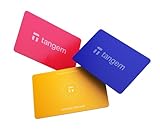
- Proven security at scale: Over 9 years and millions of cards issued with no known remote hacks, while military‑grade EAL6+ security keeps your private keys locked inside the chip. Your cryptocurrencies stay strongly protected from online attackers.
- Tap once to manage your entire crypto wallet across 90 blockchains - no USB cables or Bluetooth, no batteries, no setup. Access 14,100+ coins & tokens, DeFi, NFTs, and staking instantly from your phone
- Smart backup: Use your second Tangem Wallet as your Backup keys with end‑to‑end encryption; no more papers, pictures. If one card is lost, the remaining can still restore full access, with an optional seed phrase available for advanced users.
- Engineered to last up to 25 years: Waterproof (IP69K), shockproof and tested for extreme temperatures from −25°C to 50°C. A durable cold wallet with long‑term protection and independently audited security.
- Trusted by 6 million users worldwide (4.9 App Store, 4.8 Google Play) - buy, sell, swap, stake, and spend cryptocurrency directly. The secure offline storage wallet designed for how people actually use crypto wallets
What should you compare before using a bridge?
Review the specific route—source chain to destination chain—rather than assuming a bridge has the same properties for every transfer. The main comparison points are:
- Verification and security: Who verifies the source-chain event, and what additional assumptions does that introduce?
- Custody and control: Who can hold, freeze, release, or otherwise control funds? Does the route depend on an operator or external validator set?
- Supported networks and data: Does the bridge support both chains and the asset or message you need?
- Steps and timing: How many transactions or signatures are required, and what processing time does the route currently indicate?
- Cost: What bridge fees and network gas costs apply to this route?
Availability, liquidity, fees, and processing times can vary by route and change over time. Check the bridge’s current route details and transaction status before proceeding; a general description of a bridge cannot establish the current cost or completion time of a particular transfer.
Recommended Free Tools
Best Value

- All your digital assets in one place. You can manage thousands of crypto including Bitcoin, Ethereum, Solana, Tether and more.
- Defend your identity against hackers: secure your online accounts with passwordless, hardware backed, 2FA logins for all your favorite apps and websites.
- Connectivity: USB-C cable connection only. No Bluetooth.Compatible with the Ledger Wallet crypto app, both desktop (Windows, macOS, Linux) and mobile (Android only). Not compatible with iOS.
- Protect your digital assets with the industry's best security: keep your private keys offline in your private signer, battle-tested by the Donjon's white hat hackers, CC EAL 6+ certified Secure Element, constantly updated Ledger OS.
- Effortlessly build your crypto portfolio via the all in one Ledger Wallet app: buy, sell, send, receive, swap, stake and more across popular blockchains. 15,000+ coins & tokens in a single dashboard. Keep a close eye on the market. Compare service providers. Track performance. Get timely alerts. Build your portfolio with confidence.
What are the risks of bridging?
A bridge adds a set of technical and operational dependencies to a transfer. Ethereum.org identifies risks that include:
- Smart-contract or technology failures: a bug or flaw may affect the bridge’s ability to secure or process funds.
- Bridge attacks: an exploit may result in loss of assets.
- Operator or custody risks: trusted designs can introduce reliance on operators, including possible malicious action or censorship.
- User mistakes: choosing the wrong network, token, or transaction details can lead to an unintended outcome.
- Underlying-chain problems: an attack or other issue on a connected blockchain can affect a bridge route.
- Wrapped-asset and counterparty risk: a destination representation depends on the system and counterparties that support its backing or redemption.
- Congestion and adverse conditions: network conditions can make execution or completion less predictable.
A bridge connection does not transfer one chain’s security guarantees to another. Ethereum.org explains that a sidechain operates independently and does not inherit Ethereum’s security merely because a bridge connects it to Ethereum. Ethereum.org’s sidechain documentation explains this distinction.
Chainlink’s educational material discusses validation and message relaying as security concerns and describes measures in its own system, including independent monitoring and rate limits. Those are vendor-described design choices, not independent proof that a bridge or route is safe. Chainlink’s cross-chain bridge education page provides its explanation.
Quick Recap
What to check before you confirm a bridge transfer
- Confirm both networks. Check the source network you are sending from and the destination network you want to receive on.
- Identify the destination asset. Determine whether it is native on that chain or a bridged representation, and understand what supports its redemption or value.
- Review verification and control. Find out who or what verifies the transfer and whether operators, validators, or other external systems can control or halt it.
- Check the route’s live details. Review fees, required transactions, estimated timing, liquidity or route status, and any transaction-specific warnings.
- Use a wallet that supports the route. A wallet is a general prerequisite for using a layer 2 bridge walkthrough, but no particular provider or hardware-wallet model is established as necessary. Ethereum.org’s layer 2 bridge guide covers the practical wallet prerequisite.
- Verify transaction details before signing. Make sure the displayed networks, token, amount, and destination match your intention.
Product prices and availability are accurate as of the date/time indicated and are subject to change. Any price and availability information displayed on Amazon at the time of purchase will apply.
Free tools Windows power users keep installed
One-click scans. No signup required.




