Recommended Free Tools
A business portfolio is the mix of businesses, products, or initiatives that make up a company’s operations, along with the leadership decisions about how resources are split among them. In corporate strategy, the term usually means the set of business units a company owns or runs. Marketing and project management use the same word for different things, so the first step in using the concept is naming which kind of portfolio you mean.
What the term means
The Monash Business School marketing dictionary defines a business portfolio as “the mix of strategic business units and products that make up a company’s total operations.” That definition is the most useful starting point because it treats the portfolio as something a company actually operates, not a slide or a document. A portfolio is the collection itself: the units, the offerings, and the spending choices that connect them.
Because the word appears in several disciplines, it helps to separate the usages before building anything.
Three meanings of “portfolio” to keep apart
| Meaning | What it contains | Typical question it answers | Where the definition comes from |
|---|---|---|---|
| Business (corporate) portfolio | The company’s businesses or strategic business units, and how each fits strategically and what resources it needs | Which businesses should we invest in, maintain, or exit? | Monash Business School marketing dictionary; McKinsey & Company’s overview of corporate portfolio strategy |
| Product portfolio | The complete set of products and services a company creates, distributes, or sells | Which offerings should we add, extend, or retire? | Aha! product portfolio definition (page last updated September 2025) |
| Project or initiative portfolio | Coordinated projects, programs, product teams, service teams, and other initiatives aligned with organizational objectives | Which initiatives should we fund and staff this period? | PMI Disciplined Agile initiative-portfolio terminology |
These usages overlap. A company with several business units will usually have product portfolios inside each unit and a stream of initiatives moving through both. The business portfolio is the top layer, and the other two are the layers beneath it.
#1 Best Overall

- Size: 13 x 10 x 0.7 inches. Fits A4 and letter-size paper, standard documents and filing needs.
- User-Friendly Features: Included sticker labels allow you to easily distinguish between different categories of files, maintaining neatness and enhancing productivity!
- Sleek and Portable: Designed to slip seamlessly into backpacks, laptop bags, or file cabinets, our lightweight folder keeps your documents tidy and accessible wherever you go.
- Built to Last: Crafted from polypropylene, our folders resist tears and deformation while remaining flexible. The secure snap closure offers easy access while keeping your papers securely in place.
- Versatile Utility: This folder isn't limited to organizing course papers for college students; it's perfect for storing business tax documents, recipes, important receipts, and more!
How the formal portfolio-management definition works
SAP’s Help Portal documentation for version 6.1 SP24 offers a more operational definition: a portfolio is “a group of portfolio items that is managed in a coordinated manner in order to achieve a company’s objectives at any given period of time.” Two details matter. First, the word “coordinated” means the components are reviewed together rather than as separate budgets. Second, the objectives are time-bound, so the mix is expected to change as the period changes. SAP also notes that separate portfolios can exist where business areas are run independently. That detail becomes important when a company is large enough to have several portfolios rather than one.
The Project Management Institute’s portfolio standard describes the same logic from the management side. Portfolio management aligns components with organizational strategy and helps allocate human, financial, or material resources according to expected performance and benefits.
Rank #2

- Size: 13 x 10 x 0.7 inches. Fits A4 and letter-size paper, standard documents and filing needs.
- User-Friendly Features: Included sticker labels allow you to easily distinguish between different categories of files, maintaining neatness and enhancing productivity!
- Sleek and Portable: Designed to slip seamlessly into backpacks, laptop bags, or file cabinets, our lightweight folder keeps your documents tidy and accessible wherever you go.
- Built to Last: Crafted from polypropylene, our folders resist tears and deformation while remaining flexible. The secure snap closure offers easy access while keeping your papers securely in place.
- Versatile Utility: This folder isn't limited to organizing course papers for college students; it's perfect for storing business tax documents, recipes, important receipts, and more!
How this differs from an investment portfolio
Personal-finance readers will recognize the word from brokerage accounts, where a portfolio is a set of securities held by an individual or fund. A business portfolio is not a holding of securities. It is the set of operating units and offerings a company runs, and the decisions concern whether to fund, restructure, or sell those operations. The shared idea is allocation across parts with different risks and returns, but the inputs are operating capabilities, markets, and customers rather than tickers. The guidance cited here does not establish any rule that carries investment-portfolio mechanics, such as target weights or rebalancing, over to a company’s operating units.
How to build a business portfolio
The steps below are a practical synthesis of the cited guidance. They are not a mandatory sequence set by any one standard, and a company will adjust them to its size and decision cycle.
Free tools Windows power users keep installed
One-click scans. No signup required.
Rank #3

- High-Quality Materials: Protect your files with ENGPOW fireproof accordion file organizer.It is made of 3-layered non-itchy silicone-coated fiberglass which withstand the temperature up to 2200℉.It has passed the UL94 -V0/5VA flame retardant test.Fireproof File Folder is fireproof&Water-resistant,which can effectively protect your important documents in a fire,flood,and wet weather. They will further keep your files intact.Giving you time to save your important documents when disaster strikes
- Accordion File Organizer: A Safe Enough Folder to Keep Your Files. Say goodbye to cluttered files and disorganization with ENGPOW's file organizer folders. Compared with other folders,our fireproof folders is allows you to neatly store and classify letter/A4 files, receipts, cards, USB drives, pen, passports and more in a safe and orderly way. Perfect for daily file filing and storage.The Non-dusty material can prevent dust from sticking to the outside of our folder,always keep it neat and tidy.
- Large Capacity: 14.2" x 10.4" x 2", Compared with other folders, our Accordian File Organizer adopts a multi-layer design that can meet all your storage needs.These include 13 accordion Pockets with labels(each expanding to 1.2 inches),1 zipper pocket,2 pen slot,6 card slots,4 small mesh bags,4 medium mesh bags,and 1 main pocket. You can securely store all your important documents and other items in this fireproof expanding file folder while effectively classifying and finding your files.
- Innovative Humanized Design: Design with a strong grab handle for carrying everything you needed easily. Featuring a double zipper for convenient opening and closing,you won't have to worry about losing any important documents. The included colorful labels make categorizing your files effortless. The fireproof file folder is suitable for business, travel, office, school, home storage, you can be 100% sure that your important documents are in a safe place.
- Trusted after sales service: In the event of an emergency, our fireproof accordion file organizer folders are lighter, easier to carry than fireproof safes and quick to grab and go. We only wish to present the best to customers,to protect your valuables.If there any quality problem, please feel free to let us know.We promise to arrange a REPLACEMENT or 100% REFUND immediately. Ready to respond within a 24 hour time,your suggestion has a great impact on the upgrade of our products.
- Set the purpose and objectives. Write down the organization’s strategy, the outcomes it wants, the time horizon, and the constraints it must respect, such as capital limits or regulatory boundaries. Every portfolio choice should be traceable to these objectives. SAP’s definition makes the objective-period link explicit, and PMI frames the whole exercise as alignment with strategy.
- Choose the scope. Decide whether the portfolio tracks business units, product lines, brands, or initiatives. Name the scope in internal documents so that a list of business units is not mistaken for a product catalog or a project backlog.
- Inventory the components. List each unit or offering and record its market, its customers, its main revenue and cost drivers, the capabilities it depends on, its dependencies on other units, and the role it plays strategically. The exact fields depend on the decision being made, so keep the list lean enough to update.
- Assess performance and strategic fit. Evaluate each component against the company’s objectives and the opportunity in its market. McKinsey recommends examining the mix of assets, capabilities, and processes, and looking for opportunities both in existing businesses and in new areas. No single framework should be treated as automatically decisive, because the scoring depends on judgments about markets and capabilities that a matrix cannot settle on its own.
- Compare options and allocate resources. For each component, consider whether to invest more, develop it, acquire capability, maintain it, reduce investment, or exit. PMI emphasizes allocation based on expected performance and benefits, and McKinsey discusses the same range of choices: investing in existing businesses, building or buying new ones, and exiting businesses that are not worth keeping.
- Set ownership, measures, and a review cadence. Name who reviews each component, define the evidence that should trigger a decision, and schedule when the whole portfolio is revisited. SAP’s description supports managing components in a coordinated way toward objectives; the specific ownership and review mechanics here are a practical recommendation rather than a rule from SAP.
Comparison axes for multiple businesses or products
When a portfolio has more than a few components, comparing them on the same axes keeps the discussion honest. The axes below follow from the strategic-alignment and resource-allocation ideas in the cited guidance. They are a structure for discussion, not a validated scoring model.
- Strategic fit: how closely the component supports stated objectives.
- Market opportunity: the size and direction of demand the component can reach.
- Current and expected performance: what the component delivers now and what it is expected to deliver.
- Required investment: the capital, people, and time needed to keep or grow it.
- Capabilities: what the company does well enough to compete with this component.
- Dependencies or synergies: what other components it shares resources, customers, or technology with.
- Risk: the main ways the component could fail to meet its expected performance.
- Time horizon: when the payoff is expected, and whether the decision can be reversed.
Examples
A single portfolio with several product lines
SAP’s documentation gives product lines as the example of when a company might set up separate portfolios, namely where business areas are managed independently. By implication, product lines that are managed together can sit inside one coordinated portfolio. A company that runs three product lines under one leadership team and one budget is therefore using the coordinated-portfolio idea even if it never uses the word in its planning meetings.
Rank #4
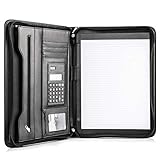
- Still superior, and now upgraded for life’s biggest advancements: Originally crafted to suit the advanced professional, we recently added smart changes to this customized vegan leather portfolio for those returning to pursue their MBA, or interviewing for that next wrung up the ladder; features include solar calculator, full PU leather interior, dual start zipper, and abundant storage so paper never crunches or falls out
- For million project masters: Juggle less, get more done. Professional, thoughtfully designed storage designed with those who “do it all” without batting an eye. Custom pockets allow you to quickly and easily access your tablet, pens, calculator, cards and everything else without giving it a second thought.
- Sleek & stunning in hand - Compact for travel: Leather folder looks gorgeous held in hand walking into the board meeting, law school, or interview while sliding neatly into handbags, backpacks while maintaining far greater storage than traditional leather planners.
- Give the gift that says, “I believe you will succeed” with this premium, practical, stylish gift for graduates, lawyers, business professionals and those on the rise. Carries your entire suite of supplies from travel tickets, documents, resumes, professional pens and everything you need to outshine others in the business world.
- Ultimate satisfaction: Quality. Service. Elation with everything you order from us, that’s the Cossini brand philosophy. From the luxurious PU leather, to the buttery smooth zipper pull, to the organization that flows with your changing life, you’ll feel satisfied with your decision to purchase.
Deciding whether to keep, grow, or exit a business unit
McKinsey’s overview of corporate portfolio strategy describes the kinds of decisions this work informs: optimizing existing businesses, identifying areas for growth, cutting back, or divesting. The overview uses these choices to illustrate what portfolio strategy considers. It does not show that any particular company achieved a result by following them.
A hypothetical illustration
Consider a hypothetical manufacturer with three business units: a mature component line with steady cash flow, a software unit with rising demand but thin margins, and a regional distribution business that shares trucks with the component line. Applying the six steps, leadership might decide to keep the component line funded because it supports the stated objective of stable cash generation, to invest in the software unit only if margin targets are met within a set period, and to review the distribution business because its shared dependencies make a stand-alone exit decision harder to judge. This example is invented to show how the axes interact; it is not a report of any company’s actual decisions.
Windows Errors? Fix Them Before They Spread
Repair common Windows errors and clear accumulated junk for a smoother, more stable PC - no reinstall needed.Free scan · no reinstallOutdated Drivers Are Slowing You Down
One free scan finds every outdated or missing driver and matches the right update for your exact hardware.Free scan · exact hardware matchBest Value
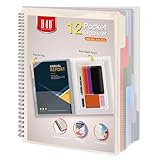
- Includes a poly project organizer folder with six dividers and twelve pockets for organizing multiple projects files neatly, also attached blank tab labels sheet
- Built in clear zipper pouch on the inside back cover for storing more school office supplies with this multi subject folder for convenience
- This folder notebook with pockets features a clear front display cover, so you can insert the custom cover sheet for an easy identification
- Durable poly material is tear and water resistant, spiral binding construction can keep this project organizer laying flat and stay open
- Multi pocket folder with soft morandi colors, each pocket can hold thirteen sheets of paper, fits for letter size documents
Common mistakes and how to avoid them
- Using the word without a scope. If a team says “our portfolio” and means a product catalog, a project list, and a set of business units at once, decisions will be made on different bases. Write the scope in the first line of the portfolio document.
- Treating a matrix as the answer. Portfolio matrices and scoring approaches are decision aids. They organize judgments about markets and capabilities; they do not settle them.
- Assuming diversification lowers risk or raises returns. The cited guidance does not establish that spreading across more businesses produces either outcome. Whether a mix helps depends on the company’s objectives and on how the components relate.
- Promising optimization results. Portfolio review can clarify where resources go, but no cited source establishes a specific financial improvement from doing it.
- Reviewing once. Markets, capabilities, and priorities change. A portfolio set once and never revisited will drift away from the objectives it was built to serve.
For readers who want more depth, the portfolio-planning chapters of a standard marketing textbook cover the analytical side. Check the edition and publisher directly before buying, since editions change.
The Bottom Line
A business portfolio is the set of businesses, products, or initiatives a company runs, managed together so resources follow strategy. Build one by stating objectives, choosing a scope, inventorying components, assessing fit and performance, allocating resources, and setting a review schedule. Use portfolio tools to structure decisions, not to make them automatically.
Quick Recap
Product prices and availability are accurate as of the date/time indicated and are subject to change. Any price and availability information displayed on Amazon at the time of purchase will apply.




