Free tools Windows power users keep installed
One-click scans. No signup required.
A robotics factory needs electrical service and distribution sized to its actual equipment, dependable factory-floor communications, cybersecurity for connected operational technology, and safety measures designed around integrated robot cells. Compressed air, cooling, water, ventilation and wastewater systems are needed only when the process or selected equipment requires them. There is no universal power capacity, network architecture or utility package: the production plan, equipment schedules, site conditions and local rules determine the design.
What does a robotics factory need, at a glance?
Think of factory infrastructure as a connected system, not a shopping list of robots and switches. Electrical and communications systems support production; cybersecurity protects connected controls and data; and safety must account for the complete robot application. Building services and process utilities then follow the needs of the equipment and manufacturing process.
| Infrastructure | What it supports | What determines the design |
|---|---|---|
| Electrical service and distribution | Robots, controllers, drives, production machinery and building systems | Equipment loads and operating patterns, site conditions, continuity needs and local requirements |
| Factory-floor communications | Control, monitoring and movement of production information | Fixed or mobile use cases, protocols, coverage, latency, reliability and interference |
| OT cybersecurity | Robot controllers, PLCs, HMIs, workstations, production servers and enterprise connections | System boundaries, approved access, change control and the facility’s risk-management approach |
| Robot-cell safety | The robot application, including its tooling, workpiece, task, surrounding equipment and people | Risk assessment, integration, operating and maintenance tasks, and jurisdiction |
| Supporting utilities | Process-specific needs such as compressed air, cooling, water or wastewater handling | Equipment specifications and the manufacturing process |
How should a factory plan its electrical power?
Start with an equipment and process load schedule rather than assuming a standard voltage or capacity for a robotics plant. Include robot arms and controllers, drives, conveyors, machine tools, welders or other process equipment, mobile-robot chargers, building systems and planned expansion. The schedule gives engineers a basis for designing service capacity and the facility’s electrical distribution.
Design decisions also depend on when and how loads operate. Startup demand, simultaneous equipment operation, regenerative drives, power quality and the consequences of a short interruption can affect the system and the continuity measures appropriate to the site. Protection, grounding, isolation, safe shutdown and recovery should be considered as part of the electrical design, with qualified professionals applying the requirements for the location.
Quick wins for a faster PC:
Repair Windows errors before they cause bigger problemsFix Now →Scan for outdated or missing drivers - takes under a minuteDriver Scan →Clear out junk files and repair common Windows errorsFree Scan →#1 Best Overall

- WIDE APPLICATION RANGE PC lens has high light transmittance. It can be used in various situations. Suitable for walking, jogging, cycling, road trips or travel, to construction, industry and more.
- Adjustable temples: The length of the temples can be adjusted, so that regardless of the face or head size, it is suitable for men, women, children, teenagers, adults and the elderly. The ergonomic integrated lens design is comfortable and stress-free.
- High-definition anti-fog field of vision: double-layer coating, strong hardness and abrasion resistance, high-tech lens without fogging, high-definition transparency of UV lens, wide-angle vision with humanity design of optical glasses. It also has anti-dust, anti-pollen and anti-allergic functions. It can reduce ultraviolet rays and block glare, protect eyes from harmful light and have anti-splash function to protect eyes from strong impact.
- Ideal for work and entertainment: very suitable for driving, shopping, washing, painting, walking, laboratory, woodworking, construction, DIY work, grinding machine, car factory, ironworks, cycling, shooting or other outdoor activities. In these activities, it can protect your eyes well.
- WIDE APPLICATION RANGE PC lens has high light transmittance. It can be used in various situations. Suitable for walking, jogging, cycling, road trips or travel, to construction, industry and more.
The U.S. Department of Energy’s Industrial Electrification Assessment Framework, published April 22, 2025, is intended to help assess a manufacturing facility’s electrification readiness, strategies, feasibility and implementation resources. It is an assessment framework, not a universal factory power specification.
Budget for the consequences of interruption
For capital planning, compare the cost of providing continuity or ride-through with the operational and recovery consequences of losing power. Which loads need continuity, and what form it should take, depend on the production process and the hazards and losses associated with an interruption. The available evidence does not establish a standard backup arrangement for every robotics factory.
How should the factory-floor network be designed?
Plan communications around what production equipment and people must communicate, and whether devices are fixed or mobile. NIST’s Manufacturing Profile (2016) describes local area network technologies as typical in manufacturing communications. That background does not prescribe a current, universal network design for a particular plant.
Rank #2

- HARD HAT WITH FACE SHIELD AND EAR PROTECTION - This all-in-one chainsaw protective gear comes with a hard hat, an adjustable metal mesh visor, a polycarbonate face shield, and adjustable 25.9 dB SNR ear muffs. Great as a logging helmet, arborist helmet, or for any lumberjack or forestry professional looking for complete chainsaw safety gear.
- SAFETY, PRACTICALITY, AND COMFORT COMBINED - This chainsaw safety helmet with face shield has it all: solid, heavy-duty protection for your eyes, ears, and head, whether you're cutting trees, chopping firewood, clearing out brush, or trimming. Plus, it fits right over your glasses or mask.
- FULLY CUSTOMIZABLE 6-IN-1 DESIGN - This tree climbing helmet can be configured in six different ways to suit your project's needs. Switch between mesh and clear visors, adjust to different angles and depths, fine-tune the headband, and rotate the ear muffs to the back when not in use. Fits head sizes ranging from 21.2in to 24.4in.
- ANSI CERTIFIED CHAINSAW SAFETY EQUIPMENT - This chainsaw mask and its parts are safety-tested for your protection. The hard hat is Z89.1 ANSI-rated, the ear muffs meet ANSI S3.19 standards, and the face visors are ANSI Z87.1 rated. The helmet qualifies as a Type I, suitable for Class E, G, and C settings.
- FORESTRY HELMET FOR PROS AND DIY ENTHUSIASTS - This versatile chainsaw face shield comes with a hard hat with ear protection, making it perfect for all sorts of jobs, from professional forestry to home DIY projects like mowing, trimming, landscaping, construction, or even weed whacking.
Use wired and wireless connections for the jobs they fit
Wired industrial communications may suit fixed cells and equipment; wireless can support mobile robots, sensors and devices whose use case benefits from mobility. Wireless performance depends on the factory layout, obstructions, interference and shared spectrum. NIST identifies reliability, performance, coexistence, latency and scalability as issues to resolve for factory automation. Validate performance in the actual operating environment before relying on wireless for an operationally critical function.
Separate and identify traffic by purpose: safety-related, control-critical, monitoring or business-facing. That classification helps the engineering team evaluate requirements and avoid treating every connection as if it had the same operational consequence.
Specify network hardware from the design
An industrial Ethernet switch is a product category, not a complete network plan or a model recommendation. Selection depends on the designed network, including protocols, environmental rating, redundancy, port count and compatibility with the control system. NIST’s manufacturing communications material supports the need to plan connectivity; it does not establish that any particular retail listing is suitable for a factory.
Rank #3
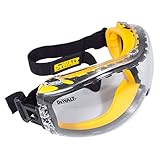
- DEWALT ToughCoat hard coated lens provides tough protection against scratches.
- DEWALT anti-fog lens coating provides tough protection against fogging.
- Soft, dual injected rubber conforms to the face to provide a high level protection from dust and debris.
- Adjustable, elastic cloth head strap provides a comfortable fit.
- Ventilation channels allow breathability and added protection against fogging.
What cybersecurity does connected operational technology need?
Connecting operational technology (OT) to information technology (IT) can support business processes, but it can also increase exposure to threats that may compromise industrial control systems and data. Treat robot controllers, programmable logic controllers (PLCs), human-machine interfaces (HMIs), engineering workstations, production servers and enterprise connections as part of a managed industrial environment.
Plan how remote access is approved and monitored, how system changes are controlled, and how unauthorized software is prevented. NIST’s National Cybersecurity Center of Excellence guide, Protecting Information and System Integrity in Industrial Control System Environments, was finalized with an executive summary dated March 2022. ISA/IEC 62443 is a standards series for requirements and processes used to secure industrial automation and control systems; ISA’s current series page references the 2025 series. These provide relevant frameworks, not a substitute for a site-specific security program.
The Tool Desk
Outbyte Driver Updater FREEScan for outdated or missing drivers - takes under a minuteDriver Scan →Outbyte PC Repair FREEClear out junk files and repair common Windows errorsFree Scan →How does robot safety affect factory infrastructure?
Safety is a property of the integrated application, not just the robot arm. The workpiece, end effector, programmed task, surrounding machinery, access and maintenance activities all affect hazards and safeguards. Plan risk assessment, safeguarding, commissioning, maintenance access, energy isolation and safe recovery alongside the cell and facility layout.
Rank #4

- Essential Workplace Safety Guide – Educates employees on proper PPE usage, reducing injury risks in construction sites, factories, warehouses, and laboratories, ensuring a safer work environment.
- OSHA-Compliant PPE & Hazard Prevention – Follows OSHA safety regulations, providing clear instructions on selecting and using the right protective gear, including gloves, goggles, respirators, and hard hats.
- Clear & Easy-to-Read Design – Features bold text, detailed illustrations, and color-coded sections, making it an effective quick-reference PPE compliance poster for all industrial and workplace environments.
- Durable, Waterproof & Tear-Resistant – Made from high-quality, heavy-duty material, this safety poster withstands harsh industrial conditions and outdoor environments, ensuring long-term visibility.
- Ideal for All Workplaces & Industries – Perfect for construction sites, warehouses, factories, healthcare facilities, and laboratories, reinforcing safety awareness and reducing workplace accidents.
ISO 10218-1:2025 addresses industrial robots, while ISO 10218-2:2025 addresses integration into complete robot applications and cells. Both were published in February 2025. In the United States, OSHA’s robotics standards page says there are currently no specific OSHA standards for the robotics industry. OSHA identifies consensus standards as guidance and states that they are not OSHA regulations. Applicable legal requirements vary by jurisdiction, so qualified professionals must determine the measures required for a particular site.
Independent reader supportYour contribution helps us test, update, and keep practical guides available for everyone.Which supporting utilities are actually necessary?
Do not assume that a factory needs compressed air, chilled water, process water, special ventilation or wastewater treatment simply because it uses robots. Confirm requirements against the selected equipment and the manufacturing process before sizing or installing those systems.
Compressed air is conditional
Some tools or processes may need compressed air; others do not. If the plant uses it, the U.S. Department of Energy’s Better Buildings & Better Plants Initiative recommends attention to demand reduction, system pressure, storage and controls, leaks, equipment and maintenance. The initiative reports that more than 80% of compressed-air input energy is lost as heat; the publication year is not stated on its Compressed Air page. That figure concerns compressed-air input energy, not the share of a robotics factory’s total energy use.
Best Value
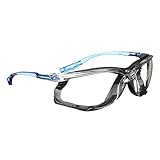
- DUST DEFENSE: Foam removable gasket helps limit eye exposure to nuisance dust and other particles while providing additional cushioning
- WRAP AROUND DESIGN provides extended eye protection and unobstructed viewing
- ANTI-FOG LENS COATING and removable foam-lined gasket with airflow vents make this protective eyewear ideal for humid environments
- CORDED EAR PLUG CONTROL SYSTEM: Unique temple design can keep eyewear and ear plugs attached, untangled, and ready to use. Corded ear plugs can double as a lanyard (ear plugs sold separately)
- SPECIFICATIONS MET: Meets the High Impact Requirements of CSA Z94.3-2007 and the High Impact Requirements of ANSI Z87.1-2020
Match building services to process requirements
Cooling, water, ventilation and wastewater provisions likewise depend on equipment and process requirements. Confirm those needs with suppliers and process engineers, then include the resulting loads and connections in facility planning rather than treating them as standard features of every robot plant.
How can an owner compare infrastructure proposals?
Compare designs against the same operating plan and site constraints. A useful evaluation covers:
- Required capacity and room for planned expansion.
- Uptime needs, safe shutdown and recovery after an interruption.
- Compatibility with robots, machine controls and communications protocols.
- Network reliability, latency, wireless coverage and interference where relevant.
- Cybersecurity, remote access and the management of system changes.
- Safety, maintainability, spare-parts availability, energy use and operating cost.
- Implementation cost and the local requirements that apply to the site.
For wired-versus-wireless decisions, assess mobility alongside coverage, interference, coexistence, latency and reliability. These criteria help compare site-specific alternatives; they do not identify one universally best solution.
What information should be ready before committing capital?
Infrastructure costs become easier to evaluate when the production plan is translated into concrete engineering inputs. Before approving a design or comparing bids, assemble:
Do these 3 things before closing this tab:
1Repair Windows errors before they cause bigger problems2Fix the driver behind crashes, sound loss and screen glitches3Clear out junk files and repair common Windows errors- Production scope: planned processes, throughput assumptions, operating schedule and expansion plans.
- Equipment information: supplier specifications and an equipment list covering electrical loads, control interfaces and any utility requirements.
- Facility information: layout, site electrical conditions and constraints that affect equipment placement, routing or wireless coverage.
- Continuity and safety needs: the effects of power or communications interruptions, plus the tasks and access needed to operate and maintain each cell.
- Jurisdiction and security needs: applicable local requirements, intended OT/IT connections and the process for approving remote access and changes.
An industrial electrical and automation integrator can help translate these inputs into a site design, coordinate equipment interfaces and address robot-cell integration. The scope should make clear who is responsible for electrical design, network design, cybersecurity, safety engineering, commissioning and documentation; those responsibilities are connected but not interchangeable.
Quick Recap
Product prices and availability are accurate as of the date/time indicated and are subject to change. Any price and availability information displayed on Amazon at the time of purchase will apply.




