UScellular is no longer simply “for sale.” Its wireless business was sold to T-Mobile, with the transaction closing on August 1, 2025. The remaining assets were then divided further: AT&T and Verizon bought portions of UScellular’s retained spectrum in 2026, while the company’s tower portfolio and other investments remained with the renamed Array Digital Infrastructure.
For customers, the practical issue is network integration, not a three-way purchase of the carrier. For investors, the important distinction is between the value of the former wireless operation, spectrum proceeds, tower leases and Array’s future.
As an Amazon Associate I earn from qualifying purchases.
The short version
| Asset | What happened | Date or status |
|---|---|---|
| Wireless customers and operations | Acquired by T-Mobile | Closed August 1, 2025 |
| Selected spectrum | Transferred to T-Mobile as part of the main deal | Closed with the wireless transaction |
| Additional retained spectrum | Sold to AT&T for approximately $1.018 billion | Closed January 13, 2026 |
| Additional retained spectrum | Sold to Verizon for $1 billion | Closed June 1, 2026 |
| Further spectrum | T-Mobile completed additional transactions totaling $168 million, primarily involving 700 MHz and 600 MHz licenses | Completed in May 2026 |
| Owned towers | Retained by Array Digital Infrastructure | Approximately 4,400 towers |
That is what “carved up” means here: different buyers acquired different asset categories. It does not mean T-Mobile, AT&T and Verizon jointly bought UScellular as equal partners.
How the UScellular sale unfolded
Telephone and Data Systems and UScellular announced the agreement to sell substantially all of UScellular’s wireless operations and selected spectrum to T-Mobile on May 24, 2024. The announced transaction value was approximately $4.4 billion.
#1 Best Overall

- YOUR CONTENT, SUPER SMOOTH: The ultra-clear 6.7" FHD+ Super AMOLED display of Galaxy A17 5G helps bring your content to life, whether you're scrolling through recipes or video chatting with loved ones.¹
- LIVE FAST. CHARGE FASTER: Focus more on the moment and less on your battery percentage with Galaxy A17 5G. Super Fast Charging powers up your battery so you can get back to life sooner.²
- MEMORIES MADE PICTURE PERFECT: Capture every angle in stunning clarity, from wide family photos to close-ups of friends, with the triple-lens camera on Galaxy A17 5G.
- NEED MORE STORAGE? WE HAVE YOU COVERED: With an improved 2TB of expandable storage, Galaxy A17 5G makes it easy to keep cherished photos, videos and important files readily accessible whenever you need them.³
- BUILT TO LAST: With an improved IP54 rating, Galaxy A17 5G is even more durable than before.⁴ It’s built to resist splashes and dust and comes with a stronger yet slimmer Gorilla Glass Victus front and Glass Fiber Reinforced Polymer back.
The deal then went through separate regulatory reviews. The Department of Justice closed its antitrust investigation on July 10, 2025. That was separate from the Federal Communications Commission’s review of the license transfers and related transaction conditions. The FCC described the transaction as involving wireless assets in 198 Cellular Market Areas and roughly 30% of UScellular’s spectrum portfolio going to T-Mobile. (FCC transaction document; DOJ statement.)
T-Mobile completed the acquisition on August 1, 2025. Its closing announcement valued the transaction at approximately $4.3 billion after adjustments, consisting of about $2.6 billion in cash and approximately $1.7 billion in assumed debt exchanged into T-Mobile notes. The $4.4 billion announcement figure and the $4.3 billion closing figure describe different stages of the transaction rather than necessarily conflicting valuations. (T-Mobile’s closing announcement.)
What T-Mobile actually bought
T-Mobile acquired the operating business that made UScellular a regional wireless carrier. That included customers and customer relationships, stores and sales distribution, customer-care operations, network operations and selected spectrum assets.
Recommended Free Tools
The spectrum included holdings across categories such as AWS, PCS, 600 MHz, 700 MHz and 2.5 GHz, among other licenses. T-Mobile did not acquire every asset associated with UScellular. Owned towers were excluded from the wireless-business sale, and the surviving company retained other spectrum and investments. (T-Mobile filing.)
This distinction matters because “T-Mobile bought UScellular” is useful shorthand for the operating-business transfer, but it is not literally a purchase of every tower, license and corporate asset.
Rank #2

- Please note, this device does not support E-SIM; This 4G model is compatible with all GSM networks worldwide outside of the U.S. In the US, ONLY compatible with T-Mobile and their MVNO's (Metro and Standup). It will NOT work with Verizon, Spectrum, AT&T, Total Wireless, other CDMA carriers, it is also not compatible with their MVNO (Visible, Xfinity Mobile, US Mobile, Cricket Wireless, etc).
- Compatibility with certain third-party devices and accessibility accessories, including some hearing aids, may vary depending on manufacturer support, Bluetooth protocols, software compatibility, and regional firmware limitations. For additional hearing aid compatibility information, please refer to Samsung’s official support documentation.
- 4G LTE Bands: B1/B3/B5/B7/B8/B20/B28/B38/B40/B41
- Display: Super AMOLED, 90Hz, 800 nits (HBM) | 6.7 inches, 110.2 cm2 (~86.0% screen-to-body ratio) | 1080 x 2340 pixels, 19.5:9 ratio (~385 ppi density)
- Camera: 50 MP, f/1.8, (wide), 1/2.76", 0.64µm, AF | 50 MP, f/1.8, (wide), 1/2.76", 0.64µm, AF | 2 MP, f/2.4, (macro)
How AT&T and Verizon fit into the carve-up
After the T-Mobile transaction, Array sold additional retained spectrum to other major carriers. AT&T’s purchase of selected licenses closed on January 13, 2026, for approximately $1.018 billion. Verizon’s purchase of selected licenses closed on June 1, 2026, for $1 billion. Array also disclosed additional T-Mobile spectrum transactions totaling $168 million, completed primarily through 700 MHz and 600 MHz license deals in May 2026.
The exact geographic and band-by-band allocation should be checked against FCC license records rather than inferred from a general press release. Spectrum holdings can involve AWS, cellular, PCS, 3.45 GHz, 700 MHz and other categories, and the practical value of a license depends on its location, bandwidth, propagation characteristics and deployment plans.
Buying spectrum does not instantly change a consumer’s coverage. A carrier must still deploy radios, connect sites to backhaul, obtain site access, support the relevant bands in handsets and integrate the licenses into its network plan.
What happened to UScellular customers?
The transfer of the wireless operating business made customer integration a T-Mobile responsibility, but it did not create one publicly established nationwide timetable for every account, device or market.
Former customers may encounter changes involving:
- Billing systems and account management
- SIM or eSIM replacement
- Device compatibility and supported network bands
- Plan terms, financing and promotional credits
- Stores and customer-support channels
- Coverage, roaming and network performance in particular locations
The former UScellular network footprint and T-Mobile’s network were not identical. Performance can vary between a home, workplace, rural highway and indoor location. A customer should therefore avoid assuming that the experience will be either uniformly better or uniformly worse.
Rank #3

- Please note, this device does not support E-SIM; This 4G model is compatible with all GSM networks worldwide outside of the U.S. In the US, ONLY compatible with T-Mobile and their MVNO's (Metro and Standup). It will NOT work with other CDMA carriers, and it is also not compatible with their MVNO (Visible, Xfinity Mobile, US Mobile, Cricket Wireless, etc).
- Compatibility with certain third-party devices and accessibility accessories, including some hearing aids, may vary depending on manufacturer support, Bluetooth protocols, software compatibility, and regional firmware limitations. For additional hearing aid compatibility information, please refer to Samsung’s official support documentation.
- Camera: 50 MP, f/1.8, (wide), 1/2.76", 0.64µm, AF | 50 MP, f/1.8, (wide), 1/2.76", 0.64µm, AF | 2 MP, f/2.4, (macro). Battery: 5000 mAh, non-removable | A power adapter is NOT included.
The sale also did not mean that every former UScellular tower became a T-Mobile-owned tower. T-Mobile acquired the wireless business while Array retained its tower portfolio and became a major infrastructure landlord.
Windows Errors? Fix Them Before They Spread
Repair common Windows errors and clear accumulated junk for a smoother, more stable PC - no reinstall needed.Free scan · no reinstallCrashes, No Sound, or Screen Glitches?
Random freezes, missing sound and display glitches usually trace back to one bad driver. Find and replace yours safely.Free scan · under a minuteWhat happened to the towers?
Array retained approximately 4,400 owned towers. T-Mobile entered a 15-year Master License Agreement covering a minimum of 2,015 incremental towers and extended leases on approximately 600 towers where T-Mobile was already a tenant. (UScellular transaction details.)
In practical terms, T-Mobile became a long-term tenant on much of the relevant infrastructure rather than acquiring the entire tower portfolio. Array described itself at the time as the fifth-largest tower business in the United States; that ranking is a company characterization, not an independently verified ranking in this article.
UScellular became Array Digital Infrastructure
After completing the wireless sale, United States Cellular Corporation changed its name to Array Digital Infrastructure, Inc. Its NYSE ticker changed from USM to AD in August 2025. The surviving business retained towers, some spectrum and other investments. (Company announcement.)
Array’s business therefore shifted from operating a regional consumer wireless carrier toward tower ownership, leasing and spectrum monetization. Its later spectrum transactions were accompanied by special dividends of $10.25 per share after the AT&T transaction and $11 per share after the Verizon transaction. Those were historical distributions tied to asset sales, not recurring wireless-service income.
Rank #4

- Charger NOT Included, 6.7" Super AMOLED FHD+, 90Hz Refresh Rate, 385 ppi, 800 nits (HBM), 1080x2340px, 5000mAh Battery
- 128GB, 4GB RAM, microSDXC, Exynos 1330 (5nm), Octa-Core, Mali-G68 MP2 or Mali-G57 MC2 GPU
- Rear Camera: 50MP, f/1.8 (wide) + 5MP, f/2.2 (ultrawide) + 2MP, f/2.4 (macro), LED flash, panorama, HDR; Front Camera: 13MP, f/2.0, Android 14, up to 6 major Android upgrades, One UI 6.1
- 3G: HSDPA 850/900/1700(AWS)/1900/2100; 4G LTE: 1/2/3/4/5/7/12/13/14/20/25/26/28/29/30/38/39/40/41/48/66/71, 5G: 2/5/25/41/66/71/77/78 SA/NSA/Sub6/mmWave - Nano-SIM + eSIM
- US Model – Global Connectivity – Compatible with Most GSM Carriers like T-Mobile, AT&T, MetroPCS, etc. Will Also work with CDMA Carriers Such as Verizon, Straight Talk.
In May 2026, TDS announced a nonbinding proposal to acquire the Array shares it did not already own. The Array special committee had not made a decision at the time of Array’s June 1 spectrum-sale announcement. That proposal is a separate corporate-development matter from the completed sale of UScellular’s wireless business.
What the deal means for competition
The transaction reduced the number of independent facilities-based wireless operators in markets where UScellular had operated. That is why the deal received regulatory scrutiny, particularly around market concentration, spectrum holdings and the effect on rural alternatives.
At the same time, the final structure was not simply a transfer of every UScellular asset to T-Mobile. Spectrum divestitures and later license sales put portions of the retained portfolio in the hands of AT&T and Verizon, while tower ownership remained with Array. The competitive effect can therefore differ by market:
- A former UScellular customer may have more practical choices if AT&T or Verizon has strong local coverage.
- A spectrum sale may improve a carrier’s future capacity without producing an immediate consumer-visible change.
- Array’s continued tower ownership preserves an infrastructure landlord separate from T-Mobile.
- Rural competition depends on local coverage, roaming, retail access and network investment—not only on which company owns a license.
What former customers should check before switching
Former UScellular customers should not switch solely because another carrier bought some UScellular spectrum. Compare the actual service available at the locations that matter most.
What’s actually slowing this PC down?
Pick the symptom - the matching free tool is one click away.
- Check coverage at your address and regular travel routes. Include workplaces, schools, rural roads and frequently visited buildings.
- Test indoor performance. Coverage maps are predictions and may not reflect building materials, terrain or congestion.
- Confirm device compatibility. Check whether the phone is unlocked and supports the carrier’s required 4G and 5G bands, SIM or eSIM setup.
- Calculate the real monthly cost. Include taxes, fees, device payments and the price after promotional credits expire.
- Review existing obligations. Check installment balances, promotional credits, prepaid terms and any account changes before porting a number.
- Compare roaming. This can be especially important in former UScellular strongholds and rural travel corridors.
- Consider support and stores. A lower advertised price may not compensate for poor local support if you rely on in-person service.
Official plan pages for comparison include T-Mobile, Verizon and AT&T. Prices, promotions, taxes, fees and eligibility rules change, so verify the live terms before making a decision.
Best Value
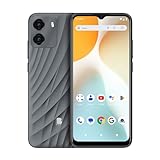
- GSM Unlocked: Enjoy seamless connectivity with your preferred GSM carrier. Compatible with T-Mobile, Metro PCS, AT&T, Cricket, Mint Mobile and other GSM networks. SIM card not included. For network compatibility, please check with your carrier. Note: Not compatible with CDMA networks like Verizon (Visible, Spectrum Mobile, US Mobile, Total Wireless, Straight Talk Wireless)
- Boundless Views: Enjoy immersive viewing on the spacious 6.5” HD+ display. Whether you're watching videos, browsing, or gaming, every detail comes through with stunning clarity.
- Smooth Performance, All Day: Powered by an efficient octa-core processor, the G35 ensures smooth performance for your everyday tasks. Enjoy faster app launches, seamless multitasking, and reliable speed.
- Snap, Share, Repeat: The G35 features a dual rear camera setup for sharp, detailed shots, and a front-facing camera that’s perfect for selfies and video calls. Capture every moment with ease and clarity.
- Effortless Access: Keep your phone secure with A.I. Face ID technology. Instantly unlock your G35 with just a glance. It's fast, easy, and secure.
What investors should separate
For financial analysis, the former UScellular transaction has at least four distinct components:
- The sale value of the wireless operating business
- Proceeds from retained-spectrum sales
- The value and recurring lease economics of Array’s towers
- Future corporate ownership and distributions involving Array
These components should not be treated as if they were recurring wireless revenue. Spectrum sales can produce substantial one-time proceeds, while tower leasing is a different business with its own tenant, contract and capital requirements. Investors should review Array and TDS filings for current ownership, distributions, debt, lease commitments and any developments concerning TDS’s proposal.
Bottom line for readers
The accurate current description is that UScellular was sold and split by asset category. T-Mobile acquired the wireless carrier and its customers in 2025. AT&T and Verizon later bought portions of the remaining spectrum in 2026. Array Digital Infrastructure retained approximately 4,400 towers and other residual assets, with T-Mobile leasing many sites under a long-term agreement.
Do these 3 things before closing this tab:
1Scan for outdated or missing drivers - takes under a minute2Repair Windows errors before they cause bigger problems3Fix the driver behind crashes, sound loss and screen glitchesFor customers, the decision is local: compare coverage, device compatibility, account terms and total cost. For investors, the key question is no longer whether UScellular might be sold, but how the wireless-sale proceeds, spectrum monetization and tower business shape Array’s future.
Quick Recap
Product prices and availability are accurate as of the date/time indicated and are subject to change. Any price and availability information displayed on Amazon at the time of purchase will apply.




