What’s actually slowing this PC down?
Pick the symptom - the matching free tool is one click away.
Federal farm-work rules for minors depend on the worker’s age, whether school is in session, and the task. Workers under 16 are generally barred from specified hazardous agricultural occupations, while narrow exceptions apply in particular circumstances. State law may add stricter age, hours, certificate, night-work, or task rules, so check the rules for the state where the work will take place before assigning a job.
What are the federal age rules for farm work?
The U.S. Department of Labor’s Fact Sheet #40, revised in December 2016, summarizes the federal baseline for agricultural employment. These rules address federal youth-employment restrictions; they do not resolve every state requirement.

| Worker’s age or situation | Federal agricultural rule | Conditions |
|---|---|---|
| 16 or older | May work in any agricultural job at any time under the federal youth-employment rule. | State law may impose additional restrictions on minors. |
| 14–15 | May work outside school hours in nonhazardous agricultural jobs. | Limited training-based exceptions can permit certain specified hazardous work; the requirements depend on the occupation and qualification. |
| 12–13 | May work outside school hours in nonhazardous agricultural jobs. | A parent must provide written consent or work on the same farm. |
| Under 12 | May work outside school hours in nonhazardous agricultural jobs only in limited circumstances. | The farm must qualify for an exemption from federal minimum-wage provisions, and the child must have parental consent. Do not assume a farm qualifies. |
| Local 10- or 11-year-olds harvesting by hand | A narrow short-season waiver may allow this work. | This is a limited waiver, not general permission for 10- and 11-year-olds to work on farms. |
| Minor working on a parent’s farm | A minor of any age may work at any time in any job on a farm owned or operated by their parent or parents under the federal parental-farm exception. | The exception is specific to a farm owned or operated by the worker’s parent or parents; a parent merely working on a farm is not the same exception. |
The federal agricultural youth rules apply to migrant and local resident children alike, according to the Department of Labor’s Agricultural Employment topic page.
Which farm tasks are prohibited for workers under 16?
Federal restrictions are based on listed hazardous occupations, not simply on a job title. A worker described as a “general farmhand,” for example, still needs a task-by-task review. Fact Sheet #40 includes examples such as:
#1 Best Overall
- Operating a tractor with more than 20 PTO horsepower.
- Operating or working with specified corn, cotton, or grain harvesting machinery.
- Operating or working with trenchers, earthmoving equipment, forklifts, or power-driven circular, band, or chain saws.
These are examples, not the complete list. Check the full Department of Labor bulletin or the applicable regulation before assigning equipment or work that may fall within a hazardous-occupation category.
When can training affect the restriction?
Some 14- and 15-year-olds may qualify for a limited exception for certain otherwise prohibited work if they are enrolled in a vocational-agriculture program or hold qualifying certificates after approved 4-H or vocational-agriculture training. The exception is tied to specified occupations and training requirements; it is not blanket permission to operate farm machinery. Verify that the worker, training, and task each meet the applicable conditions.
Rank #2
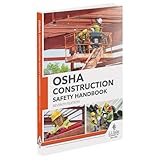
- 2024 OSHA Construction Safety Book is the seventh edition with the new OSHA HazCom final rule on 5/20/24. While the rule takes effect 7/19/24, the compliance dates don’t begin until 1/19/26 per 29 CFR 1910.1200(j).
- Construction Site Book offers quick access to essential OSHA regulations, jobsite hazards, and practical safety tips. It also helps employees identify hazards and prevent injuries and illnesses.
- Features easy-to-read format, full-color images, chapter quizzes with answer key, and comes in a compact size making it a convenient reference for employees.
- Critical topics include Confined Space Entry; Cranes & Derricks; Electrical Safety; Emergency Response; Ergonomics & Back Safety; Excavations; Fall Protection; First Aid & Bloodborne Pathogens; HazCom; Health & Wellness; Jobsite Exposures; Lockout/Tagout; Ladders & Stairways; Materials Handling/Storage; Motor Vehicles; PPE; Scaffolds; Site Safety & Security; Slips, Trips & Falls; Tool Safety; Welding, Cutting & Brazing; and Work Zone Safety.
- Specifications: 5 1/4” x 7 1/4", English, Soft bound. 7th Edition. Copyright 2024.
Why must farmers check state law?
States differ in agricultural minimum ages, age or employment certificates, school-day and weekly work-hour limits, night-work restrictions, hazardous occupations, and family-farm exceptions. Some state child-labor provisions exempt or do not cover certain agricultural work, but that does not by itself remove applicable federal requirements. When both state and federal standards apply, the more restrictive applicable rule controls.
The Department of Labor’s state comparison, revised December 10, 2025, is a useful starting point, not a substitute for current official state guidance. The Department advises employers to consult the relevant state labor office. Rules can depend on the precise work and circumstances, so check the state requirements that apply to the farm and the worker rather than relying on a general age chart.
The Tool Desk
Outbyte PC Repair FREEClear out junk files and repair common Windows errorsFree Scan →Outbyte Driver Updater FREEScan for outdated or missing drivers - takes under a minuteDriver Scan →Rank #3

- Updated Compliance: While the new rule takes effect on 7/19/2024, training and compliance dates don’t start until 1/19/2026, giving your team ample time to prepare with this thorough guide to OSHA regulations (29 CFR 1910.1200(j)).
- Comprehensive Safety Training Handbook: Prepares your employees for 25 of OSHA’s hottest safety topics, from Confined Space Entry to Workplace Violence, ensuring they are equipped with vital safety knowledge for a safer work environment.
- In-Depth, Easy-to-Understand Content: Each chapter tackles key workplace hazards like Electrical Safety, Lockout/Tagout, Respiratory Protection, and more, helping to prevent injuries and illnesses while promoting safe practices.
- Interactive Learning with Quizzes: Engaging chapter review quizzes reinforce safety concepts, making it easier for employees to retain and apply the knowledge, with downloadable answer keys for easy tracking.
- Specifications: English, Softbound, full-color pages (272 pages) offer clear, visually appealing safety information for a diverse workforce, with home safety details included throughout.
How should a farmer check a proposed job?
- Check the state where the work will occur. Review current agriculture-specific child-labor rules and guidance from that state’s labor agency. Use the Department of Labor state comparison as a starting point.
- Confirm the worker’s age and schedule. Determine the worker’s age and whether school is in session during the proposed work. Federal rules for workers under 16 distinguish work outside school hours.
- Describe the actual task and equipment. Compare the work—not just its job title—with the federal hazardous-occupation list and applicable state restrictions.
- Verify any claimed exception. Check the specific facts and requirements if relying on parental consent, a parent working on the same farm, the parent-owned-or-operated farm exception, or a training exception.
- Check documentation and scheduling rules. Confirm whether the state requires an age or employment certificate and whether it limits hours or night work.
- Keep applicable records. The Department of Labor’s Fact Sheet #12, published in January 2025, identifies issues such as recording minors’ birth dates and tracking hours for piece-rate workers. Exact recordkeeping duties depend on coverage and circumstances.
How do youth rules relate to other FLSA duties?
The Fair Labor Standards Act (FLSA) covers most agricultural employment, while providing statutory exemptions from some wage requirements. The Department of Labor describes agriculture as including primary activities such as growing crops and raising livestock, as well as certain secondary practices performed by a farmer or on a farm in conjunction with farming.
Do not assume that an exemption from one wage provision also removes child-labor or recordkeeping obligations. Those are related FLSA topics, but their application depends on the relevant rule and circumstances. Where a farm labor contractor recruits or supplies workers, joint employment may also make both the contractor and farmer responsible for applicable FLSA minimum-wage, overtime, recordkeeping, and youth-employment requirements.
Quick Recap
Best Value
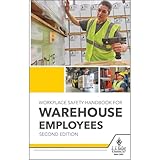
- Comprehensive Workplace Safety Handbook: This OSHA safety handbook serves as an essential reference for employees, ensuring safe work practices, proper equipment usage, and clear emergency response procedures in warehouse settings.
- Includes Updated OSHA HazCom Regulations: Reflecting the 2024 OSHA HazCom final rule, this handbook provides updated information on storage, spill management, heat safety, and natural disaster preparedness, offering employees essential training on handling hazardous materials and emergencies.
- Detailed Coverage of OSHA Standards & Responsibilities: Addressing critical topics such as your rights under OSHA, employer responsibilities, fall protection, respiratory safety, and electrical safety, this handbook offers a complete guide for maintaining workplace safety.
- Targeted Safety Training for Warehouse Environments: Focusing on the unique needs of warehouse workers, this handbook covers PPE, forklift safety, ladder safety, lockout/tagout procedures, and 15 other key topics to ensure a safe, compliant, and efficient working environment.
- 5.25" x 8.25", English softbound handbook. Copyright Date 2024. 220 pages.
Rank #4

- 2024 OSHA Construction Safety Book is the seventh edition with the new OSHA HazCom final rule on 5/20/24. While the rule takes effect 7/19/24, the compliance dates don’t begin until 1/19/26 per 29 CFR 1910.1200(j).
- Construction Site Book offers quick access to essential OSHA regulations, jobsite hazards, and practical safety tips. It also helps employees identify hazards and prevent injuries and illnesses.
- Features easy-to-read format, full-color images, chapter quizzes with answer key, and comes in a compact size making it a convenient reference for employees.
- Critical topics include Confined Space Entry; Cranes & Derricks; Electrical Safety; Emergency Response; Ergonomics & Back Safety; Excavations; Fall Protection; First Aid & Bloodborne Pathogens; HazCom; Health & Wellness; Jobsite Exposures; Lockout/Tagout; Ladders & Stairways; Materials Handling/Storage; Motor Vehicles; PPE; Scaffolds; Site Safety & Security; Slips, Trips & Falls; Tool Safety; Welding, Cutting & Brazing; and Work Zone Safety.
- Specifications: 5 1/4” x 7 1/4", Spanish, Soft bound. 7th Edition. Copyright 2024.
Product prices and availability are accurate as of the date/time indicated and are subject to change. Any price and availability information displayed on Amazon at the time of purchase will apply.




