Elevated Treasury yields generally put upward pressure on fixed mortgage rates and other long-term borrowing costs, but they do not set those rates directly. Mortgage pricing also depends on mortgage-backed securities, lender and servicing costs, market volatility, and borrower-specific terms. Short-term and variable-rate borrowing can follow different benchmarks.
Why the 10-year Treasury yield matters to mortgage rates
Investors use the 10-year Treasury yield as a reference point for longer-term interest rates. Fixed mortgages also extend over many years, so their rates tend to move with long-term market yields. When Treasury yields rise, mortgage rates often face upward pressure; when yields fall, they may face downward pressure.
The relationship is not a formula. Mortgage rates also reflect mortgage-backed securities (MBS) pricing, interest-rate volatility, guarantee and origination costs, servicing, lender margins, and the terms of the borrower’s loan. The Federal Reserve Bank of St. Louis illustrates the basic relationship with a hypothetical example: if the 10-year Treasury yield were 4% and the relevant mortgage spread were 2 percentage points, the mortgage rate would be around 6%. That is an illustration, not a current quote. Federal Reserve Bank of St. Louis, “What Determines Mortgage Rates?”
What a Treasury yield does—and does not—represent
A Treasury yield is a market benchmark, not a consumer loan offer. The Treasury’s constant-maturity (CMT) yields are interpolated from a daily par curve based on closing market bid quotations. A quoted 10-year CMT yield therefore does not necessarily describe the yield on one specific Treasury note or a completed transaction in that security. U.S. Treasury, Daily Treasury Rates
What’s actually slowing this PC down?
Pick the symptom - the matching free tool is one click away.
#1 Best Overall
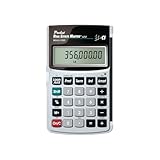
- Loan Amortization and Remaining Balances
- Instant Principal, Interest, Interest Only and Total Payments
- Future Values
- Date math function
Similarly, a national mortgage-rate average is not an offer available to every borrower. It summarizes rates for a defined survey profile, while a lender’s quote reflects the borrower, property, loan structure, fees, and market conditions at the time.
Why mortgage rates can diverge from Treasury yields
The difference between a mortgage rate and a Treasury yield is often described as a spread. It can widen or narrow, so mortgage rates do not have to rise or fall by the same amount as Treasury yields. Changes in MBS pricing, volatility, lender costs, and margins can offset or amplify a move in the benchmark.
A Federal Reserve study of the 2020 market episode found that, except during financial-market turbulence in March, a sustained 100-basis-point increase in the primary-secondary spread more than accounted for the elevated mortgage-Treasury spread. The paper also described how Federal Reserve MBS purchases lowered mortgage rates and supported mortgage credit supply during that episode. This is historical, episode-specific evidence—not a current spread estimate. Federal Reserve researchers, “Mortgage Rates and Treasury Yields”
Rank #2

- SPEAKS YOUR LANGUAGE: Keys clearly labeled in residential mortgage finance terms like Loan AMT, Int, Term, PMT. This industry-standard calculator is super easy to use on all realty financing matters from finding a loan that works for your client to considering trust deeds investments, or finding remaining balances or balloon payments and much more
- CONFIDENTLY AND EASILY SOLVES: All your clients' financial questions whether they are buyers, sellers, investors or renters. Increase your perceived professionalism as a new agent, experienced broker or seasoned loan officer. Close more home sales and impress your clients with fast, accurate answers to all their real estate finance questions
- DEDICATED BUYER QUALIFYING KEYS: Enter client's income, debt and expenses to pre-qualify them to only show properties they can afford. Include tax, insurance and mortgage insurance then compare loan options and payment solutions to give your client choices before they make an offer to buy
- FIGURE OUT THE RIGHT LOAN: At the press of a button for jumbo, conventional, FHA/VA, or even 80:10:10 or 80:15:5 combo loans; check to see if ARMs or bi-weekly loans, quarterly payments or if interest-only payments are the answer; giving your client more choices; easily perform what if loan or tvm calculations Find loan amount, term, interest or PITI or PI payments
- BECOME AN INVALUABLE RESOURCE: Reduce your clients' confusion and uncertainty; ensuring they are able to make a purchase offer; knowing they can afford the down payment; and determining which is the right loan for them. Date-math for listings and contracts too. Comes with a protective slide cover, quick reference guide, pocket User's Guide, and long-life batteries
In a 20-year sample, the Federal Reserve Bank of Dallas analysis found that the 10-year yield level, yield-curve slope, and implied interest-rate volatility together explained approximately 70% of variation in mortgage spreads over 10-year Treasury yields. That result underscores why the benchmark alone does not determine a mortgage rate. Federal Reserve Bank of Dallas, “What drives mortgage rates and their response to monetary policy changes”
PC Slower Than It Used to Be?
A free scan shows the junk files, broken settings and background clutter dragging Windows down - then fixes them in one click.Free scan · Windows 10 & 11Crashes, No Sound, or Screen Glitches?
Random freezes, missing sound and display glitches usually trace back to one bad driver. Find and replace yours safely.Free scan · under a minuteLatest cited rates and their dates
The observations below are dated, and the mortgage figures are national survey averages rather than personalized quotes.
| Measure | Rate | As of | What it represents |
|---|---|---|---|
| 10-year Treasury constant-maturity yield | 5.28% | October 2, 2026 | Federal Reserve H.15 reported observation; a market benchmark, not a mortgage quote. |
| 30-year fixed mortgage average | 7.28% | October 1, 2026 | Freddie Mac PMMS survey average; up from 7.03% the prior week. |
| 15-year fixed mortgage average | 6.60% | October 1, 2026 | Freddie Mac PMMS survey average. |
| Bank prime loan rate | 7.00% | October 5, 2026 release | Federal Reserve H.15 observation; a separate reference rate from the 10-year Treasury. |
Freddie Mac describes its PMMS borrower profile as prime conventional conforming purchase mortgages for owner-occupied, one-unit homes with 20% down. Its averages do not determine the rate a particular shopper will receive. Freddie Mac, “Mortgage Rates Average 7.28%” The Treasury observation is from the Federal Reserve’s H.15 release. Federal Reserve, H.15 Selected Interest Rates, October 5, 2026
Rank #3

- DEDICATED FUNCTION KEYS for Quick Financial Solutions: Clearly labeled function keys enable you to quickly and confidently provide financial answers and options for your clients, whether in the office, in the car or at an open house. Compare loan options and provide payment solutions to give your client choices
- INSTANT FINANCIAL PROBLEM SOLVING: Solve the financial questions your clients have whether they are buyers, investors or renters; increase your perceived professionalism and close more home sales by quickly answering real estate finance problems including remaining balances
- RESIDENTIAL REAL ESTATE FINANCE TERMS: Keys labeled in residential real estate finance terms like Loan AMT, Int, Term, PMT; Calculator is super easy to use to determine a mortgage loan that works for your client
- VERSATILE LOAN CALCULATION OPTIONS: Calculate 80:10:10 or 80:15:5 combo loans at the press of a button; check to see if ARMs or bi-weekly loans, quarterly payments or if interest-only payments are the answer; giving your client more choices
- COMES COMPLETE: Comes with a protective slide cover, quick reference guide, pocket user's guide, two long-life batteries, and 1-year warranty
How higher rates affect a homebuyer or homeowner
For a buyer comparing homes or loan offers
For a given loan amount and term, a higher offered fixed rate means a higher principal-and-interest payment, all else equal. If the buyer must stay within a fixed payment budget, that higher payment reduces the principal the budget can support. Taxes, insurance, mortgage insurance, and any homeowners’ association charges affect the total housing budget but are not part of that interest-rate comparison.
For someone with an existing fixed-rate mortgage
A change in Treasury yields does not reset the rate written into an existing fixed-rate loan. A new rate matters if the borrower refinances or takes out a new loan, subject to qualification and the offer available at that time.
Free tools Windows power users keep installed
One-click scans. No signup required.
For an adjustable-rate borrower
An adjustable-rate mortgage changes according to its contract: the index, margin, adjustment schedule, and any caps govern how and when the rate can reset. A move in the 10-year yield does not, by itself, tell a borrower when or by how much a particular loan will change.
Rank #4

- SPEAKS YOUR LANGUAGE: Keys clearly labeled in residential mortgage finance terms like Loan Amt, Int, Term, Pmt; this industry-standard calculator is super easy to use on all realty financing matters from finding a loan that works for your client to considering trust deeds investments, or finding remaining balances or balloon payments and more
- CONFIDENTLY AND EASILY SOLVE: Clients' financial questions whether they're buyers, sellers, investors or renters. Increase your perceived professionalism as a new agent, experienced broker or seasoned loan officer. Close more home sales and impress your clients with fast, accurate answers to all their real estate finance questions from PITI Payments to IRR, NPV and Cashflows
- DEDICATED BUYER QUALIFYING KEYS: Enter client's income, debt and expenses to pre-qualify them to only show properties they can afford. Include tax, insurance and mortgage insurance then compare loan options and payment solutions to give your client choices before they make an offer to buy
- FIGURE OUT THE RIGHT LOAN: For your client at the press of a button for jumbo, conventional, FHA/VA, or even 80:10:10 or 80:15:5 combo loans; check to see if ARMs or bi-weekly loans, quarterly payments or if interest-only payments are the answer; giving your client more choices; easily perform what if loan or TVM calculations find loan amount, term, interest or PITI or PI payments
- BECOME AN INVALUABLE RESOURCE: To your clients by reducing their confusion and uncertainty; ensuring they are able to make a purchase offer; knowing they can afford the down payment; and determining which is the right loan for them. Date-math for listings and contracts too. Comes with a protective slide cover, quick reference guide, pocket user's guide, and long-life battery
How to compare mortgage offers
Use actual lender quotes rather than treating either a Treasury yield or a national average as your personal rate. When comparing offers, line up the terms that change both the payment and the total cost:
- Rate type and term: compare fixed with fixed or adjustable with adjustable, and use the same repayment term.
- Loan amount and down payment: keep the amount borrowed and loan-to-value ratio comparable.
- Credit profile and property: make sure each lender is pricing the same borrower and property assumptions.
- APR, fees, and discount points: examine the annual percentage rate alongside upfront charges and points, and check what costs are included.
- Rate-lock period: compare how long each quoted rate is locked and the terms that apply if closing is delayed.
A national PMMS average cannot identify the best offer for an individual borrower; the relevant comparison is among personalized quotes with comparable terms.
What about other borrowing costs?
Long-term corporate debt and fixed mortgages are exposed to longer-term market yields, along with their own risk spreads and pricing factors. Short-term or variable-rate borrowing may instead be linked to a different reference rate. The Federal Reserve’s October 5, 2026 H.15 release reported a 7.00% bank prime rate alongside the cited Treasury observations, illustrating that prime is a separate benchmark.
Do these 3 things before closing this tab:
1Scan for outdated or missing drivers - takes under a minute2Clear out junk files and repair common Windows errors3Fix the driver behind crashes, sound loss and screen glitchesBest Value

- Extra large 12-digit angled display.
- Loan Wizard.
- Automatic Tax Keys.
- Selectable decimal setting.
- Input any three loan variables to compute the fourth.
There is no single adjustment that applies to every auto loan, credit card, business loan, or adjustable-rate mortgage. The benchmark, contract terms, lender pricing, and timing differ by product; the cited observations do not establish a current rate for each category.
Do forecasts tell you where mortgage rates will go?
A Federal Reserve 2026 stress-test scenario held the 10-year Treasury yield around 4.1%, its fourth-quarter 2025 value, and modeled mortgage rates declining from 6.2% at the end of 2025 to 5.7% by the third quarter of 2028. Those are scenario assumptions and modeled values for a stress test—not current market data or a Federal Reserve forecast for what rates will do. Federal Reserve, 2026 Scenario Review of Comments
Quick Recap
Product prices and availability are accurate as of the date/time indicated and are subject to change. Any price and availability information displayed on Amazon at the time of purchase will apply.