A major area of study is the main academic subject a student focuses on within a degree program. For example, a student earning a bachelor’s degree might major in biology while also taking general education courses and electives. The exact requirements vary by college and program, and the term is especially common in U.S. higher education.
What a major area of study means
A major identifies the field in which a student concentrates a substantial part of their coursework. EducationUSA defines a major as a student’s “field of concentration”; its undergraduate study guide says, “Your major is the field of study in which you plan to specialize.” The guide is identified as a 2018 revision: EducationUSA’s undergraduate study guide.


A major is one part of a degree, not necessarily the student’s only subject. U.S. undergraduate programs can combine major courses with core or general education requirements and electives. Core courses provide a broader academic foundation, while electives allow students to explore other subjects, as described in EducationUSA’s overview of the U.S. educational system.
How a major differs from a degree, minor, or department
- Degree: The degree is the credential a student earns, such as an associate or bachelor’s degree. The major is the field studied within that program. EducationUSA describes U.S. undergraduate degrees and their broader course requirements in its undergraduate study guidance.
- Minor: A minor is a secondary field of concentration, while the major is the primary one. EducationUSA’s glossary also notes that some students pursue more than one major.
- Department: A department is an administrative unit that offers instruction in a field. A major is the student’s academic concentration. A major may be housed in a department, but the terms describe different things.
How much of a degree does a major cover?
There is no universal course count or percentage. EducationUSA’s U.S.-focused glossary gives a general description that major courses represent 25–50% of the courses required for a degree. That range is not a rule for every institution, program, or country; schools set their own requirements. For a particular program, consult its current catalog or degree plan rather than assuming the range applies.
PC Slower Than It Used to Be?
A free scan shows the junk files, broken settings and background clutter dragging Windows down - then fixes them in one click.Free scan · Windows 10 & 11Outdated Drivers Are Slowing You Down
One free scan finds every outdated or missing driver and matches the right update for your exact hardware.Free scan · exact hardware match#1 Best Overall
When do students choose or declare a major?
The timing depends on the institution and program. Some programs are structured around a specific field from the outset, while other bachelor’s programs allow greater flexibility. EducationUSA’s FAQ describes the end of the second year as a typical time to declare, but its study guide notes that students do not necessarily have to declare when they enter university. Check the school’s current catalog and ask an academic adviser about its deadline and process: undergraduate study guidance and EducationUSA’s frequently asked questions.
What “major field of study” can mean on a form
On an education, employment, or student-record form, “major field of study” usually asks for the student’s primary academic subject—for instance, economics or nursing. In U.S. student-record privacy guidance, the Department of Education lists “major field of study” among examples of directory information under FERPA. Whether a particular school treats it as directory information, and what rights a student has to restrict disclosure, depends on the school’s policy. Check the institution’s current FERPA notice for its practices: U.S. Department of Education guidance on directory information.
Rank #2

- ELEGANT & FUNCTIONAL ACADEMIC PLANNER - This 6x8.6in academic school planner 2026-2027 student features a sleek black leatherette hardcover with gold foil accents. It’s a student-friendly planner that upgrades your study space and keeps you on track.
- SMART LAYOUTS FOR STUDENT LIFE - The 240-page homework planner for students includes undated monthly calendars, weekly spreads, class schedule, semester goals, project planners, grade tracker & more, perfect for managing academic demands efficiently.
- DURABLE & READY FOR DAILY USE - Crafted with a durable, waterproof hardcover, thick offset pages and a sturdy elastic band closure, this student planner with stickers are built to handle the wear and tear of school, work, or on-the-go life.
- EXTRAS INCLUDED & PERFECT FOR GIFTING - This school planner student comes with 2 ribbon bookmarks, a back pocket, a pen holder, and over 300 added stickers with gold foil accents. Packaged in a protective gift box, it’s beautifully gift-ready.
- WE JUST WANNA MAKE YOU SMILE - Your happiness is our priority. If this agenda book for school ever falls short, we'll make it right. Enjoy this 240-page school planner for college with 300+ stickers ready for every class, midterm, & semester project.
How to find a program’s actual major requirements
- Open the institution’s current academic catalog or the program’s official page.
- Look for required major courses or credits, any prerequisite courses, and rules for electives or concentrations.
- Check when students must declare the major and whether admission to the program has separate conditions.
- Ask the department or academic advising office to clarify requirements that are unclear or may have changed.
U.S. colleges can differ in course structure and credit requirements, so the catalog for the specific school and program is the practical authority. EducationUSA’s guidance on researching undergraduate options explains that U.S. institutions set their own requirements.
Quick Recap
Best Value
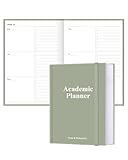
- Plan Smart, Not Hard — With structured layouts for goal-setting, timetables, and project tracking, this Undated Academic Planner keeps your academic life streamlined and stress-free.
- Start Anytime, Skip the Waste — Unlike rigid pre-dated planners, this 2026-2027 Student Planner adapts to your schedule, making it perfect for any academic journey.
- Engineered for Success — More than just a calendar, this School Planner 2026-2027 includes habit trackers, grade logs, and progress reviews—your all-in-one tool for academic achievement.
- Work Efficiently, Stay on Schedule — The Academic Planner size of 5.8" x 8.5", helps students organize deadlines, assignments, and personal goals, making it the ultimate productivity tool for a busy schedule.
- Durable & Dependable — Featuring a sturdy hardcover, thick premium paper, and handy extras like dual bookmarks and an elastic band, this 2026-2027 college Planner (or Nursing School Edition) is built to last through daily classroom and on-the-go use.
Rank #4

- Streamlined So You Actually Finish It. Ten focused sections cover what matters — personal details, medical and healthcare directives, contacts, dependents and pets, finances, accounts, and final wishes — without the dozens of categories that leave a planner half-done in a drawer. Go at your own pace, one section at a time.
- Opens Completely Flat and Stays That Way. The half-hidden spiral binding lets you write on either page without fighting the spine, and holds its shape instead of bending. Compact B5 size (8 1/2 × 10 1/4 inches) fits in a tote and sits easily on a nightstand or shelf.
- Linen Cloth Cover, Built to Last. A soft linen cover that wipes clean, premium 120 GSM bleed-resistant paper, and a clear, easy-to-read layout. A large built-in back pocket keeps important documents tucked in with the planner. All sections and prompts are printed in English.
- Everything in One Place for Your Family. Gather the details your loved ones need so no one is left guessing or searching. Guided prompts include space for your notes and notes for your executor. It’s an organizer for your information and wishes — not a replacement for a will or legal directive.
- Built from Lived Experience. From The Intentional Maven, helping you organize life’s most important details. A thoughtful way to get your own affairs in order, or to help a spouse, sibling, or parent make a start.
Rank #3
Product prices and availability are accurate as of the date/time indicated and are subject to change. Any price and availability information displayed on Amazon at the time of purchase will apply.
The Tool Desk
Outbyte PC Repair FREERepair Windows errors before they cause bigger problemsFix Now →Outbyte Driver Updater FREEFix the driver behind crashes, sound loss and screen glitchesFind Drivers →



