When central banks set different policies—or markets expect their interest rates to move along different paths—exchange rates can respond. A currency backed by a relatively tighter expected rate path may strengthen against another, all else equal, but the relationship is not a reliable one-step forecast. For an international transfer, the practical question is separate: compare live quotes for the same transaction and focus on how much the recipient receives after fees.
What central-bank policy divergence means
Policy divergence is a difference between central banks’ policy settings or the paths investors expect them to follow. For exchange rates, the expected path can matter as much as today’s policy rate: markets price expected future returns, not just the latest rate decision. Benoît Cœuré, then a member of the European Central Bank’s Executive Board, described the exchange rate as reflecting current and future expected short-term interest rates in a 2017 speech published by the Bank for International Settlements (BIS speech).
If investors revise one central bank’s expected rate path upward relative to another’s, they may reassess the currencies and assets involved. That can support the currency associated with the relatively tighter expected path, but it does not establish that policy alone caused a subsequent exchange-rate move. Risk appetite, term premia, political uncertainty, other expected asset returns, financial conditions, and market structure can all matter.
How policy divergence can affect currencies and other economies
A Federal Reserve staff note on international spillovers describes three channels through which tighter U.S. monetary policy can affect other economies. The channels may pull in different directions, so the net result varies with economic structure and other countries’ policy responses.
The Tool Desk
Outbyte PC Repair FREEClear out junk files and repair common Windows errorsFree Scan →Outbyte Driver Updater FREEFix the driver behind crashes, sound loss and screen glitchesFind Drivers →#1 Best Overall
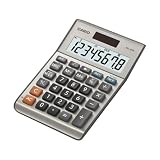
- LARGE EIGHT-DIGIT DISPLAY – Clear and easy-to-read 8-digit display, perfect for everyday calculations and ensuring accurate results in home or office settings.
- TAX & CURRENCY EXCHANGE FUNCTIONS – Effortlessly handle tax calculations and convert home currency to other currencies for easy financial management.
- GENERAL PURPOSE CALCULATOR – Ideal for a wide range of applications, from basic math to business and personal use, with memory keys for quick storage and recall.
- USER-FRIENDLY KEYBOARD – Easy-to-use layout, featuring square root, percent calculation, and simple functions that make it perfect for everyday tasks.
- COMPACT & PORTABLE DESIGN – Space-saving design that fits easily on any desk or in a briefcase, making it ideal for both home and office use.
Exchange-rate channel
A surprise rise in U.S. rates relative to foreign rates usually leads to dollar appreciation, according to the Federal Reserve staff note. Exchange-rate changes alter relative prices, affecting trade, economic activity, and inflation. This is a typical mechanism, not a guarantee that every rate increase will strengthen a currency.
Domestic-demand channel
Tighter U.S. policy can slow U.S. demand and imports, reducing demand for goods and services produced abroad. That can weigh on foreign output and inflation even if exchange-rate effects point the other way.
Rank #2

- Ad Free
- Online Currency Exchange Calculator
- 33 Currencies available in the Exchange Calculator
Financial channel
Higher U.S. longer-term yields can prompt international investors to rebalance toward U.S. assets, tightening financial conditions abroad. Dollar invoicing and dollar-denominated borrowing can make this channel especially important: exchange-rate moves affect firms and borrowers with dollar revenues, costs, or liabilities.
The combined effect depends on factors such as trade openness, currency mismatches, the use of dollars in invoicing, and foreign central-bank responses. A stronger dollar can support foreign activity and inflation through the exchange-rate channel in benchmark models, while weaker demand and tighter financial conditions can push in the opposite direction.
Do these 3 things before closing this tab:
1Clear out junk files and repair common Windows errors2Fix the driver behind crashes, sound loss and screen glitches3Repair Windows errors before they cause bigger problemsRank #3

- Check your calculations thanks to the calculator's inbuilt serial impact roller printer that enables you to monitor your inputs and retains ongoing records. This two-color printer with a four-key memory prints red and black ink at up to 2.3 lines per second onto the included roll of paper.
- Printing calculator offers 12-digit LCD display for convenient viewing. 4-key memory keeps often-used figures accessible for faster calculations. Clock and calendar functions help maintain schedules.
- Easy-to-use solution for all of your basic math needs. Streamline financial calculations with currency conversion, tax calculation, and item counter functions. 1-year manufacturer limited warranty.
- Dimensions: 2.2"H x 6.4"W x 9.1"D. Package content: AC adapter, paper roll, user manual.
- Powered by any standard AC outlet, eliminating the need for expensive batteries. Decimal switch, rounding switch, percent, sign change, backspace, double zero, and grand total functions help you solve a variety of mathematical problems.
What the 2021–2023 tightening cycle shows—and does not show
A May 2024 Federal Reserve staff analysis used survey and financial-market data to examine the 2021–2023 tightening cycle. Across the full period, aggregate exchange-rate movements did not show a systematic relationship with changes in expected relative monetary-policy stances. In cross-sectional analysis, policy expectations had a clearer relationship with advanced-economy currencies; other factors tended to dominate emerging-market currency moves. The note also found that exchange rates co-moved more strongly, on average since early 2021, with broad risk-appetite measures than with market-implied policy-rate changes, particularly during the dollar’s 2022 rise. These findings describe that episode, not a universal rule or a current forecast.
- For advanced-economy currencies in the note’s 2022 cross-section, the estimated relationship was about 1.7 percent currency appreciation against the dollar for each percentage-point increase in policy expectations relative to the U.S. counterpart. This is a sample-specific regression coefficient, not a universal causal effect.
- The reported regression had an R-squared of 0.26, indicating that substantial currency movement remained unexplained by the model.
- The dollar appreciated about 5 percent against advanced foreign economy currencies on average in 2021, according to the note. That is a historical period statistic, not an estimate of what divergence should do.
- The Brazilian real depreciated about 7 percent against the dollar in 2021 while Brazil’s policy rate increased about 6 percentage points; the Chilean peso depreciated about 18 percent that year despite rate increases. These examples show that other forces can outweigh rate changes in a given period; they do not show that rate hikes weaken currencies.
A separate 2018 BIS study examined spillovers from seven advanced-economy central banks to 47 advanced and emerging market economies. In that study, effects were more prevalent on long-term than short-term rates, and financial openness was the strongest determinant of spillover intensity in the authors’ analysis. Its conclusions are specific to that study’s design and sample.
Rank #4

- Dual power ways: Solar power or 1 AA battery (Battery Included) , energy saving and convenient.
- Adopt Japanese LCD screen, 12 digits, display data clearly.
- Support +/-(negative),%,√ calculation; Rounding off & decimal place setting; CE/C (part/all clear), MC/MR/M+/M- (memory) key.
- Auto shut-down in 8min if no further operation.
- Big ABS plastic button, offer accurate positioning and comfortable texture, support >1 million times press.
Why wholesale FX pricing does not determine a transfer quote
In wholesale markets, covered interest parity links the cash interest-rate differential between two currencies to the difference between their forward and spot exchange rates. The BIS has also documented persistent cross-currency basis deviations: borrowing a currency through an FX swap can cost more or less than borrowing it directly in the cash market. Liquidity, hedging demand, and balance-sheet constraints can affect that basis.
These concepts concern wholesale funding and hedging. They do not establish the exchange rate or fees a bank or remittance service will offer a consumer. The cited sources do not quantify how policy divergence changes a consumer’s transfer cost or compare provider quotes.
Windows Errors? Fix Them Before They Spread
Repair common Windows errors and clear accumulated junk for a smoother, more stable PC - no reinstall needed.Free scan · no reinstallCrashes, No Sound, or Screen Glitches?
Random freezes, missing sound and display glitches usually trace back to one bad driver. Find and replace yours safely.Free scan · under a minuteHow to compare an international transfer
For a decision about a specific transfer, compare current quotes for the exact sending and receiving countries, amount, funding method, and payout method. Providers may present rates and fees differently, so compare the result for the same transaction rather than relying on a headline exchange rate alone.
Quick Recap
- Enter the same sending country, receiving country, amount, funding method, and payout method for each quote.
- Compare the final amount the recipient would receive after fees, alongside the stated exchange rate and any explicit fee.
- Check delivery time and payout details, since they are part of the service being compared.
- Use current quotes for the transfer you plan to make; a macroeconomic rate differential is not a substitute for a provider’s live offer.
Product prices and availability are accurate as of the date/time indicated and are subject to change. Any price and availability information displayed on Amazon at the time of purchase will apply.




