Free tools Windows power users keep installed
One-click scans. No signup required.
Package dimensions are the length, width, and height of the parcel you are actually shipping, measured after it is packed. Carriers use those three numbers to decide whether a parcel fits a service’s size limits and, in many cases, to calculate a dimensional weight that can raise the price above what the parcel’s actual weight would cost. Entering the wrong numbers on a label or postage calculator can mean a surcharge, a rate adjustment after pickup, or a parcel that a service will not accept.
The three measurements and what each one means
A package’s dimensions describe its outside shape, not the item inside it. Packaging, padding, and the box flaps all count, because the carrier handles the parcel as a whole.
- Length is the longest side of the parcel.
- Width is the next-longest side, measured perpendicular to length.
- Height is the remaining side, measured perpendicular to both.
Naming the sides in that order matters because carriers compare the length and the girth against their limits, and because the same box can produce different results depending on which face you call the length.
How to measure a parcel correctly
UPS describes the sequence on its shipping dimensions and weight page. Follow it with the completed, sealed package:
#1 Best Overall

- Accurate to 0.1oz: High precision for postage, packaging, or food preparation.
- Solid design with high weight limit: 50Lbs
- Smart Tare & Hold Functions: Effortlessly subtract container weight or lock readings for larger boxes.
- Clear LCD Display: Large, backlit screen makes weights easy to read, even in dim rooms.
- Multi-measuring units: Kg, lb/oz, oz
- Find the longest side of the package and measure it. Record this as the length.
- Rotate the package and measure the next longest side. Record this as the width.
- Measure the remaining side. Record this as the height.
- For an irregular parcel, such as a bag or a box with a bulge, measure it as if it were a rectangular box that encloses the parcel at its extreme points.
- Enter the numbers into the label or calculator using the carrier’s rounding convention (see the next section).
If the parcel is packed in a box that is larger than the item, measure the box, not the item. If the box is later re-packed into a different container, the measurements change and should be taken again.
A tape measure is enough for this. Measure to the outside of the packaging, and re-measure if the box has been compressed or bulged by tape or padding.
Rounding conventions differ by carrier
Carriers do not all round the same way, so a figure that is correct for one service can be slightly off for another. Use the convention shown in the carrier’s current instructions for the service you select.
Rank #2

- Digital tabletop postal scale for quickly and precisely weighing items
- Includes a shipping postal scale and AC adapter; made of durable black ABS, aluminum, and iron
- 65 pound (30kg) capacity reads to 0.1 ounce (1g) in 0.1 ounce increments; minimum load weight is 0.2 ounces (5g)
- Extra large LCD display for easy viewing; measuring units in ounces, pounds, g, and kg
- Tare function for resetting the scale to zero after setting a container on the platform; great for net weights
| Carrier | Stated rounding rule | Source |
|---|---|---|
| UPS | Round each measurement up to the nearest whole number. | UPS shipping dimensions and weight page |
| USPS | The Quick Service Guide procedure shown rounds to the nearest whole inch. | USPS Quick Service Guide |
| FedEx | Not stated in the cited FedEx page. | FedEx dimensional weight page |
The difference is usually one inch, but near a pricing or size threshold it can change the result. When a parcel is close to a limit, check the service’s own instructions before you pay.
How dimensions affect what you pay
Actual weight is what the scale says. Dimensional weight is a billing figure calculated from volume, which matters when a parcel is large but light, such as a pillow, a lampshade, or flat-packed furniture. The carrier can charge for the larger of the two figures.
The calculation is generally length × width × height, divided by a divisor set by the carrier and rate type. The divisor is the number that changes most across services, so do not assume one value applies to every shipment.
Rank #3

- Lightweight Postal Scale - Max. Capacity: 440lb/200kg, Min. Readability: 40g, Display Resolution: 10g. Features a Carbon Fiber platform paired with a durable ABS housing. Lightweight + sturdy, easy to clean, move, and store.
- Digital Shipping Scale - 3 weighing Modes: kg/lb/lb:oz. Separate large back-lit LCD display with adjustable/disable Auto-off. Easy to handhold or wall-mount with the included drywall anchors and screws.
- User Friendly Design - Ships pre-calibrated and can also be easily calibrated. Dual powered by 2 x AAA batteries or AC adapter (both included).
- Hold & Tare Function - Locks readings and removes container weight for multiple weighing needs. Ideal for post offices, warehouses, commercial and home use.
- Fuzion Support - We offer 2-Year Warranty and Lifetime Support for this digital scale. Full day service by our support team. We are always glad to help with all your questions or concerns.
| Carrier | How dimensional weight is described | Divisor or value stated in the cited source |
|---|---|---|
| UPS | Length × width × height, divided by a divisor that varies by rate type. | 139 for Daily Rates; 166 for Retail Rates (UPS page). |
| FedEx | Charged on the greater of actual weight or dimensional weight. | 139 in the cited examples for U.S., Puerto Rico, and international shipments (FedEx page). |
| USPS | Enter dimensions in the price calculator; dimensional weight may apply to your package. | Not stated in the cited USPS material (USPS packages page). |
To see the effect, take a 12 × 10 × 8 inch box that weighs 2 pounds. Its volume is 960 cubic inches.
- Using a divisor of 139 (the UPS Daily Rates figure in the table), the dimensional weight is 960 ÷ 139, or about 6.9 pounds. The billable weight would be higher than the actual 2 pounds, subject to the carrier’s rounding of billable weight.
- Using a divisor of 166 (the UPS Retail Rates figure), the result is 960 ÷ 166, or about 5.8 pounds, which is still well above the actual weight.
The example shows why the rate type matters. Check which rate applies to your account or the service you pick before estimating cost.
Size limits and the length-plus-girth check
Every service sets a maximum size, and some set a combined limit. Two checks cover most cases.
Rank #4

- Digital shipping postal scale for weighing items; heavy duty yet lightweight, portable design
- Includes a postal scale and an AC adapter; black ABS with an aluminum anti-skid platform
- 660 pound (300kg) capacity reads to 0.11 pound/50g/2 ounce in 0.1 ounce increments; minimum load weight is 6 ounces (150g)
- Measuring units in kg, ounces, and pounds
- Additional separated large back-lit LCD display allows for reading the weighing data from a distance of up to 2m
Length plus girth
Girth is the distance around the parcel’s two shorter sides. UPS gives the formula for a rectangular parcel as length + (2 × width) + (2 × height), which is useful for checking a service’s criteria. For a 24 × 10 × 8 inch box, the calculation is 24 + 20 + 16, or 60 inches.
Published limits
USPS states that USPS Ground Advantage mailpieces must not exceed 130 inches in length and girth combined, as of October 2026 per its parcel size and weight fee standards FAQ. Other services and carriers publish different limits, and those can change, so confirm them on the service’s own page before you ship an oversized or unusually shaped parcel.
Independent reader supportYour contribution helps us test, update, and keep practical guides available for everyone.Comparing shipping options with your measurements
There is no single packing-size standard to compare. The useful comparison is between services for one real parcel. Enter the same measured dimensions and actual weight into each option’s calculator, then compare:
Windows Errors? Fix Them Before They Spread
Repair common Windows errors and clear accumulated junk for a smoother, more stable PC - no reinstall needed.Free scan · no reinstallCrashes, No Sound, or Screen Glitches?
Random freezes, missing sound and display glitches usually trace back to one bad driver. Find and replace yours safely.Free scan · under a minuteBest Value
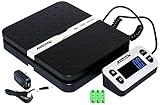
- Solid structure & Sleek/Modern Design – ACCUTECK postal scale is designed with durable plastic platform, user-friendly buttons, backlit extended display and two way 90 degree-opened lid.
- Enhanced capacity with higher precision- This new postal scale can hold a max weigh up to 110 lbs in 0.1 oz graduation. It can meet all your needs from a first-class package to parcel packages. Start weight: 10g.
- Multi Measuring Units with extra Large LCD display. Measure in oz, g, lb/oz. The extra large back-lit LCD display allows you to work under any environment.
- Convenient Tare/Hold Function and the shipping postal scale features are tare function which allows you to zero out the number for multi-packages purpose. Hold function allows you to lock the number after you take the package off the platform.
- Power supply: Batteries, USB cable Charger, AC adapter (All Included). When using on Battering, it will turn off automatically after 90 seconds. When using Ac adapter for power supply, it won't turn off automatically.
- whether the parcel is within the service’s size and girth limits;
- which dimensional-weight method the service uses and what divisor applies;
- the quoted delivery speed and destination coverage;
- the total price after any dimensional-weight adjustment.
USPS notes that service choice depends partly on size, shape, and weight, which is why it asks users with their own packaging to enter dimensions in its price calculator rather than relying on a weight estimate alone.
Common mistakes to avoid
- Measuring the item instead of the packed box.
- Calling the shortest side the length, which can make a parcel look like it fits a limit when it does not.
- Using a rounding convention from one carrier on another carrier’s label.
- Estimating dimensional weight with a divisor from a different rate type or service.
- Re-packing after measuring, so the label describes a box that no longer matches the parcel.
Accurate dimensions cost little to get and can prevent a billing adjustment after the parcel has already been handed over.
”
The Bottom Line
Measure the packed parcel at its outside extremes, label the longest side as length, apply the rounding rule of the carrier you choose, and check the dimensional-weight method and size limit for that specific service before paying. The divisor and limits above are the figures stated in carrier sources as of October 2026; they can change, so confirm them in the live calculator.
Quick Recap
Product prices and availability are accurate as of the date/time indicated and are subject to change. Any price and availability information displayed on Amazon at the time of purchase will apply.
The Tool Desk
Outbyte Driver Updater FREEFix the driver behind crashes, sound loss and screen glitchesFind Drivers →Outbyte PC Repair FREERepair Windows errors before they cause bigger problemsFix Now →



