There is no single meaningful price for “manufacturing a water bottle.” A reusable insulated steel bottle, an empty single-use PET bottle, and a sealed bottle of water are different products with different production steps and cost boundaries. To compare prices, specify the product, manufacturing scale and location, included components, and whether the figure is a factory cost, supplier quote, complete package, or delivered cost. Available published figures offer useful context, but they do not establish a current, apples-to-apples unit cost for a bottle you have not specified.
What does “water bottle manufacturing cost” include?
A quoted number can refer to substantially different things. For PET packaging, a supplier’s internal manufacturing cost is not the same as its ex-works price for an empty bottle, a bottle-and-closure package, or a delivered and usable package. A reusable-bottle quote may include the body, lid, finish, logo work, testing, packaging, and freight. Bottled-water production adds treatment, filling, capping, labeling, and inspection.
Before comparing numbers, identify the commercial boundary:
- Factory conversion or manufacturing cost: the manufacturer’s costs to make the item. Depending on the supplier’s accounting, sales expense, margin, and some other costs may be excluded.
- Ex-works empty-bottle price: a price for a finished empty bottle at the factory, potentially excluding closures, decoration, inspection, export handling, and freight.
- Complete-package price: the bottle plus specifically listed components, such as a cap or lid, and sometimes assembly. Compatibility testing and delivery costs may remain outside the quote.
- Landed usable cost: the delivered package plus applicable freight, insurance, duties or taxes, brokerage, inspection, and domestic delivery. Inventory carrying costs, production-line losses, rejects, and obsolescence may still be excluded.
These labels reflect a packaging supplier’s guide, not a universal accounting standard. Ask suppliers to list inclusions and exclusions rather than relying on the label alone. For a reusable insulated bottle, Haers Drinkware describes a quote as a price for decisions about materials, processes, quality systems, and compliance infrastructure; that is the supplier’s characterization, not an independent standard.
Do these 3 things before closing this tab:
1Scan for outdated or missing drivers - takes under a minute2Clear out junk files and repair common Windows errors3Fix the driver behind crashes, sound loss and screen glitches#1 Best Overall

- 24-ounce insulated stainless-steel water bottle with a FreeSip spout and push-button lid with lock
- Patented FreeSip spout designed for either sipping upright through the built-in straw or tilting back to swig from the spout opening
- Protective push-to-open lid keeps spout clean; convenient carry loop doubles as a lock
- Double-wall insulation keeps drinks cold for up to 24 hours; wide opening for cleaning and adding ice; cup holder-friendly base
- This bottle is wider than standard cupholders and may only fit in oversized or specialty cupholders designed for larger containers
Reusable stainless steel bottles: where the quote goes
Haers’ April 17, 2026 supplier guidance gives estimated shares for components of a typical custom insulated-bottle quote. They are supplier-specific ranges, not audited industry averages. Product choices affect the shares, and the ranges may overlap or add up inconsistently, so they should not be combined into a universal bill of materials.
| Quote component | Haers’ stated range |
|---|---|
| Raw stainless-steel body material | 30–45% |
| Lid, seal, and accessories | 8–15% |
| Finish or coating | 5–20% |
| Logo customization | 2–8% |
| Tooling amortized on a first order | 0–15% |
| Certification testing | 1–5% |
| Packaging | 3–10% |
| Factory overhead and margin | 10–18% |
| Factory-to-port freight | 2–5% |
Those figures describe the supplier’s guidance for custom insulated drinkware; they are not a quote for a particular bottle or a delivered price. The cost drivers Haers identifies explain why two apparently similar bottles can be priced differently:
- Body: material grade, wall thickness, and vacuum construction affect the body component.
- Lid and seal: lid design and seal grade change the closure cost.
- Finish and branding: coating and logo process affect customization costs.
- Tooling: a stock design and a custom design have different tooling needs; order volume affects how tooling is amortized.
For a comparison, specify the bottle’s capacity and weight, steel grade by component, wall and vacuum construction, lid mechanism and seal, finish, decoration, stock or custom design, required destination-market food-contact testing, packaging, order quantity, freight term, and quote validity. Avoid treating differences in grade, construction, or tooling as a like-for-like price premium without checking the specification.
Rank #2

- Double-Wall Insulation: The double-wall vacuum stainless steel insulated design of our water bottle guarantees that your drinks stay at your preferred temperature. Enjoy hot beverages for up to 12 hours and cold drinks for up to 24 hours.
- Premium Materials: Our food-grade 304 stainless steel water bottle ensures safe and healthy hydration throughout the day. With a sweat-proof, non-slip coating and being BPA-free, our insulated water bottle is a reliable companion for all activities.
- 100% Leak-Proof: Enhance your on-the-go experience with this stylish and practical water bottle that features a flip-top lid for easy one-handed operation and a wide-mouth design for effortless cleaning. Enjoy 100% leak-proof protection, making it perfect for any activity.
- Beautiful&Attractive: Our water bottle is available in four stunning colors: black, white, blue-black gradient, and yellow-orange gradient. These beautiful colors, paired with stylish designs, make it perfect for a variety of outdoor activities such as hiking, camping, and sports. In addition to being a practical accessory, our insulated water bottle also makes the perfect gift for someone special.
- Satisfaction Guarantee: We stand by the quality of our insulated bottle with a 100% satisfaction guarantee. For any issues, contact us for prompt resolution to ensure your complete satisfaction.
Single-use PET bottles: confirm what is being priced
Boyu Packaging describes PET bottle production as a two-stage injection stretch blow-molding process: a machine forms a preform by injection molding, then a separate machine reheats, stretches, and blows the preform into a bottle. The bottle’s size alone does not determine its cost. Weight, neck finish, intended application, temperature or pressure requirements, material requirements, decoration, closure, quantity, and delivery terms can all affect the price.
Outdated Drivers Are Slowing You Down
One free scan finds every outdated or missing driver and matches the right update for your exact hardware.Free scan · exact hardware matchWindows Errors? Fix Them Before They Spread
Repair common Windows errors and clear accumulated junk for a smoother, more stable PC - no reinstall needed.Free scan · no reinstallUse the supplier’s stated scope to classify a PET quote:
- Internal manufacturing cost: may include resin or preform, conversion, labor, utilities, ordinary scrap, and factory overhead, while excluding sales expense and margin.
- Empty bottle price: may cover the finished bottle and factory packing but exclude the cap, decoration, inspection, export handling, or freight.
- Complete package: should identify included components and whether assembly is included; compatibility tests and logistics may still be excluded.
- Landed usable cost: should account for delivery and relevant import or inspection costs, while clarifying whether losses, rejects, or inventory costs are outside the figure.
Request the exact bottle weight, dimensions, neck finish, tolerances, intended use, included closure and decoration, and the delivery term. A low bottle-only price is not comparable with a delivered bottle-and-cap price.
Rank #3

- Magnetic Cap System: Magnetic cap stows securely while drinking and closes securely after use for convenient one handed hydration.
- Vacuum Insulated Steel: Double wall vacuum insulated stainless steel helps maintain cold drink temperatures during workouts, commuting, travel, and everyday activities.
- Leak Resistant Cap: Leak resistant cap helps protect bags, desks, and gear while on the move.
- Durable Steel Construction: Stainless steel construction supports everyday use during commuting, travel, workouts, and outdoor activities.
- Dishwasher Safe Design: Bottle and cap are dishwasher safe for convenient cleaning and daily maintenance.
Filled bottled water costs more than an empty container
A bottling plant has costs beyond producing or buying its containers. IMARC’s 2026 plant description includes intake and treatment, filtration, carbon treatment, reverse osmosis or other purification, UV sterilization, ozonation, optional mineral adjustment, rinsing, filling, capping, labeling, inspection, and packaging.
In IMARC’s modeled plant, source water, PET preforms, caps, and seals account for an estimated 35–45% of operating expenditure, while utilities account for 12–18%. These are feasibility-model estimates, not observed shares that apply to every plant. Actual costs depend on the plant and production context; they should not be used as a unit cost for an empty bottle.
Quick wins for a faster PC:
Clear out junk files and repair common Windows errorsFree Scan →Scan for outdated or missing drivers - takes under a minuteDriver Scan →What published cost figures can—and cannot—tell you
Published figures provide context, not a substitute for a quote tied to a defined specification and delivery boundary. Keep their dates, geography, and scope attached to the numbers.
Rank #4
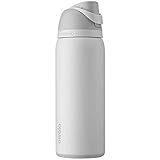
- 32-ounce insulated stainless-steel water bottle with a FreeSip spout and push-button lid with lock
- Patented FreeSip spout designed for either sipping upright through the built-in straw or tilting back to swig from the spout opening
- Protective push-to-open lid keeps spout clean; convenient carry loop doubles as a lock
- Double-wall insulation keeps drinks cold for up to 24 hours; wide opening for cleaning and adding ice; cup holder-friendly base
- This bottle is not compatible with standard automotive cupholders; it is best secured in cup holder organizers, door pockets, or bags during transport
| Figure | Scope and limitation |
|---|---|
| 2021 PET bottle cost shares: input materials 84%, utilities 7%, labor 2%, other 7% | International Aluminium Institute comparison published in 2022, based on 2021 average input prices and costs; excludes logistics, ignores within-region variation in PET production costs, and rounds some figures. It is historical, not a current quote. |
| U.S. bottled-water manufacturing materials cost: $3,421,619 thousand in 2024 | U.S. Census Bureau AIES series hosted by FRED; a U.S. sector total in thousands of dollars, not a per-bottle cost or estimate for reusable drinkware. The annual series is subject to revision. |
| Canadian packaging price-index changes in 2025: glass products +4.1%, light gauge metal containers +2.5%, plastic bottles +1.3% | Farm Credit Canada’s 2026 report; Canada-specific price-index observations, not a global factory-cost model. |
| Packaging at roughly one-third of raw material costs | Farm Credit Canada’s 2026 beverage-manufacturing context; not a universal share for every beverage, bottle type, or country. |
The International Aluminium Institute’s same 2021 comparison reports cost shares of 80% input materials, 3% utilities, 5% labor, and 12% other for aluminum cans; and 21%, 25%, 35%, and 20%, respectively, for glass. It found PET cheapest among the compared materials in the United States, Western Europe, and China, with glass most expensive. Because the comparison uses 2021 average inputs and excludes logistics, it does not establish current prices, compare reusable drinkware, or determine which container is best for a particular buyer.
Farm Credit Canada also connects Canadian packaging-cost pressures with trade disruption and producer recycling and reporting obligations. Those observations should be read in their Canadian sector context, not projected onto other markets without evidence.
Why can supplier quotes for the same bottle differ?
A large price gap may indicate that suppliers are quoting different specifications or commercial boundaries—not necessarily that one has a more efficient factory. One quote might use a stock bottle while another includes custom tooling; a PET quote might omit the cap or freight; a reusable-bottle quote might include testing, packaging, and logo work that another excludes.
Compare written quotes against the same checklist:
- Exact bottle type, intended use, capacity, weight, dimensions, and tolerances
- Material and grade by component, plus wall or vacuum construction where relevant
- Included lid, seal, cap, label, pump, or other components
- Finish, coating, decoration, and logo process
- Testing, compliance documents, and destination market
- Tooling cost, ownership or treatment, and amortization
- Minimum order quantity, quoted quantity, and annual volume assumptions
- Packaging scope and scrap or yield assumptions where relevant
- Currency, Incoterm, named delivery point, and excluded duties or taxes
- Quote date and validity period
For PET, label the offer as bottle-only, complete-package, or landed cost. For reusable bottles, compare stock models with stock models and custom-tooling offers with equivalent tooling scope. If a supplier does not state an item, ask before treating it as included.
How to get a useful manufacturing-cost estimate
- Define the product. State whether you need reusable drinkware, empty PET packaging, or filled bottled water, then set capacity, materials, intended use, and required performance.
- Set the production and delivery context. Provide order quantity and, if relevant, annual volume; identify the manufacturing location or destination market and the named delivery point.
- Specify the components and finish. List closures, seals, decoration, packaging, and required testing. For custom reusable bottles, ask how tooling is charged and amortized.
- Request a scoped quote. Ask the supplier to itemize inclusions and exclusions and identify currency, Incoterm, quote date, and validity.
- Normalize the offers. Compare the same specification and price boundary. Add excluded freight, duties, inspection, components, or other costs consistently before deciding which offer is lower.
Without a defined product, manufacturing geography, production scale, quote date, and delivery boundary, a single “cost to manufacture a water bottle” figure is not a reliable purchasing benchmark.
Quick Recap
Product prices and availability are accurate as of the date/time indicated and are subject to change. Any price and availability information displayed on Amazon at the time of purchase will apply.




