Washington has enacted a targeted ban on employer-mandated microchip implants. House Bill 2303, signed by Gov. Bob Ferguson on March 11, 2026, became Chapter 25, Laws of 2026, and took effect June 11, 2026. It prohibits an employer from requesting, requiring, or coercing an employee to have a qualifying microchip implanted “for any reason.”
That is a significant update to the original January 9, 2026 coverage, which described HB 2303 as a proposal. But the law is narrower than the phrase “workplace microchip ban” may suggest: it does not generally prohibit badges, phones, GPS systems, biometric tools, software monitoring, or every possible use of implanted technology.
As an Amazon Associate I earn from qualifying purchases.
The short answer
- Can a Washington employer require an employee to get a qualifying microchip? No.
- Can an employer request or pressure an employee to get one? No. The statute prohibits requesting, requiring, or coercing implantation.
- Does the law ban ordinary workplace surveillance? No. It targets employer conduct involving qualifying implanted microchips.
- Does it generally ban a person from obtaining an implant voluntarily? No. The operative text does not generally prohibit an individual from getting one independently.
- Can an employee sue? An aggrieved employee may bring a private civil action and seek specified remedies.
The current statute is available in RCW 49.44.235, and the Washington Legislature’s bill history records the measure’s votes, signature, chapter number, and effective date.
What Washington’s law prohibits
The operative rule is direct: “An employer may not request, require, or coerce any employee to have a microchip implanted in the employee for any reason.” Each verb matters.
#1 Best Overall

- SECURE YOUR WALLET FROM e-PICKPOCKETING: Prevent potential identity and financial theft through your contactless cards. This is the simplest and most effective prevention solution! Block RFID and NFC signals, protect your personal information, and enjoy peace of mind wherever your travels or business take you.
- JAMMING CHIP: An antenna and jamming chip makes up the main components of the card. The antenna will sense incoming radio waves and draw power for the chip to create a jamming signal. Lifetime usage as the card does not require battery.
- BROAD WORKING DISTANCE: With a 2.4” working distance, your entire wallet stays protected. The premium RFID blocking card helps secure cards within 1.2” on either side, providing reliable protection against electronic pickpocketing.
- ULTRA-THIN & COMPACT: At the size of a standard credit card and at only 0.03” thick, the card will fit into any wallet, purse or card case. Keep your wallet compact with no added bulk from this card. Best for travel, business, and everyday use.
- TEST THE CARD: Test the card is working at your local supermarket. At the self-service checkout machines, combine the card and a contactless card on the payment reader. Payment with the contactless card will be blocked and an error message should occur on the reader.
- Request: An employer cannot ask an employee to obtain the implant, even if the request is presented as optional.
- Require: An employer cannot make implantation a condition of hiring, continued employment, access, pay, scheduling, promotion, or another workplace benefit.
- Coerce: An employer cannot use pressure or circumstances that make an apparently voluntary decision functionally compulsory. For example, tying implantation to job security or preferential treatment could create legal risk.
The words “for any reason” make the prohibition broader than a rule limited to access control, timekeeping, payments, or employee tracking.
What counts as a microchip?
Under the law, a covered microchip is a product, device, or technology that is:
- implanted subcutaneously, meaning beneath the skin;
- equipped with a unique identification number and personal information; and
- capable of being retrieved or transmitted noninvasively through an external scanning device.
The definition excludes a device implanted for diagnosing, monitoring, treating, or preventing a health condition when it transmits only information necessary for those medical purposes.
Free tools Windows power users keep installed
One-click scans. No signup required.
The statute also clarifies that “subcutaneously” does not include information temporarily attached to the skin with an adhesive strip or bracelet. An ordinary badge, adhesive device, or wearable is therefore not automatically a covered microchip under this law.
What the law does not ban
HB 2303 is not a general workplace-privacy or surveillance statute. On its face, it does not prohibit employers from using:
Rank #2
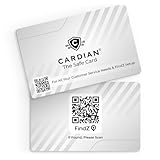
- Stop Digital Theft Instantly: Protect your credit cards, debit cards, passports, and IDs with Cardian’s advanced smart NFC and RFID card blocking technology—keeping hackers and skimmers out of your wallet
- electronic identification badges;
- time clocks and access logs;
- GPS in employer-owned vehicles;
- mobile-device management;
- video surveillance;
- biometric systems;
- productivity-monitoring software; or
- ordinary wearable equipment.
Those systems can raise separate questions involving privacy, labor law, discrimination, consent, accommodation, or data security. But they should not be described as prohibited by Washington’s microchip law merely because they monitor activity or identify workers.
The law also does not clearly state that every workplace use of a pre-existing personal implant is lawful. An employer should obtain legal advice before integrating an employee’s implant into access, payment, identification, or tracking systems.
Can an employee voluntarily get a chip?
The enacted text focuses on the employer’s conduct. It does not generally prohibit a person from independently obtaining a qualifying implant.
That does not mean every employer-related use is automatically permitted. If an employee proposes an implant program, the employer should not assume it can simply accept the proposal because the employee initiated the conversation. Accepting, promoting, rewarding, or operationalizing the program could raise questions about whether the employer requested or coerced implantation.
The statute also does not clearly resolve what an employer must do when an employee already has an implant and wants to use it at work. Employers should use a neutral alternative where possible and seek Washington employment-law advice before making the implant part of a workplace requirement.
Rank #3

- RFID Protection: An electromagnetically opaque layer helps block unauthorized scans, protecting credit card, debit card, and passport information from nearby readers; This RFID blocking card helps prevent digital skimming by shielding your wallet from electronic theft
- Threats Stay Outside: Digital pickpockets use hidden readers to skim contactless cards in crowds, transit and checkout lines; This credit card protector works as an RFID blocker the moment it's placed in your purse or wallet, stopping electronic theft before it occurs
- Invisible Yet Active: Ultra-thin and sized to fit any wallet slot, this rfid blocking card adds no bulk; Invisible protection helps shield your debit cards and IDs from electronic skimming without changing the way you carry your wallet
- One Card Protects All: Forget slipping every card into a separate RFID sleeve, just one RFID blocking card protects every contactless card, passport, and license all at once; Carry it in a purse, travel pouch or cardholder and stay shielded at airports, transit hubs and during daily commutes
- Drop and Defend: Keep the RFID blocking card in your wallet or travel bag, or save it as a backup; Simply insert it alongside your credit and debit cards for immediate protection against identity theft — no charging, no setup
Job applicants and contractors: an important uncertainty
The Legislature’s findings refer to protecting “employees and job applicants.” However, the operative prohibition in the codified section refers to an employer’s conduct toward “any employee.”
That distinction matters. It is reasonable to read the findings as expressing an intent to protect applicants, but the statute’s enforceable language does not definitively answer every question about a hiring condition imposed on an applicant. Coverage of applicants and independent contractors may require authoritative interpretation or future case law. Employers should not test that boundary by making implantation part of a hiring process.
What remedies are available?
An aggrieved employee may bring a civil action in a court of competent jurisdiction. A prevailing employee may seek:
- injunctive relief;
- actual damages;
- punitive damages; and
- reasonable attorneys’ fees and costs.
The final codified provision does not establish the standalone “starting at $10,000” penalty described in some early reporting about the bill. Workers should therefore rely on the enacted remedies rather than the bill’s earlier summaries.
Why lawmakers acted before a known mandate
The measure was designed as a preventive law. In January reporting, prime sponsor Rep. Brianna Thomas said there was no known instance of a Washington employer seeking to require such an implant. Her argument was that the power imbalance between employers and workers could make “voluntary” consent difficult to evaluate when income, scheduling, promotion, and continued employment are involved.
The Tool Desk
Outbyte PC Repair FREERepair Windows errors before they cause bigger problemsFix Now →Outbyte Driver Updater FREEScan for outdated or missing drivers - takes under a minuteDriver Scan →Rank #4

- 1. [Blocks 13.56MHz Thieves Cold] This RFID Blocking card works on the 13.56MHz frequency (most common for contactless cards/passports/IDs). Built-in antenna + jamming chip detects radio waves and emits anti-scanning signals—stops high-tech pickpockets, keeps your cards/IDs/passport safe from data theft.
- 2. [Lifetime 24/7 Protection] No batteries, no charging—works 24/7/365 non-stop. Just slip 1 card into your wallet or passport holder, and you’ll get instant dual-sided defense. Perfect for daily runs, shopping trips, or travel—shield your identity and finances from theft, no extra effort needed.
- 3. [Ultra-Slim & Hassle-Free] Same size as a standard credit card, only 0.03in thick—slides right into wallet slots, cardholders, or even pockets without bulking things up. Best of all: 1-2 cards protect all your sensitive cards in the wallet. Save space, skip the hassle.
- 4. [Practical Gift for Loved Ones] Each pack comes with 5 RFID blocking cards—small, powerful, and thoughtful. Give family and friends the peace of mind that their credit cards and passports are safe—an ideal gift for any occasion.
- 5. [24-Hour Customer Support] Thank you for choosing our RFID blocking cards. If you have questions, concerns, or need help, our team is here for you 24 hours a day. We’re committed to solving issues quickly and ensuring you have a happy, worry-free shopping experience.
The Legislature’s findings emphasize bodily autonomy, privacy, dignity, freedom of choice, and the principle that decisions about a person’s body belong to the individual rather than the employer.
“Dehumanizing” is a sponsor’s characterization reported by GeekWire, not a term used as a legal test in the statute. The policy concern can be stated more neutrally: an implant is physically attached to a worker’s body, may connect work and private life, and could create privacy or security risks when linked to identity or access systems. Those are policy arguments, not proof that every implant is inherently harmful.
Microchips are not all the same technology
Early coverage discussed possible uses including access control, identification, payments, stored information, and workplace management. A basic passive RFID implant, however, should not be confused with every other form of tracking or implanted technology.
- Passive RFID: Typically responds when an external reader is nearby. It is not automatically a GPS or cellular tracker.
- Active tracking devices: May have their own power source and communications capabilities, depending on the device.
- Medical implants: May be excluded when they meet the statute’s medical-purpose and information-transmission conditions.
- Brain-computer interfaces: A broader and more medically complex category. They provide useful future-technology context but are not the specific technology defined by this workplace rule.
It is inaccurate to say that every microchip continuously tracks a worker. The technical capabilities depend on the device, its power source, the reader or network involved, and the information it is designed to transmit.
Outdated Drivers Are Slowing You Down
One free scan finds every outdated or missing driver and matches the right update for your exact hardware.Free scan · exact hardware matchPC Slower Than It Used to Be?
A free scan shows the junk files, broken settings and background clutter dragging Windows down - then fixes them in one click.Free scan · Windows 10 & 11What workers should do if an employer raises the issue
- Do not assume “optional” means risk-free. A program connected to promotion, preferred shifts, pay, access, or job security may raise coercion concerns.
- Preserve evidence. Keep emails, text messages, policies, consent forms, job postings, vendor materials, and records of employment consequences.
- Ask for the proposal in writing. Clarify whether the employer is making a request, offering an incentive, imposing a requirement, or proposing to use an existing implant.
- Do not disclose unnecessary medical information. A medical implant is not permission for an employer to demand unrelated health details.
- Get legal advice promptly. A Washington employment attorney can assess the facts, the worker’s status, deadlines, and available remedies.
What employers and HR teams should review
Washington employers should treat the law as a policy and vendor-review issue, not simply as an access-control question.
Best Value

- SECURE YOUR WALLET FROM e-PICKPOCKETING: Prevent potential identity and financial theft through your contactless cards. Don’t become a victim e-theft in our growing contactless society. This is the simplest and most effective prevention solution! Block all RFID and NFC signal to secure your details and have peace of mind.
- JAMMING CHIP: An antenna and jamming chip makes up the main components of the card. The antenna will sense incoming radio waves and draw power for the chip to create a jamming signal. Lifetime usage as the card does not require battery.
- BROAD WORKING DISTANCE: A large working distance of 2.4” provides complete protection for your whole wallet. Cards 1.2” either side of the card will be fully secure from e-pickpocketing.
- ULTRA-THIN & COMPACT: At the size of a standard credit card and at only 0.03” thick, the card will fit into any wallet, purse or card case. Keep your wallet compact with no added bulk from this card.
- TEST THE CARD: Test the card is working at your local supermarket. At the self-service checkout machines, combine the card and a contactless card on the payment reader. Payment with the contactless card will be blocked and an error message should occur on the reader.
- Remove requests for implanted identification or tracking devices from handbooks, job descriptions, consent forms, and incentive programs.
- Avoid suggesting that implantation could improve promotion prospects, scheduling, pay, access, or job security.
- Review contracts with vendors offering implanted access-control, payment, or identification systems.
- Handle an employee’s existing personal implant cautiously and obtain legal advice before integrating it into workplace systems.
- Keep medically necessary implants outside ordinary identification policies unless a separate accommodation, safety, or legal issue applies.
- Preserve records of prior proposals or discussions involving workplace implantation.
These are risk-management steps, not additional statutory commands. Other federal, state, employment, disability, privacy, and labor laws may apply to a particular workplace practice.
How this changes the original bill story
The January 9, 2026 article accurately described a newly introduced measure at the time. Its “aims to ban” framing is now outdated. HB 2303 passed the House 87–6 on February 14, passed the Senate 48–0 on March 3, was signed on March 11, and took effect June 11.
The final law is also more precise than some early descriptions suggesting a ban on the “use” of subcutaneous technology for workplace management or surveillance. What Washington enacted is a prohibition on the employer’s requesting, requiring, or coercing the implantation itself.
Do these 3 things before closing this tab:
1Repair Windows errors before they cause bigger problems2Scan for outdated or missing drivers - takes under a minute3Clear out junk files and repair common Windows errorsFor workers, that distinction provides a specific bodily-autonomy protection without turning the law into a blanket ban on workplace technology. For employers, it means an implant program cannot be made acceptable merely by labeling it voluntary or by describing the device as an efficiency tool.
Bottom line
Washington now prevents employers from requesting, requiring, or coercing employees to have qualifying microchips implanted, and employees may pursue a private civil claim for violations. The law is targeted: it does not ban ordinary workplace monitoring, external identification tools, or every medical or personal implant. The most important practical question is whether the employer’s conduct crosses from neutral workplace technology into pressure to alter an employee’s body.
Quick Recap
Product prices and availability are accurate as of the date/time indicated and are subject to change. Any price and availability information displayed on Amazon at the time of purchase will apply.




