Do these 3 things before closing this tab:
1Scan for outdated or missing drivers - takes under a minute2Repair Windows errors before they cause bigger problems3Fix the driver behind crashes, sound loss and screen glitchesThe available evidence does not yet confirm that USDA cut both corn and soybean production more than expected. As of October 8, 2026, the October World Agricultural Supply and Demand Estimates (WASDE) report had not been released. USDA’s schedule put it on October 9 at 12:00 p.m. Eastern Time. The most recent report in USDA’s archive was the September 11, 2026 edition, and that report moved the two crops in opposite directions: it lowered U.S. corn production and raised soybean production. A headline that describes a joint cut to both crops, or a miss against expectations, needs the October figures and a dated analyst forecast before it can be stated as fact.
What the headline claims, and what can be checked
The headline makes two separate claims. The first is that USDA reduced corn and soybean production estimates in the October report. The second is that those reductions were larger than market forecasts. Each claim needs its own evidence. A cut compared with USDA’s previous month’s estimate says nothing about whether analysts expected it, and a figure that is below consensus can still be higher than last year’s crop.
Before accepting either claim, check three things:
- The October USDA figure for each crop. Pull the corn and soybean production lines from the released report on USDA’s WASDE report page.
- The change from the September estimate. Use the prior report in the same crop year, unit, and geography.
- A dated pre-release consensus. The forecast must have been published before October 9, 2026 at noon Eastern, and it must use the same units and marketing year as USDA’s figure. No such consensus figure had been verified at the time of writing, so this article does not give one.
If October soybean production was not reduced, or if either crop came in above the pre-report consensus, the “more than expected” framing does not hold for that crop, even if the other crop was cut.
What WASDE is and what it is not
WASDE is a monthly forecast publication. USDA says it is “prepared and released by the World Agricultural Outlook Board (WAOB).” The board chairs interagency commodity estimate committees whose analysts compile information from USDA and other domestic and foreign sources. It gives annual forecasts of U.S. and world supply and use for wheat, rice, coarse grains, oilseeds, cotton, and other specified commodities.
#1 Best Overall

- High Yield Bush Growth: midori giant edamame seeds form 24-36 inch nitrogen-fixing bushes, rewarding vegetable garden growers in USDA 3-9 with crunchy pods rich in complete protein.
- Fast Germination: soybean seeds for planting sprout in 5-10 days at 70-90 °F, letting home garden beginners harvest tender edamame in just 80 days while heirloom seeds thrive in loamy soil.
- Nutrient-Rich Snack: soy beans deliver sweet nutty flavor and buttery texture; boil or freeze for soy-protein snacks, soy bean seeds to plant are ideal for survival gardening fans seeking clean non gmo edamame.
- Easy Direct Sow: edamame seeds for planting outdoors need 1" depth and 12" spacing, no trellis required; bush habit suits containers or raised beds, making veggie seeds ideal for small spaces.
- Disease-Smart Cultivation: edamame seeds to plant resist common pests when grown in full sun and evenly moist soil; gardening kit growers mulch to conserve water and pick bright green pods before they yellow.
WASDE is a projection, not a final harvest count. A revision reflects new information on acreage, yield, demand, and trade. It does not mean the crop has been measured to the bushel. Production numbers can change again in later reports as conditions and data change.
What the September 2026 report changed
The September 2026 WASDE, report WASDE-675, is the most recent report with verified figures. A third-party copy of its summary is hosted at omb.report. Before quoting exact numbers, check them against the USDA-hosted PDF, because the third-party copy is not an official USDA source.
Rank #2

- EASY TO USE 🌱 Just coat your seeds and plant!
- POWERFUL MICROBIAL COMBINATION 🌱 Our Micronoc Seed Inoculant contains a carefully curated blend of nitrogen-fixing bacteria, phosphate solubilizers, and beneficial fungi. This dynamic combination creates a balanced and thriving soil ecosystem, giving your crops the perfect foundation for growth.
- ENHANCED NUTRIENT AVAILABILITY 🌱 By introducing nitrogen-fixing bacteria to your seeds, Micronoc Seed Inoculant unlocks a sustainable source of plant-usable nitrogen. This promotes robust root development, lush foliage, and overall plant vigor.
- Benefits for Seedlings 🌱 Enhances root development and nutrient uptake, boosts seedling vigor and resilience against stress.
- MICRONOC SEED INOCULANT 🌱 Is the perfect choice for all your planting seeds, from house plants to home gardens to field crops; it is compatible with all types of planting seeds.
| Item | Reported change | Source and qualification |
|---|---|---|
| U.S. corn production, 2026 (September WASDE) | Lowered 213 million bushels from the prior estimate | USDA WASDE, September 2026, as summarized in a third-party viewer; confirm against the USDA PDF |
| U.S. soybean production, 2026 (September WASDE) | Raised 16 million bushels from the prior estimate | USDA WASDE, September 2026, as summarized in a third-party viewer; confirm against the USDA PDF |
| Global coarse-grain production, 2026/27 | Projected down 5.1 million metric tons in that month’s outlook | USDA Economic Research Service, September 18, 2026 outlook |
| U.S. corn production projection, ERS | Projected down 5.4 million metric tons | USDA Economic Research Service, September 18, 2026 outlook; cited as the main driver of the global coarse-grain decline |
| U.S. sorghum production projection, ERS | Projected down 0.3 million metric tons | USDA Economic Research Service, September 18, 2026 outlook |
| October 2026 WASDE, corn and soybeans | Not stated; report scheduled for October 9, 2026 at 12:00 p.m. ET | USDA release schedule |
| Pre-release analyst consensus, October 2026 | Not stated; no dated consensus verified | Not applicable until a dated forecast is cited |
The corn figures are consistent with each other. The 213 million bushels in the WASDE summary is about 5.4 million metric tons at the standard conversion of 25.4 kilograms per bushel, which matches the ERS figure for U.S. corn. The units differ, so keep them labeled. Quoting “213 million bushels” next to “5.4 million metric tons” as if they were separate cuts double counts the same revision.
The ERS outlook also noted foreign corn production changes, including a reduction for India. The global coarse-grain decline is therefore not only a U.S. corn story, and a headline about U.S. production should not be stretched to describe world supply.
Free tools Windows power users keep installed
One-click scans. No signup required.
Rank #3

- GROW THE SWEETEST, MOST TENDER HEIRLOOM CORN - 1 packet contains 100 seeds of Golden Bantam corn (Zea mays). This cherished variety is known for its exceptional flavor and reliable harvests. Perfect for home gardeners seeking authentic, time-tested varieties.
- SWEET CORN SEEDS FOR BEGINNERS & PROS. These vegetable seeds for planting outdoors are ideal for all skill levels. Hardy and adaptable, they thrive in full sun and a variety of soils. With low-maintenance care, enjoy growing your own corn seeds from a trusted heirloom variety loved for its sweet, tender kernels.
- PERFECT FOR MOST REGIONS – COOL CLIMATE FRIENDLY. Designed to grow in USDA zones 3-11, these corn seeds are resilient and adapt to temperatures from 65°F to 95°F. Direct sow seeds outdoors for best results—no transplanting needed. Your garden will be filled with tall, healthy stalks reaching up to 6 feet.
- MATURES EARLY FOR QUICK HARVESTS. Enjoy a bountiful crop in just 75-80 days. Each Golden Bantam stalk produces 1-2 ears of corn with 8-12 kernel rows. Perfect for backyard gardens or homesteads, it’s a reliable, fast-growing option to maximize your gardening efforts.
- VERSATILE CULINARY USES – FRESH OR PRESERVED. Grill, boil, or add to recipes like chowder, cornbread, and salsa. These sweet corn seeds yield kernels that freeze, can, or dry well, letting you enjoy homegrown corn all year round. A perfect addition for both fresh meals and long-term storage.
Why corn and soybeans must be read separately
A combined headline can hide opposite revisions. In September, USDA lowered corn and raised soybeans, so a sentence such as “USDA cut corn and soybean production” would be wrong for the September report. Read each crop on its own line: the corn change, the soybean change, the comparison to consensus, and the comparison to last year’s crop.
How to test a “more than expected” claim
- Record USDA’s October estimate for the crop, with its marketing year and unit.
- Record USDA’s September estimate for the same crop, year, and unit, and calculate the change.
- Find a consensus or average analyst forecast dated before the October 9 release. Note its source and date.
- Compare USDA’s October estimate with the consensus. A figure below consensus is a miss in the cut’s direction only if it is also a cut relative to the September figure, for the same crop.
- Compare the October estimate with the prior-year crop to see whether the change is a large drop or a modest shift.
- Check which supply-and-use lines changed, such as acreage, yield, exports, domestic use, or ending stocks. A production change can be offset by a change elsewhere in the balance sheet.
How production revisions relate to prices
A production revision is one input to the supply and use balance and can influence market pricing. Whether it moves prices, and by how much, depends on the expectations already built into futures markets and on the other lines in the balance sheet. No post-release price data was available at the time of writing, so this article does not describe a market reaction. To assess price effects, compare dated futures settlements before and after the release.
Rank #4

- GROW THE SWEETEST, MOST TENDER HEIRLOOM CORN - Each packet contains 100 seeds of Golden Bantam corn (Zea mays). This cherished variety is known for its exceptional flavor and reliable harvests. Perfect for home gardeners seeking authentic, time-tested varieties.
- SWEET CORN SEEDS FOR BEGINNERS & PROS. These vegetable seeds for planting outdoors are ideal for all skill levels. Hardy and adaptable, they thrive in full sun and a variety of soils. With low-maintenance care, enjoy growing your own corn seeds from a trusted heirloom variety loved for its sweet, tender kernels.
- PERFECT FOR MOST REGIONS – COOL CLIMATE FRIENDLY. Designed to grow in USDA zones 3-11, these corn seeds are resilient and adapt to temperatures from 65°F to 95°F. Direct sow seeds outdoors for best results—no transplanting needed. Your garden will be filled with tall, healthy stalks reaching up to 6 feet.
- MATURES EARLY FOR QUICK HARVESTS. Enjoy a bountiful crop in just 75-80 days. Each Golden Bantam stalk produces 1-2 ears of corn with 8-12 kernel rows. Perfect for backyard gardens or homesteads, it’s a reliable, fast-growing option to maximize your gardening efforts.
- VERSATILE CULINARY USES – FRESH OR PRESERVED. Grill, boil, or add to recipes like chowder, cornbread, and salsa. These sweet corn seeds yield kernels that freeze, can, or dry well, letting you enjoy homegrown corn all year round. A perfect addition for both fresh meals and long-term storage.
What to do once the October report is out
- Confirm the release on USDA’s WASDE page and use the USDA PDF for exact figures.
- Confirm the consensus figure’s date and source.
- Check each crop separately before deciding whether the headline’s premise holds.
- If either crop was not cut, or was above consensus, revise the claim rather than repeating the joint framing.
USDA’s archive of past WASDE releases is at the National Agricultural Library’s WASDE publication page, which listed September 11, 2026 as the latest release at the time of writing. The ERS market outlook for corn and feed grains, dated September 18, 2026, is at USDA Economic Research Service: Corn and Other Feed Grains Market Outlook.
Quick Recap
Best Value
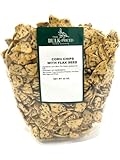
- CORN CHIPS WITH FLAX SEED: The Bulk-Priced Food Shoppe’s corn chips with flax seed are a healthy alternative to potato chips! They are a salty, crunchy snack for anytime. Eat them plain, dip them in salsa or a dip mix, or use them in any trail mix recipe!
- TASTE: These delicious, baked flax chips are made from hearty multigrain and raw flax seeds. Perfect for someone looking for a heart-healthy alternative to snack on. You will be coming back for more!
- FRESHNESS: Freshness of our products are always guaranteed due to in-house packaging. Bulk shipments are delivered weekly to our warehouse for the best possible quality.
- PACKAGING: Packaged and heat-sealed in a state licensed facility to ensure quality and cleanliness. Product comes in a resealable, stand-up bag.
- COUNTRY OF ORIGIN: United States – The Bulk-Priced Food Shoppe buys in bulk so YOU don’t have to! We give our customers the freshest food at the best possible price.
“
Product prices and availability are accurate as of the date/time indicated and are subject to change. Any price and availability information displayed on Amazon at the time of purchase will apply.




