How Much Upload Bandwidth Does a 24/7 Stream Really Need?
Quick wins for a faster PC:
Clear out junk files and repair common Windows errorsFree Scan →Scan for outdated or missing drivers - takes under a minuteDriver Scan →The answer depends entirely on whether you are streaming continuously from your home network or uploading content once to the cloud. This distinction changes the math by orders of magnitude and determines whether a typical home internet connection can sustain your stream.
Keep a YouTube Channel Live From the Cloud With StreamNeo
StreamNeo lets you upload a prerecorded video and paste a YouTube stream key, then runs the broadcast in the cloud. That directly supports the upload-once model described here instead of requiring a continuous upload from your home connection.
Because the stream runs in the cloud while your PC stays off, your home network handles the initial file upload rather than 24/7 streaming traffic. You can use the 24-hour 720p/30fps trial for free with no card at signup to test the workflow and upload timing.
StreamNeo checks stream health every 30 seconds and restarts dropped streams automatically. Upload a representative video, paste its YouTube stream key, and verify the channel’s live workflow before deciding on ongoing use.
#1 Best Overall
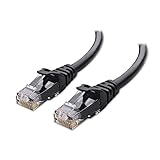
- High-Performance Connectivity: This Cat 6 ethernet cable is designed for superior performance, with a 24 AWG copper wire core. It provides universal connectivity as an ethernet cord for LAN network components such as PCs, servers, printers, routers, and more, ensuring reliable and fast network connections
- Advanced Cat6 Technology: Experience Cat6 performance with higher bandwidth at a Cat5e price. This network cable is future-proof, ready for 10-Gigabit Ethernet and backwards compatible with any existing Cat 5 cable network. It meets or exceeds Category 6 performance according to the TIA/EIA 568-C.2 standard
- Reliable Wired Network Solution: Known variously as a Cat6 network cable, ethernet cable Cat 6, or Cat 6 data/LAN cable, this RJ45 cable offers a more secure and reliable connection than wireless networks. It's ideal for internet connections that demand consistency and security
- Durable and Secure Design: The connectors of this ethernet cable feature gold-plated contacts and strain-relief boots for enhanced durability. Bare copper conductors not only improve cable performance but also comply with communication cable specifications
- High-Speed Data Transfer: With up to 550 MHz bandwidth, this ethernet cord is ideal for server applications, cloud computing, video surveillance, and streaming high-definition video. It also supports Power over Ethernet (PoE, PoE+, PoE++) for powering devices like IP cameras, VoIP phones, and wireless access points, ensuring fast and reliable network performance.
If you encode on your desktop and stream to YouTube, your upload line must stay saturated for 24 hours. If you upload a video file once to a cloud platform, your upload line is in use for 20-30 minutes, then silent. The second approach is what makes 24/7 streaming feasible for creators with normal home broadband.
Bandwidth Requirements for Streaming From Your Desktop
YouTube recommends bitrate settings based on resolution and frame rate. These are the minimum sustained upload speeds you need:
720p at 30 fps: 2,500-4,000 kbps (roughly 0.3-0.5 MB per second)
1080p at 30 fps: 4,500-6,000 kbps (roughly 0.56-0.75 MB per second)
1080p at 60 fps: 7,500-9,000 kbps (roughly 0.94-1.1 MB per second)
These are continuous bitrates. A desktop streaming encoder like OBS maintains these bitrates 24 hours a day, 7 days a week. Over a month, here is what that means:
Do these 3 things before closing this tab:
1Fix the driver behind crashes, sound loss and screen glitches2Clear out junk files and repair common Windows errors3Scan for outdated or missing drivers - takes under a minuteA 720p stream at 3,500 kbps (a typical mid-range choice) uses 3,500 kilobits per second. Converting to bytes: 3,500 ÷ 8 = 437.5 kilobytes per second. Over 30 days (2,592,000 seconds), that is 1,134 gigabytes of upload traffic.
Many home ISPs cap residential uploads at 10 Mbps or less. That 10 Mbps is 1,250 kilobytes per second. A 3,500 kbps stream consumes 437.5 KB/s, leaving 812.5 KB/s headroom for other traffic. In theory, this fits. In practice, ISP connections are rarely stable at the advertised maximum, and any other device on the network (downloads, cloud backups, software updates) will interfere.
An ISP data cap of 500 GB per month, common in many US regions, would be breached by a continuous 720p stream (1,134 GB per month) within weeks. Most ISPs bill heavily for overages or throttle the connection after cap breach.
Bandwidth Requirements for Cloud Streaming (Upload Once)
Cloud streaming platforms invert the problem. Instead of streaming continuously from home, you upload a video file to the platform’s servers. The platform encodes and streams to YouTube from its own infrastructure. Your home upload line is in use only during the initial upload.
A typical lofi or music stream lasts 4-8 hours. Let us assume a 6-hour video at 720p:
Rank #2

- Cat 6 performance at a Cat5e price but with higher bandwidth
- High Performance Cat6, 30 AWG, RJ45 Ethernet Patch Cable provides universal connectivity for LAN network components such as PCs,computer servers,printers,routers,switch boxes,network media players,NAS,VoIP phones
- Jadaol cat6 standard cable support Cat8 and Cat7 network and provides performance of up to 250 MHz 10Gbps and is suitable for 10BASE-T, 100BASE-TX (Fast Ethernet), 1000BASE-T/1000BASE-TX (Gigabit Ethernet) and 10GBASE-T (10-Gigabit Ethernet)
- UTP(Unshielded Twisted Pair) patch cable with RJ45 gold-plated Connectors and are made of 100% bare copper wire, ensure minimal noise and interference
- The unique flat cable shape allows for a cleaner and safer installation. You can easily and seamlessly make the cable run along walls, follow edges & corners or even make it completely invisible by sliding it under a carpet.
File size at 720p, 30 fps, 3,500 kbps bitrate:
3,500 kilobits per second × 3,600 seconds per hour × 6 hours = 75,600 megabits = 9,450 megabytes = 9.5 GB
Uploading a 9.5 GB file on a 10 Mbps connection (the typical home upload limit) takes:
9.5 GB × 1,000 MB/GB ÷ 1.25 MB/s = 7,600 seconds = 2 hours and 7 minutes
On a 20 Mbps upload connection (common in fiber areas), the same upload takes 63 minutes. On a 5 Mbps connection (typical in older cable areas), it takes 4 hours and 15 minutes. The upload happens once. Your ISP data cap is barely dented.
Crashes, No Sound, or Screen Glitches?
Random freezes, missing sound and display glitches usually trace back to one bad driver. Find and replace yours safely.Free scan · under a minuteWindows Errors? Fix Them Before They Spread
Repair common Windows errors and clear accumulated junk for a smoother, more stable PC - no reinstall needed.Free scan · no reinstallComparison table for a 6-hour video at 720p resolution:
| Upload Speed | Time to Upload 9.5 GB |
|---|---|
| 5 Mbps | 4 hours 15 minutes |
| 10 Mbps | 2 hours 7 minutes |
| 20 Mbps | 1 hour 3 minutes |
| 50 Mbps | 25 minutes |
The upload window is hours, not days. Once the video is on the platform’s servers, streaming to YouTube happens from the cloud data center, using the platform’s internet connection, not yours.
StreamNeo gives this upload window a concrete test: upload a representative video and paste a YouTube stream key, then use the free 24-hour 720p/30fps trial with no card at signup to check how the initial upload fits your schedule.
StreamNeo follows this upload-once workflow: upload your video and paste a YouTube stream key, then let the stream run in the cloud while your PC stays off. A free 24-hour 720p/30fps trial with no card at signup gives you a practical way to measure the initial upload and confirm the setup.
How Different Channel Types Affect Bandwidth
Lofi and ambient music channels typically run 4-8 hour videos on repeat or rotate several pre-recorded files. The upload happens once per video. A creator who uploads a new 6-hour lofi mix every other day uses 9.5 GB every other day, or roughly 142 GB per month. This fits comfortably inside most home ISP data caps and requires only brief upload windows.
Documentary or highlights channels might rotate a 2-hour clip or compile highlights into longer files. A 2-hour video at 720p is roughly 3.2 GB. Uploading daily is 96 GB per month, easily manageable.
Rank #3

- 40 Gbps 2000 Mhz High Speed: The Cat 8 ethernet cable support max. 40 Gbps data transfer and 2000 MHz Brandwith, ideal for gaming and streaming, greatly improving upload and download speed, sound, image and resolution quality
- Excellent Anti-interference: The ethernet cable comes with 4 shielded foiled twisted pairs (F/FTP), pure copper core and gold-plated RJ45 connector, reducing interference, noise and crosstalk, making network speed faster and more stable
- Marvelous Durability: Internet cable wrapped with quality cotton braided cord, which makes the LAN cable stronger and more durable. The test proves that this internet cable can be bent at least 10000 times without broken, very suitable for long-term use
- PoE Supported: All lengths of ethernet cord can support the PoE power supply function except 65ft. You don't need additional power supply when installing a PoE camera, which is very convenient and safe
- Wide Compatibility: With the RJ45 Connector, network cable can be perfectly compatible with computers, laptops, modems, routers, PS5, X-Box and other networking devices. It can also be fully backward compatible with Cat7, Cat6e, Cat6, Cat5e, Cat5
24/7 gaming channels that loop retro longplay videos might upload a new 8-10 hour file once per week (a single game playthrough), using 12-15 GB per upload. Weekly uploads are 48-60 GB per month.
News recap channels could upload a single news compilation each day (1-2 hours, 1.5-3 GB) for 45-90 GB per month.
Recommended Free Tools
All of these scenarios are compatible with home internet. None of them approach the 1,000+ GB per month that continuous desktop streaming demands.
Practical Limits on Upload Speed
Most home ISPs advertise asymmetrical speeds: 500 Mbps download, 10 Mbps upload. The upload portion is the constraint.
Fiber connections (Google Fiber, Verizon Fios) often offer symmetrical speeds: 200 Mbps up and down, or higher. These are ideal for creators who want to upload quickly.
Cable internet (Comcast, Charter) typically caps uploads at 10-35 Mbps depending on service tier.
Satellite internet (Starlink, Viasat) has improved but still struggles with consistency. Starlink offers 20-40 Mbps uploads but with higher latency, which matters less for file uploads but more for real-time monitoring.
DSL (traditional phone-line internet) is often the weakest, with uploads under 5 Mbps.
Check your actual speed by running a test at fast.com or speedtest.net. Most ISPs deliver slightly less than advertised, so add a 10-15% margin.
Rank #4
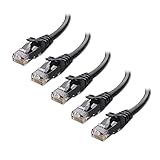
- High-Performance Connectivity: This Cat 6 ethernet cable is designed for superior performance, with a 24 AWG copper wire core. It provides universal connectivity as an ethernet cord for LAN network components such as PCs, servers, printers, routers, and more, ensuring reliable and fast network connections
- Advanced Cat6 Technology: Experience Cat6 performance with higher bandwidth at a Cat5e price. This network cable is future-proof, ready for 10-Gigabit Ethernet and backwards compatible with any existing Cat 5 cable network. It meets or exceeds Category 6 performance according to the TIA/EIA 568-C.2 standard
- Reliable Wired Network Solution: Known variously as a Cat6 network cable, ethernet cable Cat 6, or Cat 6 data/LAN cable, this RJ45 cable offers a more secure and reliable connection than wireless networks. It's ideal for internet connections that demand consistency and security
- Durable and Secure Design: The connectors of this ethernet cable feature gold-plated contacts and strain-relief boots for enhanced durability. Bare copper conductors not only improve cable performance but also comply with communication cable specifications
- High-Speed Data Transfer: With up to 550 MHz bandwidth, this ethernet cord is ideal for server applications, cloud computing, video surveillance, and streaming high-definition video. It also supports Power over Ethernet (PoE, PoE+, PoE++) for powering devices like IP cameras, VoIP phones, and wireless access points, ensuring fast and reliable network performance.
Upload Window Timing Matters
If your upload speed is 10 Mbps and your 6-hour video is 9.5 GB, uploading takes about 2 hours. Plan uploads during off-peak hours (late evening or early morning) when your household is not downloading updates or streaming video elsewhere.
Some creators upload overnight and schedule the stream to go live in the morning, ensuring the video is ready before the platform begins encoding.
Connection Stability During Upload
Long uploads are sensitive to network hiccups. If your router reboots halfway through a 2-hour upload, you might have to restart from the beginning. To reduce this risk:
After the file is uploaded, StreamNeo checks stream health every 30 seconds and restarts dropped streams automatically, while the stream runs in the cloud and your PC stays off.
Use a wired ethernet connection if possible, not Wi-Fi. Ethernet is more stable and often slightly faster.
The Tool Desk
Outbyte PC Repair FREEClear out junk files and repair common Windows errorsFree Scan →Outbyte Driver Updater FREEFix the driver behind crashes, sound loss and screen glitchesFind Drivers →Disable background tasks (updates, cloud sync) during uploads.
Use a platform that supports resume-on-disconnect, so a hiccup does not restart the entire upload.
For ongoing stream reliability, StreamNeo checks stream health every 30 seconds and restarts dropped streams automatically. That helps maintain the YouTube broadcast without leaving a local PC or encoder running to monitor it.
Independent reader supportYour contribution helps us test, update, and keep practical guides available for everyone.ISP Data Caps and Overages
If your ISP has a 500 GB data cap:
- Continuous 720p desktop streaming: 1,134 GB per month. You would exceed the cap in 13 days.
- Cloud streaming with daily 2-hour uploads: 96 GB per month. Safe, even with downloads.
- Cloud streaming with weekly video uploads: 48-60 GB per month. Minimal impact on your cap.
Many ISPs allow a free courtesy overage once per year but charge per GB after that. The cost of a month of continuous desktop streaming overage is often 200-500 dollars. Upload-once streaming avoids that risk entirely.
Free tools Windows power users keep installed
One-click scans. No signup required.
Best Value

- High Performance Cat6 Cable - The Cat6 ethernet cables 100ft supports frequencies of up to 500 MHz and high-speed 10GB internet connection for LAN network applications such as PCs,computer servers,printers,routers,switch boxes,network media players,NAS,VoIP phones and more, while remaining fully backward compatible with your existing network.
- Outdoor&Indoor Ethernet Cable - The cat 6 ethernet patch cable features 8 solid copper conductors 24 AWG. Each of the 4 unshielded twisted pairs (UTP) are separated by a PE cross insulation to isolates pairs and prevent crosstalk and covered by a 5.8mm PVC jacket with RJ45 connectors and gold-plated contacts. The molded strain relief boots help avoid snags that will damage your cables. They are molded for flexibility and resist common wear and tear.
- Lan Cable with RJ45 - UTP(Unshielded Twisted Pair) patch cable with RJ45 gold-plated Connectors, this cat6 cable support Cat8 and Cat7 network and provides performance of up to 500 MHz 10Gbps and is suitable for 10BASE-T, 100BASE-TX (Fast Ethernet), 1000BASE-T/1000BASE-TX (Gigabit Ethernet) and 10GBASE-T (10-Gigabit Ethernet)
- High Quality Control - are designed with extremely well-matched components for outstanding uniform impedance and very low return loss, providing lower crosstalk, and a higher signal-to-noise ratio. Each Cat 6 internet cable 6 ft goes through rigorous testing to ensure a secure wired internet connection with exceptional speed and reliability.
- Support – Cat6 Ethernet cable with CM grade PVC jacket complies with TIA/EIA 568-C.2, is ETL verified and RoHS compliant. If an item is defective or breaks within a year, we will issue a replacement. For questions or concerns please contact our friendly, USA-based customer Support team.
Video Quality Trade-Offs
Lower bitrates reduce file size and upload time but degrade perceived quality:
576p at 30 fps, 2,500 kbps: roughly 1.9 GB for 6 hours. Uploads in 25-50 minutes on typical home connections. Acceptable for music, retro gameplay, and ambient content.
720p at 30 fps, 3,500 kbps: roughly 2.6 GB for 6 hours. Uploads in 35-70 minutes. The standard choice for most 24/7 channels.
1080p at 30 fps, 5,000 kbps: roughly 3.75 GB for 6 hours. Uploads in 50-100 minutes. Worthwhile only if your source content is genuinely high resolution (gaming at 1440p or higher, filmed video).
What’s actually slowing this PC down?
Pick the symptom - the matching free tool is one click away.
Lofi music, ambient video, and retro content do not benefit from 1080p. Stick with 720p to minimize upload burden.
Encoding Locally Before Cloud Upload
Some creators encode locally (using OBS or ffmpeg on their desktop) and then upload the rendered file. This happens once, not continuously. Your desktop runs the encoding for 6-8 hours, then stops. The file sits on your PC for a few minutes while you upload it, then is deleted. Your PC is not used again until the next day’s encode.
This approach uses less electricity than continuous streaming (encoding is CPU-intensive for a few hours, but the machine is off the rest of the time) and still avoids the ISP upload burden during streaming hours. The encoding happens during off-peak hours or overnight.
Backup and Redundancy Considerations
If you rely on a single uploaded video playing on repeat for a week, a technical failure (the video is corrupted on the platform’s storage) could crash your entire week of streaming. Some creators keep a backup video or two ready to upload as a replacement, adding a few GB to their monthly data usage. This is cheap insurance for high-value channels.
Free tools Windows power users keep installed
One-click scans. No signup required.
Summary of Bandwidth Requirements
| Scenario | Monthly Data | Suitable Connections |
|---|---|---|
| Continuous 720p from home | 1,100+ GB | Fiber with high cap, or no cap |
| Daily 2-hour cloud uploads | 96 GB | Any home connection (5 Mbps+) |
| Weekly video uploads | 48-60 GB | Any home connection |
| Continuous 1080p from home | 1,600+ GB | Fiber only |
Cloud-based streaming is the practical choice for any creator with a standard home internet connection. The upload happens once, and the demand on your ISP connection is minimal. This is why lofi channels, music channels, and content loops have exploded in recent years—they are now feasible for anyone with broadband, not just users with business-grade connections or large data allowances.
The Cloud Streaming Advantage
Uploading a video once to StreamNeo and streaming 24/7 from the cloud requires your ISP bandwidth for a one-time upload (minutes to hours), not continuous streaming. This eliminates the 1,000+ GB monthly data usage that home streaming demands. Your home network is virtually untouched. The platform’s data centers handle all bandwidth to YouTube, and automatic recovery ensures the stream resumes if any connection hiccup occurs. This is why 24/7 lofi, music, and documentary channels have become feasible for creators with typical home internet—the upload-once model avoids ISP constraints entirely.
Quick Recap
Product prices and availability are accurate as of the date/time indicated and are subject to change. Any price and availability information displayed on Amazon at the time of purchase will apply.




