Quick wins for a faster PC:
Clear out junk files and repair common Windows errorsFree Scan →Fix the driver behind crashes, sound loss and screen glitchesFind Drivers →The claim that a UPI merchant fee would be deferred until January 1 is not confirmed by the available reporting. What is documented is that India’s government made merchant discount rate (MDR) zero for RuPay debit card and BHIM-UPI transactions from January 2020. That policy does not establish that every UPI-related fee is zero, or verify a separate festive-season deferral.
What does “UPI merchant fee” mean?
Merchant discount rate, or MDR, is a charge associated with accepting a payment. It is a merchant-side cost paid to participants in the payment ecosystem, rather than a fee automatically charged to the customer. The term needs care: the payment instrument, transaction type and applicable policy determine whether MDR applies. A separate service or platform fee should not be treated as MDR without evidence that it is the same charge.
In its January 11, 2023 release, India’s Press Information Bureau (PIB) said MDR had been made zero from January 2020 for RuPay debit card and BHIM-UPI transactions through amendments to Section 10A of the Payments and Settlement Systems Act, 2007, and Section 269SU of the Income-tax Act, 1961. PIB’s release on the incentive scheme and zero-MDR policy describes those specific categories; it should not be read as a blanket statement about every payment type or cost.
Was a festive-season UPI fee deferral confirmed?
The sources available do not establish that a UPI merchant fee was formally deferred until January 1. They do not identify which fee the proposed deferral concerned, who proposed it, or which year’s January 1 was meant. The headline claim should therefore be treated as unverified, not as an announcement that a deferral took effect.
What’s actually slowing this PC down?
Pick the symptom - the matching free tool is one click away.
#1 Best Overall

- Use the, easy-to-use, and customizable POS to get started.
- Accept contactless payments, chip cards, Apple Pay, and Google Pay from anywhere, with improved connectivity, extended battery life, and enhanced security. Pay one low rate for every tap or dip.
- No long-term commitments or contracts, no monthly fees- and with offline payments, keep taking payments for up to 24 hours.
- Safely and securely accepts payments anywhere. Plus, get data security, 24/7 fraud prevention, and payment-dispute management at no extra cost.
- Use the, easy-to-use, and customizable POS to get started.
There is related but distinct 2019 coverage. Business Today reported on September 13, 2019, that NPCI reduced MDR on RuPay debit card acceptance ahead of the festive season and referred to a similar UPI MDR reduction. That report does not verify a proposed deferral until January 1. Business Today’s September 2019 report is context, not confirmation of the specific claim.
When did the zero-MDR policy take effect?
The Economic Times reported that the government announced no MDR on RuPay and UPI transactions from January 1, 2020. Its report on the January 1 start is consistent with PIB’s later description of zero MDR from January 2020 for RuPay debit card and BHIM-UPI transactions. Neither source establishes that this start date resulted from a temporary festival-period deferral.
Rank #2

- Pay one transparent rate per swipe for Visa, Mastercard, Discover and American Express.
- Works in conjunction with most downloadable Square point-of-sale apps on your device. Customers can pay, tip and sign directly on your device. Track payments in cash, gift cards and more. Also lets you send receipts via e-mail or text message, makes it easy to apply discounts, keeps a data and sales history log and more.
- Accepts magstripe credit card payments, including those from Visa, Mastercard, Discover and American Express (fees apply).
- App sends deposits to your bank account within 1 to 2 business days, or enjoy instant deposits (fees apply).
A March 24, 2025 PIB document again describes the zero-MDR policy while distinguishing it from other payment categories and referring to UPI person-to-merchant MDR. Because this is a dated government account, readers making a present-day decision should check the applicable rules for the exact instrument and transaction type rather than infer that all UPI acceptance costs are covered. The 2025 PIB document provides that category-specific context.
Independent reader supportYour contribution helps us test, update, and keep practical guides available for everyone.What happened after the policy began?
An industry request was not a policy reversal
On January 23, 2022, The Indian Express reported that the Payments Council of India sought a rollback of zero MDR for UPI and RuPay debit card payments. This was an industry position, not evidence that the government enacted a change. The report on the council’s request should be read accordingly.
Do these 3 things before closing this tab:
1Repair Windows errors before they cause bigger problems2Scan for outdated or missing drivers - takes under a minute3Clear out junk files and repair common Windows errorsRank #3

- Accept all major credit and debit cards and pay one low rate
- No hidden fees and no long-term contracts
- Mobile card reader that accepts payments anywhere & anytime
- Use the free SumUp App on your smartphone or tablet to start accepting transactions
- Simply pay 2.6% +10 per in-person transaction
Growth figures and incentives provide context, not proof of cause
PIB reported 2,233 crore BHIM-UPI transactions in FY2020–21 and 4,597 crore in FY2021–22, describing this as 106% year-on-year growth. Those figures show the transaction growth reported for those fiscal years; they do not by themselves prove that zero MDR caused the increase. PIB’s January 2023 release also described an incentive scheme intended to support participants in the payment ecosystem. The PIB release sets out the figures and scheme context.
A later PIB document lists government incentive payouts of ₹1,389 crore for FY2021–22, ₹2,210 crore for FY2022–23 and ₹3,631 crore for FY2023–24. These are year-wise payouts under the incentive scheme, not merchant fees. The March 2025 PIB document reports the amounts.
Quick Recap
Best Value

- An intuitive interface to easily accept payments and manage your sales.
- Strong, reliable Wi-Fi connection. Free SIM card and mobile data so you can process payments anywhere.
- Great battery capability with an additional charging station.
- A truly portable device. Stay in control of your business, wherever you go.
- Support when you need it. Get in touch with our US-based support through phone, email and chat.
Rank #4
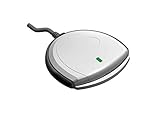
- Fully Compliant - Complies With All Major Industry Standards, Including Iso/Iec 7816, Usb Ccid, Pc/Sc, And Microsoft Whql. As Well As, Emv 2011 Ver 4.3 Level 1 And Gsa Fips 201.
- Seamless Integration - With Identiv-Specific Smartos You’Ll Get Easy, Complete Support Of All Major Contact Smart Card Ics And Technologies In One Simple Reader.
- Universal Compatibility - Works With Virtually All Contact Chip Cards And Pc Operating Systems, Including Windows, Macos, Linux And Android.
- Fast And Convenient- Shorten Your Transaction Time With A Reader That’S Optimized For Speed. It’S Ultra-Compact And Robust Design Is Streamlined For Mobile Operation, Making This Reader The Best Choice For Convenience, Security And Reliability.
- Ergonomic and cost efficient design
What should merchants check?
- Identify the payment instrument and transaction type: BHIM-UPI, RuPay debit card and other payment categories are not interchangeable policy labels.
- Ask whether a quoted charge is MDR or a separate service or platform fee, and who is expected to pay it.
- Check the effective date and the current rule for that specific transaction rather than relying on a broad claim that “UPI is free.”
Product prices and availability are accurate as of the date/time indicated and are subject to change. Any price and availability information displayed on Amazon at the time of purchase will apply.




