Short answer: There is no single best affordable health insurance company nationwide in 2026. The right choice depends on your county, household income, age, doctors, prescriptions, expected healthcare use, and eligibility for financial assistance. Medicaid or CHIP is usually the lowest-cost comprehensive option if you qualify. For Marketplace shoppers, a Silver plan with cost-sharing reductions is often the best value below 250% of the federal poverty level, while a Bronze HSA plan may suit healthy people who can handle a high deductible. Gold or Platinum can cost less overall for people expecting frequent care.
Updated August 10, 2026: Enhanced ACA premium tax credits expired after 2025, 2026 Marketplace Open Enrollment has closed on the federal platform, and the next federal Open Enrollment Period is scheduled for November 1 through December 15, 2026, for 2027 coverage.
As an Amazon Associate I earn from qualifying purchases.
Best affordable health insurance options by shopper
Start with the coverage program you can actually use—not a national insurer ranking. A regional insurer with your doctors in-network may be a better choice than a famous company that does not operate in your county.
Quick wins for a faster PC:
Fix the driver behind crashes, sound loss and screen glitchesFind Drivers →Clear out junk files and repair common Windows errorsFree Scan →Scan for outdated or missing drivers - takes under a minuteDriver Scan →| Situation | Best starting point | Why | Main warning |
|---|---|---|---|
| Eligible for Medicaid or CHIP | Medicaid or CHIP | Usually the lowest premiums and cost sharing | Eligibility differs by state, income category, age, pregnancy, disability, household status, and immigration rules |
| Household income generally between 100% and 250% of FPL and eligible for Marketplace savings | Silver Marketplace plan with CSR | Cost-sharing reductions can substantially lower deductibles, copayments, coinsurance, and the out-of-pocket maximum | You generally must select Silver to receive CSR |
| Low expected medical use and enough savings for a large bill | Bronze HSA plan | Usually a lower premium and, beginning in 2026, HSA eligibility for Marketplace Bronze plans | Routine care and prescriptions may be expensive before the deductible |
| Frequent care, expensive prescriptions, pregnancy, planned surgery, or ongoing specialist treatment | Gold, Platinum, or CSR Silver | Higher premiums may buy substantially lower cost sharing and better cash-flow predictability | Compare the actual premium increase with the deductible and coinsurance you avoid |
| Over age 30, not eligible for premium tax credits, and primarily seeking protection against a major event | Catastrophic plan, if available and eligible | Usually a lower premium with emergency protection | No premium tax credit and generally the highest out-of-pocket exposure |
| Employer pays a significant share and your doctors are in-network | Employer plan | The employer contribution can make coverage substantially cheaper | An affordable employer offer can make you ineligible for Marketplace subsidies |
| Recently lost job-based coverage | Compare a Marketplace SEP with COBRA | The Marketplace may cost less; COBRA preserves your current network and treatment relationships | Do not cancel COBRA until the replacement plan’s effective date is confirmed |
| Age 65 or older, or eligible for Medicare because of disability or ESRD | Medicare comparison | Medicare has different enrollment, drug, network, supplemental, and out-of-pocket rules | Do not rank ACA plans and Medicare plans as though they were the same products |
| Short gap between jobs | COBRA or a carefully reviewed temporary policy | COBRA preserves existing coverage; temporary coverage may have a lower premium | Short-term plans may exclude pre-existing conditions and major benefits |
This is a decision framework, not a universal ranking. A plan is affordable only if you can pay both its premiums and its share of medical bills when you need care.
#1 Best Overall

- WIDE APPLICATION: Our card protector measures 3.8 inches x 2.32 inches, fits card size within 3.6“ x 2.2”. Can be used to protect social security cards, new medicare cards, credit cards, drivers license, ID cards,card covers for debit cards business cards and more.
- MORE STRONG AND DURABLE: Our social security card protector are made of quality PVC that is waterproof and corrosion resistant, smoother and more pliable, not easy to crack, and long-lasting protection for your cards from harm. But note that they do not offer RFID shielding.
- BETTER PROTECTION OF CARDS: Our credit card sleeves made to protects your cards from wear, tear and dirt, keep your cards safe and clean, keeping your cards in top condition.Clear card sleeves,High transparency on both sides makes our plastic card sleeves easy to present your card for viewing, and also makes it easy to recognize the text on your card when it passes through the scanner.
- EASY TO USE: The inside dimensions of our social security card holder allows you to easily insert and remove your cards without worrying about them slipping out of the holder, making your daily use easier and more convenient.
- GREAT GIFT: The credit card protector is perfect for all the creative and fun personalities in your life. Ideal for birthdays, holidays, or just because, these card covers add a touch of personal flair that everyone will appreciate. Show someone you care with something that is both practical and unique.
What changed for affordable coverage in 2026?
Enhanced ACA subsidies ended after 2025
The enhanced ACA premium tax credits ended on December 31, 2025. For 2026, the standard premium tax credit generally applies to Marketplace applicants with household income from 100% through 400% of the federal poverty line, subject to other eligibility rules. People above 400% of FPL generally face the restored subsidy cliff. See the HealthCare.gov savings guidance and the IRS premium tax credit rules.
That does not mean every household below 400% FPL receives the same assistance. Your credit depends on household income, household size, age, county, and the price of the applicable benchmark plan. An affordable employer offer, Medicare, Medicaid, CHIP, TRICARE, or certain other coverage can block Marketplace tax-credit eligibility.
2026 contribution percentages are higher and income-sensitive
The applicable percentage is the share of household income used in the premium tax-credit calculation. For 2026, the ranges are:
| Household income | Applicable percentage range |
|---|---|
| Below 133% of FPL | 2.10% |
| 133% to 150% of FPL | 3.14% to 4.19% |
| 150% to 200% of FPL | 4.19% to 6.60% |
| 200% to 250% of FPL | 6.60% to 8.44% |
| 250% to 300% of FPL | 8.44% to 9.96% |
| 300% to 400% of FPL | 9.96% |
For an employer’s self-only coverage affordability test, the 2026 threshold is 9.96% of household income. Family members can have a separate affordability analysis in some circumstances, so do not assume that an employee’s eligibility automatically determines every family member’s eligibility. The IRS 2026 applicable-percentage guidance provides the underlying figures.
Do not use the wrong poverty-guideline year
For a general 2026 reference, HHS lists a poverty guideline of $15,960 for one person and $33,000 for a family of four in the 48 contiguous states and Washington, D.C. Alaska and Hawaii use different figures. However, do not simply multiply those 2026 guidelines by 400% and present the result as the universal 2026 Marketplace tax-credit threshold. The Marketplace uses the most recently published poverty guidelines available at the start of that plan year’s Open Enrollment Period. Because 2026 federal Open Enrollment began November 1, 2025, the application determines which guideline year applies. The HHS poverty-guideline table is useful for general program screening, but the Marketplace eligibility result controls.
Bronze and Catastrophic plans became HSA-eligible under the new 2026 rule
Beginning in 2026, all Bronze and Catastrophic Marketplace plans qualify as HSA-eligible plans under the new law, although you should verify the specific plan’s HSA designation and account details before contributing. An HSA can help with eligible medical expenses, but it generally does not make the premium affordable and does not eliminate the deductible.
For 2026, the HSA contribution limit is $4,400 for self-only coverage and $8,750 for family coverage. The HSA-qualified HDHP minimum deductible is $1,700 self-only and $3,400 family, while the HSA-qualified HDHP maximum out-of-pocket expenses are $8,500 and $17,000, respectively. These figures are different from the ACA Marketplace out-of-pocket maximums. See HealthCare.gov’s HSA guidance and the IRS 2026 HSA limits.
Do these 3 things before closing this tab:
1Clear out junk files and repair common Windows errors2Scan for outdated or missing drivers - takes under a minute3Repair Windows errors before they cause bigger problems2026 Marketplace enrollment is currently closed on HealthCare.gov
For 2026 coverage on the federal platform, Open Enrollment ran from November 1, 2025, through January 15, 2026. A plan selected by December 15 generally began January 1; a plan selected after December 15 and by January 15 generally began February 1.
As of August 10, 2026, new federal-platform enrollment generally requires a Special Enrollment Period or another eligibility pathway. Medicaid and CHIP applications remain available year-round. The next federal Open Enrollment Period is scheduled for November 1 through December 15, 2026, for 2027 coverage. State-based Marketplaces may use different dates within federal requirements, so check your state’s official Marketplace. The HealthCare.gov plan page and CMS Marketplace rule summary provide current enrollment information.
First determine which program you qualify for
Before comparing Aetna, Kaiser Permanente, Oscar, or any other insurer, answer these questions:
- Are you eligible for Medicaid or CHIP?
- Are you age 65 or older, or eligible for Medicare through disability or ESRD?
- Does an employer offer coverage to you or a household member?
- What is your expected household MAGI for the coverage year?
- Are you eligible for a Marketplace premium tax credit?
- Are you eligible for cost-sharing reductions, which generally require a Silver plan?
- Do you have a Special Enrollment Period?
- Do your immigration or lawful-presence circumstances affect eligibility?
- Does your household need to split coverage among Medicaid, CHIP, an employer plan, and the Marketplace?
Medicaid and CHIP
Medicaid and CHIP are usually the least expensive comprehensive options for people who qualify. Applications can be made at any time of year through the Medicaid and CHIP application process.
Eligibility varies significantly by state and category. States differ in coverage for adults, parents, children, pregnant people, disabled individuals, and older adults. Children and pregnant people may qualify at higher income levels than other adults. Adults below 100% of FPL can fall into a coverage gap in a state that has not expanded Medicaid, although other eligibility categories and immigration rules may change the result.
A Marketplace application may refer you to Medicaid or CHIP, but a referral is not the same as active coverage. Wait for the state’s final determination and follow any document requests.
Employer insurance
Employer coverage can be the best deal when the employer pays a substantial part of the premium and your preferred doctors and hospitals participate. Compare your employee contribution—not the employer’s total premium—with the after-subsidy Marketplace cost. Also compare deductibles, out-of-pocket maximums, prescription coverage, network breadth, family premiums, and any employer HSA contribution.
An offer of affordable self-only employer coverage that provides minimum value generally blocks the employee from receiving a Marketplace premium tax credit. For 2026, the self-only affordability threshold is 9.96% of household income. A family member’s eligibility may differ, particularly when the cost of family coverage is evaluated separately.
Recommended Free Tools
Rank #2

- Product Size:3.74X2.36in.
- Fit for All Size Cards:wallet pocketsslots, and the sleeve business card, credit card.
- New Medicare Card Holder Protector Sleeves.
- Easy slide & Non-stick: Special opening design can insert and remove your card easily.
- Durable Materials:made of water-resistant and corrosion-resistant PVC card sleeves
Marketplace coverage
Marketplace plans are the main individual and family option for people who are self-employed, unemployed, working in the gig economy, between jobs, or without an affordable employer plan. To receive a federal premium tax credit, you generally must purchase the plan through the Marketplace rather than directly from an insurer.
COBRA
COBRA can be worth its higher premium when you are in active treatment, need a particular employer network, have already met much of the deductible, or need continuity with a doctor or hospital. COBRA generally allows temporary continuation of employer coverage for up to 18 months after job loss or a reduction in hours. The beneficiary usually pays the full premium plus an administrative charge and generally has 60 days to elect coverage. See the Department of Labor COBRA guidance.
Compare COBRA with a Marketplace Special Enrollment Period before making a decision. Do not voluntarily cancel COBRA and assume that the cancellation will create a new Marketplace enrollment opportunity. Confirm the replacement plan’s effective date before ending COBRA. HealthCare.gov explains the job-loss and COBRA comparison.
What affordable means: premium, annual cost, and worst case
A low premium is only one measure of affordability. Consider three separate questions:
- Can I afford the premium? Can I pay it every month for the entire year?
- Can I afford care? What will routine visits, prescriptions, specialists, therapy, imaging, or a hospital stay cost?
- Can I afford the worst case? Could I pay the in-network out-of-pocket maximum while continuing to pay premiums?
Use these estimates:
Estimated annual medical cost = annual premium + expected in-network deductible spending + expected copayments and coinsurance
Worst-case annual exposure = annual premium + in-network out-of-pocket maximum
The out-of-pocket maximum generally applies to covered, in-network essential health benefits. It does not generally include premiums, noncovered services, balance bills from out-of-network providers, or every medical expense you might encounter. HealthCare.gov explains how to compare total annual plan costs.
For example, a plan costing $50 per month with a $9,000 deductible may be less affordable for someone taking several prescriptions and seeing specialists than a $250-per-month plan with a $1,500 deductible. The second plan costs $2,400 more in annual premiums, but could reduce the amount needed to access care and the risk of a large early-year bill.
Crashes, No Sound, or Screen Glitches?
Random freezes, missing sound and display glitches usually trace back to one bad driver. Find and replace yours safely.Free scan · under a minutePC Slower Than It Used to Be?
A free scan shows the junk files, broken settings and background clutter dragging Windows down - then fixes them in one click.Free scan · Windows 10 & 112026 Marketplace out-of-pocket limits and Silver cost-sharing reductions
The standard 2026 Marketplace maximum annual limitation on cost sharing is $10,150 for self-only coverage and $20,300 for other-than-self-only coverage. Plans with cost-sharing reductions can have much lower limits.
Cost-sharing reductions are available only with a qualifying Silver Marketplace plan. They can lower the deductible, copayments, coinsurance, and annual out-of-pocket maximum. For 2026, the approximate Silver actuarial values are:
| Income range | Approximate Silver actuarial value | Reduced 2026 out-of-pocket maximum |
|---|---|---|
| 100% to 150% of FPL | 94% | $3,350 self-only; $6,700 other-than-self-only |
| Above 150% to 200% of FPL | 87% | $3,350 self-only; $6,700 other-than-self-only |
| Above 200% to 250% of FPL | 73% | $8,100 self-only; $16,200 other-than-self-only |
| Above 250% of FPL | No standard federal CSR variation | Usually the standard plan limit, subject to the plan’s terms |
The applicable limits are described in CMS’s 2026 payment and parameter guidance. This is why a lower-income household should not automatically choose Bronze simply because its premium is lower. If you qualify for CSR, the Silver plan may dramatically reduce what you pay when using care.
Bronze vs. Silver vs. Gold vs. Platinum vs. Catastrophic
Metal categories describe how you and the insurer divide covered healthcare costs. They describe cost sharing—not the quality of doctors or the quality of care. A high-metal plan is not automatically a better plan if its network excludes your providers or its formulary does not cover your medication.
| Plan category | Premium and care costs | Best fit | Important warning |
|---|---|---|---|
| Bronze | Usually the lowest premium and highest cost sharing when you receive care | Healthy consumers who want comprehensive coverage and can fund a high deductible | High routine-care, prescription, and hospital costs before the deductible; compare it with Catastrophic coverage rather than assuming it is always cheaper |
| Silver | Middle-range premium and cost sharing in many markets | Especially strong starting point for people eligible for CSR; also worth comparing for many families | Silver is not automatically best; compare actual plan designs, networks, prices, and CSR status |
| Gold | Often higher premium and lower cost sharing | People expecting regular care, costly prescriptions, specialists, pregnancy, or planned procedures | Do not pay more for Gold without confirming that the lower cost sharing justifies the premium |
| Platinum | Often the highest premium and lowest cost sharing among standard metal levels | Heavy healthcare users who are not receiving CSR and can afford the premium | Availability is limited in some counties |
| Catastrophic | Usually a lower premium but the highest out-of-pocket exposure; at least three primary-care visits are covered before the deductible | Generally people under 30 or people who qualify through hardship or affordability rules and mainly want major-event protection | No premium tax credit; availability is not universal; routine care can be expensive |
In 2026, some people who cannot receive Marketplace financial assistance because their income is too low or too high may be allowed to select Catastrophic coverage where available. Do not assume eligibility or availability; check the Marketplace result for your county. A Bronze plan can sometimes be a better value because it may cover more services before the deductible and can use premium tax credits.
State-specific Silver loading can also affect the comparison. In some markets, the way insurers price Silver plans can make subsidized Gold or Bronze premiums attractive. Compare the actual after-tax-credit plans rather than relying on the metal level alone.
How to compare actual plans on the Marketplace
- Use the official Marketplace. Start at HealthCare.gov or your state’s official Marketplace. The plan estimator can show preliminary prices before login, but the final price is available only after the complete application and eligibility determination. See HealthCare.gov’s plan-estimator guidance.
- Enter the entire household accurately. Include household members, ZIP code and county, expected annual income, tobacco status, current coverage, and any employer offer. Marketplace savings are based on expected household income for the coverage year, not simply last year’s income or gross business revenue.
- Review the eligibility notice. Look for a premium tax credit, CSR eligibility, a Medicaid or CHIP referral, Catastrophic eligibility, and requests for identity, income, immigration, or other documents.
- Compare net premiums. The relevant number is the premium after your tax credit—not the insurer’s full price. Also check whether a $0 plan still requires confirmation and a first premium payment.
- Compare the deductible and out-of-pocket maximum. Check whether primary care, specialist visits, urgent care, mental-health treatment, imaging, and prescriptions are covered before the deductible or only after it.
- Check the network at the plan level. Verify your primary-care doctor, specialists, preferred hospital, children’s hospital, cancer center, behavioral-health providers, urgent-care facilities, laboratories, imaging centers, telehealth providers, and travel or out-of-area rules.
- Check the exact formulary. Confirm the medication, tier, deductible treatment, copayment or coinsurance, prior authorization, step therapy, quantity limits, specialty-pharmacy rules, and exclusions.
- Download the Summary of Benefits and Coverage. The SBC lets you compare deductibles, office visits, emergency care, hospitalization, prescriptions, maternity care, mental-health services, and standardized coverage examples. Use the SBC guidance.
- Review quality ratings. Marketplace star ratings run from one to five stars and reflect member experience, medical care, and plan administration. New or low-enrollment plans may not have a rating. A missing rating is not proof of poor quality, and a high rating is not a guarantee that your claim or provider issue will be resolved favorably. See HealthCare.gov’s quality-rating explanation.
- Confirm the effective date and pay the first premium. Selecting a plan is not the same as having active coverage. Pay the first premium directly to the insurer and confirm the policy is active before using care. HealthCare.gov’s coverage confirmation guidance explains this step.
Verify networks twice
Provider directories can be incomplete or outdated. Check the insurer’s directory and call the doctor, hospital, or facility’s billing office. Ask whether the provider participates in the exact plan network—not merely whether it accepts the insurer or Marketplace coverage. HMO and EPO plans often provide little or no routine out-of-network coverage; PPO plans generally offer out-of-network coverage at a higher cost; POS plans may combine network restrictions with referral requirements. HealthCare.gov provides provider-verification guidance.
Rank #3
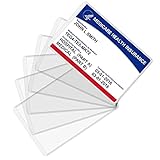
- Wide Application & Convenient: The new medicare card protector is 3.74"x 2.4". Applicable for new medicare cards, social security cards, business cards, credit cards, driver's license, id cards, etc. Fit for most wallet slots
- Sturdy to Use: The social security cardholder is made from flexible PVC, smooth and soft. Truly foldable without cracking. Single-layer thickness is increased to 12mil, double the standard thickness of 6mil, which protects your card much more effectively
- Keep Card in Perfect Condition: The new medicare card cover protects your cards from wearing, tearing, and bending. Specially keeps cards safe and clean. Besides, it is also suitable to insert two cards in the sleeve
- High Transparency: Crystal clear PVC credit card business card sleeves, offer complete transparency for easy viewing and available to place cards back to back due to double-sided design. Easily identifying your cards when the cards go through the scanner
- Easy to Use: Thin offset opening is designed for you to insert and remove cards easily. Keeps standard cards from slipping put. You can modify the size according to your needs as well. Much easier, more convenient for your life
Check prescription restrictions before enrollment
A drug can appear in an insurer’s broad formulary but be excluded from the specific plan or subject to restrictions. Ask the insurer about the exact plan’s formulary, tier, deductible, prior authorization, step therapy, quantity limits, and specialty-pharmacy requirements. Verify the answer with the prescribing office if you have an expensive or medically essential medication. See HealthCare.gov’s prescription guidance.
The Tool Desk
Outbyte Driver Updater FREEFix the driver behind crashes, sound loss and screen glitchesFind Drivers →Outbyte PC Repair FREERepair Windows errors before they cause bigger problemsFix Now →Are Kaiser, Aetna, Oscar, or another insurer the best?
National brand rankings are useful for generating a shortlist, but they cannot identify the best plan in every county. A 2026 Forbes Advisor comparison features Kaiser Permanente, Aetna, and Oscar among its affordable-insurer picks. Its methodology considers selected large insurers, average premiums at certain ages, complaint data, deductibles, plan types, and metal-tier offerings.
That type of comparison does not establish your best local option because:
- The insurer may not operate in your county.
- The cheapest unsubsidized insurer may not be cheapest after your tax credit.
- National complaint data does not measure your local network or claims experience.
- The same carrier can use different networks, formularies, premiums, and plan designs in different states.
- A PPO label does not guarantee that your preferred doctor or hospital is in-network.
- An average deductible does not tell you the deductible of the specific plan you are considering.
- Commercial rankings may rely heavily on unsubsidized averages, which can mislead people eligible for PTC or CSR.
Use the insurer’s name as a starting point, then make the decision using the plan’s SBC, provider directory, formulary, premium after assistance, out-of-pocket maximum, and Marketplace quality rating.
Short-term plans and discount programs: cheaper is not equivalent to comprehensive
Short-term limited-duration insurance
Short-term insurance may have a lower advertised premium, but it is not an equivalent substitute for ACA-compliant major medical coverage. A short-term policy may exclude pre-existing conditions, maternity care, mental-health services, prescriptions, or other benefits; use medical underwriting; impose annual or lifetime limits; and have state-specific restrictions.
What’s actually slowing this PC down?
Pick the symptom - the matching free tool is one click away.
As of July 2026, the NAIC reported that federal enforcement of the rule limiting initial terms to three months and total coverage to four months had been suspended while a revised federal rule was expected. The applicable duration can depend on federal enforcement, state law, the policy date, and the insurer. Check the current NAIC short-term-plan information and your state’s rules immediately before buying.
Consider short-term coverage only as a carefully reviewed temporary fallback after confirming exclusions, limits, renewability, waiting periods, network rules, and claim-paying responsibility. Never judge it by premium alone.
Medical discount plans and health-sharing arrangements
A medical discount plan is not health insurance. It may negotiate lower provider prices, but it does not necessarily pay claims. Health-sharing arrangements also should not be treated as guaranteed insurance benefits. The FTC warns about misleading discount-plan marketing.
Before paying, identify the entity that pays claims, obtain the full plan documents, check pre-existing-condition rules and exclusions, confirm whether your providers accept the arrangement, and determine whether the product is regulated insurance. Be especially cautious when a salesperson uses terms such as premium, deductible, or insurance without clearly identifying the policy and claims administrator.
Free tools Windows power users keep installed
One-click scans. No signup required.
Special Enrollment Periods and timing after a life event
Outside Open Enrollment, common Special Enrollment Period triggers include losing job-based coverage, losing Medicaid or CHIP, marriage, divorce with loss of coverage, birth, adoption, foster placement, moving to a new ZIP code or county, returning from abroad, aging off a parent’s plan at age 26, and certain immigration-status changes.
The federal Marketplace generally gives you 60 days after losing job-based coverage to apply. Some events require proof before enrollment, and enhanced verification rules mean you should not assume that coverage will begin immediately without documentation. Keep termination notices, employer coverage information, proof of address, birth or adoption records, and other supporting documents.
Do not intentionally stop paying premiums to create an enrollment opportunity. Marketplace termination for nonpayment generally does not create a Special Enrollment Period. Medicaid and CHIP remain available year-round. More information is available through HealthCare.gov’s job-loss coverage options and the Marketplace grace-period guidance.
2026 tax-credit traps
Advance premium tax credit repayment
If you use advance premium tax credits, you must reconcile them on your federal tax return. If your final household income is higher than the estimate used by the Marketplace, you may owe money. For tax years after 2025, IRS material says excess advance payments generally must be repaid without the prior repayment-cap protection.
What’s actually slowing this PC down?
Pick the symptom - the matching free tool is one click away.
Update your Marketplace application promptly after a raise, job change, marriage, divorce, change in dependents, investment sale, retirement-account withdrawal, or other event that changes household MAGI. If your income is uncertain, consider taking only part of the available advance credit and paying a higher monthly premium rather than taking the full credit and risking a large tax bill. Self-employed consumers should estimate MAGI, not simply gross business receipts. Use the IRS PTC questions and answers for current reconciliation rules.
Automatic renewal can produce a poor match
Do not assume that your 2025 plan remains the cheapest or still includes the same doctors, hospitals, drug formulary, deductible, or insurer. Review every renewal year. CMS also changed certain automatic-renewal rules for 2026, including a $5 monthly premium requirement in some circumstances for consumers automatically re-enrolled in a $0-premium plan who did not affirm or update eligibility information. Review the renewal notice and Marketplace eligibility result rather than ignoring them.
Rank #4

- Credit card holder with soft luxury leather
- 20 debit / credit cards can be spaced.
- Business Cards and ID card can be held as well
- Measures: 100 x 75 mm
- One Month Money Back Without Return The Defective Or Broken Item.Three Months Money Back With No reason(Need To Return The Item).
A $0 premium is not $0 healthcare
A $0 monthly premium may still come with a deductible, copayments, coinsurance, prescription costs, and a large out-of-pocket maximum. It may also require you to pay the first premium if the premium is not actually zero after all eligibility information is verified. CMS projected an average after-tax-credit premium of about $50 per month for the lowest-cost plan among eligible HealthCare.gov consumers in 2026, but that is not a personalized quote.
What 2026 Marketplace price data actually means
CMS reported different averages that answer different questions:
- The projected average premium after tax credits for the lowest-cost plan for eligible HealthCare.gov consumers was approximately $50 per month, up from $37 in 2025.
- The later Open Enrollment report found an average selected premium of $619 per month before APTC and $178 per month after APTC across all Exchanges.
- Thirty-four percent of consumers selected plans costing $10 or less per month after APTC.
- Twenty-nine percent of HealthCare.gov consumers selected a $0-premium plan after APTC, and 54% selected a plan costing $50 or less.
These numbers are not contradictory. The first is a projected lowest-cost-plan average for eligible HealthCare.gov shoppers; the second is an average of selected plans across all Exchanges. Neither is a quote for your household. Prices vary with age, county, household size, tobacco use, income, and plan selection. The CMS sources are the 2026 Marketplace price fact sheet and the 2026 Open Enrollment report.
CMS reported 23.1 million consumers selected or were automatically re-enrolled in coverage for 2026 across all Exchanges. Selection data does not prove that every person paid the first premium or maintained active coverage.
Medicare is a separate decision for older adults
If you are 65 or older, or qualify for Medicare because of disability or ESRD, do not treat ACA Marketplace rankings as Medicare recommendations.
For 2026, Medicare Part B’s standard premium is $202.90 per month before income-related adjustments, and the Part A deductible is $1,736 per benefit period. Original Medicare generally has no annual out-of-pocket maximum unless paired with supplemental coverage.
Compare these distinct approaches:
- Original Medicare plus Part D and Medigap: broad provider access where Medicare is accepted, separate drug coverage, and a Medigap premium and underwriting rules that depend on timing.
- Medicare Advantage: typically combines medical and prescription coverage with plan-specific networks, cost sharing, and an annual out-of-pocket limit.
- Medicare Savings Programs: may help eligible beneficiaries with Medicare premiums and other costs.
- Medicaid and Extra Help: may provide additional assistance for people who qualify for both Medicare and Medicaid or need help with prescription costs.
Medicare Open Enrollment is October 15 through December 7, with changes generally effective January 1. The Initial Enrollment Period around age 65 generally lasts seven months: three months before the birthday month, the birthday month, and three months afterward. The federal Medigap Open Enrollment Period is a one-time six-month window beginning when you are 65 or older and enrolled in Part B. During that window, insurers generally cannot reject you or charge more because of pre-existing conditions. See Medicare’s 2026 cost information and Medicare Open Enrollment dates.
Immigration and eligibility qualifications
Do not assume that every lawfully present immigrant qualifies for every Marketplace program. Eligibility can depend on immigration category, income, state, and current federal rules. CMS’s 2025 final rule excluded DACA recipients from Marketplace and Basic Health Program eligibility and reported additional 2026 changes affecting some noncitizens below 100% of FPL.
Use the official application, answer immigration questions accurately, and review the eligibility notice. Do not go without applying merely because you are unsure how a status rule applies. The relevant rules are summarized in the CMS Marketplace final-rule information.
Final enrollment checklist
Before choosing a plan, make sure you can answer all of these questions:
- What is my monthly premium after financial assistance?
- What is my annual deductible?
- What is my in-network out-of-pocket maximum?
- Are my doctors, specialists, hospitals, labs, and behavioral-health providers in-network?
- Are my prescriptions covered at an affordable tier?
- Do my prescriptions require prior authorization, step therapy, quantity limits, or specialty-pharmacy use?
- Do I qualify for CSR, and did I select a Silver plan if I want to use it?
- Is the plan HSA-eligible, and what are the actual HSA rules?
- What happens to my tax credit if my income changes?
- When exactly does coverage start?
- Have I paid the first premium directly to the insurer?
- Have I confirmed that coverage is active before scheduling nonemergency care?
Frequently Asked Questions
What is the cheapest comprehensive health insurance in 2026?
Medicaid or CHIP is usually the lowest-cost comprehensive coverage for people who qualify. Among Marketplace plans, a Silver plan with cost-sharing reductions may be less expensive overall than Bronze for households generally below 250% of FPL. The cheapest option depends on state, county, income, household size, and plan design.
Is a $0-premium Marketplace plan really free?
A $0 premium does not mean $0 healthcare costs. You may still owe a deductible, copayments, coinsurance, prescription costs, and an out-of-pocket maximum. You must also complete the application, resolve any verification issue, and confirm active coverage.
Can I enroll in Marketplace coverage after Open Enrollment ends?
Usually only if you qualify for a Special Enrollment Period or another eligibility pathway. Common triggers include losing employer coverage, marriage, birth, adoption, moving, losing Medicaid or CHIP, and aging off a parent’s plan. Medicaid and CHIP applications remain available year-round.
Is Bronze or Silver better if my income is low?
If you qualify for cost-sharing reductions, Silver is usually the first plan category to examine because CSR can dramatically reduce deductibles and out-of-pocket limits. Compare the specific Silver and Bronze plans, including premiums, networks, formularies, and total annual costs.
Does dropping COBRA create a Marketplace Special Enrollment Period?
Voluntarily ending COBRA generally does not create a new Special Enrollment Period outside Open Enrollment. Compare Marketplace coverage before electing or ending COBRA, and confirm the replacement plan’s effective date before canceling existing coverage.
Are short-term health plans a good substitute for Marketplace insurance?
Usually not. Short-term plans may exclude pre-existing conditions, maternity care, mental-health treatment, prescriptions, or other major benefits and may impose limits. They should be considered only as a carefully reviewed temporary fallback after checking federal and state rules.
The Bottom Line
Bottom line: Choose the cheapest coverage that protects both your monthly budget and your ability to pay for care. Check Medicaid or CHIP first, compare employer coverage against Marketplace savings, look specifically for Silver cost-sharing reductions, and choose Bronze HSA, Gold, Platinum, or Catastrophic only after comparing the plan’s total annual cost, network, formulary, and worst-case exposure. There is no reliable nationwide answer until you enter your county, household income, healthcare needs, and preferred providers into the official Marketplace and verify the actual plan documents.
Quick Recap
Product prices and availability are accurate as of the date/time indicated and are subject to change. Any price and availability information displayed on Amazon at the time of purchase will apply.




