A budget is a plan for the money you expect to receive and how you intend to spend or save it over a set period. It can help you see what is coming in, cover obligations, and make progress toward goals—but it cannot by itself solve low income, high fixed costs, illness, or other circumstances beyond your control.
What budgeting means—and what it can do
The Consumer Financial Protection Bureau (CFPB) defines a budget as “a plan that outlines what money you expect to earn or receive (your income) and how you will save it or spend it (your expenses) for a given period of time; also called a spending plan.” A budget is therefore a forward-looking plan, not simply a record of what you already spent.
Budgeting is one tool for financial well-being, which the CFPB describes as “having financial security and financial freedom of choice, in the present and in the future.” Its framework includes control over month-to-month finances, the ability to absorb a financial shock, progress toward goals, and the freedom to make choices that let you enjoy life. Income and credit score alone do not capture all of that. See the CFPB’s Your Money, Your Goals resources and its financial well-being resources.
A plan can make trade-offs clearer, but it does not guarantee financial security. A household with income that does not cover essential costs may have little room to redirect, and a budget cannot remove external constraints. Treat gaps as information for decisions or support—not proof that you have failed at budgeting.
#1 Best Overall

- EFFECTIVELY MANAGE YOUR MONEY - Our budget planner helps you take control of your finances by providing sections for financial goals, savings, debts, daily expenses, monthly budget, monthly budget review. This finance planner is a good finance book and will help you manage your money effectively.
- PREMIUM QUALITY - Our budget planner is made with high-quality 100gsm paper that reduces ink leakage, fraying, and shade issues. The sturdy and flexible cover,, helps protect the pages. The metal lay-flat twin-wire binding ensures durability and longevity.
- ORGANIZED MONTHLY GOALS & BUDGETS - Our 12-month budget planner helps you set monthly goals, budgets, reviews, and develop good monetary habits, strategies, and action plans. Write down monthly financial goals, put reminders of bills and payments on the calendar, plan your monthly budget in each category, track daily expenses, and review the monthly budget at the end of the month.
- FLEXIBLE USAGE - Our undated finance planner allows you to start at any time and place, making it convenient to use. It has a perfect size of 8.6x5.9 inches and fits in every bag, so it's always at hand.
- CREATE FINANCIAL FREEDOM - Our budget planner is your chance to develop monthly habits, monetary strategies, and action plans to start your journey to long-term financial freedom. It allows you to track monetary flow and review each area for improvements. With this 1-Years budget book, you can take the first step towards financial freedom.
How do I make a budget?
The sequence below is a practical framework, not a rule that fits every household. Use a month or another pay-cycle period that matches when you receive income and pay bills. If income varies, estimate conservatively and plan around the timing of actual deposits.
- Estimate take-home income. Add the money you expect to receive during the period after payroll deductions. Include reliable non-wage income. For irregular income, use a cautious estimate based on what you can reasonably count on rather than treating an unusually strong month as typical.
- List essential and recurring expenses. Record housing, utilities, food, transportation, insurance, minimum debt payments, and other bills. Note due dates as well as amounts; a plan can look balanced on paper and still run short if bills arrive before income.
- Estimate flexible spending. Include expenses that vary, such as groceries, fuel, household supplies, and personal spending. Use recent records or receipts where available, then revise estimates as you learn what they actually cost.
- Assign money to savings and goals. Include planned contributions for emergency savings, upcoming irregular costs, or longer-term goals. If the available amount is small, start with an amount that fits rather than assuming there is a universal minimum.
- Compare planned outflow with expected income. If the plan exceeds income, review flexible categories and timing first, while recognizing that trimming optional spending may not close a gap caused by essential costs. If there is money left, decide in advance whether it should support a savings goal, debt repayment, or another priority.
- Track and review. Compare actual income and spending with the plan during the period, then adjust estimates for the next one. A short check-in can help catch a mismatch before it compounds.
Choosing a budgeting approach
No single method is established as best for every person. Choose one you can maintain and that makes your important decisions visible. Consider the time required, how much detail you want, how well it accommodates irregular income and bills, whether it shows progress toward goals, and your preference for paper or digital records.
Rank #2

- Effective Budget Planning - Take control of your finances with the budget account book. This comprehensive planner allows you to plan and track your income, expenses, savings, and financial goals in one convenient place. With its intuitive layout and easy-to-use sections, you can stay organized and make informed decisions to achieve financial success.
- User-Friendly Layout - The budget planner features a user-friendly layout designed for easy navigation and organization. Each month, you'll find dedicated budget pages where you can set financial goals, track your income, and plan your expenses. Additional sections include debt trackers, savings goals, bill payment trackers, and more, making it simple to stay on top of your finances.
- Undated Monthly Calendar & Bonus Stickers - Featuring undated calendar each month, you'll have ample space to mark paydays, bills due, appointments, and important dates. Say goodbye to difficult writing spaces. Plus, we've included 3 cute sticker sheets that allow you to personalize your financial organizer and make budgeting more fun. Dates are not pre-printed and are completed by the user.
- Reliable and Convenient Design - Our monthly budget planner is designed for your convenience and built to last. The elastic band keeps everything securely in place, and the dual-sided pocket provides extra storage. Experience a budget planner that combines practicality and durability.
- Master Budgeting with Ease - Our financial planner includes a complete guidebook that provides valuable insights and instructions for optimal usage. From setting financial goals to tracking expenses, this guidebook offers step-by-step guidance and practical tips. Whether you're new to budgeting or an experienced user, this resource will help you make the most of your budget planner, empowering you to achieve financial success.
- Broad categories: Group spending into a few areas such as bills, everyday spending, and savings. This is easier to maintain, though it provides less detail about where money is going.
- Detailed categories: Set amounts for individual expense types. More detail can make it easier to spot a particular cost, but it takes more effort to record and review.
- Assigning every dollar: Give expected income a planned purpose, including savings and debt payments. This makes trade-offs explicit; with fluctuating income, the plan may need frequent updates.
- Percentage targets: Allocate broad shares of income to categories. This offers a quick starting point, but fixed costs or local circumstances may make suggested percentages unrealistic.
You can use paper, a spreadsheet, or a digital tracker. Paper can keep the process simple and offline; digital tools may make recurring entries and calculations easier. Choose based on convenience and privacy, and review what information a digital service collects before connecting financial accounts.
What is the 50/30/20 rule?
The CFPB presents 50/30/20 as an educational example: 50% of income for needs, 30% for wants, and 20% for savings and debt payments. It is not a requirement, and the CFPB says people should choose a personal rule that suits their circumstances. The suggested shares may not fit a household whose essential expenses take more than half of its income or whose immediate priorities differ.
Free tools Windows power users keep installed
One-click scans. No signup required.
Rank #3

- TAKE CONTROL OF YOUR MONEY & ACHIEVE YOUR FINANCIAL GOALS - Are you looking for the best monthly budget planner to keep your finances organized? Clever Fox Budget Book will help you keep your money organized, spend well and start saving.
- FIND THE BEST WAY TO ACHIEVE YOUR FINANCIAL GOALS - This budget organizer is not just a tool; it's a framework for achieving your financial goals. The finance planner helps you develop a strategy and break your ambitious goals into manageable monthly tasks.
- EASILY CONTROL YOUR SPENDING, DEBTS & SAVINGS - This money planner is undated and covers 12 months. Every month features a calendar, a budget plan, and an expense tracker. The budgeting planner also includes 8 savings and 12 debt trackers.
- USER GUIDE & BUDGETING STICKERS - Measuring 5.8 by 8.3 inches, this bill planner features a vegan leather hardcover, thick 120gsm paper, pen loop, elastic band, 3 bookmarks, pocket for receipts, budgeting stickers, and a user guide.
- 60-DAY GUARANTEE - We will exchange or refund your Budget Planner Organizer if you aren’t satisfied with your budgeting workbook for any reason. Reach out to us via message to refund your financial planner.
Use the split as a prompt for reviewing categories, not a test of whether you are managing money correctly. If you adapt it, write down your own targets and revisit them when income, costs, or priorities change.
How much should I save each month?
There is no amount in the cited CFPB guidance that applies to everyone. The amount you can save depends on income, essential expenses, existing obligations, and your goals. First include bills and necessities in the plan; then choose a savings contribution that is feasible without relying on money needed for those costs. If the amount changes month to month, a flexible contribution may reflect your circumstances better than a fixed target.
Rank #4

- Effective Budget Plan Book – Take control of your finances with the SUNEE budget account book. This all-in-one budget planner allows you to plan and track your income, expenses, savings, and financial goals. Its intuitive layout and easy-to-use sections help you stay organized and make smart decisions to reach financial success. Our financial planner also included a comprehensive guidebook with valuable tips and instructions to help you get the most out of your budgeting planner.
- Full-Page Calendars – Each month’s full-page calendar provides plenty of space to track paydays, bills due dates, appointments, and important events. No more cramped boxes or tight writing areas, you can easily plan and organize your schedule at a glance.
- Colorful Pages Layout and Tabs – This vibrant budget planner features a user-friendly design for easy navigation and organization. Each month includes dedicated budget pages to set financial goals, track income, and plan expenses. Additional sections like debt trackers, savings goals, and bill payment trackers make managing your finances a breeze. The colorful backgrounds on each page offer clear, instant visibility.
- Bonus 4 Stickers and Convenient Design – This monthly budget planner is built for convenience and durability. Water-resistant cover protects against spills, while the elastic band keeps everything secure, and the dual-sided pocket offers extra storage. Plus, we’ve included 4 adorable sticker sheets to personalize your planner and make budgeting more enjoyable. Experience a budget planner that combines practicality with lasting quality.
- UNDATED DESIGN & 1 YEAR USE - Undated finance books start with 1 page-financial goals, 1 page-Mind Map, 1 page-Financial Strategy, 1 page-Tactics, 2 pages-Important Dates, 4 pages-Bill Tracker, 4 pages-Saving Tracker, 8 pages-Debt Tracker, followed by 12 Months(10 pages per month, 1 unique color for each month). 2 pages-Christmas Budgeting, 2 pages-Yearly Summary, 2 pages-Check Register and 12 pages-Notes(dotted). It is UNDATED, so you could start at any time, suitable for 1 year use.
CFPB survey analysis offers context, not a savings prescription: among respondents with a very low financial well-being score, 5% were certain they could come up with $2,000 for an emergency. In the same score-range guide, 81% of respondents with a high score were certain they could do so. These are descriptive results for groups, not evidence that a particular savings amount or budgeting method caused a given outcome. See the CFPB’s financial well-being score ranges.
Independent reader supportYour contribution helps us test, update, and keep practical guides available for everyone.How much emergency savings do I need?
The sources cited here do not establish one emergency-savings target that suits every household. Think about which unexpected costs would be hardest to absorb, how stable your income is, and what amount you can build without missing essential bills. A smaller reserve may still help with some shocks; setting an initial, manageable goal and reviewing it as your circumstances change can make the target more usable than comparing yourself with a single headline figure.
PC Slower Than It Used to Be?
A free scan shows the junk files, broken settings and background clutter dragging Windows down - then fixes them in one click.Free scan · Windows 10 & 11Crashes, No Sound, or Screen Glitches?
Random freezes, missing sound and display glitches usually trace back to one bad driver. Find and replace yours safely.Free scan · under a minuteBest Value
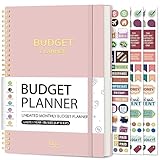
- Effective Budget Planning - Take control of your finances with the budget account book. This comprehensive planner allows you to plan and track your income, expenses, savings, and financial goals in one convenient place. With its intuitive layout and easy-to-use sections, you can stay organized and make informed decisions to achieve financial success.
- User-Friendly Layout - The budget planner features a user-friendly layout designed for easy navigation and organization. Each month, you'll find dedicated budget pages where you can set financial goals, track your income, and plan your expenses. Additional sections include debt trackers, savings goals, bill payment trackers, and more, making it simple to stay on top of your finances.
- Undated Monthly Calendar & Bonus Stickers - Featuring undated calendar each month, you'll have ample space to mark paydays, bills due, appointments, and important dates. Say goodbye to difficult writing spaces. Plus, we've included 3 cute sticker sheets that allow you to personalize your financial organizer and make budgeting more fun. Dates are not pre-printed and are completed by the user.
- Reliable and Convenient Design - Our monthly budget planner is designed for your convenience and built to last. The elastic band keeps everything securely in place, and the dual-sided pocket provides extra storage. Experience a budget planner that combines practicality and durability.
- Master Budgeting with Ease - Our financial planner includes a complete guidebook that provides valuable insights and instructions for optimal usage. From setting financial goals to tracking expenses, this guidebook offers step-by-step guidance and practical tips. Whether you're new to budgeting or an experienced user, this resource will help you make the most of your budget planner, empowering you to achieve financial success.
Keep emergency savings distinct in your plan from money intended for predictable costs, such as annual bills or planned repairs. Those expenses are not surprises simply because they do not occur every month; setting aside money for them can prevent them from displacing other priorities when due.
How do I stick to a budget?
Consistency often depends on whether the plan reflects real spending and is easy to check. Use a tracking method you will actually maintain, and review it at a cadence that fits your pay and bill schedule. A brief weekly check or a review around payday can help you compare the plan with reality without requiring constant monitoring.
- Use actual amounts and due dates where possible, then update estimates when costs change.
- Give irregular but expected bills a place in the plan instead of treating them as surprises.
- Leave room for flexible spending if a rigid plan is difficult to follow.
- When a month goes off plan, identify what changed and revise the next plan rather than treating one miss as a reason to stop tracking.
Budgeting is not a substitute for enough income or affordable essential costs. CFPB analysis found an association between saying “don’t save” and reporting more difficulty paying bills, but that does not show that saving or budgeting alone causes better outcomes. The agency also reported that financial stability and well-being deteriorated from 2023 to 2024 in its November 2024 Making Ends Meet report. These findings are a reminder that financial strain is shaped by more than individual habits.
Check your financial well-being beyond the budget
A budget can help you assess whether routine costs are covered and whether your plan is moving toward goals. The CFPB also offers a free, ten-question financial well-being self-assessment. Its page says it does not ask for personal financial data and does not collect or store answers. The assessment is a way to reflect on your situation, not an individualized financial plan.
Quick Recap
Product prices and availability are accurate as of the date/time indicated and are subject to change. Any price and availability information displayed on Amazon at the time of purchase will apply.




