What’s actually slowing this PC down?
Pick the symptom - the matching free tool is one click away.
Uber, Stellantis, NVIDIA and Foxconn announced a collaboration on October 28, 2025, to develop and eventually deploy Level 4 robotaxis. The initial plan calls for Uber to deploy at least 5,000 Stellantis-built vehicles, with production targeted for 2028 and initial operations intended for the United States. It is a future program, not evidence that those vehicles have been built or that a public service is operating.
What the four companies announced
Stellantis described the arrangement as a collaboration to explore joint development and future deployment of Level 4 vehicles for robotaxi services worldwide. Uber’s announcement set an initial target of at least 5,000 Stellantis-built, NVIDIA-powered vehicles. Stellantis targeted 2028 for the start of production; the announcements did not give a launch date for a public service in a particular U.S. city.

The distinction matters: these are plans and targets, not proof of completed vehicle orders, deliveries, regulatory approval or an operating fleet. The companies did not publicly disclose purchase prices, revenue sharing, ownership structure, exclusivity, consumer fares, detailed manufacturing locations or guaranteed delivery volumes. Stellantis’ announcement and Uber’s announcement describe the intended program, not a complete public contract.
Who is responsible for what?
| Company | Stated role |
|---|---|
| Stellantis | Designs, engineers and manufactures the vehicles, using platforms including the K0 medium-size van and STLA Small, and integrates the autonomous-driving technology. |
| NVIDIA | Supplies the DRIVE computing architecture, operating system and autonomous-driving software. |
| Foxconn | Contributes hardware and systems-integration expertise, including high-performance computing, sensors and electronic-control systems. |
| Uber | Plans to put autonomous vehicles on its network and operate fleet services, including remote assistance, charging, cleaning, maintenance and customer support. |
The arrangement divides the work across a vehicle maker, technology supplier, systems integrator and ride-hailing operator. Foxconn’s stated integration role should not be read as confirmation that it will manufacture every complete robotaxi. Its announcement describes electronics and systems expertise, not sole responsibility for the vehicle program. Foxconn’s description of its role provides the company’s own account.
#1 Best Overall
What NVIDIA’s technology description does—and does not—establish
NVIDIA identified DRIVE AGX Hyperion 10 as the reference architecture for the program, alongside its safety-certified DriveOS and DRIVE AV software. The reference configuration includes 14 high-definition cameras, nine radars, one lidar, 12 ultrasonic sensors and two DRIVE AGX Thor in-vehicle computing platforms.
Those figures describe NVIDIA’s reference platform, not a confirmed final specification for every Stellantis vehicle. The announcements do not establish that every planned vehicle will use an identical sensor arrangement. NVIDIA’s announcement also describes a broader Uber autonomy effort, which should not be conflated with the specifications or vehicle count of the Stellantis program.
Rank #2

- Opening parts and rolling wheels
- Easy assembly, pre-painted metal body
- When finished the vehicles are fully functional
- Rolling diecast replica
- Skill level: intermediate
What Level 4 means for a passenger
Level 4 automation means the vehicle is designed to perform the full driving task without a human taking over within a defined operational design domain. That domain can limit where and when the vehicle operates—for example, by geography, road type, weather, speed or time of day. “Driverless” therefore does not mean the car can drive anywhere, in all conditions, without restrictions.
The original announcements use terms such as “driverless” and “hands-off, eyes-off,” but do not specify the final operating domain for the Stellantis vehicles. Nor does a production target establish permission to carry passengers: jurisdictions may require vehicle certification, system validation, safety-driver removal approvals, insurance, incident reporting and other authorizations before service begins.
Quick wins for a faster PC:
Clear out junk files and repair common Windows errorsFree Scan →Scan for outdated or missing drivers - takes under a minuteDriver Scan →Repair Windows errors before they cause bigger problemsFix Now →Rank #3
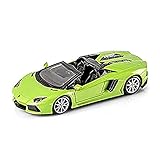
- Authentic 1:24-1:27 scale model kit
- Die-cast metal body with plastic parts
- Working steering and opening doors
- No glue or paint needed
How the initial target differs from Uber’s wider plans
The at-least-5,000-vehicle figure applies to the initial Stellantis program. It is not the same as Uber and NVIDIA’s broader ambition to build an autonomous-vehicle ecosystem with a long-term target of 100,000 vehicles. In March 2026, Uber and NVIDIA also announced plans for Level 4 robotaxi operations in 28 cities by 2028. That broader city target does not say that every city will use Stellantis vehicles. Uber’s 28-city announcement describes the expanded plan.
As of August 18, 2026, the original four-company collaboration is not the only public strand of Uber’s autonomous-vehicle strategy. Stellantis, Wayve and Uber announced a separate global robotaxi collaboration on June 17, 2026. That later announcement shows a multi-partner approach; it does not, by itself, establish that the NVIDIA collaboration was canceled or that either arrangement is exclusive. Stellantis’ Wayve announcement sets out that separate partnership.
Rank #4

- DIY Building: The F1 car kit requires assembly, which is a fun and challenging science kit for children and adults. The process of building the car helps to develop creativity, fine motor skills, and hand-eye coordination. Good choice for children aged 9-16.
- STEM Education: The F1 car kit is designed to be an educational toy that promotes STEM education. By building and assembling the car, children can learn about basic engineering concepts and gain problem-solving skills.
- High-Quality Wood Material: The F1 car kit is made of high-quality wood, ensuring durability and longevity. The wood material provides an authentic and unique feel to the product and enhances the overall building experience.
- Remote Control: The F1 car kit comes with a remote control that allows users to control the car's movements, making it a fun and engaging toy for kids and adults alike. The remote control is easy to use, making it accessible to everyone.
- Racing Experience: Once the car is built, it can be raced against other remote control cars or driven around to showcase its speed and agility. The F1 car kit provides a realistic racing experience and is sure to impress both kids and adults.
Foxconn has also discussed a separate Taiwan robotaxi plan, with a 2028 service beginning on airport-to-city routes in Kaohsiung and later extending toward Taiwan high-speed rail corridors. That is not evidence that the Stellantis fleet will launch there or on the same schedule. NVIDIA’s account of the Taiwan plan concerns a different deployment context.
Independent reader supportYour contribution helps us test, update, and keep practical guides available for everyone.What still has to work before a service can scale
Regulatory approval and operating limits
Production, testing and paid passenger service are distinct milestones. Each market may set its own rules for vehicle certification, autonomous-system validation, remote assistance, insurance, data handling and incident reporting. A vehicle permitted to operate in one approved area may not be authorized elsewhere or in every condition.
Best Value

- Perfect Gift for Children: This STEM kit for 10-12 year olds is an ideal gift for birthdays or Christmas. It includes all the parts needed to assemble a remote control car (except batteries) and is suitable for children aged 9, 10, 11, 12, 13, 14 and up.
- Functional Perfection: The STEM toy car kit has a steering system that allows the front wheels to swing from side to side and is also self-centring. The kit comes with detailed step-by-step colour instructions and an assembly video.
- Interference-Free Racing: Multiple cars can be raced simultaneously without interference from one another. Kids can enjoy thrilling races with their friends and family, fostering healthy competition and social interactions.
- Stimulating Curiosity and Learning: This engaging and challenging toy for boys ages 10-14 encourages them to explore scientific concepts and learn about the car's steering system. This is a great STEM project for 10-14 year olds that is both educational and entertaining.
- Cultivate Creativity and Imagination: Assembling these toys for 9-14 year olds promotes hand-eye co-ordination and stimulates the imagination, making it a highly interactive activity that promotes physical and intellectual development.
Manufacturing and integration
The program must translate a reference technology stack into production vehicles that can be built and maintained consistently. Relevant questions include whether Stellantis can reach the planned cost and volume, whether Foxconn can integrate systems across vehicle platforms, and whether suppliers can provide sensors, computing hardware and replacement parts at scale. The announcements do not provide cost, capacity or unit-price figures.
Fleet economics and operations
A robotaxi’s economics depend on more than the purchase price of a vehicle. Utilization, charging downtime, maintenance, cleaning, depot costs, remote-assistance staffing, insurance, hardware replacement, software and cloud costs, fares and compliance all affect operating performance. The companies have not published a projected fare, operating margin or break-even point for this program.
Safety evidence and data governance
Company descriptions of platform capability are not independent safety results. The cited announcements do not provide crash rates, disengagement data or third-party validation for the proposed Stellantis vehicles. NVIDIA and Uber have also described a joint AI data factory using NVIDIA Cosmos, but public material does not fully specify data ownership, rider privacy protections, cross-border handling, or how software updates will be validated in service.
Quick Recap
Milestones to watch
- Publicly identified vehicle prototypes and testing locations.
- Regulatory filings, approvals and any decision to remove safety drivers in specific operating areas.
- Confirmation that production has started, followed by fleet deliveries.
- Named Uber service cities, the conditions in which vehicles may operate, and when passenger service is expected to begin.
- Published fares, operating costs or other evidence that clarifies the commercial model.
- Independent safety and performance information for vehicles operating in the approved domain.
Product prices and availability are accurate as of the date/time indicated and are subject to change. Any price and availability information displayed on Amazon at the time of purchase will apply.
Free tools Windows power users keep installed
One-click scans. No signup required.




