Quick wins for a faster PC:
Scan for outdated or missing drivers - takes under a minuteDriver Scan →Clear out junk files and repair common Windows errorsFree Scan →Fix the driver behind crashes, sound loss and screen glitchesFind Drivers →U.S. dairy replacement supply remains tight in 2026, and CoBank’s model does not project a year-over-year increase in heifers entering the milking herd until 2027. That is a forecast of future replacement entries—not a claim that the total dairy-cow herd is already shrinking. USDA counted 9.57 million milk cows on January 1, 2026, while the replacement pool was 3.905 million heifers.
What the latest counts say about the dairy heifer shortage
The latest USDA figures show a large but slightly smaller replacement inventory than a year earlier. The counts describe animals on hand and expected calvings; they are different from CoBank’s model of how many replacements will enter the milking herd in coming years.


| Measure | January 1, 2025 | January 1, 2026 | What it measures |
|---|---|---|---|
| Milk replacement heifers | 3.915 million | 3.905 million | USDA ERS inventory of milk replacement heifers |
| Share of productive cows | 41.7% | 40.8% | USDA ERS ratio of replacement heifers to productive cows |
| Replacement heifers expected to calve during the year | 2.501 million during 2025 | 2.498 million during 2026 | USDA ERS expected-calving count |
Sources: USDA Economic Research Service, February 2026 Livestock, Dairy, and Poultry Outlook. These are inventory and expected-calving measures, not counts of animals that actually entered the milking herd.
USDA’s National Agricultural Statistics Service reported 9.57 million U.S. milk cows as of January 1, 2026. Its January survey contacted approximately 35,000 operators for inventories as of that date. The figure is a total-cow inventory, not a replacement-heifer count. USDA NASS, January 30, 2026.
What’s actually slowing this PC down?
Pick the symptom - the matching free tool is one click away.
#1 Best Overall
Why the total cow herd can hold up while replacements are scarce
A shortage of replacement heifers does not automatically mean fewer milk cows immediately. CoBank’s June 2026 analysis says producers retained more than 600,000 dairy cows from August 2023 through August 2025, based on its analysis of USDA slaughter data; slaughter picked up afterward. Retaining mature cows can support current herd numbers when fewer young animals are available to replace them. CoBank also points to beef-related returns as one incentive affecting retention. This is an explanation of market behavior, not evidence that every farm made the same choice. CoBank, June 2026.
CoBank defines its heifer-to-cow ratio as heifers expected to calve relative to the dairy-cow herd. Its USDA-based calculations put the ratio above 30% during 2012–2022, at 27.9% in 2023 and 26.1% in 2026. The declining ratio helps explain why the replacement pipeline is tight even as the cow inventory remains substantial.
Rank #2
How breeding choices helped tighten the replacement pipeline
Breeding decisions balance near-term calf revenue against the future need for dairy replacements. Beef-on-dairy breeding can produce calves for beef markets, while gender-sorted dairy semen is used to target female calves for the replacement pool. A heifer must grow before she can enter milk production, so a breeding shift takes time to affect replacement availability.
| U.S. semen-sales category | Change, 2020–2025 |
|---|---|
| Beef-on-dairy semen | Up 62% |
| Gender-sorted dairy semen | Up 53.6% |
| Conventional dairy semen | Down 47.4% |
CoBank reported these changes using National Association of Animal Breeders sales data. It also said dairy farmers purchased 82.7% of the 9.8 million beef-semen units sold in the United States in 2025. These sales figures describe breeding inputs, not the number of calves born or heifers ultimately entering herds. CoBank, June 2026.
Rank #3

- COMPLETE CALF FEEDING SYSTEM: Designed for efficient calf feeding, this 8-quart calf bucket includes one natural rubber teat (nipple), one feeding valve, and one mounting hanger bracket for a complete feeding solution.
- MINIMIZES MILK WASTE: The feeding valve is positioned flush with the bottom of the bucket, allowing calves to consume more milk while reducing leftover liquid. This efficient design helps maximize every feeding and simplifies cleanup after use
- NATURAL RUBBER TEAT DESIGN: The included natural rubber nipple is engineered to encourage a natural suckling motion for comfortable feeding. Dual milk openings help provide consistent milk flow while supporting nipple durability during repeated daily use
- HEAVY-DUTY 8-QUART PLASTIC BUCKET: Manufactured from durable, impact-resistant plastic to withstand everyday farm use. The rugged bucket is suitable for barns, calf hutches, dairy operations, ranches, and livestock facilities while offering long-lasting performance through repeated feeding cycles
- EASY TO INSTALL & CLEAN: Includes a sturdy hanger bracket for convenient mounting to fences, pens, hutches, or calf feeding stations. The smooth bucket interior allows quick rinsing and easy cleaning, making daily feeding routines more efficient for farmers and livestock caretakers
CoBank lead dairy economist Corey Geiger characterized the economics this way in a June 18, 2026 release: “On most dairy farms, net margins are currently being driven by the beef check, not the milk check.” CoBank’s statement reflects its assessment of farm margins; it is not a universal measure of every dairy operation’s income.
What CoBank expects through 2028—and what the forecast means
CoBank’s June 2026 model projects 438,800 fewer heifers entering dairy herds in 2026 than in 2025. It then projects 285,400 more entering in 2027 than in 2026, followed by an additional 74,900 in 2028 compared with 2027. These are modelled year-over-year changes, not USDA inventory counts or guarantees of a rapid return to historical abundance.
Rank #4
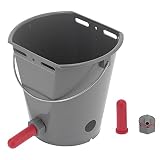
- SAFE FOOD-GRADE MATERIAL: Your livestock's health comes first. This feeder bucket is crafted from , food-grade plastic that is safe, non , and odorless. It provides a hygienic environment for feeding milk or water, ensuring the well being of your young animals without harmful chemicals.
- 8L CAPACITY WITH CLEAR SCALES: Designed for efficiency, this large-capacity holds up to 8 liters of liquid. The interior features clear measurement scales, allowing you to precisely control the amount of milk or feed provided, which is essential for maintaining a consistent and diet for growing calves.
- ANTI-LEAKAGE CHECK VALVE: Say goodbye to messy spills! Equipped with a specialized check valve, this bucket effectively fixes the nipple in place and prevents milk leakage or backflow. This ensures a clean feeding process and reduces waste, keeping your barn and equipment tidy.
- REPLACEABLE NIPPLE DESIGN: and durability are key. The assembled nipples are designed to be easily installed and disassembled for thorough cleaning or replacement. The package includes extra nipples, ensuring you always have a spare ready when needed to keep your feeding schedule on track.
- PORTABLE & ERGONOMIC HANDLE: Built for the daily demands of farm life, this bucket features a sturdy lifting handle. It makes carrying the feeder from the barn to the pasture effortless, reducing strain on your hands and making animal husbandry tasks much more manageable.
The model links semen-sales data to reproductive assumptions and the biological lag between breeding and an animal’s entry into the milking herd. An earlier CoBank description of the model lists assumptions for conception by semen type and cow parity, pregnancy loss, calf sex, and a 79% completion rate based on field data from 85 Holstein herds. The published numbers therefore depend on assumptions and should be read as an outlook, not observed outcomes. CoBank, June 2026; CoBank’s earlier model description.
Independent reader supportYour contribution helps us test, update, and keep practical guides available for everyone.What dairy producers should weigh in herd and breeding plans
There is no single breeding strategy established as best for all farms. A decision that favors beef-calf income may leave fewer home-raised replacements later; one that targets more dairy heifers has its own cost, timing, and reproductive-performance considerations. Producers can compare choices against their own replacement schedule and operating economics:
Free tools Windows power users keep installed
One-click scans. No signup required.
Best Value
- Replacement timing: Estimate how many heifers the farm needs and when they must enter the milking herd, allowing for the growth interval.
- Calf and replacement returns: Compare expected beef-on-dairy calf revenue with the value and cost of generating future dairy replacements.
- Semen choice and reproductive results: Consider conventional dairy, gender-sorted dairy, and beef semen alongside the farm’s actual conception and pregnancy outcomes.
- Raise or buy: Compare the cost and risks of raising replacements with purchasing them.
- Culling and cow productivity: Assess cow age, expected performance, and the operational consequences of retaining mature cows longer.
- Local conditions: Account for processing capacity and milk demand; CoBank says these can raise replacement demand in some regions.
CoBank economists interviewed by Agriculture.com also framed breeding decisions in relation to a farm’s business cycle. That interview offers context, not a controlled comparison proving one approach produces better farm outcomes. Agriculture.com interview.
Quick Recap
Product prices and availability are accurate as of the date/time indicated and are subject to change. Any price and availability information displayed on Amazon at the time of purchase will apply.




