What’s actually slowing this PC down?
Pick the symptom - the matching free tool is one click away.
Yes—but only in a defined strategic sense. In EE Times’ 39-minute, 58-second interview published on August 13, 2021, Tyson Tuttle argued that he had completed the Silicon Labs transition he helped start: moving from a diversified semiconductor company to a focused provider of wireless connectivity for low-power IoT devices, then handing the company to a prepared successor. The surrounding corporate record confirms the key milestones, while the episode’s larger claims about market size and long-term success remain management’s 2021 assessment.
The episode in brief
| Detail | What EE Times records |
|---|---|
| Title | “CEO Interview: Tyson Tuttle Did What He Came To Do” |
| Program | EE Times On Air / Weekly Briefing |
| Episode | No. 148 |
| Host | Brian Santo |
| Published | August 13, 2021 |
| Runtime | 39:58 |
| Format | Audio interview with a web transcript |
| Topics listed | Edge computing, executives, IoT and sensors |
The EE Times episode page is both the listening page and the transcript source. It captures Tuttle at the moment a decade-long strategy was being declared complete—not as an independent investigation of every performance claim.


The transaction that made the title plausible
Silicon Labs had just finished selling its Infrastructure & Automotive business to Skyworks for $2.75 billion in cash. The deal was announced on April 22, 2021, and completed on July 26, 2021. The divested operation included power and isolation products, timing products, broadcast products, related intellectual property and associated employees.
See the transaction announcement and completion announcement. After the sale, Silicon Labs described itself as a pure-play IoT wireless-connectivity company. That is the objective event behind Tuttle’s statement that he had done what he came to do.
Quick wins for a faster PC:
Fix the driver behind crashes, sound loss and screen glitchesFind Drivers →Repair Windows errors before they cause bigger problemsFix Now →Scan for outdated or missing drivers - takes under a minuteDriver Scan →#1 Best Overall
Focus brought a trade-off
A pure-play identity can make capital allocation, product messaging and investor analysis clearer. It also removes established product lines and customers, increasing dependence on one strategic market. Tuttle’s achievement was therefore a concentration decision, not simply an expansion.
The IoT bet began before the market had a clear name
In the interview, Tuttle says Silicon Labs committed to IoT around 2010, when the category was still loosely defined. His account describes a deliberate move toward embedded devices that combine a microcontroller, wireless radio, software, development tools and security rather than a business built around a single chip.
The company accepted lower profitability while investing in that platform. The intended payoff was a reusable technology base spanning many products: smart meters, lights, power tools, asset tags, factories, robots, medical devices, retail systems and energy-management equipment.
Rank #2

- USHTS: 8517620090 CNHTS: 8543709990 JPHTS: 851762090
From components to a connectivity platform
Tuttle’s retained-business description includes Bluetooth, Wi‑Fi, mesh networking, Zigbee, Thread, software frameworks, development tools, security, machine-learning capabilities and low-power operation. Supporting several protocols can enlarge the addressable market, but it also creates certification, software-maintenance, interoperability and support obligations.
The Tool Desk
Outbyte PC Repair FREERepair Windows errors before they cause bigger problemsFix Now →Outbyte Driver Updater FREEFix the driver behind crashes, sound loss and screen glitchesFind Drivers →Why low power matters
The interview repeatedly returns to devices that sense or control something at the edge while spending most of their time asleep. A “coin cell for 10 years” is best read as a design benchmark or aspiration, not a universal result: battery life varies with radio duty cycle, range, security, processing and the surrounding system.
Interoperability was still emerging
Tuttle describes a move beyond the assumption that every smart home would use one central hub. Devices might communicate directly with a phone, through a local network or gateway, and through cloud and ecosystem services. He also discusses the initiative then called Connected Home over IP, later renamed Matter. In August 2021 it was an emerging interoperability effort, not a mature or universally deployed standard. A protocol label alone does not guarantee compatible products; certification, profiles, security models and ecosystem support matter.
Rank #3

- High Performance MCU: Silicon Labs' EFR32MG24 SoC, 32-bit 78 MHz ARM Cortex-M33 with DSP instruction
- Matter Native: Compatible with Matter over Thread and Bluetooth Low Energy 5.3, Supported by the Arduino Core
- Outstanding RF Performance: Equipped with an on-board antenna with BLE range up to 50m in an open location with no signal interference, while reserving an interface for external UFL antenna
- Super-Low Power Design: Power consumption less than 1.95μA in sleep mode, ideal for battery-powered home automation application
- Advanced Onboard Sensors: Features additional analog microphone and 6-axis IMU for TinyML and edge AI applications such as pose perception for more responsive automation.
Acquisitions were capability purchases
Tuttle presents acquisitions as ways to add complementary wireless expertise rather than unrelated diversification:
- Integration Associates: acquired in 2008 for approximately $80 million.
- Ember: added Zigbee mesh-networking technology after Silicon Labs made its stronger IoT commitment.
- Sigma Designs: acquired in 2017 for approximately $280 million, adding Z-Wave capabilities.
- Redpine Signals: acquired in 2020 for a little more than $300 million, adding low-power Wi‑Fi and Bluetooth expertise.
These deal descriptions and values come from Tuttle’s interview account. They illustrate the platform-building logic, but the podcast does not independently audit each acquisition’s financial return or integration outcome.
What Tuttle claimed about growth
Tuttle said the IoT business grew from about $100 million when the strategy began to more than $650 million in 2021, with roughly 30% growth. He also cited more than 20,000 customers, a third-generation platform and an addressable market he described as roughly $7–8 billion growing to $10–15 billion.
Those are statements made by Tuttle in the 2021 interview, not current or independently verified figures in the episode. A contemporaneous company datapoint provides context: Silicon Labs reported $185 million in third-quarter 2021 revenue from continuing operations, up 39% year over year, while treating Infrastructure & Automotive as discontinued operations after the sale. The figures appear in its Q3 2021 results.
Independent reader supportYour contribution helps us test, update, and keep practical guides available for everyone.What Silicon Labs meant by “IoT”
Tuttle drew a boundary around the market rather than treating every connected computer as equivalent. His definition emphasized:
- Embedded devices using microcontrollers instead of high-end application processors
- Real-time operating systems rather than Linux or Android
- Battery-powered or otherwise energy-constrained operation
- Low-duty-cycle sensing and control
- Wireless connectivity at the edge
- Security and software updatability
That excludes, or at least separates, smartphones, voice assistants, connected cars and other high-powered systems that require different processors, operating systems and connectivity architectures. A device can still need several radios—for example, mesh networking for local operation and Bluetooth for phone-based commissioning.
Outdated Drivers Are Slowing You Down
One free scan finds every outdated or missing driver and matches the right update for your exact hardware.Free scan · exact hardware matchPC Slower Than It Used to Be?
A free scan shows the junk files, broken settings and background clutter dragging Windows down - then fixes them in one click.Free scan · Windows 10 & 11Best Value
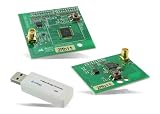
- Z-Wave development tools Available in three frequency variants Design modules RF-matched for specific regions (U.S., Europe, Asia) Samples that allow for easy prototype development
Why Tuttle retired when he did
Tuttle had been with Silicon Labs since 1997, reportedly joining as its 10th employee, and became CEO in 2012. On July 28, 2021, the company announced that he would retire effective January 1, 2022. President Matt Johnson was designated as his successor; the company’s SEC filing says Johnson began serving as CEO on January 2, 2022.
The company presented this as an orderly handoff after the divestiture, not a crisis exit. Its announcement said the IoT strategy and roadmap were established, financial results were strong and demand for wireless technology was increasing. Johnson had led the IoT business since 2018 and became president in April 2021. The company’s announcements are available here, with the succession dates confirmed in the SEC filing; his president appointment is documented here.
In the interview, Tuttle frames leadership as finishing what he starts, “landing the plane” and leaving the operation in capable hands. Choosing an internal successor reinforced continuity rather than signaling a new strategic direction.
Did he actually do what he came to do?
Yes, for the narrow strategic objective
The verifiable sequence is clear: Silicon Labs made an IoT commitment around 2010, built and bought wireless and software capabilities, sold Infrastructure & Automotive to Skyworks for $2.75 billion, and installed a successor after the sale. In that sense, Tuttle’s claim is supported by completed corporate actions.
Not every success claim is proven by this episode
“Critical mass,” “escape velocity,” projected market size, customer count and the assertion that the transformation was complete are management judgments recorded at one point in time. The interview cannot by itself establish enduring market leadership, the eventual value delivered to customers or whether every forecast proved accurate.
Why the episode remains useful
The lasting value is documentary. It shows how a semiconductor CEO explained a decade-long pivot at the exact moment he handed the focused company to his successor. Readers can listen to the audio or read the transcript on the original EE Times page, keeping the 2021 date in mind when evaluating its predictions.
Quick Recap
Product prices and availability are accurate as of the date/time indicated and are subject to change. Any price and availability information displayed on Amazon at the time of purchase will apply.




