What’s actually slowing this PC down?
Pick the symptom - the matching free tool is one click away.
You do not need every engineering specialty on your payroll, but a smartphone business must cover every one of them somewhere in its product chain. At minimum, someone must own system architecture, electronics, radio performance, power and thermal behavior, software, security, validation, manufacturing, quality, and market approvals. Those owners may be employees, an ODM, a chipset supplier, a contract manufacturer, or an accredited laboratory—but accountability cannot be outsourced.
Types of Engineers You Need as a Smartphone Manufacturer
The short answer
A smartphone is an integrated system rather than a single hardware product. The engineering organization must connect silicon, circuit boards, antennas, batteries, cameras, displays, software, factories, and regulators.
| Engineering capability | Primary responsibility | Typical ownership model |
|---|---|---|
| Systems and product architecture | Requirements, budgets, interfaces, and trade-offs across the whole phone | Usually in-house |
| Electrical and PCB | Schematics, board layout, signal integrity, and hardware bring-up | In-house or ODM |
| SoC and platform integration | Reference design, memory, peripherals, BSP, and silicon limitations | Phone maker plus chipset vendor |
| RF and antenna | Cellular, Wi-Fi, Bluetooth, GNSS, NFC, coexistence, and tuning | Internal specialist plus labs or consultants |
| Power, battery, and thermal | Battery life, charging, heat, safety, and aging | Internal ownership is important |
| Mechanical and industrialization | Enclosure, durability, tolerances, tooling, and assembly | Shared with ODM or manufacturer |
| Display, touch, camera, and audio | User-visible quality and subsystem integration | Depends on differentiation goals |
| Firmware, kernel, and Android | Boot, drivers, operating-system integration, updates, and performance | Usually in-house, vendor-supported |
| Security and privacy | Secure boot, keys, updates, data protection, and threat response | In-house owner required |
| Validation and reliability | Proving the design works in use, under stress, and after updates | Internal sign-off with external facilities |
| Manufacturing, test, and yield | Repeatable assembly, calibration, factory tests, and defect reduction | Factory plus internal owner |
| Regulatory and compliance | Equipment authorization, safety, environmental, and market access | Internal coordinator plus laboratories |
Start by defining what “manufacturer” means
Brand owner using an ODM
The brand specifies industrial design, camera targets, software experience, markets, cost, and launch timing. An ODM may design much of the hardware, establish tooling, and coordinate factory work. The brand still needs owners for requirements, software and update policy, acceptance criteria, validation sign-off, market planning, supplier decisions, and field-failure escalation.
OEM designing internally
An internally designed phone requires broader electrical, mechanical, software, laboratory, manufacturing, and sustaining teams. The company owns more design reviews, prototypes, tooling decisions, and production risk.
The Tool Desk
Outbyte Driver Updater FREEFix the driver behind crashes, sound loss and screen glitchesFind Drivers →Outbyte PC Repair FREERepair Windows errors before they cause bigger problemsFix Now →#1 Best Overall

- The original electronics toolkit: Designed for computer, smartphone, tablet, and gaming repair, backed by thousands of free instructions.
- Intentional selection: All the tools you need. A 64 precision bit driver set, tweezers, flex extension, opening tools, and anti-static wristband.
- Secure design: Magnetic case and foam insert ensure secure storage and transportation. Additionally, the inside of the lid serves as a sorting/organization tray.
- Lifetime Warranty: We'll replace anything that breaks, as long as you own it.
Platform company supplying a reference design
A chipset vendor can provide an SoC, modem, reference board, board-support package (BSP), drivers, and design guidance. It does not deliver a finished phone. The manufacturer must still integrate the final enclosure, tune antennas and cameras, manage power and heat, complete regional testing, achieve factory yield, and support updates.
Vertically integrated manufacturer
A large company may design custom silicon, operating-system components, displays, cameras, batteries, and manufacturing equipment. That model adds semiconductor architecture, verification, physical design, design-for-test, packaging, foundry, and silicon-validation disciplines. Qualcomm’s business model also illustrates that designing silicon and physically manufacturing it are different activities: a largely fabless company can rely on suppliers for fabrication, assembly, and testing. See the Qualcomm 2025 Corporate Responsibility Report.
Product architecture and systems engineering
Systems engineers
Systems engineers translate a product brief into measurable requirements and allocate performance, power, thermal, cost, size, reliability, and schedule budgets. They choose and connect the SoC, modem, memory, storage, display, cameras, battery, and radios; define hardware-software interfaces; run design reviews; control changes; and resolve conflicts between industrial design, RF, camera, battery, and mechanical constraints.
This role is commonly underestimated. Without it, each specialist can optimize a subsystem while making the complete phone worse—for example, adding a larger camera module that harms antenna clearance or increasing charging power beyond the thermal budget.
Architecture specialties
Large organizations may split product, hardware, software, platform, network, and security architecture. A small company may combine these into one or two senior roles, but the decisions and documentation still have to exist.
Hardware engineering roles
Electrical and PCB engineers
Electrical engineers own power rails and sequencing, processor and memory interfaces, USB and charging, audio codecs and amplifiers, sensors, display and camera interfaces, wireless modules, high-speed signal integrity, electromagnetic compatibility, schematics, and board bring-up. PCB engineers turn those schematics into a dense, manufacturable multilayer board with controlled impedance, correct return paths, RF isolation, component placement, and design-for-assembly and design-for-test features.
A phone board combines high-speed digital, sensitive analog, RF, power conversion, cameras, and audio in a very small mechanical envelope; it is not simply a smaller desktop motherboard.
SoC and platform-integration engineers
Most brands buy a commercial platform but still need engineers who can review reference designs, integrate memory and storage, configure displays and cameras, understand CPU/GPU/DSP/NPU/ISP and modem behavior, bring up silicon, and debug hardware-software interactions. Qualcomm’s current role descriptions span modem, multimedia, connectivity, computer vision, image processing, RF, analog and mixed-signal, power, SoC verification, low-power design, board and FPGA design, physical design, design-for-test, CPU, firmware, and system validation; that breadth is a useful picture of the underlying work. Qualcomm hardware-engineering opening.
Free tools Windows power users keep installed
One-click scans. No signup required.
Rank #2
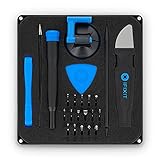
- COMPLETE: This set contains a variety of tools - Besides various opening tools, it includes 16 precision bits (4 mm) and a precision screwdriver with a magnetic bit socket, knurled grip, and swivel top for easy operation.
- STARTER SET: You want to replace a broken screen or battery in your smartphone? This toolkit provides the necessary tools for a basic electronic repair. Compatible with Apple, Samsung, Huawei, Sony and many more devices!
- FUNCTIONAL: Thanks to the foam insert and magnetic closure of the case, tools, components and bits can be safely stored and transported. Additionally, the inside of the lid serves as a sorting tray.
- MUST-HAVE: This tool-set was designed to repair any smartphone, game console, tablet, PC, etc. It also serves for most household DIY fixes.
- IFIXIT QUALITY: These 16 precision-bits (4 mm) are made of high-quality S2 steel. The precisely machined bits fit properly into the screws and protect both the bit and the fasteners from damages.
When semiconductor engineers are required
Buying an off-the-shelf SoC generally requires integration and validation rather than a full chip-design department. Custom or heavily modified silicon adds RTL design, functional and formal verification, physical design, timing and power closure, scan and memory built-in self-test, packaging, foundry coordination, yield, and silicon validation.
RF, antenna, power, and thermal engineering
RF and antenna engineers
RF engineers handle cellular, Wi-Fi, Bluetooth, GNSS, NFC, and sometimes ultra-wideband. Their work includes front-end selection, power amplifiers and filters, impedance matching, receiver sensitivity, transmit power, carrier aggregation, interference, coexistence, regional bands, and calibration.
Antenna engineers tune the complete antenna system around the phone’s frame, camera structures, battery, display, cover glass, grounding, and the user’s hand. Wireless engineering is not limited to 5G; every radio and their interactions matter.
Wireless certification engineers
They coordinate cellular conformance, Wi-Fi and Bluetooth qualification, GNSS, SAR and other RF-exposure work, carrier acceptance, and regional equipment authorization. In the United States, wireless products follow FCC equipment-authorization rules; FCC requirements also address protection against unauthorized software modification. See the FCC 2026 equipment-authorization document.
Recommended Free Tools
Power and battery engineers
Power-management engineers configure regulators and PMICs, sequencing, sleep and wake states, dynamic voltage and frequency scaling, USB power negotiation, charging, battery gauges, and subsystem power budgets. Battery engineers select cells, design packs and protection, set charging limits, test aging and abuse, qualify suppliers, address transport requirements, and investigate field safety issues.
Fast charging is a system problem involving the battery, PMIC, USB, firmware, thermal paths, mechanical packaging, and reliability—not a battery-only feature.
Thermal engineers
Thermal specialists model and measure heat from the SoC and GPU, modem and power amplifiers, camera processing, fast charging, display, wireless charging, memory, and storage. They design graphite, heat spreaders, vapor chambers, shielding, and software thermal policies. Qualcomm’s system-level testing work covers performance across voltage, process, and thermal conditions. Qualcomm system-level test role.
Mechanical, display, camera, and audio engineering
Mechanical and industrialization engineers
Mechanical engineers design frames, enclosures, brackets, camera clearances, seals, buttons, speakers, microphones, USB retention, battery retention, display mounting, drop and torsion resistance, water and dust protection, assembly sequence, and serviceability.
Rank #3

- COMPLETE: Everything you need to start a repair business—in one handy messenger bag. Get all tools together and save big!
- UNIVERSAL: Tools chosen by iFixit technicians to tackle any household or professional DIY electronics repair project.
- FUNCTIONAL: Robust iFixit messenger bag lets you take your business mobile.
- MUST-HAVE: Includes essentials like the Pro Tech Toolkit, phone-opening Anti-Clamp, tweezers, spudgers, mats, digital multimeter + caliper, tapes, cleaner, cloths, and much more!
- IFIXIT QUALITY: Covered by iFixit's Lifetime Warranty.
Design-for-manufacture and design-for-assembly engineers add tolerance stacks, adhesives, fasteners, automation, cosmetic yield, rework, cycle time, tooling, and operator ergonomics. Materials and packaging specialists may evaluate glass, ceramics, metals, plastics, coatings, sealants, thermal-interface materials, and shipping protection.
Display, touch, and sensor engineers
Display engineers integrate OLED or LCD panels, refresh rate, brightness and power behavior, color calibration, touch, lamination, cover glass, uniformity, and burn-in testing. Touch and sensor specialists handle sensitivity, palm rejection, moisture and glove behavior, haptics, accelerometers, gyroscopes, magnetometers, barometers, proximity and ambient-light sensors, and fingerprint readers.
Camera engineering
Camera hardware engineers integrate sensors, lenses, optical image stabilization, autofocus actuators, module alignment, interfaces, and calibration fixtures. Computational-imaging engineers tune the ISP and algorithms for noise reduction, HDR, white balance, autofocus, portrait segmentation, night photography, stabilization, multi-camera fusion, color science, and on-device AI. Camera quality depends on optics, alignment, processing, tuning, and the app—not the sensor alone.
Audio engineering
Audio teams place and tune microphones and speakers, integrate codecs and amplifiers, manage echo cancellation and noise suppression, validate voice-call quality, support headphone and USB audio, and coordinate acoustic sealing, enclosure design, and haptics.
Quick wins for a faster PC:
Scan for outdated or missing drivers - takes under a minuteDriver Scan →Clear out junk files and repair common Windows errorsFree Scan →Software engineering roles
Bootloader and firmware
Firmware engineers implement bootloaders, device-tree configuration, power-management and peripheral firmware, secure boot, recovery, factory flashing, and update mechanisms for sensors, cameras, displays, and touch controllers. Qualcomm describes firmware work as a cross-functional activity with systems, hardware, architecture, and test teams. Qualcomm firmware-engineering role.
Kernel, drivers, and Android platform
Embedded Linux and kernel engineers handle drivers, power and memory management, display and camera pipelines, USB, audio, sensors, storage, networking, and kernel security. Android platform engineers integrate AOSP, hardware-abstraction layers, framework services, vendor partitions, build systems, OTA updates, performance, and Google Mobile Services where separately licensed.
Android compatibility is more than installing AOSP. A compatible implementation follows the applicable Compatibility Definition Document and passes the Compatibility Test Suite (CTS). The Android compatibility process is described at Android Compatibility Program overview. Compatibility can make a device eligible to pursue Google Mobile Services licensing; it does not automatically grant a license. The CDD is a policy document, not a complete test suite, and CTS cannot judge every visible hardware experience such as display quality.
Applications, cloud, and user experience
A differentiated phone may need launcher, settings, camera-app, account, backup, migration, accessibility, localization, update-service, and user-interface engineers. Cloud teams support accounts, device tracking, remote support, warranty systems, AI services, app distribution, OTA infrastructure, telemetry, and crash reporting. These are separate from Android platform work.
PC Slower Than It Used to Be?
A free scan shows the junk files, broken settings and background clutter dragging Windows down - then fixes them in one click.Free scan · Windows 10 & 11Crashes, No Sound, or Screen Glitches?
Random freezes, missing sound and display glitches usually trace back to one bad driver. Find and replace yours safely.Free scan · under a minuteRank #4

- 【Wide Application】STREBITO precision screwdriver set has 120 bits, complete with every driver bit you'll need to tackle any fix or DIY project. In addition, this PC tool kit comes with 22 accessories, such as magnetizer, magnetic mat, suction cup, spudger, cleaning brush, tweezers, etc. Whether you're a professional technician or a amateur, this essential electronics toolkit has what you need to repair all PC, iphone, laptop, PS5, switch, game controller, tablets, glasses, watch, etc
- 【Humanized Design】Our iphone repair tool kit has been designed with the professional in mind to maximize your repair capabilities. The screwdriver features a rubberized, ergonomic handle with swivel top, provides a comfort grip and smoothly spinning. Magnetic bit holder transmits magnetism through the bit, helping you handle small screws and parts. The blade can be extended for working in hard-to-reach areas. And flexible extension shaft is useful for removing screw in tight spots
- 【Magnetic Design】We put 2 magnetic tools in this computer repair tool kit that save your energy and time, make your fixing job easier. The 5.7 x 3.3" magnetic project mat can keep all tiny screws and parts organized, prevent from losing and messing up, make your repair work more efficient. Magnetizer demagnetizer tool helps strengthen the magnetism of the screw driver tips to grab screws, or weaken it to avoid damage to your sensitive electronics
- 【Organize & Portable】All screwdriver bits are stored in rubber bit holder which marked with type and size for fast recognizing. And the repair tools are held in a tear-resistant and shock-proof oxford bag, offering a whole protection and organized storage, no more worry about losing anything. The tool bag with nylon strap is light and handy, suit for your tool case, easy to carry out, or placed in the home, office, car, drawer and other places
- 【Lifetime Warranty】The precision bits are made of 60HRC Chromium-vanadium steel which is resist abrasion, oxidation and corrosion, sturdy and durable, ensure long time use. This computer screwdriver kit is covered by STREBITO lifetime warranty and 30 days money-back. If you have any issues with your phone repair tool kit, simply contact customer service for troubleshooting help, parts, replacement or refund. Buy the STREBITO electronic screwdriver set with confidence
Security and privacy
Product-security engineers protect secure boot, hardware-backed keys, trusted execution environments, encryption, biometrics, app isolation, signed updates, debug controls, factory provisioning, and anti-rollback. Application and cloud-security engineers protect APIs, accounts, update servers, diagnostics, and backups. Privacy engineers assess permissions, telemetry, location, biometrics, identifiers, regional requirements, retention, and deletion. Qualcomm identifies mobile security, threat detection, vulnerability protection, and hardware-enhanced security as distinct areas. Qualcomm mobile-security research.
Independent reader supportYour contribution helps us test, update, and keep practical guides available for everyone.Validation, reliability, and manufacturing
Validation and test engineers
Hardware validation covers voltages, timing, interfaces, radios, cameras, audio, sensors, storage, charging, and thermal behavior. Software validation covers boot and recovery, calls, messaging, wireless connectivity, camera and media, battery life, updates, localization, accessibility, migration, reset, and security.
System-level engineers find failures that appear only when subsystems interact: cellular transmission disturbing audio, fast charging affecting touch, Bluetooth reducing Wi-Fi performance, or a firmware update breaking a hardware feature. Automation engineers build flashing systems, hardware-in-the-loop rigs, device farms, regression pipelines, log collection, dashboards, and factory test software. Qualcomm’s system-level role describes this hardware/software and production-screen work. System-level test details.
Reliability and failure analysis
Reliability teams test drops, bending, torsion, vibration, temperature and humidity cycling, water and dust ingress, connector and button life, battery aging, display damage, cosmetics, and long-duration use. Failure-analysis engineers determine root causes in returned or failed units.
Manufacturing, process, and yield
Manufacturing-process engineers define assembly flows, tooling, fixtures, work instructions, automation, capability, line balance, yield improvement, defect reduction, and ramp-up. Production-test engineers create board, display, touch, camera, audio, RF, sensor, charging, flashing, and final functional tests with traceability and serialization.
Yield and data engineers analyze systematic defects, supplier variation, process drift, test-station correlations, early-life failures, and rework. Qualcomm’s silicon-test roles cover new-product introduction, characterization, manufacturing enablement, and structural, processor, DDR, sensor, and high-speed testing. Qualcomm product and test-development role.
Supplier quality and sustaining engineering
Supplier-quality engineers qualify displays, camera modules, batteries, memory, mechanical parts, connectors, speakers, haptics, chargers, packaging, and PCBs. They manage audits, incoming standards, corrective actions, and supplier-change notifications. Sustaining engineers handle revisions, obsolescence, field returns, software maintenance, and cost or availability changes after launch.
Regulatory and market-access engineering
Compliance may involve radio and telecommunications approval, RF exposure and SAR, EMC and immunity, electrical safety, battery transport, environmental substances, recycling and labeling, charger and USB rules, accessibility, privacy, cybersecurity, carrier acceptance, and import requirements.
Do these 3 things before closing this tab:
1Clear out junk files and repair common Windows errors2Fix the driver behind crashes, sound loss and screen glitches3Repair Windows errors before they cause bigger problemsBest Value
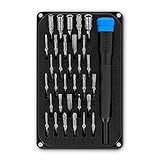
- PORTABLE: iFixit's Moray Driver Kit offers maximum utility in a small package sized to keep on hand in a kitchen drawer, a car glovebox, or a toolbox.
- COMPLETE: Included in the case is our 4 mm precision bit driver handle with an integrated SIM eject pin, magnetic bit socket, knurled grip, and swivel top—plus 32 precision driver bits with 4 mm hex shank and extended-reach long necks.
- FUNCTIONAL: The bit kit lid is held in place with magnets to increase product lifespan (no more broken hinges or clasps). If you need help keeping your screws and parts organized, use the lid's integrated sorting tray.
- MUST-HAVE: Whether you're a professional fixer or a weekend warrior, this bit kit has what you need to disassemble, repair, and reassemble smartphones, game consoles, wearables, laptops, desktops, tablets, small appliances, and much more!
There is no universal checklist. Scope changes by country, radio bands, cellular technology, charger, battery chemistry, Wi-Fi, Bluetooth, NFC, UWB, satellite functions, Google-services arrangement, and sales channel. Carrier distribution can add VoLTE and VoNR, emergency calling, SIM and eSIM, carrier configuration, field trials, operator software, and post-launch network troubleshooting.
Regional variants may require different bands, chargers, labels, approvals, languages, privacy defaults, payment or NFC behavior, and emergency alerts. Tie Android requirements to the release being shipped: Google maintains separate CDDs for each platform version, including Android 16 and Android 17. The Android Compatibility FAQ explains qualification context.
Which roles can one person combine?
Small teams can combine disciplines, but not eliminate responsibilities.
- A senior electrical engineer may cover board design, power, and hardware bring-up.
- An embedded lead may cover bootloader, drivers, firmware, kernel, and Android integration.
- A mechanical lead may own enclosure work while an ODM supplies detailed tooling.
- A systems lead may also manage suppliers and product requirements.
- Validation can begin with one lead supported by external laboratories and contract testers.
Do not assume one person can deeply specialize in RF, camera algorithms, battery safety, Android maintenance, security, and factory yield at the same time. Use specialists or partners where the risk is high.
Which work should you outsource?
Good candidates for external execution
- RF, EMC, safety, SAR, and other accredited laboratory testing
- Carrier acceptance and specialized interoperability testing
- Industrial design, tooling, and factory line setup
- Camera-module manufacturing and selected camera tuning
- Custom silicon design when the business lacks a semiconductor organization
- Specialized reliability testing and failure-analysis capacity
Keep accountability inside the company
- Product requirements and system architecture
- Software experience, security, and update policy
- Camera, battery-life, performance, and thermal acceptance criteria
- Validation sign-off and change approval
- Regulatory scope and market decisions
- Supplier and ODM escalation
- Field-quality and customer-impact decisions
An ODM reference design accelerates development; it does not solve final antenna performance, camera quality, thermal limits, battery life, durability, factory yield, regional requirements, software differentiation, or long-term updates.
Example staffing by company stage
Early prototype
- Senior systems or product architect
- Electrical and hardware engineers
- Embedded and Android platform lead
- Mechanical engineer or trusted design partner
- RF and antenna specialist or consultant
- Validation lead
- Operations and supplier lead
Use partners for reference designs, industrial design, RF laboratories, certification, camera tuning, tooling, and manufacturing ramp.
First commercial product
Add dedicated ownership for power and battery, camera, RF and antenna, mechanical DFM, software QA, security, reliability, manufacturing test, supplier quality, and regulatory compliance.
Multi-product manufacturer
Separate platform hardware, product hardware, Android platform, camera, connectivity, power and thermal, reliability, factory engineering, security, sustaining, field quality, OTA, and cloud teams.
Final hiring and partner checklist
- Who owns the end-to-end system architecture and requirements?
- Who brings up the board and resolves hardware-software faults?
- Who signs off cellular, Wi-Fi, Bluetooth, GNSS, NFC, and antenna performance?
- Who owns battery safety, charging, thermal limits, and aging?
- Who owns camera, display, touch, audio, and sensor quality?
- Who maintains Android, firmware, security patches, and OTA updates?
- Who verifies reliability across environmental and abuse conditions?
- Who owns factory tests, calibration, yield, traceability, and supplier changes?
- Who defines the regulatory scope for each market and coordinates laboratories?
- Who has authority to stop a launch or approve a field-quality response?
The practical rule is simple: hire or contract for every capability the product needs, but keep technical ownership of the decisions that determine customer safety, quality, compliance, and long-term support.
Quick Recap
Product prices and availability are accurate as of the date/time indicated and are subject to change. Any price and availability information displayed on Amazon at the time of purchase will apply.




