Free tools Windows power users keep installed
One-click scans. No signup required.
President Donald Trump called on Congress to repeal the CHIPS and Science Act during his March 4, 2025 joint address to Congress. He also suggested that any money left over could be used to reduce the national debt or for another purpose. But the speech did not repeal the law, and there is no evidence in the available record that CHIPS funds were transferred to debt repayment.
Instead, CHIPS-related activity continued under a restructured management model into 2026. The dispute is therefore about whether the United States should support domestic semiconductor production—and how—not about a completed cancellation and debt transfer.
What Trump actually said
During his joint address to Congress on March 4, 2025, Trump criticized what he called the “CHIP Act” and told House Speaker Mike Johnson that Congress should “get rid of” it. He argued that companies could build in the United States because of tariffs rather than federal subsidies, and said remaining money could be used to reduce the national debt or for another purpose.
The White House video, the speech transcript, and the official government record establish the date and context.
Do these 3 things before closing this tab:
1Repair Windows errors before they cause bigger problems2Scan for outdated or missing drivers - takes under a minute3Clear out junk files and repair common Windows errors#1 Best Overall

- Next‑Gen Platform Support: Compatible with Intel 800 Series Chipset‑based motherboards with LGA1851 Socket enabling PCIe 5.0/4.0 and high‑speed DDR5 memory (up to 7200 MT/s).
- High‑Performance Core Configuration: Features up to 24 cores (8 P‑cores + 16 E‑cores) for demanding gaming and creator
- Ultra‑Fast Boost Clocks: Reaches up to 5.5 GHz max turbo frequency for top‑tier responsiveness and performance
- Built for Enthusiasts: Unlocked for performance tuning when paired with Intel Z‑series chipsets, making it ideal for overclockers and power users.
- Robust Power & Thermal Design: Engineered with 125W base power and 250W max turbo power to sustain high‑intensity
That distinction matters: Trump made a legislative demand. He did not announce that the statute had already been repealed or that its funds had automatically moved to the Treasury.
What the CHIPS and Science Act pays for
President Joe Biden signed the CHIPS and Science Act in August 2022. The law was intended to expand semiconductor manufacturing in the United States while funding research, workforce development, and related infrastructure. The policy was motivated in part by economic and national-security concerns surrounding reliance on overseas chip production.
The core semiconductor incentives are commonly described as follows:
| Program area | Approximate amount | What it represents |
|---|---|---|
| Manufacturing incentives | $39 billion | Direct incentives for semiconductor facilities and related production |
| Semiconductor research and development | $11 billion | Research programs and technical infrastructure |
| Federal lending authority | $75 billion | Loan authority, not a comparable pot of cash grants |
These figures come from the National Institute of Standards and Technology’s CHIPS program information and a White House funding overview.
The broader law is sometimes described using a roughly $280 billion headline figure. That total includes science and technology authorizations beyond the core semiconductor incentives. It should not be treated as $280 billion in chip subsidies, or as money available for immediate debt repayment.
Rank #2

- Game Without Compromise. Play harder and work smarter with Intel Core 14th Gen processors
- 20 cores (8 P-cores plus 12 E-cores) and 28 threads. Integrated Intel UHD Graphics 770 included
- Up to 5.6 GHz with Turbo Boost Max Technology 3.0 gives you smooth game play, high frame rates, and rapid responsiveness
- Compatible with Intel 600-series (with potential BIOS update) or 700-series chipset-based motherboards
- DDR4 and DDR5 platform support cuts your load times and gives you the space to run the most demanding games
Why the money could not simply be redirected
A president cannot repeal an act of Congress by making an announcement. Congress would generally need to pass repeal legislation or use the statutory rescission process to cancel eligible appropriations. The Congress.gov explanation of the 2025 rescissions process states that a presidential rescission proposal must be enacted through Congress to take effect.
Even congressional action would not necessarily turn the program’s entire headline value into a Treasury payment. CHIPS-related resources can occupy different legal and financial categories:
- Authorized: Congress has approved a program or spending ceiling, but funds may not have been provided.
- Appropriated: Congress has made funding available, but an agency may not yet have committed it.
- Obligated: The government has entered into an agreement or otherwise committed funds.
- Disbursed: Money has actually been paid.
- Loan authority: The government may be permitted to support borrowing without spending the full authorized amount.
- Tax credits: A qualifying company may claim a tax benefit rather than receive a conventional grant.
Those categories have different cancellation and recovery rules. A signed grant agreement, an already-disbursed payment, a tax-credit claim, and unused loan authority are not interchangeable. Any repeal or rescission would need to address existing agreements, money already spent, and projects operating under federal commitments. The amount “left over” cannot be calculated by subtracting one broad program total from spending to date.
Why Trump opposed the original model
Trump’s criticism focused on the government’s role in subsidizing large corporations. His stated or implied arguments included that:
- Federal subsidies can distort private investment and favor particular companies.
- Tariffs or access to the U.S. market could encourage companies to build domestically without comparable grants.
- Taxpayers may not receive enough value from direct corporate support.
- A more transactional approach could require stronger corporate commitments or a government financial stake.
These are policy arguments, not established conclusions. Companies may weigh subsidies alongside labor, infrastructure, supply chains, customer demand, geopolitical risk, and access to markets.
Rank #3

- Get ultra-efficient with Intel Core Ultra desktop processors that improve both performance and efficiency so your PC can run cooler, quieter, and quicker.
- Core and Threads 24 cores (8 P-cores plus 16 E-cores) and 24 threads. Integrated Intel Graphics included
- Performance Hybrid Architecture Integrates two core microarchitectures, prioritizing and distributing workloads to optimize performance
- Performance Unlocked Up to 5.7 GHz unlocked. 40MB Cache
- Compatibility Compatible with Intel 800 series chipset-based motherboards
Trump’s later semiconductor policies suggest opposition to the CHIPS Act’s original subsidy structure did not mean abandoning domestic chip production. The administration emphasized tariffs, negotiated investment commitments, permitting coordination, and possible government participation. A January 2026 White House fact sheet described a 25% tariff on certain advanced-computing chips, with stated exemptions related to U.S. supply-chain development. A related presidential proclamation set out the broader semiconductor trade action.
What happened after the repeal call?
The available record does not show that the CHIPS program ended. The White House later said the United States Investment Accelerator had assumed responsibility for the CHIPS Program Office and was pursuing faster investment, reduced regulatory burdens, permitting coordination, and renegotiated deals. That points to administrative restructuring and a different implementation philosophy—not proof that Congress repealed the statute.
Quick wins for a faster PC:
Clear out junk files and repair common Windows errorsFree Scan →Scan for outdated or missing drivers - takes under a minuteDriver Scan →Repair Windows errors before they cause bigger problemsFix Now →NIST’s CHIPS page also recorded CHIPS-related funding activity as late as June 25, 2026, including an announcement involving Powerex. Those developments are inconsistent with describing the program as simply abolished after Trump’s speech. The relevant White House account of 2025–26 semiconductor policy and NIST program updates show continued activity.
The available record reviewed here does not establish that Congress enacted a full repeal of the CHIPS and Science Act. It also does not establish that CHIPS money was transferred to pay down the national debt.
What “use it to reduce the debt” would mean
Trump’s phrase was a political instruction to Congress, not a detailed budget plan. A workable proposal would have to specify:
Rank #4
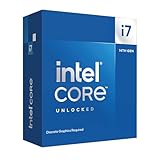
- Game Without Compromise. Play harder and work smarter with Intel Core 14th Gen processors
- 20 cores (8 P-cores plus 12 E-cores) and 28 threads. Discrete graphics required
- Up to 5.6 GHz with Turbo Boost Max Technology 3.0 gives you smooth game play, high frame rates, and rapid responsiveness
- Compatible with Intel 600-series (with potential BIOS update) or 700-series chipset-based motherboards
- DDR4 and DDR5 platform support cuts your load times and gives you the space to run the most demanding games
- Which appropriations or balances would be canceled;
- Whether only unobligated funds would be affected;
- Whether future grants, loans, or tax credits would be eliminated;
- Whether signed awards would be honored;
- Whether the Treasury would make a direct debt payment or simply borrow less in the future; and
- How much money would actually be recoverable.
Even if Congress reclaimed some unobligated funds, that amount would need to be compared with the scale of federal borrowing, annual deficits, and total outstanding debt. Without a formal fiscal estimate, it would be misleading to say that repealing the CHIPS Act would materially solve the national-debt problem.
Recommended Free Tools
Potential effects on companies, states, and workers
A repeal or major redesign could affect semiconductor manufacturers, equipment suppliers, construction companies, universities, workforce programs, and state and local economic-development plans. Companies and projects associated with the U.S. semiconductor buildout include Intel projects in states such as Ohio and Arizona, TSMC’s Arizona investments, Samsung and SK hynix projects, and Micron memory-chip developments.
That does not mean any particular project would automatically be canceled. The effect would depend on the project’s legal and financial status:
- Preliminary award: Terms may still be subject to negotiation or conditions.
- Signed agreement: The parties may have enforceable commitments, subject to the agreement’s terms.
- Obligated federal payment: The government may already be legally committed to provide funding.
- Disbursed funds: Money has already been paid and cannot be treated as an unused balance.
- Tax-credit position: A company may have based a qualifying investment or tax filing on a separate statutory benefit.
States may also have committed their own incentives in reliance on expected federal support. Any attempt to cancel or alter awards could raise contractual, administrative, and litigation questions that would have to be resolved case by case.
The policy trade-off is broader than “subsidies versus debt.” It is whether domestic semiconductor capacity should be supported through direct grants and research funding, or through tariffs, tax policy, procurement, regulation, negotiated commitments, equity stakes, and private investment.
The Tool Desk
Outbyte Driver Updater FREEFix the driver behind crashes, sound loss and screen glitchesFind Drivers →Outbyte PC Repair FREEClear out junk files and repair common Windows errorsFree Scan →Best Value

- Game without compromise. Play harder and work smarter with Intel Core 14th Gen processors
- 24 cores (8 P-cores plus 16 E-cores) and 32 threads. Integrated Intel UHD Graphics 770 included
- Leading max clock speed of up to 6.0 GHz gives you smoother game play, higher frame rates, and rapid responsiveness
- Compatible with Intel 600-series (with potential BIOS update) or 700-series chipset-based motherboards
- DDR4 and DDR5 platform support cuts your load times and gives you the space to run the most demanding games
Did Congress support repeal?
Public reaction to Trump’s speech did not establish that Congress had the votes or a legislative plan to repeal the law. An Associated Press report said Speaker Johnson later indicated repeal was not on the immediate agenda. Separate reporting from Axios described limited Republican appetite for repeal, including the political importance of semiconductor investments in states represented by Republican lawmakers.
That does not prove repeal is permanently impossible or that Congress could never change the law. It does mean a presidential request, applause in the chamber, and enacted legislation are separate events.
What this means for taxpayers and investors
For taxpayers, the key point is that the CHIPS Act’s advertised funding figure is not the same as an immediate federal saving. Some funds may have been spent or committed, some may represent lending authority, and some benefits may arise through tax provisions rather than cash grants.
For investors and companies, policy uncertainty can matter even without formal repeal. A shift from grants toward tariffs, negotiated conditions, or government equity could change project financing, expected returns, compliance obligations, and the timing of awards. But the existence of uncertainty does not establish that a specific company or facility will lose support.
Quick Recap
Product prices and availability are accurate as of the date/time indicated and are subject to change. Any price and availability information displayed on Amazon at the time of purchase will apply.




