Do these 3 things before closing this tab:
1Clear out junk files and repair common Windows errors2Scan for outdated or missing drivers - takes under a minute3Repair Windows errors before they cause bigger problemsTariffs are not stopping the AI-driven data-center buildout, but they are making projects harder to price and schedule. The immediate effects are front-loaded purchasing, higher expected costs for exposed equipment, more complex origin and customs decisions, and a wider range of possible project returns. A 25% U.S. duty now applies to specified advanced-computing chips and derivative products, yet qualifying imports for U.S. data centers and several other uses are exempt. Broader semiconductor duties remain a possibility rather than an established rule.
What is actually happening
Demand remains exceptionally strong. The Federal Reserve estimated that trade in a selected basket of AI-related servers, graphics cards and parts exceeded $272 billion in the first half of 2025, up 65% year over year. The measure includes some non-AI products and can miss components classified elsewhere, so it is an indicator of scale rather than a complete AI trade census. U.S. imports accelerated, while Mexico became a more important assembly location. Federal Reserve analysis
At the same time, policy uncertainty is changing purchasing behavior. S&P Global reported that imports in its data-center-related basket rose 79.6% year over year in the first quarter, with March imports up 33% sequentially. That pattern is consistent with companies pulling orders forward while tariff treatment was unsettled. Its forecast called for first-quarter 2026 year-over-year price increases of about 5.6% for fiber-optic cable and 3.6% for chips. These are basket-level estimates, not a universal surcharge on every project. S&P Global
The practical question is therefore not whether tariffs “kill” data centers. It is whether a project can absorb uncertain landed costs, redesigns, inventory decisions and delays while still meeting its return and capacity targets.
#1 Best Overall
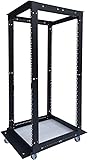
- This 32U open frame server rack features a robust steel frame with an impressive 440 lb weight capacity, ideal for hosting heavy servers, networking equipment, and AV gear. The Open Frame relay is 32U - W21" x H62" X D (24" - 38")
- Perfect for Data Centers & Home Offices: Whether you're outfitting a large-scale data center, upgrading your home server setup, or organizing your networking gear, this versatile rack is a reliable solution for all your equipment storage needs. Optimized Ventilation: The open frame design enhances airflow around your equipment, reducing the risk of overheating and ensuring better performance and longevity of your gear.
- Adjustable & Customizable: The rack features adjustable mounting rails to easily fit various types of server and network hardware. Great for rack-mounted servers, cabling, and other networking components. Easy Assembly: Quick and simple tool-free assembly, so you can get your rack set up and running without hassle. Ideal for IT professionals, network administrators, and hobbyists.
- Rackmount Design: Compatible with most standard 19-inch rackmount servers, network switches, routers, and other IT equipment. Flexible to accommodate 18U, 22U, 27U, 32U, 42U and custom configurations.
- Perfect for Data Centers & Home Offices: Whether you're outfitting a large-scale data center, upgrading your home server setup, or organizing your networking gear, this versatile rack is a reliable solution for all your equipment storage needs. Optimized Ventilation: The open frame design enhances airflow around your equipment, reducing the risk of overheating and ensuring better performance and longevity of your gear.
Which U.S. tariff measures matter?
Specified advanced-computing chips
A January 14, 2026 Section 232 proclamation imposed a 25% duty on specified advanced-computing chips and derivative products, including examples such as NVIDIA H200 and AMD MI325X products. The proclamation carves out qualifying imports used for U.S. data centers, repairs, research and development, startups, public-sector applications and other supply-chain-strengthening purposes. Eligibility depends on the legal text, documentation and the imported item; it is not a blanket exemption for anything a buyer calls an AI server. White House proclamation
Possible broader semiconductor duties
The same action leaves open a later phase covering a wider range of semiconductors and derivative products after negotiations. Those broader duties should be treated as a scenario in financial models, not as an already-imposed rate. White House fact sheet
Reciprocal and country-specific tariffs
Other measures can affect servers, switches, metals and electrical equipment even when the item is not an advanced chip. The applicable result depends on the Harmonized System code, legal country of origin, country of export, product composition, assembly location, trade-agreement treatment and any exclusion or end-use rule. There is no single “data-center tariff rate.”
Rank #2

- Durable: Wall Mount Rack made from heavy duty cold rolled steel, 60lbs(27kg) weight capacity; Electrostatic powder coat preventing rust and corrosion
- Space-saving: Horizontal or vertical installation; Small footprint without giving up the storage capacity of devices
- Optimized Airflow: Wall Mount Network Rack with four-sided vents to enhance air circulation and prolong the life of equipment
- Considerate Design: Different screw hole combinations enable positions of rack rails to be adjusted according to demands; Bottom passable holes of Wall Mount Rack allow cables to pass freely
- Widely Applicable: EIA/ECA-310-E complaint; Fit 19in racks and cabinets to hold non-rack mountable devices; Multi-scene application like studio, home office, data center and so on
Where tariff exposure is concentrated
| Layer | Why it matters | Evidence and qualification |
|---|---|---|
| Servers and accelerators | GPUs, CPUs, memory, baseboards, controllers and complete AI systems can dominate equipment cost. | CSIS, citing McKinsey estimates, put servers at about 52% of data-center capital expenditure; semiconductors were roughly 81% of traditional-server value and up to 87% in AI-optimized facilities. The tariff is not automatically applied to the full server price. CSIS analysis |
| Networking and optics | AI clusters need high-speed switches, optical transceivers, network cards, connectors and fiber. | Networking represented 27.4% of S&P’s import basket by value in the first quarter, with imports up 39.4% year over year. S&P Global |
| Power equipment | Transformers, switchgear, busways, UPS systems, generators, batteries and medium- or high-voltage gear determine whether a site can energize. | Transformer imports rose 88.6% year over year in S&P’s basket. Electrical-grade steel constraints can matter even when transformer dollar share is small. S&P Global |
| Cooling | Liquid-cooling distribution units, cold plates, pumps, heat exchangers, chillers, controls, hoses and fittings support high-density racks. | Exposure differs by item: locally fabricated mechanical work may face little direct duty while imported pumps, controls and specialized parts remain exposed. |
| Construction materials | Steel, copper, aluminum, cable, busbar, insulation, piping, racks and enclosures affect both shell construction and fit-out. | S&P reported structural-steel imports down 13.2% year over year while cable, racks, coolers and computer power supplies increased. S&P Global |
How tariffs transmit through a project
Direct landed cost
A duty can raise the delivered price of an imported component. The eventual burden depends on whether the contract allows pass-through, who is importer of record and whether an exemption is accepted by Customs.
Quick wins for a faster PC:
Repair Windows errors before they cause bigger problemsFix Now →Fix the driver behind crashes, sound loss and screen glitchesFind Drivers →Clear out junk files and repair common Windows errorsFree Scan →Substitution cost
A buyer may switch suppliers, assembly locations or chip generations. A nominally cheaper alternative can require new firmware, networking, power, cooling or software qualification, erasing the apparent saving.
Timing cost
Developers may purchase early, hold inventory, redesign around available equipment or wait for clarification. Capital tied up in inventory, storage and insurance is a real project cost, as is missing a revenue date.
Rank #3
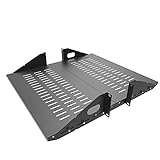
- Compatible with all 19” racks and cabinets to hold various IT, network and other equipment.
- Dimensions: W 19" x D 10" x H 2U per shelf ; 2 Shelves as set
- This Vented Center Weighted Mounting Rack Shelf fits the mounting posts in different deepth from 75 mm to 125mm.
- Max Weight Capacity: 110 Pounds; Center weighted.
- Slotted Venting to Improve Air flow and Help Prevent Overheating of Your Equipment
Why the policy appears contradictory
The administration is simultaneously trying to accelerate domestic capacity and make imported inputs less predictable. A July 2025 initiative targets expedited federal permitting for data centers requiring more than 100 megawatts of new load, along with related energy, semiconductor and networking infrastructure. White House permitting initiative
The semiconductor proclamation frames imported chips as a national-security concern while exempting qualifying uses that keep U.S. projects supplied. That is a transition trade-off: domestic fabs, packaging plants and electrical-equipment factories take years to build, whereas AI customers need capacity now. A federal order also directed agencies to examine data-center supply-chain risks. Federal Register
Recommended Free Tools
Why the global market feels U.S. policy
Chip design, wafer fabrication, advanced packaging, server assembly, optics, cooling and power equipment are distributed across Taiwan, China, Mexico, the United States, Europe and other hubs. Mexico’s growth in high-tech hardware imports, including significant inflows from Taiwan, illustrates how assembly can move without eliminating imported content. Federal Reserve
Rank #4

- Space-Saving Design: Measures 19.0"H x 21.7"W x 17.7"D with a 14.2" max mounting depth, our 9U rack fits tight spaces while holding full 19" gear—ideal as a server cabinet or wall mount network cabinet for home offices and small server rooms
- Full Security: Both the lockable glass door and side panels protect your hardware from theft or tampering. This 9U wall mount rack gives you peace of mind in public or shared environments, ensuring your equipment rack stays safe and secure
- Active Cooling: The built-in cooling fan prevents overheating, keeping your wall mount server rack running reliably. Perfect for active networks, this 9U network rack extends the life of switches, routers, and PDUs by maintaining consistent airflow
- Heavy-Duty Build: Cold-rolled steel construction supports up to 110 lbs of 19" IT and A/V devices. Whether you need a wall mount server cabinet for shallow servers or a wall mount network rack for patch panels, this delivers years of reliable use
- Easy Installation: Pre-marked mounting holes and top/bottom cable ports make setup fast. Adjustable rails and numbered U positions allow precise rack mounting of your gear. This turns any wall into a tidy, professional server room in minutes
- U.S. projects: face direct customs, origin and exemption questions.
- Non-U.S. projects: may avoid U.S. duties but still pay more if global suppliers redirect scarce inventory or raise prices.
- Mexico-based assembly: can change logistics and origin outcomes, but does not automatically remove duties or imported component content.
- Global cloud operators: may rebalance where they deploy capacity, adding currency, export-control, data-sovereignty and power-market risks.
Tariffs are only one source of delay
A tariff-adjusted equipment bill does not determine energization. Grid interconnection queues, transformer availability, transmission upgrades, permitting, water, labor, land, fiber, financing and semiconductor allocation can dominate the schedule. On June 18, 2026, FERC ordered all six regional grid operators to justify or reform treatment of large loads, including transmission studies, cost allocation, co-location, behind-the-meter generation and flexible loads. FERC
Federal Reserve researchers likewise warn that uncertainty about tariff duration and severity can delay investment even while AI spending remains strong. Aggregate U.S. foreign direct investment held up in 2025, but outcomes differed materially by industry. Federal Reserve
Independent reader supportYour contribution helps us test, update, and keep practical guides available for everyone.What outcomes are most plausible?
Base case: buildout continues with higher friction
Exemptions and negotiated arrangements preserve demand, while procurement teams pay more for exposed items, carry more inventory and accept longer qualification cycles.
Best Value

- MULTIPLE DEVICE COMPATIBILITY: This 3 prong AC power cord with NEMA 5-15P to C19 connector is ideal for servers, UPS, PDUs, and monitors. It delivers stable power for high-performance equipment.
- OPTIMAL POWER CONNECTION: This 15ft heavy-duty 5-15P to C19 replacement power cord 3 prong offers flexibility for device setup. It ensures a secure power connection without limited reach.
- HIGH-QUALITY CONNECTOR: This 3 prong power cable with IEC60320-C19 male connector that plugs into an IEC60320-C20 connector, ensuring a stable connection for PDUs, surge protectors, and more.
- INSTANT POWER SUPPLY: This 14AWG power cord delivers stable, immediate power to servers, UPS, PDUs, and monitors. Ideal for high-demand setups needing reliable, uninterrupted performance.
- ROBUST POWER CORD: This 15ft IEC power cord supports 15A/125V. It provides durable, reliable power and a secure connection for office and industrial equipment with C19 to NEMA 5-15P connectors.
Upside case: diversification reduces exposure
U.S. manufacturing, Mexico assembly, multi-source designs and clearer customs guidance reduce the share of equipment caught by duties without materially slowing deployment.
Downside case: broad duties hit marginal projects
Wider semiconductor or metal duties could reduce returns, delay phases, shrink initial deployments or shift some capacity abroad. That is different from proving that projects are being broadly cancelled.
Bottleneck case: grid economics dominate
Even stable equipment prices cannot overcome an unavailable transformer, an unresolved interconnection study or a local permitting dispute.
Actions for developers and equipment buyers
- Map every major item to an HS code. Do not model a countrywide rate or assume a complete server receives the same treatment as its chips.
- Document origin and end use. Obtain manufacturing, substantial-transformation and exemption evidence before relying on a data-center carve-out.
- Get written supplier assumptions. Contracts should identify importer of record, duty allocation, pass-through rights and treatment of future government actions.
- Run tariff scenarios. Model current treatment, a broader semiconductor case and metal or country-specific cases, including inventory carrying costs and schedule slippage.
- Qualify alternatives early. Keep at least one alternate server, switch and optical design compatible with the planned power, cooling and software stack.
- Reserve critical-path equipment. Transformers, switchgear, generators, liquid-cooling hardware and long-lead components may matter more to schedule than chip duty rates.
- Compare locations on a total-cost basis. Evaluate U.S., Mexico and overseas sites for tariffs, power, taxes, export controls, sovereignty, labor, currency and delivery risk.
- Consider bridge capacity. Colocation, powered shells or cloud GPUs can protect a launch date, but compare their recurring premium with the cost of owning delayed hardware.
- Use specialist advice. Customs software can track landed cost and origin, but ambiguous classifications still require qualified trade counsel or a customs broker.
What to watch next
- Any formal expansion of Section 232 semiconductor coverage.
- Customs interpretations and documentation requirements for data-center exemptions.
- Potential copper, steel and other metal investigations or duties.
- FERC and regional-grid reforms affecting large-load interconnection and cost allocation.
- Transformer, electrical-steel and high-voltage manufacturing capacity.
- Whether server assembly continues shifting toward Mexico and other regional hubs.
- Whether AI demand remains strong enough to absorb higher capital costs.
The bottom line for investors and operators
Trump-era tariffs have made data-center economics less predictable, not uneconomic by definition. The clearest near-term signature is accelerated purchasing and higher expected prices for exposed equipment. The decisive advantage will go to projects that know the classification and origin of each component, secure power equipment early, preserve design alternatives and write explicit tariff protections into contracts. Projects that depend on one imported architecture, just-in-time delivery and thin margins face the greatest risk of delay or resizing.
The Tool Desk
Outbyte PC Repair FREEClear out junk files and repair common Windows errorsFree Scan →Outbyte Driver Updater FREEScan for outdated or missing drivers - takes under a minuteDriver Scan →Quick Recap
Product prices and availability are accurate as of the date/time indicated and are subject to change. Any price and availability information displayed on Amazon at the time of purchase will apply.




