The Ratepayer Protection Pledge is a voluntary federal initiative launched on March 4, 2026. It asks hyperscalers and other AI companies to provide or procure generation for their data centers, pay for required electricity-delivery upgrades, negotiate separate rates with utilities and states, and keep paying those rates and infrastructure costs even when contracted power is unused.
That design is intended to prevent data-center growth from shifting costs onto households. It does not, by itself, prove that residential bills will fall or that every signatory has accepted identical terms. Actual effects depend on utility contracts, state regulatory decisions, project implementation and measured customer bills.
What is the Ratepayer Protection Pledge?
President Donald J. Trump announced the pledge on March 4, 2026. The proclamation says companies that increase electricity demand should pay the full cost of the energy and infrastructure needed to build and operate their data centers. The White House describes the framework in its March 4 proclamation and accompanying fact sheet.
In plain terms, the administration is asking large data-center customers to match new demand with new supply, fund the delivery system needed to serve that demand, and use contracts or rates that keep those costs from being assigned to ordinary utility customers.
#1 Best Overall

- 【Matter-Certified】Matter-certified devices, regardless of brand, can work together and are compatible with most major smart home platforms like Amazon Alexa, Apple HomeKit, Google Home, and Samsung SmartThings. Enjoy more flexible and unified control.
- 【Insightful Energy Tracking】 Monitor your energy consumption with in-depth statistics and clear visuals, helping you optimize power usage.
- 【Estimate Your Energy Bill】 Enhance energy management by integrating with billing systems for clear cost visualization (both single and periodic readings). Additionally, programmable scheduling allows automatic operation of high-consumption devices during off-peak hours with lower electricity rates, resulting in cost savings.
- 【Overcharge Prevention & Power Management】 Automatically cuts off power based on user-set thresholds and durations to prevent overcharging, conserve energy, and protect connected devices from overcurrents by shutting off when power exceeds set limits.
- 【Voice & Remote Control】 With built-in support for both Alexa and Google Assistant, issue simple voice commands to adjust settings, turn devices on or off, or even access specific functions without lifting a finger. Manage Tapo P110M and its connected devices from anywhere with the user-friendly Tapo app.
The seven initial technology-company signatories
The White House named Amazon, Google, Meta, Microsoft, OpenAI, Oracle and xAI as the initial signatories. Signing the federal pledge is a public commitment; it is not the same as a single nationwide tariff or a finding that each company has already implemented every provision.
What companies are asked to do
| Commitment described by the White House | Practical meaning | What the pledge does not establish |
|---|---|---|
| “Build, bring, or buy” generation and electricity | New data-center load should be paired with new generation resources or power procurement. | It does not identify one technology, project schedule or capacity requirement for every facility. |
| Pay for new power-delivery infrastructure | The data-center customer is expected to cover required transmission, distribution or interconnection upgrades. | It does not create one national formula for allocating every upgrade cost. |
| Negotiate separate rates with utilities and relevant state governments | A project may receive a distinct tariff, contract or other rate arrangement rather than the standard residential rate structure. | Terms can differ by utility and state, and the federal materials do not publish a uniform template. |
| Pay rates and infrastructure costs even when contracted electricity is unused | The customer would continue paying for reserved capacity and associated costs instead of leaving them with other ratepayers when utilization is lower than expected. | The public pledge does not show how every contract will define unused power, minimum payments or exceptions. |
| Coordinate with grid operators and make backup generation available during emergencies | Data centers are expected to support reliability when the grid is stressed. | The fact sheet states this as a commitment; it does not document implementation at each site. |
| Invest in local communities and hire and train local workers | Projects are presented as potential sources of workforce and community benefits. | The pledge does not guarantee a specific number of jobs, training places or local investments. |
Who joined after the initial announcement?
The White House’s current Ratepayer Protection Pledge page, accessed September 27, 2026, says more than 300 organizations have joined across four groups: state governors, hyperscalers and AI companies, utilities and cooperatives, and data-center developers. The page attributes several broad figures to the administration:
- Roughly 80% of the electricity delivered to U.S. homes and businesses is covered by participating organizations, according to the White House.
- 263 million Americans are described by the White House as protected when a data center is built nearby.
- The page lists 23 governors and seven electricity buyers.
Those are participation and reach measures, not measurements of lower household bills. A large membership count can show that the framework has political or industry support without showing how a particular utility allocates costs or whether a customer’s bill changed.
A July 23 White House release said more than 200 additional utilities, developers, cooperatives and states had joined. It also publicized projected customer benefits in Michigan, Indiana, Georgia and Mississippi, including at least $1.4 billion in customer returns over 15 years for arrangements in Indiana. Those figures are administration-reported projections or claims, not independently verified realized savings.
Recommended Free Tools
Rank #2

- Real-Time Energy Monitoring: Smart plugs track the real-time power, current, and voltage of your plug-in devices on Govee Home App. Supports reviewing data daily / weekly / monthly and up to 1 year to effectively save energy and reduce waste.
- Stable WiFi & Bluetooth Connectivity: Connecting with Govee Home App via WiFi and Bluetooth to access the Smart Plug easily, even away, you can remotely control your home appliances and never come back to a dark home. Note: Do NOT support 5G Wi-Fi.
- Convenient Voice Control: Free hands by using simple voice commands with Alexa and Google Assistant. Just once setting, you can enjoy coffee immediately after waking up and experience a leisurely morning. It's also a caring choice for the elderly.
- Scheduling & Group Control: Smart plugs with timer help create detailed to the minute schedules power your appliances on/off automatically for helping save energy and money. And supports share on the Govee Home App to enjoy the smart life together.
- Safe and Comfortable Smart Home: Govee plug not only fully FCC & ETL certified, but also made of fire-resistant materials. 15A 120V smart outlet is suitable for high-power appliances such as coffee maker, brings you a stable and safe life assistant.
What the pledge means for hyperscalers
More responsibility for securing power
Hyperscalers planning large artificial-intelligence campuses face a stated expectation that their incremental load will be accompanied by generation or procurement. That can mean investing directly in generation, signing long-term supply contracts or arranging other resources with utilities and grid operators. The pledge does not prescribe whether the resource must be renewable, fossil-fueled, nuclear, storage-based or a combination.
Separate commercial terms instead of ordinary pooled rates
A separate rate or contract is meant to make the data center’s cost responsibility visible. Depending on the utility and state, the arrangement could address reserved capacity, energy charges, demand charges, interconnection work, transmission or distribution upgrades and other project-specific costs. The federal announcement leaves those details to negotiations and state oversight.
Paying for capacity that is reserved but not used
Data centers often require the grid to reserve substantial capacity before a campus reaches full operation. Under the pledge’s stated approach, the company would pay the applicable rate and infrastructure costs even if it later uses less than the contracted amount. That shifts the risk of underutilization away from other utility customers, at least as the commitment is described.
Reliability and community obligations
The White House also says participating companies will coordinate with grid operators, make backup generation available during emergencies, and hire and train workers in host communities. These are policy commitments described in federal materials, not evidence that every project has delivered those benefits.
Rank #3
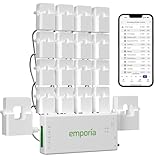
- SAFETY YOU CAN TRUST WITH UL CERTIFICATION: With Emporia Energy, your home energy monitoring is safe, reliable, and certified. The Emporia Vue is UL Listed, meaning it has met rigorous safety standards for electrical products in the U.S. and Canada. This certification ensures that every component has been thoroughly tested to prevent hazards, such as overheating, short-circuiting, or fire, offering you peace of mind as you manage your home’s energy consumption.
- INSTALLS IN CIRCUIT PANEL of most homes with clamp-on sensors. Supports Single phase, Single-split phase, and 2-wire systems. 3-wire systems; 3-phase, 4-wire Wye systems with earthed (TN or TT) neutral (no-Delta) are supported with an additional 200A sensor (sold separately).
- 24/7 ENERGY MANAGEMENT AND MONITORING: Automate, manage and control your home's real power anywhere, anytime to prevent costly repairs, conserve energy, and save costs. Monitor solar / net metering. PROTECTED BY A 1-YEAR WARRANTY.
- LOWER YOUR ELECTRIC BILL: Configure settings in the Emporia Energy App to automate energy management for time of use, peak demand, excess solar, and rewards programs. You can even see live reporting and invaluable savings opportunities instantly. Gauge real-time spending and get actionable notifications and automated energy management to help you reduce costs.
- REAL-TIME ENERGY DATA: REQUIRES 2.4 GHz WIFI WITH AN INTERNET CONNECTION to monitor energy use with iPhone / Android / Web app. Vue sensors collect energy data and are accurate from ±2%. The Vue is UL and CE Listed for your safety. 1 second data is only available in the app (when actively open) and retained 3 hours. Minute and hour data are retained in the cloud. 1 minute data is retained 7 days, 1 hour data is retained indefinitely. Export cloud data whenever you want in the app.
Will data centers raise or lower your electric bill?
The pledge’s intended answer is that data-center customers, rather than households, should bear the incremental costs of their demand. But four separate questions determine whether that protection reaches a customer’s bill:
- What did the utility and data-center customer sign? The relevant tariff, contract or settlement controls the project’s charges and minimum-payment obligations.
- Which regulator approved it? State public-utility commissions and, in some cases, other authorities decide whether cost allocation and rates are reasonable.
- Were new generation and delivery costs fully assigned to the project? A pledge statement does not reveal whether a particular upgrade is paid entirely by the data center or shared under existing rules.
- What happened to observed bills? Only billing data over time can show whether residential customers experienced savings, no change or higher costs.
The Associated Press reported that the pledge is voluntary and that it remained unclear whether consumers would realize genuine savings. Its July 23, 2026 report also described concerns about data centers competing with communities for electricity, water and land, along with state legislation and utility regulation that could affect outcomes.
For broader context on how rapid load growth can affect electricity prices, Columbia University’s Center on Global Energy Policy published a June 2026 literature review. It discusses load-growth economics generally; it is not evidence that this pledge has already reduced residential rates.
Independent reader supportYour contribution helps us test, update, and keep practical guides available for everyone.How to evaluate a local data-center deal
The federal pledge is a framework, so the documents filed in your state matter more than the national signatory list. Look for these items in a utility commission docket, approved tariff or signed settlement:
Rank #4

- 【Insightful Energy Tracking】Track your plug's energy use with clear and easy-to-understand statistics and intuitive charts, helping you optimize power usage.
- 【Estimate Your Energy Bill】 Enhance energy management by integrating with billing systems for clear cost visualization (both single and periodic readings). Additionally, programmable scheduling allows automatic operation of high-consumption devices during off-peak hours with lower electricity rates, resulting in cost savings.
- 【Smart Charging for Devices】Automatically cuts power once your device reaches the low-battery limit you set, preventing overcharging.
- 【Auto-Shutoff】Prevents electrical overload by automatically shutting off devices that use too much power.
- 【Voice & Remote Control】 With built-in support for both Alexa and Google Assistant, issue simple voice commands to adjust settings, turn devices on or off, or even access specific functions without lifting a finger. Manage Tapo P115 and its connected devices from anywhere with the user-friendly Tapo app.
- Generation funding: Who pays for new plants, power-purchase commitments, fuel, storage or other supply resources?
- Delivery upgrades: Are substations, transmission lines, distribution work and interconnection facilities assigned to the data center?
- Rate design: Is there a separate tariff or contract, and does it include demand, capacity, minimum-use or reservation charges?
- Unused capacity: Does the customer remain responsible when construction is delayed, demand falls or reserved electricity is not consumed?
- Emergency operations: Are backup generators or demand-response resources available to the grid, and under what operating rules?
- Evidence of customer impact: Are savings projections, approved credits or actual bill data being reported separately?
What is voluntary—and what is enforceable?
The federal materials describe voluntary commitments and negotiations with utilities and states. They do not establish a uniform nationwide compliance office, penalty schedule or automatic remedy if a project’s costs are later assigned to other ratepayers. Enforcement and verification therefore depend on jurisdiction-specific utility commission orders, signed tariffs, contracts and any future reporting requirements.
That distinction is important for hyperscalers and households alike. A company can be listed as a participant while the legally operative obligations come from a separate state-approved agreement. Until those documents are public and tested against actual bills, the pledge should be treated as a policy commitment rather than a guaranteed nationwide outcome.
What officials and companies said
In a March 5 White House release, Special Advisor for AI and Crypto David Sacks said: “Today President Trump obtained a pledge from America’s leading tech companies that new data centers would not increase electricity prices for residential consumers.” AWS CEO Matt Garman said Amazon was proud to sign, and Google Global Head of Data Center Energy Amanda Peterson Corlo called the pledge a critical step toward meeting growing power demand affordably. The statements appear in the White House release; they are advocacy and company viewpoints, not independent findings about subsequent electricity prices.
Quick Recap
Product prices and availability are accurate as of the date/time indicated and are subject to change. Any price and availability information displayed on Amazon at the time of purchase will apply.
What’s actually slowing this PC down?
Pick the symptom - the matching free tool is one click away.




