Quick wins for a faster PC:
Repair Windows errors before they cause bigger problemsFix Now →Fix the driver behind crashes, sound loss and screen glitchesFind Drivers →Tokyu Construction is best compared with major Japanese general contractors by lining up the same fiscal period and accounting basis, then separating sales scale from operating profitability, earnings quality, business mix and valuation. Its FY ended March 31, 2026 consolidated sales were ¥341.1 billion, but the available figures do not support a definitive ranking against Kajima, Obayashi, Shimizu and Taisei—or a claim that Tokyu Construction is the cheapest.
Start with the same fiscal year and accounting basis
A company’s fiscal-year label is not enough to establish that two results cover the same dates. State the beginning and ending dates, and distinguish consolidated from nonconsolidated results. “FY2026” can describe April 2025 through March 2026 at one issuer and April 2026 through March 2027 at another.



Tokyu Construction reported consolidated results for the year ended March 31, 2026. Obayashi’s captured results for the year ended March 31, 2026 are explicitly nonconsolidated; its FY ending March 31, 2027 figures are forecasts, also nonconsolidated. These are not directly comparable to Tokyu Construction’s consolidated results. Obayashi’s reporting materials distinguish the years as FY2025 (April 2025–March 2026) and FY2026 (April 2026–March 2027), illustrating why the dates matter. See Obayashi’s investor-relations materials.
For a peer comparison, first gather consolidated results for the same completed fiscal year from Tokyu Construction, Kajima, Obayashi, Shimizu and Taisei. If a company’s comparable consolidated figures are unavailable, label the gap rather than substituting a different accounting perimeter or forecast.
#1 Best Overall
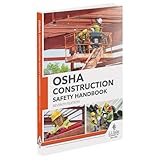
- 2024 OSHA Construction Safety Book is the seventh edition with the new OSHA HazCom final rule on 5/20/24. While the rule takes effect 7/19/24, the compliance dates don’t begin until 1/19/26 per 29 CFR 1910.1200(j).
- Construction Site Book offers quick access to essential OSHA regulations, jobsite hazards, and practical safety tips. It also helps employees identify hazards and prevent injuries and illnesses.
- Features easy-to-read format, full-color images, chapter quizzes with answer key, and comes in a compact size making it a convenient reference for employees.
- Critical topics include Confined Space Entry; Cranes & Derricks; Electrical Safety; Emergency Response; Ergonomics & Back Safety; Excavations; Fall Protection; First Aid & Bloodborne Pathogens; HazCom; Health & Wellness; Jobsite Exposures; Lockout/Tagout; Ladders & Stairways; Materials Handling/Storage; Motor Vehicles; PPE; Scaffolds; Site Safety & Security; Slips, Trips & Falls; Tool Safety; Welding, Cutting & Brazing; and Work Zone Safety.
- Specifications: 5 1/4” x 7 1/4", English, Soft bound. 7th Edition. Copyright 2024.
Separate company scale from operating performance
For the year ended March 31, 2026, Tokyu Construction reported consolidated net sales of ¥341.1 billion, operating income of ¥16.3 billion and profit attributable to owners of parent of ¥13.3 billion. These are company-reported figures. Tokyu Construction’s management attributed the performance to robust domestic construction demand, on-site ingenuity using digital technology, and reflecting cost fluctuations in contract prices; those are management explanations, not independently verified causes. The company’s shareholder message and investor-relations information provide the reported results.
Sales indicate scale, not how much profit a contractor earns from that scale. Compare operating income and operating margin alongside sales; calculate margin as operating income divided by net sales. Keep net income and earnings per share (EPS) separate, since they reflect items beyond operating performance and, for EPS, the share count.
Rank #2
Why project economics matter
Construction margins can be affected by project mix, cost estimates, claims and change orders, as well as execution. Obayashi’s FY2026 forecast Q&A discusses project cost reviews and change orders and gives a 13.0% forecast gross margin on completed construction contracts. That is a company forecast for completed-construction gross margin, not a reported operating margin or a sector benchmark. Consult Obayashi’s investor-relations materials for the context.
Check whether reported earnings are recurring
Operating income, ordinary income and net income answer different questions. A large increase in net income may reflect a transaction or investment gain rather than stronger construction operations, so trace the movement from operating profit through ordinary income to net income before interpreting growth or a valuation multiple.
Free tools Windows power users keep installed
One-click scans. No signup required.
Shimizu’s July 30, 2026 disclosure illustrates the issue: unusual affiliate earnings and gains on sales of investment securities boosted reported first-quarter ordinary income and net income. Shimizu raised its forecasts for those two profit lines by ¥35.5 billion while leaving its sales and operating-income forecasts unchanged. The adjustment is tied to the disclosed transaction-related affiliate-income recognition, not evidence of a comparable increase in core operating profit. See Shimizu’s investor-relations disclosures.
Compare business mix and earnings visibility
Two contractors with similar sales may have different risk and margin profiles if their work is divided differently among domestic building, civil engineering, overseas construction, development and other activities. Compare segment sales and profit where disclosed, and consider orders or backlog as indicators of future work only when companies report them on a comparable basis.
Tokyu Construction provides segment-level actual and forecast data for FY2023–FY2026. That breakdown can help explain its earnings profile, but it does not supply a complete, same-basis segment comparison for every major peer. Review Tokyu Construction’s investor-relations materials and each peer’s filings rather than assuming that aggregate sales reveal the underlying mix.
Independent reader supportYour contribution helps us test, update, and keep practical guides available for everyone.Use valuation figures only with a dated share price
Tokyu Construction’s investor-relations page displayed a share-price snapshot dated September 24, 2026: ¥1,221 per share, forecast P/E of 11.8, actual P/B of 1.2 and expected dividend yield of 3.5%. These are dated company-page figures, not a current quote. The page’s labels matter: the P/E uses forecast earnings, the P/B uses actual book value, and the yield is expected. See the Tokyu Construction stock-information page.
What’s actually slowing this PC down?
Pick the symptom - the matching free tool is one click away.
Best Value
A valid peer valuation compares figures from one stated market date and defines the earnings and book-value periods behind each multiple. It should also align forecast horizons, share counts and dividend assumptions. The available peer figures here do not establish a complete same-date set of multiples, so they cannot show that Tokyu Construction is cheaper or more expensive than the named competitors.
A practical comparison checklist
- Scale: Consolidated sales for the same fiscal dates, with business mix in view.
- Core profitability: Operating income and operating margin; include construction gross margin only when its definition and period are clear.
- Earnings conversion: Ordinary income, net income and EPS, with unusual gains or affiliate effects identified.
- Financial resilience: Cash, interest-bearing debt, equity and operating cash flow, all on a comparable basis. Consistent figures for every peer are not established in the available company materials cited here.
- Mix and visibility: Building, civil, overseas and development segments, plus orders or backlog where disclosed on a comparable basis.
- Valuation and capital returns: Market capitalization, trailing or forecast P/E, actual or forecast P/B, yield, payout and buybacks, all aligned to one date and clearly defined earnings assumptions.
This comparison set commonly includes Kajima, Obayashi, Shimizu and Taisei alongside Tokyu Construction. The cited material gives useful examples from Obayashi and Shimizu, but does not establish complete same-basis financial figures or valuations for all of those companies. Treat the checklist as a framework, not a completed league table.
Do not confuse Tokyu Construction with Tokyu Corporation: they are separate issuers. Tokyu Corporation’s translated FY ended March 2026 report says its Japanese original prevails if the translation differs; its results should not be attributed to Tokyu Construction. See Tokyu Corporation’s investor-relations materials.
Quick Recap
Product prices and availability are accurate as of the date/time indicated and are subject to change. Any price and availability information displayed on Amazon at the time of purchase will apply.
Recommended Free Tools




