The Tool Desk
Outbyte Driver Updater FREEScan for outdated or missing drivers - takes under a minuteDriver Scan →Outbyte PC Repair FREERepair Windows errors before they cause bigger problemsFix Now →The U.S. government’s roughly 9.9% stake in Intel does not automatically change product prices, warranties, support, delivery commitments or commercial customers’ place in line. It does change the strategic context: the government has a larger financial interest in Intel’s domestic manufacturing, while buyers still need to assess Intel’s products, capacity, contracts and execution on their own merits.
The agreement was announced on August 22, 2025, and closed on August 27, 2025—not August 18, 2026. For enterprise buyers, the practical question is not whether Intel is now government-controlled; the announced stake is passive. It is whether Intel fits a particular workload and whether the buyer’s contract protects it if supply, roadmap or geopolitical conditions change.
What the government received
The transaction issued new Intel shares to the U.S. government; it was not an ordinary purchase of shares on the open market. The government received approximately 9.9% of Intel, often rounded to 10%, in exchange for approximately $8.9 billion tied primarily to previously committed CHIPS Act and Secure Enclave funding. The deal was a government-linked equity financing arrangement, not a conventional grant or nationalization. The transaction terms filed with the SEC and Intel’s closing announcement describe the structure.
The stake is passive under the announced arrangement: the government received no board seat or ordinary governance or information rights. It also received a five-year warrant for up to approximately 5% more Intel shares, under conditions tied to Intel retaining at least 51% ownership of its foundry business. That gives the government an economic interest connected to Intel retaining majority ownership of the foundry; it does not mean the government directly manages the business or rule out every possible restructuring. Intel’s SEC filing on the purchase agreement and warrant sets out the terms.
Free tools Windows power users keep installed
One-click scans. No signup required.
#1 Best Overall

- Intel Xeon E5-2699 V4 Docosa-core (22 Core) 2.20 Ghz Processor - Socket Lga 2011-v3 - 5.50 Mb - 55 Mb Cache - 64-bit Processing - 14 Nm - 145 W
What changes—and what does not—for customers
The transaction documents do not establish an automatic price change, guaranteed supply, preferential commercial allocation, or special support for ordinary enterprise buyers. They also do not create a general requirement for private companies to buy Intel. A government stake is distinct from CHIPS Act funding, Secure Enclave obligations, defense-oriented manufacturing programs, Intel product sales and individual Intel Foundry contracts. Any preference or requirement attached to a specific government program or contract must be evaluated under that program’s own terms.
Intel says prices can vary with factors such as order volume, and much of its business uses purchase orders that customers may be able to cancel, change or delay without penalty. Buyers should therefore rely on negotiated agreements—not the existence of a government shareholder—for price protection, delivery assurance and support. Intel’s 2025 annual report discusses its commercial arrangements and pricing factors.
Rank #2
![Intel Xeon Silver [3rd Gen] 4310 Dodeca-core [12 Core] 2.10 GHz Processor - OEM Pack](https://m.media-amazon.com/images/I/31KUwTUW75L._SL160_.jpg)
Why the stake may matter strategically
The government has a stronger financial and policy interest in Intel’s continued viability and U.S. manufacturing capabilities. For customers seeking to diversify away from concentration in overseas production, a domestic manufacturing option may be valuable. Intel says its Secure Enclave and related work is intended to support trusted production for U.S. government and defense-industrial-base customers. Intel also describes itself as the only U.S. company researching, developing and manufacturing leading-edge semiconductor technology; that is Intel’s characterization, not a guarantee of commercial performance. Intel’s announcement of the agreement discusses the company’s strategic role.
That possible resilience comes with trade-offs. Intel remains exposed to global suppliers, overseas facilities, third-party foundries, trade disputes and export controls. A closer association with U.S. policy could also complicate business for multinational buyers whose customers, subsidiaries or suppliers operate in jurisdictions wary of U.S. government influence. Intel itself identifies regulatory, geopolitical and international-business risks in its transaction announcement and annual report.
Recommended Free Tools
Rank #3
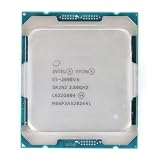
- Total Cores 14
- Total Threads 28
- Processor Base Frequency 2.60 GHz
- Max Turbo Frequency 3.50 GHz
- Sockets Supported LGA2011-3
Intel’s roadmap still depends on execution
The government stake supports Intel’s strategic importance, but it does not prove that manufacturing yields, product quality, capacity or external customer demand have been solved. Intel’s 2025 annual report says Intel 18A entered high-volume manufacturing in late 2025 and is used for its first Core Ultra Series 3 processor. Intel also positions 18A and 18A-P for multiple future client and server generations. Intel 3 is used for Xeon 6 Scalable server processors. These are different products and process generations, so buyers should evaluate the particular platform they plan to deploy rather than treating “Intel” as one uniform supply proposition. Intel’s 2025 Form 10-K describes its roadmap.
Intel 14A remains in development. Intel says it is designed from inception with external foundry customers in mind and warns that substantial committed demand matters to the economics of future nodes. The company has also said it has had few external foundry customers to date and may manufacture future products internally or use an external foundry. A future roadmap target is not the same as a qualified, contractually available product. Intel’s Q1 2026 filing discusses 18A, 14A and future-node economics.
Rank #4

- Manufacturer: Intel CPU Frequency: 2.20 GHz CPU Max Turbo Frequency: 3.60 GHz Number of Cores: 22 Threads: 44 Cache: 55 MB Intel Smart Cache Number of UPI Links: 0 Lithography: 14 nm Thermal Design Power: 145 W Memory Types: DDR4 1600/1866/2133/2400 Max Memory Size: 1.5 TB Max # Memory Channels: 4 Sockets Supported: FCLGA2011-3 E5-2699v4
What different buyers should consider
Enterprise PC and server buyers
For a standard PC or server purchase through an OEM, the stake alone is not a reason to change a qualified platform or switch vendors. Compare current systems on workload fit, performance, power use, software compatibility, support and total cost. Alternatives may include AMD Ryzen PRO or EPYC, Arm-based platforms, or other OEM configurations; there is no verified price or performance comparison here. Confirm lifecycle dates, lead times and substitution terms with the actual system supplier.
Cloud providers and infrastructure teams
For critical workloads, treat Intel as one supply option rather than assuming government ownership guarantees availability. Check allocation and delivery commitments for the configurations you need, and preserve a tested alternative where an interruption would be costly. Workloads dependent on GPUs, custom accelerators or a particular cloud ecosystem may be better served by other platforms.
Best Value

- Part Number Identification: CD8069504194501 for easy reference and compatibility verification
- CPU Series Specification: 2nd Generation Intel Xeon Scalable processor from the Gold 6000 series
- Processor Frequency: 3.10GHz base clock speed with 18 cores for high-performance computing tasks
- Package Type: OEM tray processor without retail packaging
- Cooling Device Notice: Processor only, cooling device not included and must be purchased separately
Government contractors and sensitive workloads
Intel’s domestic and trusted-manufacturing programs may be relevant, but eligibility and security depend on the specific program, facility, product and contract. Verify export-control obligations, sanctions exposure, country of origin, chain of custody, secure provisioning, attestation and any government-contract flow-down terms. A government shareholder is not a security certification.
Companies considering Intel Foundry
Intel Foundry prospects face a different diligence exercise from buyers of finished Intel CPUs. Intel describes an offering that includes wafer fabrication, advanced packaging, chiplet integration and design-enablement services, and says it is expanding support for industry-standard EDA tools, PDKs and foundation IP. Its RAMP-C program has supported prototypes, ecosystem readiness and early engagement for 18A and Secure Enclave; that is evidence of ecosystem development, not proof of foundry scale or maturity comparable to established providers. Intel’s RAMP-C update describes that work.
Before committing a design, assess PDK maturity and revisions, EDA qualification, available and licensed IP, yield and reliability reporting, packaging, production capacity, customer references, roadmap confidence and remedies for missed milestones. Moving a design later can be expensive because IP, verification, packaging and yield learning are not automatically portable. Compare Intel’s proposal with other foundry options, including TSMC or Samsung, on the specific design and contract rather than assuming equivalence.
Independent reader supportYour contribution helps us test, update, and keep practical guides available for everyone.A procurement checklist for Intel-dependent purchases
For CPUs and complete systems
- Get written allocation and lead-time commitments by configuration and delivery region.
- Confirm product lifecycle dates, last-order deadlines and the supplier’s substitution rights if a SKU is unavailable.
- Specify warranty, support, firmware and security-update duration, plus escalation procedures for shortages.
- Ask where products are manufactured and assembled, and what country-of-origin documentation is available.
- Document a migration path to another generation or an alternative platform, such as AMD or Arm, for critical workloads.
For regulated and multinational operations
- Review export controls, sanctions screening, data-residency rules and cross-border shipment restrictions for each relevant jurisdiction.
- Check trusted-foundry eligibility, chain-of-custody evidence, secure provisioning and attestation requirements where applicable.
- Map government-contract flow-down obligations and identify who is responsible for compliance across OEMs, distributors and integrators.
For Intel Foundry engagements
- Make PDK release dates, revisions, EDA qualification and IP availability explicit in the schedule and contract.
- Agree on tape-out milestones, wafer volumes, capacity reservations, yield and reliability reporting, and advanced-packaging access.
- Negotiate remedies for delays or failure to deliver, and define what design data, re-spin help or portability support is available if the plan changes.
- Maintain a multi-foundry contingency plan where the design and economics make it practical.
How to make the buying decision
Continue buying Intel where the current product meets technical and commercial requirements and the supplier’s contract adequately covers delivery, lifecycle and support. Do not increase single-vendor dependence just because the government has invested in Intel. Treat domestic manufacturing as a potential resilience advantage, not proof of lower cost or guaranteed capacity. For Intel Foundry, base commitments on technical qualification, demonstrated capacity and enforceable milestones—not political expectations about future nodes.
Quick Recap
Product prices and availability are accurate as of the date/time indicated and are subject to change. Any price and availability information displayed on Amazon at the time of purchase will apply.




