The Ford Edsel failed because several disadvantages arrived at once. Ford pursued a plausible middle-price opportunity, then built an expensive stand-alone division, a broad model range, a large dealer network and an extraordinary publicity campaign around optimistic sales forecasts. The 1958 launch landed as the U.S. economy entered recession. Confusing positioning, divisive styling and early service problems then weakened customer and dealer confidence. The result was a feedback loop in which low sales made the entire structure harder to sustain.
Ford’s idea was reasonable
Ford wanted a marque between its mass-market Ford line and Mercury/Lincoln. The target was the expanding middle-price market occupied by General Motors brands such as Buick and Oldsmobile. The strategy was consistent with the industry’s ladder of brands: Mercury had itself been created to bridge Ford and Lincoln.

The opportunity was not imaginary. The mistake was treating a plausible long-term segment as if it guaranteed strong demand at a particular launch date. Ford committed to a complete new division before it knew whether buyers would give the Edsel a clear place in their consideration set.
Ford overbuilt the launch
Contemporary coverage, including TIME, reported roughly a decade of planning and about $250 million in planning and launch spending. That figure is a widely reported investment estimate, not necessarily one audited accounting category. Ford used teaser advertisements, covered cars, a national campaign and a television special to create anticipation for the “E-car.”
What’s actually slowing this PC down?
Pick the symptom - the matching free tool is one click away.
#1 Best Overall

- 1:18 Special Edition. Detailed die-cast precision model. Large - approx 9.5" replica.
- Die-cast metal body. Opening doors and engine compartment.
- Full functioning steering. Four-wheel suspension.
- Detailed chassis with separate exhaust system.
- Mounted on plastic stand.
At the same time, Ford created a separate Edsel organization, prepared 18 models for 1958 and recruited approximately 1,187 Edsel dealers. Such infrastructure can work when volume is large and predictable. It becomes a liability when a new brand must first prove that customers want it.
The recession made the timing disastrous
The Edsel’s first model year coincided with the U.S. recession that ran roughly from mid-1957 through April 1958. Households delayed big purchases, kept existing cars longer and became more price-sensitive. Industry sales weakened broadly, so the downturn was not an Edsel-specific event; it was, however, a severe test for an unproven marque with high fixed costs.
Ford’s strategic assumption was that buyers would keep moving into the middle-price category. The recession interrupted that assumption precisely when the company needed trial purchases to establish the brand. A market opportunity that might have been viable over a longer period became a poor launch window.
Customers could not easily tell what an Edsel was
The 1958 range stretched across several sizes and price points. It used four named series—Citation, Corsair, Pacer and Ranger—along with station wagons. That breadth made the Edsel look like a parallel car company rather than one focused product with a simple reason to buy it.
Do these 3 things before closing this tab:
1Scan for outdated or missing drivers - takes under a minute2Repair Windows errors before they cause bigger problems3Fix the driver behind crashes, sound loss and screen glitchesRank #2
Buyers could not readily classify the car as either a mainstream middle-market choice or a near-luxury alternative. Established Ford, Mercury, Buick, Oldsmobile and Pontiac already had recognizable identities and dealer relationships. The Edsel asked shoppers to learn a new brand while offering no equally simple category promise.
The dealer network magnified weak demand
Ford’s approximately 1,187 Edsel dealers represented a major commitment. Many were Edsel-only or Edsel-focused outlets that needed steady traffic and inventory turnover. When shoppers stayed away, dealers faced slow-moving stock and uncertain resale values. That reduced enthusiasm for local promotion and made prospective buyers less confident about service and future support.
The problem reinforced itself: low sales hurt dealers, weaker dealers hurt visibility and confidence, and the cost of supporting the network made the venture less viable. Ford later tried to fold Edsel operations into Lincoln–Mercury, but integration could not erase the initial overcapacity.
Styling became the symbol, not the whole cause
The 1958 Edsel’s vertical “horse-collar” grille divided opinion and supplied an instantly recognizable symbol for failure. Its appearance did matter, especially because Ford had advertised a revolutionary new car. But styling alone does not explain the collapse.
Rank #3

- Made of die-cast metal and premium rubber tires.
- Opening doors, detailed interior
- 1:24 Scale measuring approx. 7.5x3x3 inches
- Brand new in window box
- Pre-assembled model
Retrospective analysis in Business Horizons identifies unfortunate styling alongside too many divisions and dealerships and the rushed introduction of an insufficiently tested car. The design became disproportionately damaging because it was the most visible part of a promise that publicity had inflated beyond what any conventional American automobile could reliably satisfy.
Early service friction damaged trust
The Edsel introduced unusual equipment, including the steering-wheel-mounted Teletouch transmission selector. The feature was innovative but unfamiliar. Historical accounts describe repair and service difficulties when mechanics were not yet comfortable with the system, while Edsel service bulletins recorded corrections, inspections, transmission and wiring issues, fit problems and other launch-period work.
That does not mean every Edsel was mechanically defective or that “bad engineering” alone caused the failure. The more accurate point is that unfamiliar systems and inconsistent early execution created customer and dealer friction at the exact moment a new brand needed enthusiastic advocates. A sound concept can lose credibility quickly when owners encounter avoidable service uncertainty.
Marketing research was not simply absent
A persistent story says Ford did no market research. The strongest scholarly retrospective disputes that simplification and characterizes the research as generally good quality. The record points more strongly to execution, organizational design, styling, timing and bad luck.
PC Slower Than It Used to Be?
A free scan shows the junk files, broken settings and background clutter dragging Windows down - then fixes them in one click.Free scan · Windows 10 & 11Crashes, No Sound, or Screen Glitches?
Random freezes, missing sound and display glitches usually trace back to one bad driver. Find and replace yours safely.Free scan · under a minuteRank #4

- Official Licensed Product through Motormax
- Made of die-cast metal and premium rubber tires.
- Opening doors, detailed interior
- 1:24 Scale measuring approx. 8x3x3 inches
Research can identify an attractive segment; it cannot guarantee that a company will interpret every signal correctly or remain flexible after making large commitments. Once Ford had built a division, dealer system, model range and publicity campaign, reversing course became expensive and politically difficult. Optimistic assumptions turned useful research into an overcommitted launch plan.
Sales collapsed across three model years
Edsel Club production data, attributed to Ward’s Automotive figures compiled by T. Y. Tripplett, lists the following totals:
| Model year | Reported production |
|---|---|
| 1958 | 68,045 |
| 1959 | 47,396 |
| 1960 | 2,846 |
| Three-year total | 118,287 |
The broad total includes Canadian production. Historical sources sometimes distinguish production, U.S. sales, Canadian output and model-year totals differently, so individual figures should not be treated as interchangeable. The durable conclusion is that volume was far below what Ford’s investment and distribution structure required.
Ford announced the program’s termination on November 19, 1959, shortly after the 1960 models appeared. The final model year therefore lasted only a short time.
Best Value
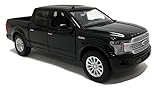
- Box Real rubber tires. Folding side mirrors. Has opening front doors. Detailed interior, exterior. Made of diecast with some plastic parts. Dimensions approximately L-8.5, W-3.75, H-2.75 inches.
- Brand new in box Genuine rubber tyres. Folding side mirrors. It has front doors that open. Detailed interior and exterior. Made of cast iron with some plastic parts. Approximate dimensions: 8.5 x 3.7 x 2.8 inches
- Item Package Dimensions: 10.2L x 11.3W x 25.3H cm
Why the revisions could not rescue the brand
Ford revised the Edsel for 1959 and substantially simplified the 1960 line, addressing styling and complexity. Those changes arrived after the 1958 launch had already damaged word of mouth, dealer confidence, resale expectations and customer trust.
The 1960 Edsel was introduced on October 15, 1959. Ford announced discontinuation on November 19, leaving almost no time for the redesign to establish itself. A better second-year product could not repair an economic case and reputation that had already collapsed.
What the Edsel failure does—and does not—prove
- It does show that a new product needs a clear customer promise, realistic forecasts, reliable execution, credible channel economics and time to earn trust.
- It does not show that radical styling always fails, that advertising excitement is inherently harmful or that market research is useless.
- It does not show that the name alone doomed the car. An unusual name can be overcome by strong positioning and execution; branding cannot rescue a confused, poorly timed offer.
- It does not show that recession was the sole cause. The downturn amplified weaknesses that Ford had already built into the launch.
Ford later demonstrated, with the Mustang, that it could introduce a successful new automobile concept. The contrast underlines the lesson: novelty works when the product, promise, price, channel and timing reinforce one another.
The complete causal chain
- Strategic premise: Ford identified a legitimate middle-price opportunity.
- Overcommitment: It built a full division, broad range, dealer network and expensive launch around optimistic forecasts.
- Timing shock: The 1957–1958 recession reduced new-car demand and encouraged conservative purchases.
- Product ambiguity: The Edsel was difficult to classify against established competitors.
- Visible execution problems: Divisive styling, early service friction and inflated publicity weakened confidence.
- Feedback loop: Weak sales hurt dealers and resale expectations, making later revisions ineffective.
In one sentence: The Edsel was a reasonable market idea turned into an oversized, overhyped and ambiguously positioned launch that arrived during a recession and suffered execution problems before it could establish trust.
Recommended Free Tools
Quick Recap
Product prices and availability are accurate as of the date/time indicated and are subject to change. Any price and availability information displayed on Amazon at the time of purchase will apply.




