Puerto Rico has not sold its electricity grid: the system remains publicly owned, while private companies operate key parts of it. The controversy is over whether those operators are meeting their obligations—and whether replacing LUMA can be done without adding legal costs or slowing repairs. As of the latest cited court update, the government’s case against LUMA had been sent back to Puerto Rico’s courts, and the dispute remained unresolved.
What is happening with LUMA’s contract?
The Puerto Rico government is trying to end its agreement with LUMA, the company that operates the island’s transmission and distribution system. The government’s position, as reported by the Associated Press, is that the grid has not improved with the speed, consistency, or effectiveness promised. LUMA disputes the effort to terminate its contract.
On May 8, 2026, the Financial Oversight and Management Board for Puerto Rico said the U.S. District Court for the District of Puerto Rico had remanded the government’s lawsuit to Puerto Rico’s local courts. That procedural step was not a decision on whether the contract can be terminated. On June 23, 2026, the Associated Press reported that LUMA had countersued, accusing the government of bad faith and asserting that termination could entitle it to at least $4.5 billion in damages. That figure is LUMA’s claim, not a court award or established public liability. The cited updates do not establish that the case has since been resolved.
The Oversight Board has said disputes must not interrupt electricity service, reconstruction, modernization, or federal funding. It also says any change in operators should follow a transparent and competitive process.
#1 Best Overall

- Ultra-Lightweight: At only 7.5 lbs, the Explorer 300 delivers a robust 292Wh capacity while remaining 17% lighter than the industry average. The sleek, integrated handle makes it effortless to carry on long hikes or pack with your camping gear, providing reliable off-grid power without adding bulk to your load.
- Versatile Power for 6 Devices: Equipped with 2 AC outlets, a 100W USB-C PD port, 2 USB-A ports, and a 120W car port. With a 300W rated output (600W peak surge), it easily handles laptops, drones, and cameras, while also serving as a dependable cpap battery for camping or a robust solar powered generator when paired with panels.
- Built to Last: Upgraded with premium LiFePO4 chemistry, this portable generator delivers over 4,000 charge cycles before reaching 70% capacity. This ensures more than 11 years of reliable service life, making it a sustainable and durable energy partner for a decade of exploration.
- Fast Solar Charging: Perfect for off-grid use, this solar powered generator pairs seamlessly with Jackery panels. Reach 80% capacity in approximately 2.8 hours with a 100W solar panel, or maintain your gear with a portable 40W panel (80% in 7.5 hours), making it an essential part of your hunting essentials.
- WHAT YOU GET: 1* Jackery Explorer 300 Portable Power Station, 1*AC adapter, 1* car charger cable, 1* user guide (𝐒𝐨𝐥𝐚𝐫 𝐏𝐚𝐧𝐞𝐥 𝐍𝐨𝐭 𝐈𝐧𝐜𝐥𝐮𝐝𝐞𝐝.)
Who owns Puerto Rico’s grid, and what do the private operators do?
The Puerto Rico Electric Power Authority, or PREPA, remains the public authority. In a September 28, 2025 statement, the Oversight Board said the people of Puerto Rico retain ownership of the grid and power plants. The arrangement is private operation and management, not an outright sale of the electricity system.
- LUMA: The consortium of ATCO and Quanta Services took over transmission and distribution in June 2021, according to the Associated Press.
- Genera PR: Operates PREPA generation assets. The Puerto Rico Energy Bureau’s stabilization proceeding refers to Genera alongside LUMA and PREPA.
- PREPA: Remains the public authority and is involved in generation planning and the regulator’s stabilization directions.
The roles matter because “privatization” can suggest a change in ownership that did not occur. The practical dispute is about private management of public assets, contract performance, and who is accountable for decisions affecting service and repairs.
Why was private operation adopted, and why is it contested?
Puerto Rico established a public-private framework under Act 120-2018. The Oversight Board says that law and PREPA’s Fiscal Plan require private management of the grid and power generation. The Board says it reviewed and approved LUMA’s operating and management agreement under its contract-review policy; the Puerto Rico Public-Private Partnerships Authority selected LUMA and remains responsible for enforcing the agreement.
Rank #2

- 【SLIM & POCKETABLE】This portable power bank is about the size of a smartphone (6.5×3.3×4 inches) and weighs only 2.54 pounds. It features an ergonomic soft handle for easy portability. It easily fits into a backpack for convenient portability. Pro Tip: Fully charge and discharge the battery twice initially for the best experience.(Solar panel and cable not included)
- 【DUAL INPUT/OUTPUT (AC + DC)】The portable power station comes with a 89.6Wh capacity LiFePO4 battery pack(not NCM) and 100W, features 7 output ports, including 2 AC sockets (100W),2 USB-C port (45W/15W), 2 USB-A port (18W/15W), and DC5521 ports (60W). The LED display can clearly show the working status and remaining power.(Please peel off the protective film on the screen after unboxing)
- 【Ultra Fast Charging】With unique fast charging technology,the portable generator can be charged from 0-80% just in 1.5hrs. The solar power bank power station has Four methods to charging: AC wall socket fast charging, USB-C DC two-way PD fast charging(AC and DC can be charged at the same time) ,car charging and solar panel charging.Fast charging solar power bank portable charger suitable for for emergency home backyard outdoor power outages off-grid camping essentials
- 【ULTRA-QUIET & EMERGENCY-READY POWER STATION】Experience silent, fanless operation perfect for sleeping, working, or camping, while the built-in 4-level LED flashlight (with steady/SOS modes) ensures emergency readiness. Its accidental-touch-proof design requires a long-press to activate, ideal for charging devices during outages or outdoor adventures without noise disruption.(Only suitable for powering devices within 100W).
- 【Long-Lasting & Safe LiFePO4 Battery】: 3500+ life cycles (far exceeding standard batteries). Durable LiFePO4 batteries last 3x longer than standard lithium batteries! Advanced BMS provides 12 safety protections, monitoring voltage, current & temperature. Powers your smartphone, laptop, mini-fridge, camera, and drone simultaneously.
The Board argues that the legacy PREPA system suffered from decades of mismanagement and that the island needs a structural transformation. But its support for private management is not an independent finding that LUMA has met its contractual obligations. In September 2025, the Board acknowledged that “Electricity in Puerto Rico is not yet reliable” and said LUMA must perform better. It also said residents have a right to hold operators accountable to their agreements.
Recommended Free Tools
The government’s criticism and LUMA’s response are positions in a live contract dispute, not final judicial findings. Assessing performance requires looking at what the agreement required, how it was enforced, and whether service and repair outcomes improved—not simply whether an operator is publicly or privately managed.
What do the recovery figures show?
A June 2026 Government Accountability Office (GAO) review describes a slow recovery and a substantial gap between federal funding obligated and money disbursed. “Obligated” funds have been committed for a purpose; they are not necessarily in the hands of a project or spent on completed work.
Rank #3
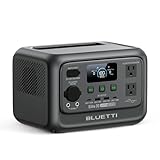
- [288Wh On-the-Go Power] - Only 9.4 lbs lightweight, carry it anywhere during storms! 288Wh capacity meets daily & outdoor needs—camping, road trips, beach visits, or home emergencies. Extend your smart green energy life to every corner of your ideal lifestyle with this compact entry-level power station.
- [600W Continuous & 1500W Surge Power] - Get a full 600W output—twice as much as others. When you need serious power, activate Power Lifting Mode for 1500W power (vs. the typical 600W). It runs everything from essential camping lights, speakers, and car fridges to critical devices like laptops and CPAP machines and even a small kettle or toaster—ideal for stormy days at home or outdoor trips.
- [50% Lower Power Consumption] - Upgraded UltraCell tech & smart cooling system cut power consumption by 50%. Enhances overall energy efficiency, extends device runtime. Excellent durability & environmental adaptability for extreme outdoor climates and long-term operation.(Standby power only 4.5W, DC 5W, AC 8W)
- [8 Charging Modes & 380W Fast Wall Charge] - Supports AC wall charge (380W/200W adjustable), solar, car charging, etc. 0-80% in 45 mins, 0-100% in 70 mins (battery-safe). Match PV60L solar panel for on-the-go recharging. Flexible charging solutions for city, wilderness, daily or emergency scenarios.
- [Reliable UPS] - Never lose data or stop your devices during winter storms/blackouts! 10ms ultra-fast UPS switch protects CPAP, laptops, routers—critical for home emergencies when power cuts suddenly.
| Measure | What the source reported |
|---|---|
| Federal recovery and modernization funding | GAO reported that FEMA, HUD, and DOE had obligated about $14 billion for Puerto Rico’s grid recovery and modernization since 2017, while relatively limited funds had been disbursed (June 2026). |
| FEMA funds disbursed | Of about $11.1 billion FEMA had obligated, about $2.7 billion had been disbursed. GAO said much of the disbursed amount went to equipment, materials, and architecture and engineering (June 2026). |
| Permanent FEMA-funded projects | As of December 2025, nine projects were complete overall; 116 were more than 75% complete, and 133 remained at other stages. Most completed projects were generation projects; most of those more than 75% complete were distribution projects, according to GAO’s June 2026 report. |
| Vegetation clearing | LUMA estimated that about $1.2 billion was needed for vegetation clearing. GAO reported LUMA figures of 2,793 miles cleared in fiscal year 2025 and the first two quarters of fiscal year 2026, with 392 miles supported by federal funds (June 2026). |
| Potential damages if LUMA is terminated | LUMA asserted that termination could lead to at least $4.5 billion in damages, according to the Associated Press on June 23, 2026. This is a litigant’s claim, not a judicial award. |
GAO also reported that LUMA officials said a cap on FEMA working-capital advances could cause construction pauses of up to 120 days. That is the officials’ account of a potential constraint, not a finding that every project paused for that length of time. The broader recovery obstacles GAO described include delayed funding, slow project completion, construction interruptions, vegetation-management barriers, and equipment constraints.
Have private operators made outages worse?
The evidence cited here establishes continuing reliability problems and a difficult recovery, but it does not isolate privatization as their cause. Puerto Rico’s grid entered the current operating era with longstanding weaknesses, including storm damage, aging infrastructure, and decades of underinvestment or mismanagement. Reliability is also affected by generation shortfalls, federal funding delays, regulatory decisions, and the practical limits on construction and repairs.
In February 2025, Oversight Board Executive Director Robert F. Mujica Jr. said Puerto Rico’s energy system was deteriorating faster than PREPA and the grid and power-plant operators could make repairs. The Board’s September 2025 statement likewise described electricity as unreliable. Those assessments point to a serious system problem; they do not, by themselves, assign its cause to one operator or prove whether LUMA met each contract measure.
Rank #4

- Powerful yet Compact: Boasting a 1,500W AC output and a 3,000W surge peak, the Solar Generator 1000 V2 can power multiple appliances, including AC units, fridges, and electric pots. With a 1,070Wh capacity and a lightweight build of only 23.8 lbs, along with a foldable handle, it makes an excellent companion for outdoor camping, road trips, or emergencies.
- One Hour Fast Charging: Charge your Explorer 1000 v2 Portable Power Station from 0% to 100% battery level in just one hour with emergency charging activated via the Jackery App. It defaults to 1.7 hours for a full charge to optimize battery health. Engineered with advanced ChargeShield 2.0 technology, this power station charges safer, faster, and smarter.
- 10 Year Lifespan: The Explorer 1000 v2 portable power station is equipped with a durable LFP battery, maintaining over 70% of its original capacity even after 4,000 charge cycles, offering longevity exceeding 10 years.
- Tailored for Versatility: Featuring two USB-C ports, one USB-A port, one DC car port, and three pure sine wave AC ports, along with LED lights, the Solar Generator 1000 V2 is capable of charging multiple devices simultaneously, meeting power needs in various scenarios. PD 100W fast USB-C charging ensures a rapid charging speed, even without power adapters.
- Smart App Control: Effortlessly switch between different charging modes with Jackery’s App—including one hour emergency charging from 0 to 100%, 30 dB quiet overnight charging mode, and energy efficiency mode. Maximize the freedom to adjust the power station to meet your needs.
The GAO report does not provide a comparable annual outage-rate or SAIDI/SAIFI series in the cited material. Without a consistent metric, period, and underlying utility or regulator data, a year-over-year outage claim would not establish whether reliability is improving or worsening, much less why.
Independent reader supportYour contribution helps us test, update, and keep practical guides available for everyone.What are regulators doing about immediate reliability risks?
The Puerto Rico Energy Bureau’s July 4, 2025 order in docket NEPR-MI-2024-0005 directed LUMA, PREPA, and Genera to develop aggressive preliminary improvement plans with a maximum two-year implementation period. The order identified several operational concerns:
- Outdated protection schemes and insufficient redundancy;
- Vegetation management;
- Reliable generation capacity;
- Frequency and inertia control; and
- Load shedding.
The same order directed PREPA to begin expedited procurement for up to 800 megawatts of temporary generation for 18 months. That was the authorized scale and period for the procurement direction, not evidence that all of that capacity had been procured or placed in service. Costs were to be submitted to the Energy Bureau for review of prudence and reasonableness.
Quick wins for a faster PC:
Clear out junk files and repair common Windows errorsFree Scan →Fix the driver behind crashes, sound loss and screen glitchesFind Drivers →Repair Windows errors before they cause bigger problemsFix Now →Best Value
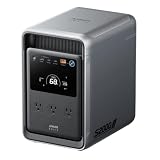
- 𝐔𝐩 𝐭𝐨 𝟑𝟓-𝐇𝐨𝐮𝐫 𝐅𝐫𝐢𝐝𝐠𝐞 𝐁𝐚𝐜𝐤𝐮𝐩: With 6W idle power draw and 10% higher efficiency, this power station runs 20% longer than other 2kWh systems, keeping your fridge powered for 35 hours.
- 𝟏𝟎,𝟎𝟎𝟎-𝐂𝐲𝐜𝐥𝐞 𝐋𝐅𝐏 𝐁𝐚𝐭𝐭𝐞𝐫𝐲: Powered by 314Ah LFP cells, S2000 has a 15-year lifespan, equivalent to 10,000 charge cycles.
- 𝐒𝐦𝐚𝐥𝐥𝐞𝐬𝐭 𝐚𝐧𝐝 𝐋𝐢𝐠𝐡𝐭𝐞𝐬𝐭 𝟐𝐤𝐖𝐡 𝐏𝐨𝐰𝐞𝐫 𝐒𝐭𝐚𝐭𝐢𝐨𝐧: 30% smaller and 25% lighter than the industry average, this power station measures just 8.2 × 11.1 × 12.7 in and weighs only 35.7 lbs.
- 𝐏𝐨𝐰𝐞𝐫𝐬 𝟗𝟗% 𝐨𝐟 𝐇𝐨𝐦𝐞 𝐄𝐬𝐬𝐞𝐧𝐭𝐢𝐚𝐥𝐬: 1,500W continuous output and 3,000W peak output keep nearly every essential appliance running. Actual runtime will vary depending on your refrigerator model, usage habits, and ambient temperature.
- 𝟔 𝐖𝐚𝐲𝐬 𝐭𝐨 𝐑𝐞𝐜𝐡𝐚𝐫𝐠𝐞: Supports up to 400W solar input. Power up via AC + solar, a wall outlet, a generator, solar panels, an alternator charger, or a car outlet—anytime, anywhere.
Separate from the longer-term operator dispute, federal emergency orders under Section 202(c) of the Federal Power Act directed PREPA to dispatch specified generation units and conduct vegetation and asset management at specified transmission facilities. The U.S. Department of Energy’s page says the order renewed in August 2026 is effective from August 10 through November 7, 2026. These emergency directions address near-term system risks; they do not determine who should own or operate the grid over the long term.
What would a change in operator have to account for?
Changing the operator could address concerns about contract performance, but it would also require a credible plan to keep service and recovery work moving. The choice is not simply whether to retain LUMA or replace it; any workable option has to explain how operations, investment, and accountability would function during and after a transition.
GAO’s June 2026 report records competing stakeholder assessments. Some stakeholders raised concerns that replacing LUMA could lead to termination fees and slow repairs. Another said a phased transition could be feasible if operations continued without interruption. These are stakeholder views, not settled predictions. The Oversight Board has separately called for a transparent and competitive process for any operator change.
For residents and policymakers, the useful tests are whether a proposal sets measurable performance standards, identifies who will enforce them, and provides a funded, technically credible transition. It also needs to address workforce and engineering capacity, federal-fund schedules, maintenance, litigation exposure, and the effect on PREPA’s debt restructuring. A new contract or operator label alone would not demonstrate that those practical problems have been solved.
Do these 3 things before closing this tab:
1Fix the driver behind crashes, sound loss and screen glitches2Repair Windows errors before they cause bigger problems3Scan for outdated or missing drivers - takes under a minuteWhat evidence should clarify the dispute?
The most informative developments will be concrete records rather than competing claims: rulings in the contract litigation; documented enforcement of the operating agreements; comparable, publicly reported reliability measures; the pace at which obligated federal funds are disbursed and projects are completed; and measurable progress under the Energy Bureau’s stabilization plans. Together, those records can help distinguish a dispute over management from the wider constraints slowing Puerto Rico’s grid recovery.
Quick Recap
Product prices and availability are accurate as of the date/time indicated and are subject to change. Any price and availability information displayed on Amazon at the time of purchase will apply.




