The U.S. Navy’s Conventional Prompt Strike (CPS) missile has the highest publicly reported per-missile estimate among the figures compared here: the Government Accountability Office (GAO) put it at about $63 million to $71 million, averaging approximately $67 million, as of April 2026. That is an estimate, not proof of a worldwide record. Public figures also mix missile unit costs with program budgets and the costs of fielding entire systems, so they cannot be ranked as if they measured the same thing.
Why there is no reliable worldwide price ranking
A missile’s reported cost depends on what the number counts. A unit-cost estimate may include some missile-related support costs, while another source may state a price for a particular variant. A budget request can combine research, development, testing, evaluation, and procurement. A fielding estimate can include the launchers or other elements needed to deploy missiles. Those are different measures, even when each is described informally as a missile cost.
Comparisons also cross fiscal years, dollar bases, missions, and levels of certainty. The figures below are drawn from U.S. government sources and do not establish a uniform worldwide dataset. They support a qualified comparison of reported U.S. costs—not a definitive ranking of every missile in service or development.
Reported missile and program costs, kept in separate categories
Amounts are shown in the basis used by the cited source. They are not adjusted to a common year or treated as interchangeable prices.
#1 Best Overall
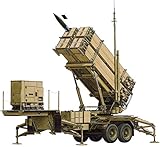
- This is a 1/35 scale unassembled model kit
- Engineered for modeling enjoyment
- Paint & glue required, not included
| System or program | Reported amount | What it measures | Basis and qualification |
|---|---|---|---|
| Conventional Prompt Strike (CPS) | About $63 million–$71 million per missile; approximately $67 million on average | Estimated missile unit cost | GAO estimate as of April 2026. Included support equipment and other missile-related costs affect the figure; GAO says it may change as production begins. |
| Tomahawk Block V | Approximately $3.64 million per missile | Stated unit cost | Naval Air Systems Command (NAVAIR) product page; FY2026 dollars. |
| LGM-35A Sentinel | $3,731.9 million | Combined research, development, test and evaluation (RDT&E) and procurement funding | Congressional Research Service (CRS) summary of the FY2025 Department of Defense (DoD) request; nominal dollars. This is program funding, not a missile unit price. |
| Trident II modifications | $2,465.7 million | Combined RDT&E and procurement funding for modifications | CRS summary of the FY2025 DoD request; nominal dollars. This is modification-program funding, not the price of a new missile. |
| Long-Range Standoff Weapon (LRSO) | $833.8 million | Combined RDT&E and procurement funding | CRS summary of the FY2025 DoD request; nominal dollars. This is program funding, not a missile unit price. |
| CBO Option 1: ground-launched JASSM-ER | $1.3 billion | Up-front cost for a ground-launched fielding option | Congressional Budget Office (CBO) estimate in 2020 dollars; not a per-missile price. |
| CBO Option 2: ground-launched LRASM | $2.2 billion | Up-front cost for a ground-launched fielding option | CBO estimate in 2020 dollars; not a per-missile price. |
| CBO Option 3: ground-launched SM-6 | $4.6 billion | Up-front cost for a ground-launched fielding option | CBO estimate in 2020 dollars; not a per-missile price. |
| CBO Option 4: combined LRASM and SM-6 fielding | $6.3 billion | Up-front cost for a combined ground-launched fielding option | CBO estimate in 2020 dollars; not a per-missile price. |
CRS describes its selected-system figures as combined RDT&E and procurement funding in millions of nominal dollars, based on the DoD Comptroller’s FY2025 Program Acquisition Cost by Weapon System. They are requested amounts, not necessarily enacted or ultimately spent amounts. Without a matching missile quantity and a clear account of which costs are included, dividing a program total by a quantity would not produce a defensible per-missile price.
What the compared systems are for
Conventional Prompt Strike
CPS is the Navy’s planned hypersonic missile capability. GAO’s April 2026 estimate is sensitive to production efficiency, procurement stability, design maturation, inflation, technology upgrades, and which missile-related costs budget documents include. These uncertainties matter when reading its unusually high estimated unit cost: the reported range is not a settled production price.
Rank #2
- Opening Hood with Detailed Engine
Tomahawk Block V
NAVAIR describes Tomahawk as a long-range cruise missile used for deep land attack. Its product information distinguishes Block IV, which can be retargeted in flight using two-way satellite communications, from Block V, which includes navigation and communications upgrades and identifies future maritime-strike and warhead capabilities. These are mission and variant details, not evidence that Tomahawk is a like-for-like alternative to CPS.
Sentinel, Trident II, and LRSO
CRS discusses Trident II D5, LGM-35A Sentinel, and LRSO within its strategic-missile funding coverage. For that analysis, a strategic missile is a nuclear-capable missile with a range exceeding 1,500 nautical miles. CRS reported that these three programs together made up over 98% of DoD’s strategic-missile funding request in its FY2024 account. That share describes a budget category, not their share of all missile spending or a ranking by unit price.
Rank #3

- From shape to control room, barrel, tank track etc details, this armored car tank model accurately catch the details of a real military tank.
- Missiles can be fired; the turret can be raised, lowered and rotated; the roof cover can be removed; and the support frame can be swung; You can put some soldiers in the control room to simulate the scene, and every detail is highly restored to create a real experience for each player.
- This tank model includes 2566 pieces building bricks, the finished model measures 24 in(L) x 7.8 in(W) x 11 in(H).
- In this set, include a tank building parts set and a paper instructions. Common Box Package.
- This set is suitable for various occasions, whether it's for personal play or as a gift.
Ground-launched JASSM-ER, LRASM, and SM-6 options
CBO’s comparison concerns the up-front costs and scenario value of ground-launched fielding options. It considered JASSM-ER for static ground targets, LRASM for ships, and SM-6 for aircraft and missiles. The options therefore combine a missile choice with a deployment concept; the totals cannot be used as acquisition prices for individual missiles.
How to read a missile cost claim
- Check the unit. Look for “per missile” or “unit cost.” A program appropriation or system-fielding total is not a unit price.
- Check the accounting scope. Determine whether the figure includes research and development, support equipment, launchers, infrastructure, or other costs. Sources may count different things.
- Check the date and dollar basis. A FY2026-dollar figure, a nominal FY2025 request, and a 2020-dollar estimate should not be compared as though they were measured in the same year.
- Check whether it is requested, estimated, or realized. A budget request is not enacted spending, and a projected unit cost is not necessarily a final procurement cost.
- Check the mission and class. Hypersonic weapons, cruise missiles, nuclear-capable strategic systems, anti-ship weapons, and interceptors serve different roles. A higher figure does not by itself mean one is a more capable or better-value weapon.
What can be concluded
Among the public per-missile figures cited here, CPS stands out, with GAO’s April 2026 estimate averaging about $67 million. Tomahawk Block V has a much lower stated unit cost, but it is a different missile with a different mission and cost basis. The larger Sentinel, Trident II, LRSO, and CBO option totals describe budgets or fielding concepts, not individual missile prices. The available figures therefore answer which reported per-missile estimate is highest in this comparison, but they do not establish the single most expensive missile in the world.
Rank #4
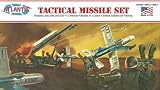
- This plastic model requires assembly and painting. Adhesives, tools, paints, etc., sold separately
- 1/40 scale unpainted plastic model assembly kit
- Set includes dirt against tank missiles and Little John Earth to Earth Missiles
- Mold Color: White, Olive Drab
- Includes 5 crew figures
Sources: U.S. Government Accountability Office, Navy Ship Modernization: DOD Needs Comprehensive Strategy to Field Hypersonic Missile Capability; Naval Air Systems Command, Tomahawk; Congressional Research Service, FY2025 Budget Request: Department of Defense-Military (Subfunction 051) and FY2024 Defense Budget Request: Strategic Missile Programs; Congressional Budget Office, Options for Fielding Ground-Launched Long-Range Missiles.
Quick Recap
Best Value

- This plastic model requires assembly and painting. Adhesives, tools, paints, etc., sold separately
- 1/56 scale unpainted plastic assembly kit
- Released kits from the level in 1959
- Completed :9" total length
- Comes with 3 different decals
Product prices and availability are accurate as of the date/time indicated and are subject to change. Any price and availability information displayed on Amazon at the time of purchase will apply.




