Recommended Free Tools
Political events move foreign-exchange markets when they change expectations about interest rates, inflation, government borrowing, trade, capital flows or institutional stability. The market does not simply ask whether an event is “good” or “bad.” It asks what the event means for future policy—and whether that policy is credible.
For personal-finance decisions, this matters when you exchange money for travel, send remittances, receive income from abroad, hold foreign investments or trade currency pairs. A political announcement can change the exchange rate, the cost of hedging and even the availability of foreign currency.


How political events reach the forex market
Political news affects currencies through several connected channels. The first reaction may happen within seconds, while the longer-term effect can take months to become clear.
| Political channel | What markets reassess | Possible currency effect |
|---|---|---|
| Interest-rate expectations | Inflation, growth and the likely central-bank response | Higher expected returns may support a currency; credibility concerns may weaken it |
| Fiscal policy | Taxes, government spending, deficits and debt sustainability | Higher yields may attract capital—or signal higher sovereign risk |
| Trade policy | Tariffs, exports, imports, supply chains and retaliation | May improve or damage the currency depending on growth and risk effects |
| Geopolitical risk | Energy prices, sanctions, investment and global risk appetite | Safe-haven currencies may rise while exposed economies fall |
| Institutional stability | Central-bank independence, property rights and access to funding | Loss of confidence can trigger capital outflows |
Interest rates: the first mechanism to watch
Suppose investors believe a new government will increase spending. That may raise inflation expectations and lead markets to price higher interest rates. Higher domestic yields can make the currency more attractive to international investors.
What’s actually slowing this PC down?
Pick the symptom - the matching free tool is one click away.
#1 Best Overall

- BUILT FOR YOUR MARKET, FUTURES, STOCKS, FOREX, OPTIONS & CRYPTO: 4X is a mindset and process journal, not a strategy tool tied to one instrument. The plan, the trade log, the deep dive and the weekly review work the same whether you trade ES, EURUSD, SPY or BTC. Traders use it across all five markets every day.
- THE 2026 EDITION, REBUILT FROM TRADER FEEDBACK: Same trusted system, better in every way. An extra daily page for more room to log the session. Weekly reviews now grouped with each week's trades, so no more flipping back and forth. Crisp, darker print that's easy on the eyes after hours on a screen. A Quick-Start QR that scans straight to step-by-step instructions.
- NOT A NOTEBOOK, A COMPLETE 12-WEEK SYSTEM: Start with a one-time 9-part Trading Plan (your market, setups, risk rules and discipline checklist). Then twelve identical weeks: five Daily Logs, five Deep Dive trade pages, and a two-page Weekly Review. 189 guided pages, roughly 80 trades. Guided prompts walk you through every step. You never stare at a blank page.
- RATE YOUR EXECUTION, NOT YOUR RESULT: Your platform tracks the P&L. Nothing tracks the why. Log energy, sleep and mindset before the open; grade every trade A to F on whether you followed your plan, not on whether it won; then face the pattern every weekend with START / STOP / IMPROVE / CONTINUE. That review habit is the edge. You're 42% more likely to hit a goal you've written down.
- BUILT TO LAST, ARRIVES GIFT-READY: Vegan-leather hardcover, 100gsm bleed-resistant paper, two ribbon markers and an elastic closure band. Bound to lay flat so you're not fighting the spine while you write. 189 pages, 5.75" x 8.5", carries in a bag. Ships in a premium gift box: the gift every trader in your life actually wants.
That is only one side of the calculation. If investors think the spending will produce unsustainable deficits, they may demand a larger risk premium or sell domestic assets altogether. The currency can then fall even as government-bond yields rise.
The key distinction is whether higher yields represent stronger expected returns or compensation for greater risk. A credible increase in real interest rates may support a currency. A loss of confidence in fiscal or monetary policy may weaken it.
Elections and referendums
Forex markets do not wait for election day. Traders adjust prices as polling data, campaign promises and implied probabilities change. The eventual result can cause only a modest move if it was already expected, while a surprise result can produce a sharp repricing.
Markets usually focus on the policies that may follow an election:
Quick wins for a faster PC:
Clear out junk files and repair common Windows errorsFree Scan →Fix the driver behind crashes, sound loss and screen glitchesFind Drivers →Repair Windows errors before they cause bigger problemsFix Now →- Tax and spending plans
- Trade restrictions and foreign-policy changes
- Immigration rules and labor supply
- Regulation and corporate taxation
- Capital controls or restrictions on foreign ownership
- Pressure on the central bank
- Relations with international lenders or trading blocs
The 2016 UK EU referendum shows how large the reaction can be when the result creates a new institutional framework. Between June 23 and July 1, 2016, the Bank of England reported that the sterling exchange-rate index fell 9%. Short-term sterling-dollar volatility also reached its highest level of the post-Bretton Woods era.
The lesson is not that referendums always weaken a currency. It is that markets struggle when the legal and economic consequences are uncertain. A political change that produces a more credible and stable policy framework can instead support the currency.
Government collapses and coalition crises
A government collapse can be currency-negative if it creates policy paralysis, delays a budget or raises the risk of a debt confrontation. Investors may sell the country’s bonds and shares, then convert the proceeds into another currency.
It can also be currency-positive. If the change removes a government associated with uncontrolled borrowing or institutional conflict, investors may expect more credible policies from its replacement.
Free tools Windows power users keep installed
One-click scans. No signup required.
Rank #2

- My Trading Journal for Stock Market, Forex, and Crypto: Precisely track and analyze every trade. This log book is essential for improving your trading performance and decision-making skills.
- Comprehensive Day Trading Planner: Record and review 80 guided trades with 8 review sections, perfect for traders aiming to refine their strategies and maximize profits.
- Customizable Trading Setup: Tailor your trading approach by documenting your setups, analyzing results, and adjusting strategies based on market conditions.
- For All Types of Traders: Whether you're trading stocks, forex, or crypto, My Trading Journal supports your unique trading style and helps you achieve consistent success.
- Premium Quality and Durability: Made with high-quality materials, this A5-sized journal is perfect for daily use and designed to withstand the rigors of active trading.
Watch the likely next step rather than the headline alone:
- Will a stable coalition form?
- Is an early election likely?
- Can the government pass a budget?
- Will an international funding agreement remain in place?
- Is the central bank likely to retain operational independence?
Trade wars, tariffs and sanctions
Tariffs affect exchange rates through import demand, exports, inflation, business investment and retaliation. The simple claim that a tariff automatically strengthens the imposing country’s currency is unreliable.
A tariff may reduce imports and initially support the currency. But it can also lower expected growth, disrupt supply chains, increase uncertainty and invite retaliatory tariffs. Those effects may cause investors to reduce exposure to the country’s assets.
A 2026 NBER study examining the US dollar after the 2025 tariff announcements found that tariff uncertainty could produce immediate dollar depreciation, even though a simpler trade model might predict appreciation. The ECB likewise reported that the April 2, 2025 US tariff announcement was followed by an unusual risk-off pattern: the euro, Swiss franc and Japanese yen appreciated while the dollar depreciated.
The Tool Desk
Outbyte PC Repair FREEClear out junk files and repair common Windows errorsFree Scan →Outbyte Driver Updater FREEFix the driver behind crashes, sound loss and screen glitchesFind Drivers →Sanctions create additional complications. They can restrict correspondent banking, reserve currencies, cross-border payments, trade finance and access to foreign-exchange reserves. In severe cases, a country may have separate official, domestic-market and offshore exchange rates. The official rate may therefore not be the rate available to individuals or businesses that need unrestricted currency conversion.
Wars and geopolitical shocks
Military escalation typically increases demand for liquid assets and currencies viewed as safe havens. The US dollar, Swiss franc and Japanese yen have traditionally benefited from these flows. The euro has also shown safe-haven characteristics during some recent risk-off episodes.
Safe-haven demand does not necessarily mean investors approve of the destination country’s politics. They may be seeking liquidity, collateral or a funding currency.
Geopolitical events also affect currencies through commodities. A conflict that raises oil or gas prices may weaken an energy-importing economy by increasing its import bill. An energy exporter may initially benefit from improved terms of trade. The same conflict can therefore push different currencies in opposite directions.
Rank #3
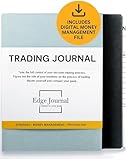
- FOR SERIOUS TRADERS: Track every entry, exit, position size, P&L, and setup with a structured layout designed for forex, stocks, options, futures, and crypto traders who want to identify what actually works in their strategy. NEUROSCIENCE-BASED DESIGN that encourages Growth Mindset and accountability
- TRADER PSYCHOLOGY FOCUS: Built on proven cognitive science principles, each page guides you through emotion tagging, bias recognition, and post-trade reflection to rewire reactive decision-making and build the disciplined mindset top-performing traders rely on
- COMPLETE 2026 TRADING LOG BOOK: Undated 12-month layout with performance summaries and goal tracking for day traders, swing traders, and long-term investors building consistent and serious results
- PERFORMANCE METRICS THAT DRIVE GROWTH: Dedicated sections for win rate, risk-reward ratio and strategy backtesting help you turn raw data into actionable insights, so every losing trade becomes a lesson and every winning trade becomes a repeatable system
- DIGITAL MONEY MANAGEMENT FILE INCLUDED : calculate your risk/reward ratio and win rate to find out whether you have a mathematical edge on the market, or not.
Central-bank independence
Investors care about who controls monetary policy and whether the central bank can respond to inflation without political interference. A dispute over central-bank leadership or a demand for artificially low interest rates can weaken a currency before any formal policy change occurs.
Markets may then reprice:
- Expected inflation
- The future path of interest rates
- The probability of foreign-exchange intervention
- The sustainability of public debt
- The risk of capital controls
Political pressure can also affect intervention. An IMF working paper published in 2026 found that, in some emerging markets, competitive elections were associated with larger and more frequent foreign-exchange sales before elections than afterward. Intervention may slow a currency’s fall, but it does not remove the underlying political risk and can reduce reserves available for later shocks.
Why emerging-market currencies often react more sharply
Political shocks are generally harder for currencies with shallow markets and limited access to foreign funding. Large price moves are more likely when a country has several of the following characteristics:
- High foreign-currency debt
- A large current-account deficit
- Low foreign-exchange reserves
- Weak central-bank credibility
- Heavy reliance on foreign portfolio investment
- Concentrated ownership of local bonds or shares
- Limited dollar liquidity
When investors try to exit at the same time, the exchange rate can move far more than the underlying economic news might suggest. Central banks may sell reserves or impose temporary controls, but these measures can create additional costs and distortions.
Do these 3 things before closing this tab:
1Scan for outdated or missing drivers - takes under a minute2Clear out junk files and repair common Windows errors3Fix the driver behind crashes, sound loss and screen glitchesPolitical news also changes trading conditions
The spot exchange rate is only one part of the market reaction. Political uncertainty can produce:
- Wider bid-ask spreads
- Higher options-implied volatility
- More expensive currency hedging
- Greater slippage on market orders
- Higher margin requirements
- Reduced market depth
- More expensive cross-currency funding
IMF analysis found that a one-standard-deviation increase in uncertainty indicators increased weekly excess exchange-rate volatility by approximately 5–10 basis points, widened bid-ask spreads by around 1–3 basis points and widened the three-month cross-currency basis by up to 13 basis points over a week. The effects were larger during unusually severe shocks.
For a household, this can mean that exchanging $1,000 or €1,000 costs more than usual—not only because the quoted rate moved, but because the provider widened its spread. For a leveraged forex trader, the same conditions can trigger a margin call even if the long-term direction later reverses.
Why the first currency move can reverse
Political events often create a two-stage reaction.
- Immediate repricing: traders respond to the surprise and the most obvious expected policy change.
- Fundamental reassessment: investors test whether the policy can be implemented and what it means for growth, inflation, debt and external financing.
A currency that initially falls may recover if a stable coalition forms, courts limit the policy, the central bank preserves credibility or the worst-case scenario fails to occur. Conversely, a currency can initially rise after an election and then weaken when the government reveals larger deficits or encounters institutional conflict.
How to assess a political event’s FX impact
Do not evaluate the effect using one currency pair or one headline. A practical analysis should compare several indicators:
| Indicator | What it can show |
|---|---|
| Spot and nominal effective exchange rates | Whether the currency is moving against one counterpart or a broader basket |
| Government-bond yields and credit spreads | Whether investors expect stronger returns or demand more risk compensation |
| Interest-rate futures | Changes in expected central-bank policy |
| Implied volatility | Expected size of future currency movements |
| Options risk reversals | Whether traders are paying more to hedge depreciation or appreciation |
| Bid-ask spreads and market depth | Whether the market is becoming harder or more expensive to trade |
| Commodity prices | Possible terms-of-trade effects for exporters and importers |
For a formal event study, compare the rate immediately before and after the announcement with a basket of currencies. Also account for simultaneous economic releases, bond-market moves, equity prices and commodity prices. High-frequency data can help isolate the political news, but only when the event time is known and other information is controlled for.
Independent reader supportYour contribution helps us test, update, and keep practical guides available for everyone.What this means for personal-finance decisions
Most households should not try to predict every election-related currency move. They can, however, reduce the consequences of political volatility.
- Match the timing of currency needs to the liability. If tuition, rent or a mortgage payment is due in a foreign currency, avoid leaving the entire conversion until the day before payment.
- Compare the total conversion cost. Check the exchange rate, fixed fee and spread. A provider advertising “no commission” may still earn money through a wide exchange-rate margin.
- Use staged conversions for large, non-urgent amounts. Converting in several planned portions reduces dependence on one political headline and one market price.
- Keep an emergency buffer in the currency you must spend. This is more reliable than assuming the exchange rate will return to a previous level.
- Be cautious with leveraged forex trading around announcements. Wider spreads, gaps and margin requirements can turn a small position into a large loss.
- Do not confuse a safe-haven rally with a permanent fundamental improvement. A currency can rise temporarily because investors need liquidity.
Businesses with predictable foreign-currency receipts or payments may consider a professional hedging policy. Individuals should understand the product, fees, settlement dates and potential losses before using forwards, options or leveraged contracts.
Common claims that fail
“Political uncertainty always weakens the affected currency.”
Not necessarily. The currency may rise if the event increases expected interest rates, improves the likely policy regime or triggers safe-haven demand.
“The dollar rises in every crisis.”
The dollar has often acted as a safe haven, but that relationship is conditional. During the 2025 tariff shock documented by the ECB, the dollar fell while the euro, franc and yen rose.
“Markets move only when the result is announced.”
Markets price changing probabilities in advance. Sterling’s sensitivity to the perceived probability of a UK vote to leave the EU increased as the 2016 referendum approached.
“A stable government guarantees a strong currency.”
Political stability can lower risk premiums, but a stable government can still create currency weakness through high inflation, excessive borrowing or deteriorating trade finances.
“A large spot move equals the change in fundamental value.”
Not always. Forced selling, thin liquidity and wider spreads can exaggerate the initial move.
FAQ
Do elections always cause a currency to fall?
No. The result depends on what was expected, the policies likely to follow and the credibility of the new government. A surprise may cause a sharp move, while an expected result may produce little immediate change.
Which currencies usually benefit from political crises?
The US dollar, Swiss franc and Japanese yen have traditionally attracted safe-haven flows. However, these relationships are not guaranteed. The source of the shock, the country’s institutional credibility and global risk appetite all matter.
Outdated Drivers Are Slowing You Down
One free scan finds every outdated or missing driver and matches the right update for your exact hardware.Free scan · exact hardware matchPC Slower Than It Used to Be?
A free scan shows the junk files, broken settings and background clutter dragging Windows down - then fixes them in one click.Free scan · Windows 10 & 11Why can a currency fall when interest rates and bond yields rise?
Yields may be rising because investors expect better returns, or because they demand compensation for inflation, default and political risk. The second type of increase can accompany capital outflows and currency depreciation.
How can political events affect the cost of exchanging money?
They can widen bid-ask spreads, reduce market depth and increase provider risk premiums. You may therefore receive a worse conversion rate even if the underlying spot move appears modest.
Should I wait until after an election to exchange currency?
There is no reliable rule. Waiting may avoid uncertainty, but it also exposes you to a sudden move after the result. For an important future payment, staged conversions and a cash buffer can reduce timing risk.
The Bottom Line
Political events affect forex markets by changing expectations about rates, inflation, fiscal policy, trade, capital flows and institutional credibility. The direction is never determined by the political label alone. Surprise, policy credibility, the central bank’s likely response, safe-haven demand and the country’s financial vulnerabilities matter more.
For personal finances, the practical response is to plan foreign-currency needs, compare spreads and fees, avoid excessive leverage and treat political forecasts as uncertain. A dramatic first move may reverse—but it may also expose a lasting change in the country’s economic and financial outlook.
Sources: Bank for International Settlements; IMF; Bank of England; European Central Bank; and NBER.
Quick Recap
Product prices and availability are accurate as of the date/time indicated and are subject to change. Any price and availability information displayed on Amazon at the time of purchase will apply.




