Recommended Free Tools
IT outsourcing is changing, not disappearing. The model built around large teams and low hourly rates is losing ground to services that combine automation, cloud expertise, cybersecurity, specialized talent and measurable business outcomes. For buyers, the challenge is to choose the right mix of internal teams, platforms and providers. For service providers, it is to prove value beyond labor cost.
What is changing in IT outsourcing?
IT outsourcing now covers a range of services with different economics: infrastructure and data-center operations, cloud migration and management, application development and maintenance, managed security, service desks, data engineering, AI operations, enterprise-platform implementation, and staff augmentation. Growth in one category does not mean every category is growing at the same pace.
The shift is from buying people or fixed teams toward buying capabilities and, increasingly, outcomes. Delivery is more often cloud-based and hybrid; routine work is being automated; and enterprises combine providers, internal teams and global capability centers rather than relying on one supplier for everything.
Market indicators support that distinction. ISG reported demand concentrated in cloud, infrastructure, engineering and AI-related work, and forecast approximately 2.1% growth in managed services and 20% growth in XaaS for 2026. Those are ISG index forecasts, not growth rates for all IT outsourcing. Gartner’s February 10, 2026 analysis describes a move toward outcome-driven, AI-orchestrated services. ISG’s 2026 outlook and Gartner’s analysis point to a changing market, not the end of outsourcing.
#1 Best Overall

- The Anker Advantage: Join the 50 million+ powered by our leading technology.
- Massive Expansion: Equipped with a USB C PD-IN charging port, 2 USB-A data ports, 2 HDMI ports, an Ethernet port, and a microSD/SD card reader, giving you an incredible range of functions—all from a single USB-C port.
- Dual HDMI Display: Stream or mirror content to a single device in stunning 4K@60Hz, or hook up two displays to both HDMI ports in 4K@30Hz. Note: For macOS, the display on both external monitors will be identical.
- Power Delivery Compatible: Compatible with USB-C Power Delivery to provide high-speed pass-through charging up to 85W. Please note: 100W PD wall charger and USB-C to C cable required.
- Compatibility: Supports USB-C, USB4, and Thunderbolt connections. Compatible with Windows 10 and 11, ChromeOS, and laptops equipped with DP Alt Mode and Power Delivery. Note: This device is not compatible with Linux.
Why low-cost labor is no longer enough
Labor arbitrage can still matter, but a low hourly rate does not guarantee a low total cost. Rework, handoffs, attrition, coordination delays, incidents and transition expenses can outweigh salary savings. Buyers also need architecture, domain understanding and accountability—not just capacity to write code or close tickets.
AI tools can reduce the labor required for some coding, testing, documentation and support tasks. Clients may expect providers to reflect resulting productivity gains in their fees. At the same time, providers compete with software platforms, AI tools, internal teams and global capability centers, not just other outsourcing firms. ISG’s market commentary describes pressure on traditional labor-centric services alongside demand for cloud, infrastructure, engineering and AI-related work. ISG’s market commentary
The practical comparison is risk-adjusted value: verified outcomes relative to total cost and risk. Include labor, transition, cloud and software charges, rework, security controls, downtime and the cost of managing the supplier.
Where demand and differentiation are strongest
Cloud, infrastructure and platform operations
Cloud migration and modernization, infrastructure operations, platform engineering, DevOps, reliability engineering and FinOps require more than moving workloads. Buyers need sound architecture, cost visibility, observability, recovery plans and control over access. Cloud services can improve flexibility and resilience when properly designed, but they can also create concentration, configuration and egress-cost risks.
What’s actually slowing this PC down?
Pick the symptom - the matching free tool is one click away.
Security, resilience and compliance
Managed detection and response, identity controls, vulnerability management, incident response, disaster recovery and compliance automation are strategically important because outsourced access expands the attack surface. A provider that can show relevant controls, service-specific evidence and regional delivery options can compete for work that a rate-first provider may not be equipped to handle.
Rank #2

- Detachable 2-in-1 Design for Desk & Travel — Features a 13-in-1 desktop docking station with a detachable 6-in-1 portable hub that snaps off for on-the-go use. One docking station replaces two, covering both your home office setup and mobile work needs without buying separate devices.
- Triple Display with Flexible Monitor Setup — Connect up to 3 monitors via 2× HDMI ports and 1x DisplayPort for a full desktop workstation. Supports up to 4K@60Hz (single display) or dual 2K@60Hz (dual displays) or triple 1080P@60hz (triple display). Perfect for data analysts, traders, and content creators who need screen real estate. (Note: macOS supports mirrored mode only on multiple external displays).
- All the Ports You Need in One Dock — 1× USB C upstream, 2× USB C Data at 5Gbps and 10Gbps, 3× USB-A, 2× HDMI, 1× DisplayPort, 1× Gigabit Ethernet, 1× 3.5mm audio, SD/TF card slots, and DC power input. Connect your monitors, keyboard, mouse, webcam, headphones, and wired network — all through a single USB C cable to your laptop.
- 100W Laptop Charging + 10Gbps Data Transfer — Delivers up to 100W Power Delivery to charge your laptop while running all connected peripherals. Includes a 140W power adapter to ensure stable performance under full load. One USB C Data port transfers files at 10Gbps — move a 1GB video in under 2 minutes.
- Wide Compatibility & Complete Package — Works with Dell XPS, Lenovo ThinkPad, HP Spectre, and most Windows laptops with USB C. Includes: Nano Docking Station (13-in-1), 3ft USB C cable (10Gbps), 140W power adapter with 5ft power cord, welcome guide, and 18-month warranty. Set up in under 2 minutes — plug and play, no drivers needed.
Data, AI and specialized engineering
Data engineering, analytics, AI infrastructure, model operations and industry-specific engineering require scarce skills and sustained governance. Routine maintenance, basic service-desk tasks, manual monitoring, repetitive testing and generic code production are more exposed to commoditization. They can remain viable when paired with automation, domain expertise, security, observability or performance commitments.
How AI changes delivery, pricing and accountability
AI in outsourcing can mean several different things. AI-assisted work has people using tools to code, test, document or analyze. AI-enabled services embed automation in an existing operation. AI-agent operations allow agents to carry out multistep tasks with limited intervention. AI-native delivery designs the service around automation from the outset. These are not equivalent levels of autonomy or risk.
Set commercial terms around value, not headcount alone
Per-person or hourly pricing becomes harder to defend when automation lowers labor input. Depending on how predictable the work is, alternatives include a fixed fee for a defined outcome, a per-ticket or per-workload charge, consumption pricing, gain-sharing, or a base fee combined with a performance component. Expert retainers paired with usage-based automation can also fit work with variable demand.
Agree on a baseline before work begins and specify how productivity improvements affect fees. A provider should not be rewarded for preserving unnecessary labor; a buyer should not assume it can demand unlimited savings without funding modernization, integration and governance.
Bound agent authority and preserve oversight
Contracts and operating procedures should establish which actions an AI system may take independently, when a person must approve or review them, and who is accountable when provider-operated automation causes an error. Controls should include:
Rank #3

- 5-in-1 Connectivity: Equipped with a 4K HDMI port, a 5 Gbps USB-C data port, two 5 Gbps USB-A ports, and a USB C 100W PD-IN port. Note: The USB C 100W PD-IN port supports only charging and does not support data transfer devices such as headphones or speakers.
- Powerful Pass-Through Charging: Supports up to 85W pass-through charging so you can power up your laptop while you use the hub. Note: Pass-through charging requires a charger (not included). Note: To achieve full power for iPad, we recommend using a 45W wall charger.
- Transfer Files in Seconds: Move files to and from your laptop at speeds of up to 5 Gbps via the USB-C and USB-A data ports. Note: The USB C 5Gbps Data port does not support video output.
- HD Display: Connect to the HDMI port to stream or mirror content to an external monitor in resolutions of up to 4K@30Hz. Note: The USB-C ports do not support video output.
- What You Get: Anker 332 USB-C Hub (5-in-1), welcome guide, our worry-free 18-month warranty, and friendly customer service.
- Least-privilege access and limits on the systems and data an agent can reach.
- Audit logs, model and prompt versioning, and records of consequential actions.
- Restrictions on using customer data for model training and clear retention rules.
- Testing for inaccurate outputs, bias, unsafe actions and prompt injection.
- Human approval thresholds, escalation paths and a tested rollback or kill switch.
- Clear responsibility for incidents, remediation and customer notification.
Plan for a changing workforce
Automation shifts the skills mix rather than removing the need for skilled people. Architecture, domain analysis, security engineering, data governance, AI evaluation, platform engineering, incident response and product management become more important. Buyers still need internal owners for architecture, product decisions, security and supplier performance.
Choose a delivery model that fits the work
No location or sourcing structure is best for every service. Choose based on data residency, customer proximity, language, working hours, specialist availability, security requirements, labor rules, resilience and total cost—not wages alone.
Quick wins for a faster PC:
Clear out junk files and repair common Windows errorsFree Scan →Scan for outdated or missing drivers - takes under a minuteDriver Scan →| Model | Strengths | Risks or limitations |
|---|---|---|
| Offshore | Large talent pools, extended-hours coverage and potential labor-cost advantages. | Time-zone friction, communication overhead, geopolitical exposure and restrictions on data transfer may matter. |
| Nearshore | Often offers more time-zone overlap and easier collaboration than distant offshore delivery. | Talent pools may be smaller, specialist skills narrower or costs higher than expected. |
| Onshore | Proximity to stakeholders and potential alignment with local regulatory or clearance needs. | Higher labor costs and talent scarcity can constrain scale. |
| Hybrid | Can balance cost, proximity, access and resilience across locations. | Handoffs, governance and coordination are more complex. |
| Global capability center | Greater internal control and institutional knowledge. | Requires long-term recruiting, management capability, investment and operational commitment. |
| Multi-vendor | Access to specialists and less reliance on a single supplier. | Integration disputes, duplicated tools, blurred accountability and governance overhead can rise. |
A global capability center and outsourcing are not mutually exclusive. An enterprise can keep architecture, product ownership and sensitive functions in-house, operate a captive center for strategic capabilities, and outsource specialist or variable-demand services. A build-operate-transfer arrangement is another option when an organization wants a provider to establish a center before transferring its operation.
Deloitte’s 2025 Global Business Services survey covered leaders across more than 30 countries, with organizations operating in roughly 50 countries. About half of responding organizations said their GBS organizations achieved savings above 20%; that is a survey finding, not a promised result for an outsourcing buyer. Deloitte’s survey methodology and survey findings
Manage cloud portability, sovereignty and concentration risk
Public, private, hybrid and sovereign-cloud choices depend on workload, jurisdiction and customer requirements. Before outsourcing cloud operations, determine where data and backups will reside, whether cross-border transfers are permitted, who controls encryption keys, and which subcontractors can access the environment. Plan for identity management, disaster recovery, data export and workload exit before a migration makes them urgent.
Rank #4

- 14-in-1 Connectivity: Bring together all your devices with a 14-in-1 solution, perfect for charging, transferring data quickly, and managing dual displays.
- Ultra-Fast Docking Station: Deliver a powerful charge with 160W of total output, capable of charging up to four devices simultaneously through three USB-C ports at 100W max each and one USB-A port at 12W max.
- Master Your Data Flow with 11 Ports: Efficiently manage data across multiple devices with versatile ports offering speeds up to 10Gbps, complemented by dual 4K display and audio options.
- Dual Display: Connect to the dual HDMI ports to enjoy crystal-clear streaming or mirroring across 2 displays at up to 2K@60Hz with a DP 1.4 laptop or 1080p@60Hz with a DP 1.2 laptop. Note: This product does not support a 5120*1440 monitor.
- Compatibility: Supports USB-C, USB4, and Thunderbolt connections. Compatible with Windows 10 and 11, ChromeOS, and laptops that support DP Alt Mode and Power Delivery. Note: 1. For macOS, the displays on the both external monitors are identical. 2. This device is not compatible with Linux.
Portability measures can include documented architecture, infrastructure-as-code, reproducible environments, exportable data and open interfaces where they are practical. Kubernetes or other open standards can help in some cases, but they do not make workloads automatically portable. Egress fees, proprietary services, refactoring and the cost of operating across environments can make an exit expensive. Multi-cloud is not automatically cheaper or safer; it can multiply tools, skills requirements and control complexity.
ISG identifies cloud sovereignty and AI- and data-related workloads as part of the evolving cloud landscape. ISG Index materials
Make third-party security and compliance specific
Outsourcing gives a supplier and sometimes its subcontractors access to systems, data or software-development processes. Due diligence should cover the service and delivery locations being purchased, not just the provider’s corporate reputation. CISA’s vendor and software-acquisition guidance highlights supplier risk, security controls, subcontractors and software supply-chain information. CISA’s vendor SCRM template
Ask for evidence on privileged-access controls, customer-environment segregation, security logging, patching, incident response, secure development, disaster recovery and independent assurance. For software services, request a software bill of materials where appropriate. Confirm whether certifications cover the actual service, product and region; check their scope, expiration, exceptions, complementary customer controls and subcontractor coverage. A certification is evidence about a defined scope, not a guarantee that every customer configuration is secure.
Legal obligations depend on the customer’s industry and location, the data and people involved, where processing occurs, the service type, government-contract status and whether AI supports consequential decisions. Privacy rules such as GDPR, sector and critical-infrastructure requirements, financial-sector resilience rules, AI governance, export controls and contractual audit or notification duties may all be relevant. Buyers should map the applicable obligations with qualified legal and compliance teams instead of assuming one global rule applies.
Do these 3 things before closing this tab:
1Fix the driver behind crashes, sound loss and screen glitches2Clear out junk files and repair common Windows errors3Scan for outdated or missing drivers - takes under a minuteBest Value
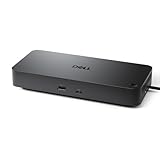
- Powerful compatibility: Power essential productivity across the AI PC workplace. The Dell Pro Dock offers enhanced compatibility and drives up to 100W of power to new mainstream Dell AI PCs and non-Dell PCs.
- Modern manageability: The Dell Pro Dock is part of the world’s most manageable commercial docking family, with flexible management capabilities, designed to uplevel IT efficiency and keep users working without disruption.
- Thoughtful design: Configure your workspace with an ambidextrous USB-C cable that can be routed left or right. Features a new robust USB-C connector, designed for enhanced durability.
- A leader in sustainable innovation: Experience up to 72% reduction in power consumption on standby mode. Built with at least 65% postconsumer recycled materials and packaged with 100% recycled or renewable packaging.
- Upgraded for modern work: Expand your views with native support for up to four high-res displays. Keep your PC accessories connected and charged with the latest ports, while staying productive with faster USB and network speeds.
Redesign the contract for outcomes and change
Define service boundaries and dependencies
- Describe outcomes, service boundaries, exclusions and customer responsibilities.
- Identify subcontractors and set disclosure, approval and change-notification rights.
- Specify how AI-generated work and AI-operated services are governed.
- Set data-use, retention, access and audit requirements.
Measure quality beyond uptime
Use metrics tied to the service and its business purpose. Depending on the work, track mean time to detect and restore, change-failure rate, deployment frequency, escaped defects, ticket resolution quality, user experience, security-remediation time, cloud-cost variance, automation rate or business-process cycle time. Define the measurement method, baseline, reporting cadence, exclusions and consequences for missed targets.
Make charges and productivity visible
- Baseline current cost and performance before transition.
- Separate labor, cloud consumption, software licenses and pass-through charges.
- Set usage bands, minimum commitments, currency and inflation rules, and limits on unilateral rate changes.
- Agree on benchmarking or market-testing rights and how verified productivity gains are shared.
- State responsibility for egress fees, licenses, third-party costs and approved change requests.
A fixed price does not transfer every risk. If scope and acceptance criteria are unclear, a provider may seek change orders, rely on exclusions, reduce effort in ways that harm quality or slow delivery. Use fixed fees where scope is sufficiently stable; use variable or hybrid terms when demand or outcomes are genuinely uncertain.
Set AI-specific rights and protections
Name permitted models and tools, restrict customer-data training, assign ownership or use rights for prompts, workflows, code and outputs, and set confidentiality and retention terms. Provide for human oversight, testing, acceptance, auditability, liability, indemnity and the right to substitute a model. Define what happens if a model or its provider becomes unavailable or materially changes.
Make exit workable before signing
Specify termination assistance, data-export formats, documentation and runbooks, knowledge transfer, transition staffing, continued access to necessary tools, and cooperation with replacement suppliers. Set a maximum transition period and pricing for exit services. Source-code escrow may be justified for certain custom or business-critical systems, but it is not a substitute for current documentation and a realistic transition plan.
Use a buyer scorecard and an RFP that tests evidence
Score providers against the work being sourced; do not let an attractive rate or a general-purpose ranking substitute for references and service-specific proof. Ask finalists to demonstrate:
- Outcome and domain capability: What business result will the team own, and what relevant industry experience can it show?
- Automation maturity: Which tasks are automated today, how are gains verified, and who receives the benefit?
- Cloud and platform depth: What production experience supports its architecture, infrastructure-as-code, DevOps, observability, FinOps and recovery claims?
- Security and compliance: What assurance applies to this service and region, and which subcontractors or customer controls are outside its scope?
- Talent continuity: What is the proposed senior-to-junior mix, how is attrition managed, and how will scarce skills remain available?
- Delivery resilience: Where are primary and backup teams, and how has business continuity been tested?
- Commercial transparency: Can the provider separate labor, cloud, license and pass-through costs and explain exit charges?
- Interoperability and exit: Are interfaces, data and documentation usable by the customer or a replacement supplier?
Do not assume a large provider is automatically safer: evaluate account-level staffing, subcontracting, local delivery quality, financial and operational stability, and whether the account receives appropriate attention. Nor does multi-sourcing eliminate lock-in; it can reduce dependence while adding coordination and accountability problems. Gartner’s data-center outsourcing research covers a specific market category, so it should not be treated as a universal ranking across all IT services. Gartner’s data-center outsourcing research context
What providers must build to remain competitive
Providers should invest in reusable automation and intellectual property, vertical expertise, architecture and engineering depth, secure delivery, regional options and demonstrable AI governance. They need transparent productivity economics: show what automation changes, how performance is measured and how pricing reflects it. Integrations with cloud and enterprise platforms can help, but an alliance or marketplace listing is not proof of fit.
Labor rates alone are a weak differentiator when buyers can compare total cost, delivery speed, quality, security and resilience. Providers should be prepared to demonstrate post-transition improvement and accept metrics that reflect the customer’s business rather than simply the number of staff assigned.
Crashes, No Sound, or Screen Glitches?
Random freezes, missing sound and display glitches usually trace back to one bad driver. Find and replace yours safely.Free scan · under a minutePC Slower Than It Used to Be?
A free scan shows the junk files, broken settings and background clutter dragging Windows down - then fixes them in one click.Free scan · Windows 10 & 11Quick Recap
A practical 12-month sourcing transition
- Segment the portfolio. Separate strategic, regulated or differentiating work from repeatable commodity services; distinguish application maintenance from cloud, security, engineering and other markets.
- Set ownership. Retain clear internal accountability for architecture, product decisions, security, business processes and supplier governance.
- Choose the operating mix. For each service, compare internal delivery, outsourcing, platforms, a capability center or a hybrid approach against total cost, risk and talent needs.
- Baseline performance. Record costs, service quality, incidents, delivery speed, cloud consumption and business outcomes before changing suppliers or pricing.
- Pilot automation safely. Start with bounded workflows, least-privilege access, human escalation, logging and rollback. Measure verified outcomes, not just tasks automated.
- Renegotiate around evidence. Adjust service levels, charges, productivity sharing and AI controls using the baseline and pilot results.
- Build resilience and exit options. Test recovery, document systems and data exports, and make transition responsibilities and costs explicit.
- Review the portfolio annually. Reassess service boundaries, supplier concentration, performance, regulation, technology and the value of internal capabilities.
Product prices and availability are accurate as of the date/time indicated and are subject to change. Any price and availability information displayed on Amazon at the time of purchase will apply.




