Recommended Free Tools
Elon Musk’s AI strategy is bigger than Grok. It is an attempt to connect AI models with data centers, the X social platform, Tesla vehicles and robots, Starlink connectivity, and SpaceX launch capacity. If those pieces work together, they could change how AI companies compete—and where the industry’s costs and risks land. But many of the most ambitious plans, especially orbital data centers, remain proposals rather than proven businesses.
This article reflects publicly available company materials and product documentation through August 16, 2026. Company-reported figures and forecasts are identified as such; they are not independent verification of performance or profitability.
What is in Musk’s AI ecosystem?
The central product is Grok, an AI assistant and model platform. The wider strategy links it to assets held across SpaceXAI, X, Tesla, and SpaceX. SpaceX announced its acquisition of xAI in February 2026, and later company materials describe xAI, Grok, and X as integrated into SpaceX’s AI business. Tesla is a separate company: it disclosed an investment in xAI and a framework for considering collaborations, not a full operational merger.
| Asset | Role in the strategy | What is established |
|---|---|---|
| SpaceXAI and xAI | AI models, APIs, research, and business products | SpaceX materials describe xAI and Grok as part of its AI business; the operating and governance details of every collaboration are not public. |
| Grok | Consumer assistant and developer model platform | Official documentation lists web and mobile access, text and voice interaction, image and video creation, file analysis, and tool connections. Grok documentation |
| X | Distribution and a source of current public conversation | SpaceX investor materials report company-defined X and Grok audience figures; audience size does not establish paid conversion or profitability. SpaceX investor materials |
| Colossus and Colossus II | Large-scale AI computing capacity | Company materials present the facilities as core to its AI plans; public evidence here does not establish their utilization or operating costs. |
| Tesla | Potential route into vehicles, autonomy, robotics, and physical AI | Tesla disclosed an approximately $2 billion investment in xAI and a framework for evaluating possible collaborations. Specific projects require separate negotiations and approvals. Tesla’s SEC filing |
| Starlink and SpaceX launch systems | Connectivity and a possible route to deploying computing infrastructure in orbit | Orbital AI compute is described in company materials as a future plan, not a proven commercial service. SpaceX investor materials |
Why combine AI with a rocket company?
The strategic idea is vertical integration: control or coordinate more of the chain that turns capital and electricity into useful AI services. That chain includes specialized chips and data centers, models, applications, distribution, connectivity, and—in Tesla’s case—machines acting in the physical world.
Quick wins for a faster PC:
Repair Windows errors before they cause bigger problemsFix Now →Fix the driver behind crashes, sound loss and screen glitchesFind Drivers →Clear out junk files and repair common Windows errorsFree Scan →#1 Best Overall
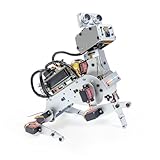
- AI-Powered Raspberry Pi Robot Dog — PiDog: Powered by Raspberry Pi (5/4B/3B+/3B/Zero 2W), OpenClaw, and multi-LLMs like ChatGPT, Gemini, Grok, DeepSeek, Qwen & Ollama. With 12 servos, camera, gyroscope, hearing & touch sensors, PiDog can see, listen, talk, move, and interact intelligently. Supports OpenCV, MediaPipe, TTS & STT, app control, FPV & Python. A great STEM robotics gift for students, makers & tech enthusiasts—perfect for birthdays and holidays. (Raspberry Pi not included)
- Realistic Dog-like Movements: PiDog's 12 powerful servos enable 32 dog-like actions, including walking, sitting, standing, shaking its head, wagging its tail, and performing playful tricks, closely mimicking a real dog and providing an engaging experience. This is an AI development robot product designed for engineers, suitable for ages 15 and above
- Rich Sensor Suite for Interactive Experiences: PiDog features ultrasonic, touch, gyroscope, sound, camera, speaker and microphone. These provide it with advanced hearing, vision, and touch, enabling it to see, detect obstacles, respond to touch, and recognize sounds, making interactions highly engaging
- AI-Powered Interactions with OpenClaw & Multi-LLMs. PiDog combines voice, vision, and gesture recognition for immersive AI experiences. Powered by OpenClaw and multi-LLMs like ChatGPT, Gemini, Grok, DeepSeek, Qwen, Doubao, and Ollama (local LLMs), it can understand questions, respond naturally through TTS & STT, recognize math problems, interpret hand gestures, and hold smart conversations. OpenClaw also enables customizable AI behaviors and personalized robotics development, helping users create their own intelligent robotic companion
- Comprehensive Learning Resources and Support: PiDog offers detailed online documentation, video tutorials, prompt technical support, and an active forum community, ensuring beginners can easily complete all projects and enjoy a great experience
Owning more layers can reduce dependence on outside providers and make it easier to coordinate model training, product launches, and infrastructure. It can also create routes to customers that a stand-alone lab would have to build or buy. But integration does not automatically make a model better or a business cheaper. It can concentrate execution risk, complicate governance, and make it harder to identify which company paid for an asset or benefited from it.
What changed with the SpaceX–xAI combination?
SpaceX’s February 2026 announcement and subsequent investor materials place xAI and Grok inside a broader SpaceX AI strategy. This gives the plan a potential connection to SpaceX’s capital, launch operations, and satellite network. The public materials establish the strategic combination, but not every operational arrangement, allocation of costs, or intellectual-property boundary among related businesses.
Why X matters—and what it cannot guarantee
X offers a ready-made distribution channel: Grok can be placed where people already read and post, and the company can bundle AI features with social products. SpaceX investor materials reported approximately 117 million monthly active users of Grok AI features and approximately 550 million monthly active users across the combined X and Grok audience as of March 31, 2026. These are company-reported, company-defined metrics, not independent measures of paying customers or revenue.
Real-time social content may give a model fresher context than a static training corpus, but freshness is not accuracy. Posts can be incomplete, manipulated, biased, or false. A model that draws on fast-moving discussion still needs ways to distinguish evidence from rumor.
Free tools Windows power users keep installed
One-click scans. No signup required.
Grok’s commercial position: product, API, and price
Grok is offered through web and mobile applications and as a developer platform. The documentation updated August 11, 2026 describes text chat, voice, image and video creation, file analysis, and connections to external tools. It also confirms free access to start and paid SuperGrok plans, but the documentation available for this article does not establish an exact consumer subscription price. Official Grok documentation
Rank #2

- Optimized AI Arm Kit for LeRobot & Hugging Face Projects – The SO-ARM101 is an upgraded low-cost robotic arm servo motor kit designed for AI robotics enthusiasts and developers. Fully compatible with LeRobot and Hugging Face frameworks, it supports imitation learning and reinforcement learning, making it ideal for real-world robotics applications. (3D-printed parts not included.)
- Enhanced Wiring & Performance – Compared to the SO-ARM100, the SO-ARM101 features improved wiring to prevent disconnection at joint 3 and eliminates range-of-motion limitations. The leader arm uses optimized gear ratio motors for smoother performance—no external gearboxes required.
- Real-Time Leader-Follower Functionality – New real-time tracking allows the leader arm to follow the follower arm, enabling human intervention and correction during reinforcement learning (RL) training. Perfect for hands-on AI robotics development and research.
- Open-Source, DIY-Friendly & Nvidia-Compatible – Developed by TheRobotStudio, this open-source AI Arm kit integrates seamlessly with the LeRobot platform, offering PyTorch-based datasets, simulation, training, and deployment tools. Fully compatible with Nvidia Jetson edge devices, including reComputer Mini J4012 Orin NX 16 GB.
- Comprehensive Learning Resources – Includes detailed open-source assembly and calibration guides, testing tutorials, and deployment instructions. From wiring to AI training, get everything you need to start building, teaching, and optimizing your robotic arm for grasping and placing tasks.
For developers, the published Grok 4.5 API specification lists a 500,000-token context window, text and image input, and support for coding and agentic workflows. The page accessed in August 2026 listed the following rates and limits for that API model; they can change and do not describe consumer subscription pricing. Grok 4.5 API documentation
| Grok 4.5 API item | Published specification |
|---|---|
| Input | $2 per million tokens |
| Cached input | $0.30 per million tokens |
| Output | $6 per million tokens |
| Context window | 500,000 tokens |
| Listed regions | us-east-1 and us-west-2 |
| Listed limits | 150 requests per second and 50 million tokens per minute |
Token rates are only one part of the cost of deploying AI. A company also has to account for retries, tool calls, latency, human review, security, integration, and the cost of errors. Enterprise buyers may care as much about support, privacy terms, uptime, and compliance as about a large context window or a low per-token price.
SpaceXAI’s January 6, 2026 Series E announcement said xAI raised $20 billion, that Grok Voice was serving millions of users across the Grok app and Tesla vehicles, and that Grok 5 was in training at that time. Those are first-party statements; the announcement does not establish Grok 5’s subsequent release status or independently verify commercial performance. Series E announcement
Outdated Drivers Are Slowing You Down
One free scan finds every outdated or missing driver and matches the right update for your exact hardware.Free scan · exact hardware matchWindows Errors? Fix Them Before They Spread
Repair common Windows errors and clear accumulated junk for a smoother, more stable PC - no reinstall needed.Free scan · no reinstallCompute: the expensive foundation beneath AI
Training and serving advanced models requires substantial computing capacity, along with power, cooling, networking, and facilities. Building data centers can reduce reliance on external cloud providers and give a company more control over how it schedules model training and inference. If capacity exceeds internal needs, selling compute to outside customers could help pay for it.
That same capacity creates fixed costs. Its value depends on whether it can be used intensively and whether customers will pay enough for the resulting services. SpaceX investor materials describe Colossus and Colossus II and report a cloud-compute agreement expected to produce approximately $1.25 billion in monthly fees through May 2029, subject to conditions. This is a company disclosure about an agreement, not independent confirmation of unrestricted, realized recurring revenue. The company’s own filing also warns that the commercial value of frontier AI remains unproven. SpaceX investor materials
Rank #3
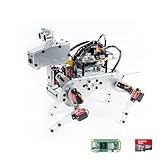
- Raspberry Pi AI Robot: powered by Raspberry Pi (5/4B/3B+/3B/Zero 2W), features 12 servos and sensors for vision, hearing, and touch. Integrated with ChatGPT-4o, it responds to complex queries. With app control and FPV, users can manage and see its view in real-time. It supports Python programming
- Realistic Movements: 12 powerful servos enable 32 actions, including walking, sitting, standing, shaking its head, wagging its tail, and performing playful tricks, closely mimicking a real and providing an engaging experience
- Rich Sensor Suite for Interactive Experiences: features ultrasonic, touch, gyroscope, sound, camera, speaker and microphone. These provide it with advanced hearing, vision, and touch, enabling it to see, detect obstacles, respond to touch, and recognize sounds, making interactions highly engaging
- Engaging Interactions with ChatGPT-4o: with ChatGPT-4o enables voice interactions and visual recognition, making it smarter and more responsive. Users can have natural conversations, solve math problems via the camera, and interpret gestures, creating diverse and fun interactions
- Comprehensive Learning Resources and Support: offers detailed online documentation, video tutorials, prompt technical support, and an active forum community, ensuring beginners can easily complete all projects and enjoy a great experience
- Potential advantage: More control over capacity can help a provider iterate on models and manage inference supply.
- Key economic test: Utilization and revenue per unit of capacity must justify construction, power, chip, cooling, and networking costs.
- Failure mode: If demand or monetization falls short, large facilities can become underused capital rather than a competitive moat.
How Tesla fits: a bet on physical AI
Tesla could connect digital AI to vehicles, robotics, and other machines. In principle, a language model could handle high-level interaction while specialized systems perceive and control a vehicle or robot. Tesla’s vehicles and robotics work could also provide routes to deploying AI beyond screens.
The verified financial link is narrower than that vision. Tesla’s SEC filing says the company entered an agreement on January 16, 2026 to invest approximately $2 billion in xAI’s Series E preferred stock. It also describes a framework to evaluate possible collaborations, with individual projects subject to separate negotiation and approval. That does not establish that Grok controls Tesla vehicles, that the companies share all operational data, or that a particular robot or autonomy product will result. Tesla’s SEC filing
A capable assistant is not, by itself, evidence of safe autonomous driving or reliable robotics. Physical systems need their own validation: real-world failure rates, cybersecurity, human oversight, regulatory acceptance, and performance outside controlled demonstrations.
Orbital AI computing: ambitious plan, unproven economics
SpaceX investor materials describe a possible program to deploy AI compute satellites beginning in 2028. The company argues that reusable launch, solar energy, radiative cooling, and Starlink connectivity could help expand computing capacity beyond terrestrial power, land, and permitting constraints. These are company claims and a roadmap; they do not establish that orbital computing is approved, ready on schedule, or cheaper per useful AI task than data centers on Earth. SpaceX investor materials
What could make the idea attractive
- Solar power could provide an energy source in suitable orbits.
- SpaceX’s launch and reuse capabilities could be relevant to putting large hardware into orbit.
- Radiative cooling and Starlink links are part of the company’s proposed system design.
- Orbital capacity might offer another route to scaling if terrestrial power, land, or permitting becomes a constraint.
What must be solved
- Launch, replacement, and hardware-upgrade costs must compete with terrestrial data centers.
- Radiation can damage chips; heat still has to be managed; and repairs are harder than on Earth.
- Bandwidth and latency may constrain which training or inference workloads can be moved off-planet.
- Orbital debris, spectrum and other regulatory constraints, and failure recovery affect deployment risk.
- The manufacturing, supply-chain, and launch footprint must be included in any comparison of environmental or financial cost.
A satellite data center might be technically feasible yet still lose economically to a terrestrial facility. The relevant comparison is not a claim about solar power in isolation; it is the fully loaded cost and performance of delivering useful compute.
Rank #4
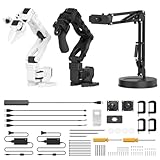
- 【End-to-End Imitation Learning】Hiwonder SO-ARM101 robot arm is an embodied intelligent hardware platform compatible with the Lerobot open-source framework. It provides developers with streamlined access to shared code, templates, and pre-trained models to explore the latest advancements in AI research.
- 【Dual-Camera Vision System】Equipped with both a gripper-mounted camera and an external camera, the system supports both precise manipulation and environmental awareness for accurate imitation learning.
- 【Hiwonder High-Performance Bus Servos】Featuring 12 high-torque bus servo motors with magnetic feedback, the Hiwonder SO-Arm101 robotic arm delivers smooth, stable motion, eliminating issues like power deficiency and jitter.
- 【Professional Control & Debugging】Integrated with the Hiwonder BusLinker V3.0 debugging board, the system supports servo scanning, real-time status monitoring, and trajectory control. The professional PC software simplifies device calibration and debugging, making it accessible for both researchers and hobbyists.
- 【Open-Source Compatibility】The SO-ARM101 robotic arm is designed to be fully compatible with the LeRobot open-source project. We acknowledge the contributions of the open-source community; all trademarks and copyrights belong to their respective owners.
What the strategy could change across the AI industry
Prices and infrastructure competition
If Grok can offer capable models at competitive API rates, it could increase pressure on other providers to lower prices or improve performance. That pressure would extend beyond model developers to cloud companies, chip suppliers, and data-center operators. But a listed token price does not show a provider’s production cost, margin, or cost per successful customer task. A cheaper model may require more retries or human correction.
Distribution and bundling
Grok’s presence on X—and the possibility of use through Tesla products—illustrates how consumer AI may be bundled with services people already use. Bundling can reduce the friction of trying a product, but it does not guarantee retention, paid subscriptions, or trust. The question for competitors is whether they can match the convenience without owning a social platform, vehicle fleet, or communications network.
Enterprise buying and concentration
Companies choosing an AI supplier will weigh reliability, security, privacy, compliance, support, latency, and integration alongside model capability and price. Some may value a tightly integrated provider; others may prefer multiple vendors to avoid dependence on one company or founder-controlled ecosystem. A supplier that combines models, distribution, cloud capacity, and connectivity could become useful infrastructure—but also a concentration risk for customers and governments.
Software work and autonomous machines
Coding and agentic models could automate parts of software development and research workflows, while vehicle and robotics applications could extend AI into physical work. The economic effect depends on successful tasks, not demonstrations: error rates, supervision needs, safety, and total cost determine whether automation changes productivity or simply shifts work to review and maintenance.
Risks investors, customers, and policymakers should watch
- Demand versus capital spending: Data-center investment can run ahead of paying demand, leaving costly capacity underused.
- Temporary model advantages: A benchmark lead or brief period of parity may not last as rivals respond. Independent results across coding, reasoning, multimodal tasks, factuality, and tool use matter more than a single selected score.
- Data quality and rights: Real-time posts can be noisy and manipulated; the legal basis, representativeness, user expectations, and safeguards for data use matter.
- Safety across different settings: Moderation for a social platform, reliability for enterprise software, and safety for cars or robots are distinct problems. One policy cannot substitute for environment-specific testing and incident reporting.
- Related-party governance: Tesla’s investment and possible collaboration framework make disclosure and oversight important. Investors need clarity on market terms, board independence, intellectual property, resource allocation, and which entity bears costs or receives benefits.
- Reputation and procurement: Some enterprises and public agencies may be cautious about relying on a provider tied to a polarizing founder or a platform with reputational volatility.
- Founder dependence: A strategy centered on one executive’s attention and capital-allocation decisions carries key-person and governance risks.
For claims about truth-seeking or real-time awareness, evaluate how a model handles contradictory sources, uncertainty, and corrections—not just how quickly it can retrieve a post. For high-stakes decisions, current social content should not be treated as verified evidence without independent checking.
The Tool Desk
Outbyte PC Repair FREEClear out junk files and repair common Windows errorsFree Scan →Outbyte Driver Updater FREEScan for outdated or missing drivers - takes under a minuteDriver Scan →Three plausible outcomes by 2028–2030
| Scenario | What would have to happen | What it would mean |
|---|---|---|
| Integrated AI winner | Grok remains competitive; X converts distribution into sustained use; infrastructure is well utilized; Tesla and SpaceX applications deliver practical value. | AI competition shifts further toward companies that coordinate models, compute, distribution, connectivity, and physical deployment. |
| Strong niche competitor | Grok wins useful consumer, coding, vehicle, or government use cases without dominating frontier AI overall. | The ecosystem becomes a meaningful supplier, while model leadership and customer demand remain contested. |
| Expensive strategic overreach | Infrastructure and expansion outpace monetization; model advantages prove temporary; governance or reputational issues limit adoption. | Vertical integration adds cost and complexity without producing durable economic advantage. |
How to judge whether the strategy is working
Model rankings alone are a poor scorecard. A stronger assessment tracks whether the integrated business produces durable value for users and investors:
- Independent capability: Compare performance across tasks and languages, including factuality, long-context reliability, and tool-use accuracy.
- Cost per useful result: Include retries, latency, review, and failures—not only the posted price per million tokens.
- Durable distribution: Look for retention, paid conversion, and enterprise customers beyond the initial audience on X or Tesla channels.
- Compute economics: Watch utilization, power and chip costs, training-versus-inference demand, and revenue generated by deployed capacity.
- Governance quality: Look for transparent related-party terms, clear ownership of data and intellectual property, and credible oversight.
- Physical deployment evidence: Require safety validation and real-world reliability before treating vehicle or robotics ambitions as commercial results.
- Orbital milestones: Distinguish a stated 2028 target from actual launches, operational capacity, and demonstrated cost competitiveness.
The most important question is whether coordination across these businesses creates an advantage that customers can see in lower total cost, more reliable products, or capabilities competitors cannot readily match. Until that is demonstrated, the ecosystem is a consequential strategic bet—not proof that vertical integration will win AI.
Quick Recap
Product prices and availability are accurate as of the date/time indicated and are subject to change. Any price and availability information displayed on Amazon at the time of purchase will apply.




