Amazon Prime Day 2026 is over in the U.S. The event ran June 23–26, 2026, so prices advertised during the sale should not be treated as live deals now. This guide explains what was worth watching, how to assess a camera bargain when prices change, and how to avoid paying more for a supposedly discounted bundle.
Amazon’s headline claim of electronics discounts of up to 30% applied across a broad category, not to every camera. A genuine deal depends on the exact model, configuration, seller, condition and recent selling price—not simply the crossed-out list price. Amazon’s official event announcement confirms the dates.
As an Amazon Associate I earn from qualifying purchases.
Prime Day camera deals are historical, not currently live
As of August 18, 2026, there are no 2026 Prime Day camera prices in this guide that should be assumed to remain available. Amazon’s prices, coupons and inventory can change after a sale ends, and a product page may switch between new, renewed, used and third-party listings.
Historical Prime Day examples are still useful for judging whether a future offer is attractive. For context, coverage of Prime Day 2025 listed the Canon EOS R100 kit at $549, the Panasonic Lumix S9 at $1,298, the Sony a7 IV at $2,198, the GoPro Hero 13 Black at $329 and the DJI Osmo Action 4 at $209. Those were sale prices for that event, not current prices. Engadget’s dated 2025 coverage provides the historical context.
#1 Best Overall

- 20.1MP stacked back illuminated 1" Exmor RS CMOS sensor w/ DRAM, large aperture 24-70mm1 F1.8-2.8 ZEISS Vario-Sonnar T lens
- Enhanced subject capture: wide 425 Phase/ 425 contrast detection points over 84 percent of the sensor
- Fast and accurate: Up to 11Fps continuous shooting at 24.2 MP raw with crisp, clear natural colors
- Multiple movie functions: Make time lapse movies or slow/quick motion videos without post processing
- Tiltable LCD screen: customizable for vlogging, still photography or recording a professional film
For a current purchase, compare Amazon with Best Buy, B&H Photo, Adorama and the manufacturer’s store. A previous-generation camera can be a better value than a newer model at a small discount, but only if its autofocus, video features, firmware support and lens ecosystem meet your needs.
Quick guide: which type of camera should you buy?
| Use case | Models worth watching | What matters most |
|---|---|---|
| First interchangeable-lens camera | Canon EOS R100 or R50; Sony ZV-E10 or a6400 | Kit-lens value, autofocus, controls and future lens cost |
| Travel and everyday photography | Canon EOS R50, Sony a6400, Panasonic Lumix G-series or S9 | Size, stabilization, battery life and available lenses |
| Vlogging and creator work | Sony ZV-E10/ZV-E10 II, ZV-1F, ZV-1 II or Panasonic S9 | Articulating screen, autofocus, audio, USB streaming and heat management |
| Full-frame hybrid work | Sony a7 III/a7 IV, Panasonic S5 II/S9 or Canon EOS R6 Mark II | Low-light performance, video limits, stabilization and lens prices |
| High-resolution professional work | Canon EOS R5/R5 Mark II or Sony a7R-series models | Resolution, storage, card format, heat management and workflow |
| Action and outdoor recording | GoPro Hero 12 or Hero 13 Black, DJI Osmo Action or Insta360 X4 | Stabilization, battery bundle, waterproofing, mounts and app workflow |
| Wildlife and sports | Choose based on the complete system, not just the body | Tracking autofocus, burst rate, buffer, telephoto availability, stabilization and weather sealing |
How to tell whether a camera discount is real
- Record the exact price and time. Note the price in U.S. dollars, the date and time in U.S. Eastern Time, and whether the price remains available after clicking through.
- Check the exact configuration. Body-only, one-lens kits, two-lens bundles, renewed products and gray-market imports can have very different prices.
- Compare with recent prices. A discount from Amazon’s reference price is not proof of a bargain. Prefer a comparison with the product’s recent normal price or a documented price history for the same configuration.
- Check the seller and fulfillment. Confirm whether the item is sold and shipped by Amazon, sold by a marketplace seller, or supplied as renewed or used stock. Review the warranty and return terms.
- Apply coupons before checkout. Some Amazon offers require manually selecting an on-page coupon. A displayed coupon price may not be the final price unless it is activated.
- Separate real savings from unwanted extras. A large bundle discount may include a low-value card, case or accessory you would not otherwise buy.
Do not use “lowest price ever” unless the claim identifies the U.S. market, seller, exact configuration and time period and is supported by reliable historical data. “Best deal” should mean a combination of meaningful savings and a product that fits the buyer’s use case.
Body-only versus kit: calculate the complete cost
A cheap camera body may be a poor bargain for a first-time buyer. Add the cost of the items required to use it:
- Compatible lens, if none is included
- Battery and charger, depending on the model
- Memory card
- Bag or protective case
- Spare battery or power bank
- Microphone, tripod or light for creator work
Compare the body-only price with the single-lens kit and twin-lens bundle. Identify the exact lens model and focal-length range. An inexpensive kit lens may be adequate for family, travel and daylight photography, but a buyer planning wildlife, portraits or low-light work may quickly need another lens.
Rank #2
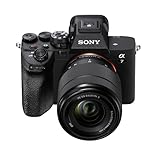
- 33MP1 full-frame Exmor R back-illuminated CMOS sensor
- 8x more powerful2, next generation BIONZ XR image processing engine
- Up to 4K 60p11 10-bit 4:2:2 w/ full pixel readout in all rec. formats
- Real-time Eye-AF for humans, animals, birds for photo and movie
- Advanced movie features; Focus Map16, Breathing Comp14., S-Cinetone, S-log3, HLGAF Assist17
System cost matters, too. Sony E/FE, Canon RF/RF-S, Panasonic Micro Four Thirds and Panasonic L-mount systems offer different body, lens and upgrade paths. The least expensive camera at checkout is not necessarily the least expensive camera to own.
What to check before choosing a mirrorless camera
- Sensor format: full-frame models generally offer more low-light and background-blur potential, while APS-C and Micro Four Thirds systems can be smaller and less expensive.
- Autofocus: subject detection and tracking are especially important for children, pets, sports and video.
- Stabilization: in-body stabilization can help with handheld stills and video, but it does not freeze a moving subject.
- Video capability: check resolution, frame rate, crop, codec, color depth and recording limits rather than relying on labels such as 4K or 8K.
- Cards: verify whether the camera uses SD, CFexpress Type A or CFexpress Type B and what speed rating high-bitrate video or burst shooting requires.
- Screen and viewfinder: an articulating screen helps with vlogging and unusual angles; a viewfinder is useful in bright light and for traditional photography.
- Battery and weather protection: these can matter more than a small resolution difference for travel or outdoor use.
Beginner and travel choices
The Canon EOS R100 and R50, Sony ZV-E10 and Sony a6400 are sensible models to watch in the entry-level category, but the recommendation changes with the price and kit. The R100 may appeal to a budget buyer, while newer or more creator-oriented models can offer a stronger screen, autofocus or video experience. Compare the included lens and the cost of the next lens before deciding.
Full-frame and higher-end choices
An older flagship can offer better construction, controls or viewfinder performance than a newer budget body. A newer midrange model may instead offer more modern autofocus or video features. Sony a7 III/a7 IV, Canon EOS R6 Mark II and Panasonic S5 II/S9 belong in different buying conversations, so do not rank them by discount percentage alone.
Free tools Windows power users keep installed
One-click scans. No signup required.
High-resolution models such as the Canon EOS R5/R5 Mark II and Sony a7R-series cameras make the most sense for large prints, substantial cropping or demanding professional workflows. They are poor value for casual users who will not use those capabilities and may require more expensive storage and processing equipment.
Rank #3

- 24.2MP APS-C Exmor CMOS Sensor and fast BIONZ X processor
- 4K Movie oversampled from 6k w/ full pixel readout, no pixel binning
- Product Showcase Setting transitions focus from face to object
- Background Defocus button instantly toggles between defocus effect on/off
- Easy live streaming w/ single USB cable and no extra hardware/software
Choosing a vlogging camera
For vlogging, examine the entire recording workflow. A camera with a fully articulating screen, reliable face and eye autofocus, USB webcam or streaming support, and practical microphone connectivity can be more useful than one with a higher headline resolution.
Sony’s ZV-1F and ZV-1 II use fixed lenses, making them simpler but less flexible. The ZV-E10 and ZV-E10 II use interchangeable lenses, which expands creative options but adds cost. Panasonic’s S9 can appeal to creators who want a full-frame system, although the body-only price is only one part of the investment.
Check the lens field of view, headphone monitoring, included microphone or adapter, stabilization, overheating behavior and recording limits. Do not assume that a camera marketed for creators is ideal for long, uninterrupted recordings in a warm environment.
Do these 3 things before closing this tab:
1Scan for outdated or missing drivers - takes under a minute2Clear out junk files and repair common Windows errors3Fix the driver behind crashes, sound loss and screen glitchesChoosing an action camera
GoPro, DJI and Insta360 serve overlapping but different needs. GoPro is the conventional action-camera choice; DJI competes strongly on stabilization, sensor and battery-oriented bundles; Insta360 is particularly relevant when 360-degree capture and later reframing are priorities. Historical comparison coverage from Engadget’s 2024 Prime Day guide illustrates these distinctions, but current model prices must be checked separately.
Rank #4

- 33MP full-frame Exmor R back-illuminated CMOS sensor.Operating temperature : 0 to 40 °C (32 to 104 °F), Rated input : 100 - 240 V , 50/60 Hz, 0.2 A.
- 8x more powerful, next generation BIONZ XR image processing engine
- Up to 4K 60p 10-bit 4:2:2 w/ full pixel readout in all recording formats
- 7K oversampling full-frame 4K 30p 10-bit 4:2:2 w/ no pixel binning
- Beautiful color expression made simple with S-Cinetone color profile
For any action-camera deal, verify:
- Maximum resolution and frame rate, including crops and stabilization limits
- Waterproof depth and duration, and whether a housing is required
- Battery life in cold and hot conditions
- Mounting ecosystem and the mounts included in the bundle
- Lens or field-of-view options
- Phone-app and editing requirements
- Number of batteries, charging case and other included accessories
A low-priced bundle is not necessarily useful if it lacks spare batteries, a protective or waterproof case, or the mount needed for your activity.
Independent reader supportYour contribution helps us test, update, and keep practical guides available for everyone.Accessories that can change the real price
Memory cards
Match the card to the camera. Check UHS-I or UHS-II requirements, V-rating, CFexpress type and supported capacity. A cheap card that cannot sustain the camera’s video bitrate or burst-writing speed is a false economy. Also budget for a compatible card reader when transferring large files.
Power
Travel and video buyers may need a spare battery, charger or USB-C power bank. Avoid unverified third-party batteries when reliability, warranty or professional work matters.
Audio, support and protection
Vloggers may benefit more from a compatible wireless or shotgun microphone, small LED light and tripod than from a minor body upgrade. For travel, a protective bag and spare battery may be more valuable than a large accessory bundle filled with generic items.
Best Value
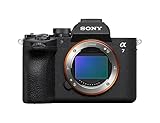
- A partially stacked Exmor RS CMOS image sensor features high-speed circuitry above and below the sensing layer. Sensor readout is approx. 4.5 x*1 faster than the α7 IV, maximum shutter speed is 1/16000 s, *2 blackout-free bursts at up to 30 fps are available with AF/AE tracking, *3 and video can be recorded at 4K 120p.*4 This advanced sensor contributes up to an unprecedented 16 stops of dynamic range*5 with smooth gradations.
- The new BIONZ XR2 processing engine delivers dramatic improvements in image and sound quality, communication, integration, and operation. It also incorporates AI-based Real-time Recognition AF and*6 Real-time Tracking, *7 plus accurate, stable color reproduction. A lightweight RAW format has been included, while user interface, networking, and file management functions have been refined for smooth workflow.
- The new 33.0-megapixel*8 sensor and BIONZ XR2 processing engine work together to deliver up to 16 stops of dynamic range. *9 Lifelike gradations from shadows to highlights enable highly effective HDR processing when needed, and effective noise reduction applied at all sensitivities achieves high resolution throughout the ISO 100-51200 still and movie range (expandable to 50-204800 for stills and 100-102400 for movies).
- An advanced optical stabilization unit, gyro sensors, and algorithm accurately detect and correct image shake. Up to 7.5-step central and 6.5-step peripheral stabilization*14 allows handheld shooting without having to boost sensitivity. The body also works with compatible lenses*15 for even better stabilization. Even shake that is amplified at telephoto focal lengths is effectively suppressed.
- AI processing in the new BIONZ XR2 processing engine improves recognition by approximately 30% over the α7 IV. Human pose estimation technology uses detailed form and pose data to achieve reliable human eye recognition as well as accurate recognition of body and head position, even with challenging subjects. Multiple subjects can also be recognized, making it possible to track the desired subject.
Lenses and filters
Lens discounts should be judged by mount compatibility and intended use. Confirm whether a lens is Sony E or FE, Canon RF or RF-S, or compatible with Panasonic’s Micro Four Thirds or L-mount system. Filters must match the lens’s filter-thread diameter.
Prime Day and checkout pitfalls
- Prime-only pricing: confirm that the offer requires Prime and decide whether membership has value beyond this one purchase. Amazon’s Prime page has the current membership information.
- Marketplace substitution: check the seller, fulfillment, warranty, return policy and product condition before paying.
- Renewed or used stock: keep these offers separate from new-product deals and inspect the stated condition and return rights.
- Gray-market imports: regional warranties, chargers, menus and manufacturer support may differ.
- Variant pricing: color, storage capacity and lens configuration can change the price after the product page loads.
- Firmware-dependent features: confirm whether advertised autofocus, recording or compatibility features require a particular firmware version.
- Waterproof claims: look for a specified depth and duration rather than accepting “waterproof” without conditions.
When should you buy or wait?
Buy when the exact configuration meets your needs, the seller and warranty are acceptable, and the price is meaningfully below its recent normal level. You do not need a universal discount threshold: a modest reduction on a current camera that rarely falls in price can be better than a dramatic reduction on an obsolete or unwanted kit.
Wait when the offer depends on an inflated reference price, leaves out a necessary lens or card, comes from an unfamiliar marketplace seller, is renewed or gray-market when you need manufacturer support, or is a high-end body whose features you will not use. For expensive purchases, compare competing retailers and consider whether a previous-generation model offers the same practical capabilities.
Crashes, No Sound, or Screen Glitches?
Random freezes, missing sound and display glitches usually trace back to one bad driver. Find and replace yours safely.Free scan · under a minutePC Slower Than It Used to Be?
A free scan shows the junk files, broken settings and background clutter dragging Windows down - then fixes them in one click.Free scan · Windows 10 & 11Amazon’s event materials mention deal alerts, personalized deal guides and price-history features. These can help monitor a future sale, but they do not make every product a verified historical low. Amazon’s 2026 deals preview should be read as event-level information, not a guarantee about a particular camera.
How this page should be maintained
A Prime Day deal page should show the exact configuration, price, discount, seller, condition and a last-checked timestamp for every live offer. Once a deal expires, mark it sold out or remove it. Keep historical prices only in a clearly dated archive and never present them as current.
Amazon’s 2026 event also ran in several markets, but dates and offers varied by country. The guidance here assumes the U.S. Amazon store and U.S. pricing. Amazon’s international announcement lists the broader event scope.
The Bottom Line
Bottom line: Amazon Prime Day 2026 camera deals are no longer live, and historical Prime Day prices should not be used as current quotes. For your next purchase, compare the exact kit and seller against recent prices, calculate the full system cost, and choose the camera that fits your use—not simply the one with the biggest advertised discount.
What’s actually slowing this PC down?
Pick the symptom - the matching free tool is one click away.
Quick Recap
Product prices and availability are accurate as of the date/time indicated and are subject to change. Any price and availability information displayed on Amazon at the time of purchase will apply.




