Quick wins for a faster PC:
Fix the driver behind crashes, sound loss and screen glitchesFind Drivers →Repair Windows errors before they cause bigger problemsFix Now →An effective business report helps a specific reader understand an issue and decide what to do. Start by defining the decision the report must support, then gather relevant evidence, analyze what it means, and connect the findings to practical recommendations. There is no single required format: follow the commissioning brief or your organization’s style guide first.
What a business report is—and what it is for
A business report is a structured, researched document that analyzes a business issue and may recommend a course of action. CIPD describes it as a document in which the author analyzes an issue and gives recommendations based on that analysis (CIPD guidance). Its value is not simply collecting facts; it makes relevant information usable for a manager, client, board, or other decision-maker.
Reports differ because their audiences and purposes differ. A routine status report, an evaluation of alternatives, and a proposal need not share the same headings. If a course assignment, client brief, or organizational template specifies requirements, use those rather than treating a generic outline as mandatory. See the guidance from Massey University and Monash University.
Start with the reader and the decision
Before researching or drafting, write a one-sentence purpose statement: what issue is being examined, who commissioned the report, and what decision or action should follow? Then clarify what the intended reader already knows, what they need to know, and how much detail will help them act.
What’s actually slowing this PC down?
Pick the symptom - the matching free tool is one click away.
#1 Best Overall

- Look Professional: Make a good first impression with these clear front report covers! They are the perfect choice for letters, spreadsheet, proposal, portfolio, and resume for your job interview
- Keep Documents Safe: Don't take the chance of spills or dirt ruining your hard work. Our report covers keeping your papers dry and in pristine condition until submission time
- Stay Organized: Store your important documents in a secure and accessible place. The transparent front of our report covers with 3-prong fasteners clear front lets you quickly check the title page for easy sorting
- Big Space for More Files: These clear folders for documents plastic have a 0.5" capacity and can hold up to 100 punched sheets. Back pocket 2.5" can be used for additional materials
- Made to Last: Our report cover is made with 0.3mm thick textured polypropylene back and 0.18mm smooth poly front. These presentation folders are spill-proof and difficult to stain
- Audience: Identify the primary reader and any other stakeholders who may use the report.
- Purpose: State the question the report will answer, rather than a broad topic.
- Scope: Set boundaries, such as the alternatives, time period, department, or location covered.
- Constraints: Confirm the required length, deadline, format, and available evidence; disclose assumptions that affect the analysis.
This scoping step prevents a report from becoming a collection of interesting but irrelevant information. The University of Nevada, Reno’s business-report guide also emphasizes purpose, audience, and organization.
Choose a structure that fits the job
A straightforward report often uses the sections below, but include only those that serve the report’s purpose or are required by the brief.
| Section | What it does |
|---|---|
| Title page | Identifies the report, author, recipient, and date when a formal or longer document needs them. |
| Executive summary | Gives a standalone account of the purpose, approach, main findings, conclusions, and recommendations for readers who need the decision-relevant message quickly. |
| Contents | Helps readers navigate a longer report. |
| Introduction or background | Explains the purpose, context, scope, process, and how the report is organized. |
| Findings and analysis | Presents relevant evidence and explains its significance, implications, and limits. |
| Conclusion | Draws together the conclusions supported by the analysis. |
| Recommendations | Specifies feasible actions that follow from the conclusions. |
| References and appendices | Credits sources and provides useful supporting material that would interrupt the main discussion. |
For a proposal or evaluation, descriptive headings can be clearer than generic labels: for example, “Current Situation,” “Evaluation of Alternatives,” “Risk Assessment,” or “Proposed Initiative.” These can do the work of traditional discussion and recommendation sections. Massey University’s guidance explains how report structures vary by purpose.
Rank #2

- Package Includes: A set of 5 clear report covers with sliding bar. These folders are the perfect choice for organizing and presenting your work resume, school projects, presentations, documents, proposals, and portfolios
- Report Covers Size: The clear report covers measure 8.9 * 11.2 inches, they are great fit for both A4 size and US letter size paper (11 x 8.5 inches). No need for hole-punching and easy-to-load
- 70-Sheet Capacity: The clear report covers can hold approximately 70 sheets of paper. The sliding bars have a width of 10mm, ensuring that they won't easily slide off the clear report cover
- Premium Material: The Clear Front & Back Cover design help you easy to locate the required documents and information. These report covers are made of durable clear PP plastic material, which can protect reports from bends, dings, surface moisture
- Wide Applications: Clear report covers with sliding bar are suitable for use in schools, homes, and businesses. You can use them as homework folders, presentation folders. They are designed to keep your reports, school projects without damage
Decide where to put the conclusion
Use a direct, decision-first order when the reader needs the result or recommendation up front, with the detailed reasoning afterward. An evidence-first order can suit a contentious finding or situation where readers need to follow the reasoning before reaching the conclusion. Follow any required order in the brief. These are structural choices, not competing universal rules.
Build the argument from evidence
Gather information relevant to the question: this may include organizational data, credible external research, industry material, or other sources suited to the decision. Track source details as you work, and identify limitations or assumptions that could change how the findings should be interpreted. An internal business report does not automatically need an academic literature review; include one only when the purpose and audience call for it.
Make the reasoning visible by moving from evidence to analysis, then to conclusions and recommendations. A finding says what the evidence shows; analysis explains why it matters, what implications follow, and what it can or cannot establish. A recommendation should be both feasible and traceable to that reasoning rather than appearing as an unsupported preference. For guidance on this evidence-to-recommendation relationship, see Massey University.
Rank #3

- REPORT COVERS BULK: A set of 42 clear report covers with sliding bar. These folders are the perfect choice for organizing and presenting your presentations, school projects, work resume, documents, proposals, and portfolios
- STANDARD SIZE: The clear report covers measure 8.9 * 11.2 inches, they are fit for both A4 size and US letter size paper (11 x 8.5 inches). No need for hole-punching and easy-to-load
- 70-SHEET CAPACITY: The clear report covers can hold approximately 70 sheets of paper. The sliding bars have a width of 10mm, ensuring that they won't easily slide off the clear report cover
- PREMIUM MATERIAL: The Clear Front & Back Cover design helps you easily locate the required documents and information. These report covers are made of durable clear PP plastic material, which can protect reports from bends, dings, surface moisture
- WIDE USAGE: Clear report covers with sliding bar are suitable for schools, homes, and businesses. You can use them as homework folders, or presentation folders. They are designed to keep your reports, and school projects without damage
Write the main sections for a busy reader
Introduction or background
Set out the report’s purpose and context, define its scope, explain the process or approach used, and give readers a useful map of what follows. Do not use the introduction as a substitute for the decision-focused summary.
Findings and analysis
Organize information under headings that tell readers what each section covers. Keep each paragraph centered on one main idea. Present only evidence that helps answer the report question, and interpret it rather than leaving readers to infer its importance.
Recommended Free Tools
Use a table or figure when it makes a comparison, pattern, or process easier to understand than prose alone. Give each visual a clear number and title, refer to it in the text, and cite the source of borrowed data or imagery. University of Nevada, Reno and Monash University both advise clear organization and effective use of visuals.
Rank #4
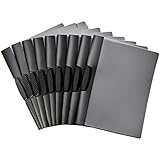
- 10-pack of clip report covers gives reports a sleek professional appearance
- PP plastic front cover helps protect papers from damage and offers a clear view of the title page
- Black back cover; black swing clip holds everything together and offers easy open and closure
- Won’t damage the edges of paper—no need for hole-punching; ideal for school, home, or work
- Measures 9 by 0.4 by 11.45 inches (LxWxH); the product is a 10-pack of swing clip report covers (9" x 11.45") that fits letter-size paper and holds up to 30 sheets (20lb)
Conclusion and recommendations
Use the conclusion to state what the analysis supports; do not introduce a new claim at this stage. Then set out actions that follow from those conclusions. Where practical, make each recommendation specific enough to guide a decision or next step.
Independent reader supportYour contribution helps us test, update, and keep practical guides available for everyone.Write the executive summary after the report
Although it appears near the front, draft the executive summary once the body, findings, and recommendations are settled. It should stand on its own, covering the report’s purpose, approach, principal findings, conclusions, and recommendations in a way that lets a time-constrained reader grasp the central message. Follow the same overall organization as the report, and avoid simply repeating the introduction.
There is no universal summary length. The University of Wisconsin–Madison guide suggests five to ten percent of the report’s length; treat that as that guide’s recommendation, not a rule for every workplace or assignment. Keep the summary proportionate to the report and any instructions you have been given.
Outdated Drivers Are Slowing You Down
One free scan finds every outdated or missing driver and matches the right update for your exact hardware.Free scan · exact hardware matchWindows Errors? Fix Them Before They Spread
Repair common Windows errors and clear accumulated junk for a smoother, more stable PC - no reinstall needed.Free scan · no reinstallBest Value
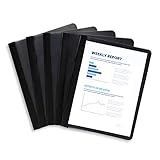
- Make your reports, school projects and other documents look professional with this bulk 25 pack of black plastic report covers.
- Designed to keep your important documents and papers safe, these flexible plastic report folders feature a clear PP plastic front and a black PP plastic back and side
- Designed to keep your most important documents organized, these plastic report covers feature 3 prongs in that will keep your contents secure and in place.
- Letter size plastic folder covers will hold standard printouts, papers, and other 8.5 x 11 inch sized documents.
- Made from durable 0.42mm PP plastic, these ensure these 3 prong report covers won’t tear or stain with use over time.
Revise and check before sending
Review the report as a decision-making document, not just as a piece of writing. Use this checklist:
- Does it answer the question it was commissioned to address?
- Does the structure suit the reader, purpose, and required format?
- Does each section have a clear job, and does each claim have adequate support?
- Do conclusions follow from the analysis, and do recommendations follow from the conclusions?
- Are headings informative, wording concise, and terminology consistent?
- Are tables and figures labeled, explained in the text, and credited where needed?
- Are sources acknowledged, assumptions or material limitations explained, and appendices genuinely useful?
For further guidance on report organization and documentation, consult ANU’s referencing resources alongside your organization’s own citation requirements.
Quick Recap
Product prices and availability are accurate as of the date/time indicated and are subject to change. Any price and availability information displayed on Amazon at the time of purchase will apply.




