Do these 3 things before closing this tab:
1Fix the driver behind crashes, sound loss and screen glitches2Repair Windows errors before they cause bigger problems3Scan for outdated or missing drivers - takes under a minuteCRN’s 2022 Internet of Things 50 names 10 hardware companies spanning the entire IoT stack: Advantech, Cisco Systems, Dell Technologies, Eurotech, Hewlett Packard Enterprise, Intel, Lantronix, Lenovo, Nvidia and Qualcomm. They are not ten directly competing products. Together, they supply chips, sensors, gateways, networks, edge computers, servers and integrated platforms that collect data, process it near its source and connect it to centralized systems.
What the 2022 IoT hardware list represents
Internet of Things deployments depend on several hardware layers. Sensors capture conditions such as location, temperature or motion. Gateways and edge computers filter, store and analyze data near the device. Networks move information between sites, while servers, storage and data-center infrastructure handle larger-scale processing. As more analytics and artificial intelligence move to the edge, the choice of physical hardware affects latency, reliability, security and operating cost.

CRN’s list is therefore best used as a map of the market, not a like-for-like product ranking. The right supplier depends on the layer you need, the environment in which equipment will operate, your connectivity requirements and how much software or engineering support you want with the hardware.
The 10 companies and where they fit
| Company | Primary hardware emphasis | Notable IoT capabilities in CRN’s 2022 profile |
|---|---|---|
| Advantech | Industrial gateways and edge computers | Nvidia-certified edge-AI computer for healthcare; rugged, waterproof edge-intelligence gateway for harsh environments |
| Cisco Systems | Industrial networking and connectivity | Endpoint connection and monitoring, operational automation and mobile IoT strengthened by the 2020 Fluidmesh Networks acquisition |
| Dell Technologies | Edge gateways, servers and hyperconverged infrastructure | Safety and Security architecture that combines data streams to support planning and action |
| Eurotech | Edge computers and end-to-end systems | Everyware Cloud, asset-monitoring gateways and high-performance edge computers for AI workloads |
| Hewlett Packard Enterprise | Converged edge infrastructure | GreenLake edge-to-cloud platform and Edgeline systems for connected, protected IoT deployments |
| Intel | Processors and commercial IoT platforms | 12th Gen Intel Core and Xeon D-1700/D-2700 processors; IoT RFP Ready Kits organized around industry use cases |
| Lantronix | Connectivity, sensors, trackers and turnkey systems | Wired, Wi-Fi and cellular products combined with SaaS, engineering services and intelligent hardware |
| Lenovo | Commercial IoT systems | Smart-building and smart-retail solutions developed with partners across multiple industries |
| Nvidia | Embedded AI computing | Jetson Nano developer kit, Jetson embedded platforms and JetPack SDK for robotics, edge devices and AI-IoT systems |
| Qualcomm | Processors and wireless connectivity | Snapdragon platforms with cognitive computing, Bluetooth, Wi-Fi, GNSS and LTE modem capabilities |
Company-by-company guide
Advantech: industrial edge hardware
Taiwan-based Advantech focuses on industrial IoT through industry-specific applications, a co-creation model and its core hardware competencies. CRN highlights an Nvidia-certified edge-AI computer aimed at healthcare and a rugged, waterproof gateway designed for harsh environments. It is a natural candidate when equipment must combine local intelligence with industrial durability.
#1 Best Overall
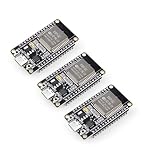
- Dual-Core Performance Up to 240 MHz: Run sensor processing, wireless communication, automation logic and connected-device tasks on a 32-bit dual-core ESP32 platform designed for responsive embedded and IoT projects
- Built-in Wi-Fi and Bluetooth 4.2: Connect to 2.4 GHz Wi-Fi networks or use Bluetooth Classic and BLE for wireless sensors, smart devices, remote controls, home automation and other connected projects
- Flexible Power-Saving Modes: ESP32 power-management features support dynamic clock scaling and low-power operating modes, helping developers reduce energy use in compatible sensing, monitoring and connected-device applications, suitable for battery-powered Internet of Things (IoT) devices.
- USB-C Programming with CP2102: Connect through USB-C for power, sketch uploads and serial monitoring, while GPIO, UART, SPI and I2C interfaces support sensors, displays, motor drivers and other modules (USB-C cable not included)
- Over-the-Air Update Support: Configure OTA functionality through a compatible ESP-32 software framework to update deployed firmware over Wi-Fi without reconnecting the board by USB for every revision
Cisco Systems: connecting moving and critical assets
Cisco approaches IoT primarily through industrial networking. Its strategy connects and monitors endpoints, automates operations and turns device data into operational decisions. The 2020 acquisition of Fluidmesh Networks expanded Cisco’s capabilities for critical mobile and on-the-move applications, where wireless links and dependable connectivity are central requirements.
Dell Technologies: infrastructure at the edge
Dell supplies edge gateways, edge-focused servers and hyperconverged infrastructure. Its IoT Solution for Safety and Security combines multiple data streams so organizations can use security information for planning and response. Dell is particularly relevant when an IoT project needs enterprise compute and storage rather than a small standalone controller.
Eurotech: hardware plus an IoT platform
Eurotech combines edge computers with software and services. Its Everyware Cloud platform, asset-monitoring gateways and high-performance AI edge computers support deployments that need a managed path from field equipment to applications. This integrated approach can reduce the number of separate suppliers involved in an end-to-end project.
Rank #2

- Certified & Future-Ready: Espressif-certified ESP32-WROOM-32E ensures full hardware compatibility and lifetime firmware support. Upgraded 8MB Flash handles IoT data and OTA updates.
- Dual-Core Speed: 240MHz dual-core processor runs Wi-Fi/BLE and sensors 2x faster. 38 GPIO pins (10 RTC) support SPI/I2C/UART for LCDs, motors, and industrial sensors.
- Plug & Play Dev: USB-C driver pre-installed: upload code instantly on Windows/Mac/Linux. Works with Arduino IDE, MicroPython, and Espressif IDF.
- All-Environment Ready: Run Wi-Fi smart switches (Home Assistant) and BLE tracking on one board. Industrial-grade stability (-40°C~85°C) for outdoor/automated systems.
- Advantages: The ESP32 development board offers high performance, low power consumption, and rich wireless connectivity, making it suitable for developers of all levels, especially beginners.
Hewlett Packard Enterprise: converged edge-to-cloud systems
HPE provides infrastructure, applications and security capabilities for connecting devices and protecting IoT data. GreenLake extends its consumption-oriented edge-to-cloud model, while Edgeline converged edge systems bring compute and other infrastructure closer to connected equipment. HPE fits organizations that want an enterprise platform spanning remote sites and cloud operations.
Intel: the processor layer and packaged designs
Intel supplies processors used in IoT systems, including 12th Gen Intel Core products for IoT applications and Xeon D-1700 and D-2700 processors. Its IoT RFP Ready Kits package commercial-grade components around industry use cases, which can help buyers move from a processor selection to a more complete reference design.
Lantronix: connectivity and turnkey deployment
Lantronix combines SaaS, connectivity, engineering services, intelligent hardware and turnkey systems. Its portfolio includes wired, Wi-Fi and cellular connectivity as well as sensors and trackers. That breadth makes it useful when a project needs both the communications hardware and practical integration support. Lantronix CEO Paul Pickle said the company was honored to be included among CRN’s Top 10 Coolest Hardware Companies in the 2022 list.
Rank #3
Lenovo: commercial IoT for buildings and retail
Lenovo’s Commercial IoT group targets smart buildings and smart retail. It works with partners in real estate, retail, manufacturing, healthcare, education and transportation, making the company more relevant to multi-site commercial deployments than to a single experimental sensor project.
Nvidia: a widely recognized edge-AI development route
Nvidia’s Jetson family is designed for embedded applications, robotics, edge devices and AI-enabled IoT systems. The NVIDIA Jetson Nano developer kit gives developers a concrete starting point for prototyping, while the JetPack SDK supplies software tools for edge and IoT AI workloads. Kit contents, availability and regional inventory can change, so buyers should verify those details with the current seller before ordering.
Crashes, No Sound, or Screen Glitches?
Random freezes, missing sound and display glitches usually trace back to one bad driver. Find and replace yours safely.Free scan · under a minuteWindows Errors? Fix Them Before They Spread
Repair common Windows errors and clear accumulated junk for a smoother, more stable PC - no reinstall needed.Free scan · no reinstallQualcomm: efficient compute with wireless built in
Qualcomm targets smart-body, smart-home and smart-city products with Snapdragon processors and integrated communications technologies. Depending on the platform, capabilities include cognitive computing, Bluetooth, Wi-Fi, GNSS and LTE modems. This combination is suited to compact products that need local intelligence and several wireless positioning or communications options.
Rank #4

- 2.4GHz Dual Mode WiFi + Bluetooth Development Board
- Support LWIP protocol, Freertos
- SupportThree Modes: AP, STA, and AP+STA
- Ultra-Low power consumption, Compatible with Arduino IDE
- ESP32 is a safe, reliable, and scalable to a variety of applications
How to compare these companies for a real deployment
1. Identify the hardware layer
Start by deciding whether you need a processor, development board, sensor, gateway, industrial computer, network connection, edge server or a complete system. Intel, Nvidia and Qualcomm are strongest at compute platforms; Cisco emphasizes networking; Dell and HPE emphasize edge infrastructure; Advantech and Eurotech emphasize industrial edge systems; Lantronix spans connectivity and turnkey equipment.
2. Define where processing occurs
Applications requiring rapid responses or limited backhaul often need local edge processing. Compare processor capability, AI acceleration, memory, storage and software support rather than looking only at a chip name. Nvidia’s Jetson products and Advantech’s Nvidia-certified system are explicitly positioned for edge AI, while Dell, HPE and Eurotech address larger edge-computing deployments.
3. Match connectivity to the site
Factories and buildings may require wired Ethernet; mobile assets may need cellular; nearby devices may use Wi-Fi or Bluetooth; location-aware products may require GNSS. Cisco, Lantronix and Qualcomm have especially broad connectivity relevance, but the exact radios, carrier support and regional certifications must be checked for the specific model.
Best Value
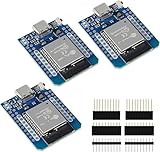
- D1 Mini NodeMCU Type-C ESP32 WLAN WiFi Bluetooth IoT Development Board 5V Compatible for Arduino
- Designed with ultra-low power technology, it offers the full range of performance and features of the ESP32 chip. The pin arrangement provides compatibility with the modules developed for the D1 Mini ESP8266 while also offering fast WLAN, enhanced GPIO, Bluetooth functionality, and with its higher performance, a wider range of applications.
- 100% compatible with Arudino IDE, Lua and Micropython, it shows robustness, versatility, and reliability in a wide variety of applications and power scenarios.
- All I/O pins have interrupt, PWM, I2C and one-wire capability, except the pin DO.
- Designed with ultra-low power technology, it offers the full range of performance and features of the ESP32 chip. The pin arrangement provides compatibility with the modules developed for the D1 Mini ESP8266 while also offering fast WLAN, enhanced GPIO, Bluetooth functionality, and with its higher performance, a wider range of applications.
4. Check environmental and lifecycle requirements
Outdoor, mobile and industrial installations can require waterproofing, rugged enclosures, temperature tolerance, long availability windows and remote management. Advantech’s rugged waterproof gateway is the clearest example in this list of hardware designed for harsh conditions. Enterprise infrastructure vendors may instead be a better fit for secured server rooms, retail sites or controlled facilities.
5. Decide how much integration you want
Buying individual components provides flexibility but increases engineering work. Eurotech, HPE, Dell and Lantronix offer combinations of hardware, software or services that can simplify deployment. Intel’s RFP Ready Kits provide another packaged route for commercial use cases. Integrated systems can narrow component choice, so confirm that the platform supports your preferred sensors, protocols and cloud environment.
Is there an IoT development kit you can buy?
Yes. CRN specifically identifies Nvidia’s Jetson Nano developer kit as an option for embedded, robotics, edge-device and AI-IoT prototyping. It is the clearest development-kit purchase associated with this list. A development kit is not automatically production hardware: before deployment, verify enclosure and environmental ratings, long-term availability, security updates, power requirements, connectivity certifications and the software support period.
What this list means for buyers
The 2022 CRN selection shows why “IoT hardware company” is a broad category. A connected product may rely on Qualcomm or Intel compute, Cisco or Lantronix connectivity, an Advantech or Eurotech gateway, and Dell or HPE infrastructure behind the site. Nvidia addresses a particularly visible edge-AI and prototyping segment, while Lenovo focuses on commercial environments such as buildings and retail.
Free tools Windows power users keep installed
One-click scans. No signup required.
The practical choice is to map your requirements to the layer and deployment conditions first, then compare vendors within that role. A company recognized for processors is not necessarily an alternative to a rugged gateway maker, and a development kit should not be evaluated as if it were a finished industrial system.
Quick Recap
Product prices and availability are accurate as of the date/time indicated and are subject to change. Any price and availability information displayed on Amazon at the time of purchase will apply.




