Recommended Free Tools
Short answer: A proposed California class action alleged that Tesla software caused some vehicles to record more miles than they actually traveled, potentially pushing owners past mileage-capped warranties early. The complaint said the alleged system used energy-consumption data, GPS or vehicle-position data, driving patterns, predictive calculations, and efficiency multipliers.
Those are allegations—not established facts. Tesla disputed the technical theory, said its odometers use conventional automotive measurement systems, and cited an inspection in which the displayed mileage and mileage values derived from the drive units were within approximately 0.2% of one another. No independently verified, fleet-wide test identified in the public sources establishes that Tesla operated a company-wide scheme to inflate odometers or use predictive algorithms to void warranties.
As an Amazon Associate I earn from qualifying purchases.
Secondary reports published in March 2026 said the federal court dismissed the case. However, the publicly accessible docket mirror available for this review ends on September 26, 2025, and the underlying dismissal order was not independently retrieved. The safest description is therefore a reported dismissal pending confirmation from the court’s actual order—not a judicial finding that every Tesla odometer is accurate.
Case status note — as of August 10, 2026: Secondary reports say the court granted Tesla’s motion to dismiss around March 2026. Before treating that as a final outcome, readers should verify the order through PACER or the court’s ECF system and check whether the dismissal was with prejudice, without prejudice, or with leave to amend, whether judgment was entered, and whether an appeal followed.
#1 Best Overall

- 【HIGH QUALITY】: made of premium PU leather and durable vinyl PVC, strong and firm enough for your long-term use.
- 【SAFE PROTECTION】: this registration and insurance card holder keeps your document free from tearing, bending or being ruined by moisture.
- 【TIME SAVER】: clear inner pouches design helps you identify the correct document quickly with one glance.
- 【WIDE RANGE OF USES】: can store your bills, insurance cards, vehicle registration and other essential paperwork.
- 【SPECIAL GIFT】: beautiful sleek and trim design. This car document holder is a good gift for yourself, your lover, friends and family.
What the lawsuit actually claimed
The case was brought by Nyree Hinton after he said the odometer in a used 2020 Tesla Model Y accumulated miles far faster than his commute and ordinary driving appeared to justify. His complaint alleged that Tesla did not rely solely on a conventional distance-measurement system. Instead, it claimed Tesla used software that could combine:
- energy-consumption information;
- GPS or other vehicle-position data;
- historical driving patterns;
- predictive algorithms;
- driver-behavior or efficiency multipliers; and
- software recalibration.
According to the complaint, these inputs could cause the displayed odometer to show more miles than the vehicle had actually traveled. The complaint alleged that inflated mileage could benefit Tesla by causing:
- basic warranties to expire sooner;
- lease customers to incur mileage charges earlier;
- owners to pay for repairs that might otherwise have been covered;
- customers to buy extended warranties; and
- vehicles to suffer additional depreciation or resale-value damage.
That theory is the source of the viral shorthand that Tesla used “predictive algorithms” to void warranties. It is not evidence that Tesla admitted using those algorithms for odometer calculations. The complaint’s theory still had to be supported with technical evidence and survive Tesla’s legal challenges.
Quick wins for a faster PC:
Scan for outdated or missing drivers - takes under a minuteDriver Scan →Clear out junk files and repair common Windows errorsFree Scan →Hinton’s Model Y timeline
Hinton’s experience was the central factual example in the complaint. Each point below describes what the complaint alleged or what Hinton said; it is not an adjudicated finding.
| Date or period | What the complaint alleged |
|---|---|
| Approximately December 9, 2022 | Hinton purchased a used 2020 Model Y from IQautos in Marietta, Georgia, with approximately 36,772 miles showing. |
| December 12, 2022 to February 6, 2023 | He said the vehicle recorded an average of 55.54 miles per day, despite his estimate that his ordinary driving was about 20 miles per day. |
| February 2023 | The vehicle underwent suspension-related service, according to the complaint. |
| March 26 to June 28, 2023 | Hinton said the reported mileage increased at an average rate of 72.35 miles per day. The complaint also referred to four additional service visits during the March-to-June period. |
| Approximately July 7, 2023 | The odometer allegedly reached 50,000 miles, the mileage limit for the basic warranty described in the complaint. |
| Approximately January 24, 2024 | When Hinton returned for additional suspension work, he said Tesla treated the repair as customer-paid rather than warranty-covered. |
| February 10, 2025 | The proposed class action was filed in Los Angeles County Superior Court as Case No. 25STCV03746, according to the complaint and removal materials. |
| April 2, 2025 | The case was removed to the U.S. District Court for the Central District of California, where it became Nyree Hinton v. Tesla, Inc. et al., No. 2:25-cv-02877. |
| February 19, 2026 | Secondary reporting said Tesla filed a motion to dismiss. |
| March 2026 | Secondary reports said the court dismissed the case. The underlying order and its precise terms require verification. |
The complaint’s warranty description concerned a basic warranty lasting four years or 50,000 miles, whichever came first. It separately described an eight-year or 120,000-mile battery and drive-unit warranty for the applicable long-range Model Y. Those terms should not be generalized to every Tesla: coverage varies by model, configuration, component, date of first delivery, and warranty document.
What does the 117% figure mean?
The complaint compared mileage recorded by Hinton’s Model Y over a six-month period with mileage accumulated by three vehicles he had owned previously:
| Measure | Miles |
|---|---|
| Mileage recorded by the Model Y | 13,228 |
| Average mileage recorded by three previous vehicles | 6,086 |
| Difference | 7,142 |
| Difference relative to the historical benchmark | Approximately 117.3% |
The arithmetic is straightforward: 7,142 divided by 6,086 is approximately 1.173. But the result means the Model Y recorded about 117% more miles than Hinton’s historical comparison benchmark. It does not mean a controlled test proved that Tesla’s odometer was 117% inaccurate.
The comparison involved different vehicles, potentially different routes, different periods, different driving patterns, service downtime, and the possibility that the vehicles were used differently. A driver’s estimate of a commute or comparison with prior vehicles can identify an anomaly worth investigating, but it cannot by itself establish the true distance traveled or prove odometer tampering.
How strong was the publicly described evidence?
The public complaint described observations and comparisons, but the sources reviewed did not identify a controlled technical study establishing the alleged error across Tesla vehicles.
Evidence Hinton reportedly relied on
- His estimate of the distance covered during his normal commute and routine.
- Comparison with mileage accumulated by three earlier vehicles.
- Tesla service records and periods when the Model Y was allegedly unavailable.
- Changes in the vehicle’s reported daily mileage before and after service visits.
- The timing of the odometer reaching the 50,000-mile warranty threshold.
- Online reports from other Tesla owners.
What the public complaint did not provide
- A synchronized GPS-versus-odometer test over a controlled route.
- Raw vehicle telemetry that showed how the odometer value was calculated.
- A certified measurement of wheel rotations, axle rotations, or another calibrated distance reference.
- An expert report independently auditing the vehicle’s software or control modules.
- A fleet-wide sample covering different Tesla models, years, tire sizes, and drive configurations.
- A reproducible methodology showing that the alleged error appeared consistently under the same conditions.
For an allegation of a system-wide measurement problem, the most important unresolved question is not whether one owner saw an unexpected number. It is whether a repeatable, independently measured discrepancy exists across vehicles and whether the discrepancy comes from the odometer itself rather than from data synchronization, service activity, route assumptions, or another component.
Rank #2
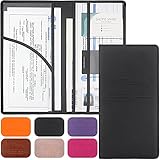
- 💼 CAR ORGANIZER PRACTICALITY: Car registration and insurance holder has multi-function clear compartments which can organize various items very well. The car document holder large pocket for insurance documents and 2 pockets for vehicle registration, 3 small pockets for driver's license, ID cards, AAA cards, business cards, receipt, key contact information cards, etc. It can fully meet your needs
- 👁EASY TO ACCESS AND READ: Car registration and insurance holder keeps your documents organized and keep them tidy and secured, which is stress-free to identify the documents in the folder and quickly reach the document when asked
- 🧲MAGNETIC CLOSURE DESIGN: The car insurance card holder is built with inner magnetic closure, which will keep your vehicle paperwork organizer closed to secure your vehicle documents from humidity and wear and tear. The car insurance holder is your first choice for protecting important car documents and certificates
- ✨PREMIUM MATERIAL: Car registration and insurance holder are made of high-quality PU leather and vinyl PVC. The beautiful cover of 3d embossing provides a comfortable soft touch feeling and professional look. This material is durable, Tolerant, and looks very naturally beautiful
- 💖SECURED & ASSURED: If you have any product problem when you use our car registration and insurance holder. Please feel free to contact us by email, we will do our best to offer a satisfactory solution for you within 24 hours
A useful evidence hierarchy is:
- the actual court order and filed technical motions;
- raw vehicle data or an expert report;
- controlled GPS-versus-odometer testing;
- service records with synchronized timestamps;
- independent fleet data;
- an owner’s comparison with previous vehicles; and
- social-media anecdotes.
What Tesla said in response
According to reporting on Tesla’s motion to dismiss, Tesla made several separate arguments. These are Tesla’s litigation positions as reported, not findings by the court.
What’s actually slowing this PC down?
Pick the symptom - the matching free tool is one click away.
1. The odometer theory was speculative
Tesla argued that the complaint did not show that the alleged energy, GPS, behavioral, or predictive calculations actually controlled the odometer. Alleging that a vehicle contains software capable of calculating expected energy use is different from proving that the software writes mileage to the legal odometer.
2. The patent did not support the claim
Tesla reportedly argued that the patent cited by the complaint concerns trip planning, battery charging, and energy management—not the calculation of the vehicle’s odometer.
3. Tesla said its vehicles use conventional odometer systems
Tesla’s reported position was that its odometers use conventional automotive measurement systems, do not use GPS, predictive algorithms, energy-consumption metrics, or driver-behavior multipliers to calculate odometer mileage, and are supplied by ordinary automotive-component manufacturers.
That is a technical assertion made in litigation. It is not independently verified merely because it appears in a motion, but it directly contradicts the complaint’s central theory.
The Tool Desk
Outbyte PC Repair FREEClear out junk files and repair common Windows errorsFree Scan →Outbyte Driver Updater FREEScan for outdated or missing drivers - takes under a minuteDriver Scan →4. Tesla cited an inspection involving three mileage readings
Tesla reportedly compared the displayed odometer with mileage values derived from front and rear drive-unit data. On the inspection date, the figures were reported as:
| Source of mileage | Reported reading |
|---|---|
| Front drive-unit data | 68,490.65 miles |
| Displayed odometer | 68,574 miles |
| Rear drive-unit data | 68,695.92 miles |
Tesla said those readings were within approximately 0.2% of one another. This is substantially different from the 117% comparison in Hinton’s complaint, but it is important to describe the source correctly: the figures came from Tesla’s reported inspection and litigation filing. They were not, based on the public material reviewed, the result of a court-appointed or independently audited fleet test.
5. Tesla said it offered additional testing
Tesla reportedly said it offered a joint inspection of another vehicle and a controlled test-track test, and that the plaintiffs declined further testing. That assertion should also be checked against the actual motion and any opposition papers before being treated as an established account of what happened.
6. Tesla challenged the alleged damages
Tesla reportedly argued that the plaintiffs had not adequately shown that the repairs at issue were covered warranty defects or that an alleged odometer problem caused compensable financial harm. A mileage dispute does not automatically establish that every repair should have been free, because coverage also depends on the component, warranty category, exclusions, time limits, and cause of the failure.
PC Slower Than It Used to Be?
A free scan shows the junk files, broken settings and background clutter dragging Windows down - then fixes them in one click.Free scan · Windows 10 & 11Crashes, No Sound, or Screen Glitches?
Random freezes, missing sound and display glitches usually trace back to one bad driver. Find and replace yours safely.Free scan · under a minuteWhat the cited Tesla patent actually describes
The complaint cited “Patent U58054038B2,” apparently a typographical reference to U.S. Patent No. 8,054,038. The official patent is titled System for optimizing battery pack cut-off voltage.
Rank #3
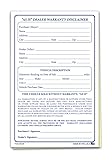
- LIABILITY DOCUMENTATION FOR AUTO DEALERS: As is dealer warranty disclaimer forms designed specifically for used car sales, helping automotive dealerships document vehicle condition disclosure and obtain written customer acceptance during sales transactions.
- 2-PART CARBONLESS NCR DUPLICATE FORMS: High-quality 2-part carbonless NCR forms create instant duplicate copies without carbon paper, providing white copies for dealer records and canary copies for customer documentation and filing.
- STANDARD 5.5 x 8.5 INCH DEALERSHIP FORM SIZE: Compact 5.5 x 8.5 inch automotive dealership paperwork fits easily into deal jackets, folders, clipboards, and filing systems while allowing sufficient space for vehicle details and signatures.
- EDGE-GLUED DESIGN FOR DAILY DEALERSHIP USE: Edge-glued construction keeps multi-part forms aligned during completion, improves handling efficiency, and allows clean separation of copies for consistent use in busy auto sales environments.
- VERSATILE VEHICLE SALES APPLICATION: Suitable for documenting as is warranty disclosure in used car, truck, SUV, motorcycle, and other vehicle sales, making these forms a practical solution for dealerships and vehicle resellers.
The patent describes a system that can:
- calculate total travel miles from a travel plan;
- convert expected travel miles into electrical-energy requirements;
- use energy-per-mile conversion factors; and
- adjust estimates using information such as road conditions, traffic, and weather.
Those functions relate to battery charging decisions, battery management, and trip planning. They may involve the word “miles,” but that does not establish that the resulting estimate is used as the vehicle’s legal odometer reading.
A patent can describe a possible invention, system architecture, or method without proving that a production vehicle uses it, that Tesla deployed it in a particular model year, or that it controls a particular function. Patent ownership or citation is therefore not proof that the patent’s calculations inflate odometers.
Why the warranty issue matters financially
Mileage is practically important because many vehicle warranties end when either a time limit or a mileage limit is reached. Under the warranty terms described in Hinton’s complaint, the basic warranty ended after four years or 50,000 miles, whichever came first. If a vehicle’s recorded mileage were genuinely and materially overstated, an owner could face a premature transition from warranty-covered repairs to customer-paid repairs.
But an odometer reading does not automatically determine every warranty decision. The applicable questions include:
- Which warranty applies—the basic vehicle warranty, battery and drive-unit warranty, parts warranty, supplemental coverage, or another product?
- What model, configuration, and date of first delivery are involved?
- Had the time limit expired even if the mileage were corrected?
- Was the failed component covered?
- Do exclusions apply because of an accident, misuse, modification, nonstandard parts, or another condition?
- What mileage did Tesla rely on, and what clause did it cite in a written denial?
Tesla’s current North American New Vehicle Limited Warranty contains model- and component-specific terms. It also says that altering an odometer or related system, or rendering it inoperative so that the actual mileage is difficult to determine, can affect coverage. That provision concerns alteration or disconnection; it is not evidence that Tesla’s ordinary odometers are inaccurate.
The same distinction matters for leases and resale. The complaint alleged potential lease-mileage charges and depreciation consequences, but the public evidence reviewed does not establish a Tesla-wide mileage inflation problem that affected all leases or used-vehicle values.
What the federal 4% standard does—and does not—show
The complaint invoked federal odometer rules and referred to a federal motor-vehicle safety standard requiring a covered odometer to indicate distance no more than 4% greater or 4% less than actual distance when tested under specified conditions. The relevant federal standard is available through the Code of Federal Regulations source.
Free tools Windows power users keep installed
One-click scans. No signup required.
The 4% figure is important, but it is often reported incorrectly. It does not mean:
- every real-world route comparison must match a driver’s estimate within 4%;
- a difference between a Tesla and a prior vehicle is automatically a regulatory odometer test; or
- an owner’s 15% or 117% comparison proves intentional tampering.
The federal tolerance applies under specified testing conditions. A proper evaluation would need a defined route or test method, a reliable reference measurement, synchronized readings, and control of factors such as tire and wheel configuration. A personal commute estimate and a prior vehicle’s history do not supply that same measurement.
What laws did the complaint invoke?
The complaint referenced several legal theories, including:
Rank #4
![ESSENTIAL Car Auto Insurance Registration BLACK Document Wallet Holders 2 Pack - [BUNDLE, 2pcs] - Automobile, Motorcycle, Truck, Trailer Vinyl ID Holder & Visor Storage - Strong Closure On Each -](https://m.media-amazon.com/images/I/41k-QvzFVuL._SL160_.jpg)
- ESSENTIAL Car Auto Insurance Registration BLACK Document Wallet Holders 2 Pieces
- federal odometer-tampering provisions, including 49 U.S.C. §§ 32703 and 32710;
- California Vehicle Code § 28050 and related provisions;
- California’s Unfair Competition Law, Business and Professions Code § 17200;
- California’s False Advertising Law, Business and Professions Code § 17500; and
- contract and warranty theories.
Federal law generally addresses conduct such as using, installing, or having installed a device that causes an odometer to register mileage different from the mileage driven beyond the manufacturer’s designed tolerance. It separately addresses resetting or altering an odometer with intent to change the mileage.
That legal framework highlights an important distinction:
- Inaccurate measurement: the instrument may report the wrong distance because of a defect, calibration issue, configuration problem, or another technical cause.
- Intentional alteration: someone may reset, disconnect, or manipulate the odometer with intent to change the displayed mileage.
- Warranty disagreement: a manufacturer and owner may dispute whether a repair is covered or what mileage limit applies.
Those categories can overlap in a lawsuit, but they are not interchangeable. A complaint invoking an odometer statute does not itself prove that a prohibited device was used or that a company intended to manipulate mileage.
Was this a certified class action?
No publicly verified class certification should be assumed. The complaint asked to represent California residents who purchased new or used Tesla vehicles for personal, family, or household purposes. That proposed class was a litigation request, not proof that a judge certified the class.
The federal docket identifies Hinton as the plaintiff and Tesla, Tesla Finance, and other defendants. The case was removed from California state court to the Central District of California on April 2, 2025. Readers can review the publicly accessible federal docket mirror and the CourtListener docket, while recognizing that third-party docket mirrors may not display every later filing.
Do these 3 things before closing this tab:
1Clear out junk files and repair common Windows errors2Fix the driver behind crashes, sound loss and screen glitches3Repair Windows errors before they cause bigger problemsWhat is the case’s present status?
Reported status as of August 10, 2026: Reports published in March 2026 said the federal court granted Tesla’s motion to dismiss. The motion was reportedly filed on February 19, 2026, and one report placed the dismissal around March 12, 2026.
Verification limitation: The publicly accessible Justia docket retrieved for this review stops at September 26, 2025. The actual dismissal order was not independently retrieved through the court’s public web interface. That means the public record reviewed here does not establish whether the dismissal was with prejudice, without prejudice, or with leave to amend; whether final judgment was entered; whether an appeal was filed; or whether the plaintiff amended or refiled.
For reporting or legal research, check the actual order through PACER or the court’s ECF system. Even if the dismissal is confirmed, a procedural dismissal would not necessarily be a technical finding that every Tesla odometer is accurate. It would resolve the litigation in the manner stated by the order, not automatically validate one side’s engineering account.
The report claiming dismissal and the later status summary are useful leads, but they are secondary sources and should not replace the order itself.
What Tesla owners should do if the mileage appears wrong
An owner who suspects an odometer discrepancy should focus on creating a synchronized record before a warranty deadline or repair dispute becomes difficult to reconstruct.
Best Value
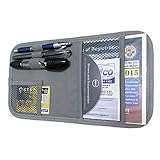
- CLEAN AND TIDY - Zuggear car sun visor organizer is great to keep your car organized for an enjoyable ride. Auto visor organizer is specially designed to to hold items(like cards, pens, document ...) in place and at your fingertips.
- NICE STORAGE EXTENSION – The visor organizer get the interior visor that maximizes storage space. Zuggear car visor holder is perfectly designed to fit most Cars, SUV, Trucks and Jeep visors. 12.2’’(L)x 6.3"(W) visor pouch extender will not resist you to open or close the Car visor.
- DURABLE - Car document registration holder is made of the high quality materials to keep you organized for years to come. With the 3 visor pouch pockets and 3 different sizes Car visor Pen Holders to fit most of your small personal belongs.
- EASY INSTALLATION - Our sun visor organizer is easily to install, just slide the visor organizer over your sun visor, it attaches with 2 strong elastic straps and has sturdy cardboard backing to fit flat against car visor.
- HASSLE-FREE WARRANTY – ZugGear Visor Organizers Back up by 2 years unlimited warranty. Email us if you have any quality problem, replacement or refund would be sent under warranty.
- Photograph or record the odometer. Capture the displayed mileage, date, vehicle identification information where appropriate, and the condition of the car before and after service.
- Keep an independent route record. Use a separate GPS device or navigation log to record the same trip and preserve the date-stamped data. GPS distance is not automatically a perfect legal reference, but it is more useful when synchronized with the odometer and repeated over a defined route.
- Save Tesla records. Preserve Tesla trip-card or energy-app screenshots, service invoices, appointment records, and any mileage shown in the Tesla mobile app. Tesla’s Model Y owner information identifies the odometer through Controls > Software, the Trips card, and the mobile app; labels can vary by vehicle generation and software version. See the Model Y owner manual for the relevant interface.
- Record time spent away from the owner. Keep tow, transport, valet, loaner, delivery, and service records. Service-center movement or test driving is a possible explanation for some mileage differences, although it should not be assumed without records.
- Document the configuration. Note tire and wheel sizes, replacement tires, tire wear and inflation, software version, and any vehicle-control-module or odometer-related replacement.
- Request the warranty decision in writing. Ask Tesla to identify the mileage it used, the date coverage ended, the failed component, the applicable warranty clause, and the reason for denying coverage.
- Obtain an independent inspection if the amount is significant. An appropriately qualified technician may be able to compare the odometer with wheel-speed, motor, or drive-unit data and document the method used.
Possible explanations for an apparent discrepancy include a tire-size or wheel-size configuration issue, changes in tire circumference from replacement tires or wear, sensor calibration, a control-module replacement, service-center movement, towing or transport, synchronization errors among the vehicle, app, service records, and third-party trackers, or confusion between total odometer mileage, trip mileage, and energy-app distance. These are possibilities to investigate—not established explanations for Hinton’s vehicle.
If Tesla denies a repair, an owner should also check whether the time limit had expired independently of mileage, whether the failed part had a separate warranty, and whether the purchase or lease agreement includes arbitration or class-action-waiver provisions. State consumer-protection agencies and a lawyer who handles automotive warranty or consumer claims may be appropriate sources of individual advice.
What prospective used-Tesla buyers should verify
The lawsuit does not establish that all Tesla odometers are inflated, but mileage remains a meaningful financial and maintenance variable in any used-car purchase. A buyer considering a used Tesla can:
Quick wins for a faster PC:
Clear out junk files and repair common Windows errorsFree Scan →Scan for outdated or missing drivers - takes under a minuteDriver Scan →- compare the displayed odometer with service invoices, inspection records, registration documents, and vehicle-history reports;
- ask which basic, battery, drive-unit, or supplemental warranty coverage remains and when each limit expires;
- confirm the vehicle’s tire and wheel configuration;
- look for unexplained gaps or sharp changes in mileage history; and
- obtain a pre-purchase inspection if the mileage or warranty status is material to the price.
An unusual number should trigger verification, not an automatic conclusion that the odometer was manipulated. The financial risk is specific to the vehicle’s documented coverage and condition, not proven to be a universal Tesla-owner liability.
The bottom line on the “predictive algorithms” claim
The lawsuit raised a serious and testable question: can Tesla’s production vehicles record distance in a way that materially exceeds the distance actually driven, and can that affect warranty or lease economics? The complaint supplied Hinton’s account, service history, daily-mileage comparisons, and the 117% historical benchmark. It did not, in the public material reviewed, supply a controlled odometer test, raw telemetry, an independent expert audit, or fleet-wide evidence.
Tesla strongly disputed the theory and reportedly cited both conventional odometer architecture and a single-vehicle inspection in which three mileage readings were within approximately 0.2%. Neither the complaint nor Tesla’s litigation position should be mistaken for a final technical determination. The reported dismissal also needs confirmation from the court’s actual order.
So the accurate conclusion is narrower than the viral headline: a lawsuit alleged that Tesla odometers could be inflated by predictive software, but the available public record does not establish a Tesla-wide algorithmic scheme or prove that predictive algorithms were used to void warranties.
What’s actually slowing this PC down?
Pick the symptom - the matching free tool is one click away.
Frequently Asked Questions
Did a court find that Tesla uses predictive algorithms to inflate odometers?
Not based on the public record reviewed. The predictive-algorithm theory appeared in the plaintiff’s complaint. Tesla disputed it and said its odometers use conventional automotive systems. Secondary reports say the case was dismissed, but the underlying order was not independently retrieved, so it should not be described as a court finding that Tesla’s odometers are accurate or inaccurate.
Was the 117% figure a measured odometer error?
No. The complaint calculated the figure by comparing 13,228 miles recorded by Hinton’s Model Y with a 6,086-mile average from three previous vehicles over a comparable period. That is approximately 117% above the historical benchmark, not a controlled GPS, wheel-rotation, or laboratory measurement of odometer error.
Could an odometer dispute affect Tesla warranty coverage?
It could matter when a warranty has a mileage cap, but coverage also depends on the vehicle, configuration, date of first delivery, component, time limit, exclusions, and the reason for the repair denial. Owners should request the mileage and warranty clause relied on in writing.
Does Tesla’s battery-energy patent prove that its odometers use predictive algorithms?
No. U.S. Patent No. 8,054,038 describes travel-mile and energy calculations used for battery charging and management, with possible adjustments for road, traffic, and weather information. A patent’s description does not prove that the system was deployed in production or used to calculate the legal odometer.
What should a Tesla owner do if the displayed mileage seems inaccurate?
Preserve date-stamped odometer images, independent GPS route records, Tesla app and trip-card data, service invoices, tow or transport records, tire and wheel information, and any written warranty denial. For a significant dispute, consider an independent inspection comparing the displayed mileage with relevant vehicle data.
The Bottom Line
Bottom line: Tesla faced a proposed class action alleging that software inflated odometer readings and caused warranty limits to arrive early. The complaint’s 117% figure was a comparison with prior vehicles, not an independently controlled odometer test. Tesla denied the technical theory and cited inspection readings that were reportedly within approximately 0.2%. The available public record does not establish a company-wide scheme, and the reported dismissal should be confirmed against the court’s actual order before its legal effect is stated more specifically.
Quick Recap
Product prices and availability are accurate as of the date/time indicated and are subject to change. Any price and availability information displayed on Amazon at the time of purchase will apply.




