The Tool Desk
Outbyte Driver Updater FREEFix the driver behind crashes, sound loss and screen glitchesFind Drivers →Outbyte PC Repair FREERepair Windows errors before they cause bigger problemsFix Now →Elon Musk’s Tesla Master Plan Part 3 was not primarily a new-car announcement. Presented at Tesla’s Investor Day on March 1, 2023, it was a global energy-transition proposal: replace fossil fuels with renewable electricity, storage, electric vehicles, heat pumps, electrified industrial processes, hydrogen, and sustainable fuels.
Tesla’s model estimated that this transition could require about 30 terawatts of renewable generation, 240 terawatt-hours of storage, and $10 trillion in manufacturing-related investment. Those figures were Tesla’s modeled outputs—not an independently audited forecast, a Tesla spending commitment, or a guaranteed implementation timetable. The detailed 41-page paper was published on April 5, 2023. As of 2026, Part 3 is also historical: Tesla published a different Master Plan Part IV on September 1, 2025, focused more heavily on artificial intelligence, autonomy, humanoid robots, and sustainable abundance.
What Tesla actually revealed at Investor Day
Tesla’s March 1, 2023 Investor Day took place at Gigafactory Texas in Austin. The event combined a long-term corporate vision with presentations about Tesla’s vehicles, factories, software, charging network, energy business, and supply chain. The formal Master Plan segment began at approximately 13:24 in Tesla’s official event video.
The live presentation and the later technical paper should be treated as related but distinct disclosures:
#1 Best Overall

- 【Full Off-Grid Solar Solution】: Achieve energy independence with a robust renewable solution! Take control of your energy independence with the AUECOOR comprehensive off-grid solar kit. This package includes 51.2V 200Ah LiFePO4 integrated communication wall mounted & Vertical batteries, 20pcs 120W monocrystalline solar panels, and a powerful 12000W Split Phase Output Pure Sine Wave inverter equipped with MPPT solar charge controller, as well as all the cables and Z mounting brackets.
- 【LifePO4 Battery with BMS & LCD Dispaly】: The 51.2V, 200AH lithium iron phosphate battery is equipped with a built-in Battery Management System (BMS) for enhanced protection. With charge balancing technology, it extends the battery life to over ten years under optimal conditions. Certified for UN38.3 compliance and backed by an MSDS testing report, this battery guarantees safety and reliability.Has a more user-friendly design with a smart display that enables you to monitor & control the battery at any time and anywhere. That can display the voltage, current, energy etc. This is undoubtedly a huge innovation that brings great convenience to the user experience.
- 【Perfect Current Transmission】: The AUECOOR 48V 12KW 120V/240V Split Phase Solar Inverter with MPPT solar controller, this kit has high tracking efficiency of up to 99% and peak conversion efficiency of 98%, and 95% High conversion efficiency, making full use of battery power without waste.The LCD display of this Solar Inverter shows operating information, parameters, and fault icons. The system's working information is clear and easy to understand, with charging indicator lights for easy monitoring of the working status.
- 【Long-Lasting Grade A LiFePO4 Cells】: Original Grade A lithium iron phosphate battery cell has high safety and reliability,Compatible with most inverters on the market,Supporting RS485 and CAN communication,Supporting up to 15 batteries in parallel,The LCD display monitors the operating status in real time。this battery provides reliable energy, exceptional cycle life, and unwavering safety—all supported by a 10-year limited warranty for total peace of mind.
- 【Perfect After-Sale Assurance】 AUECOOR is committed to provide the best products and services for you. You will get 10-Year limited Warranty and a lifetime of tech support This assurance provides your investment with the confidence. Any time any questions, please contact us feel free, we will try our best to help you. The last, your feedback is our motivations to improve. We are looking forward to your words. AUECOOR support team is always on standby for you!
- The live presentation: Musk and Tesla executives explained the sustainable-energy vision and discussed manufacturing, powertrain, charging, energy storage, software, autonomy, and Optimus.
- The technical paper: Tesla published the detailed 41-page Master Plan Part 3 paper on April 5, 2023. This document contains the assumptions, calculations, tables, and caveats behind the headline numbers.
- The broader company strategy: The event also included product and operational disclosures that were not themselves the global Master Plan. These included a next-generation manufacturing method, powertrain changes, energy-storage plans, and the reiteration of a planned factory in Mexico.
Tesla’s official event archive divided the day into sections covering Master Plan 3, vehicle design, powertrain, electronic architecture, software, Full Self-Driving, Optimus, charging, supply chain, manufacturing, energy, impact and financials, followed by questions and answers. The Mexico factory announcement came during the Q&A at approximately 3:03:24.
The distinction mattered to investors. Musk offered a broad route toward a sustainable energy economy, but the event did not present a finished affordable Tesla model, a confirmed retail price, a production-ready next-generation vehicle, or a detailed delivery schedule.
How Part 3 differs from Tesla’s earlier master plans
Tesla’s master plans became progressively broader. The first two were primarily roadmaps for Tesla’s products and business model. Part 3 was a system-level proposal for how the global economy could move away from fossil fuels.
Part 1: the 2006 product strategy
Tesla’s original 2006 master plan described a sequence: begin with an expensive, low-volume electric sports car; use the proceeds to build a more affordable vehicle; then use that business to create progressively cheaper, higher-volume electric cars. It also stated Tesla’s broader purpose as helping accelerate the shift from a fossil-fuel economy toward a solar-electric economy.
Recommended Free Tools
Part Deux: the 2016 Tesla roadmap
Master Plan Part Deux expanded the product strategy. It covered solar roofs integrated with energy storage, a broader electric-vehicle lineup, self-driving capability, a shared autonomous vehicle fleet, and the expansion of Tesla’s energy-generation and storage businesses.
Part 3: a global energy model
Part 3 moved the question from How will Tesla sell more products? to What would it take to replace the fossil-fuel economy? Tesla modeled vehicles, power generation, storage, heating, industry, aviation, shipping, hydrogen, sustainable fuels, mining, refining, manufacturing, and transmission as parts of one connected system.
That makes Part 3 closer to a feasibility study or transition model than a conventional corporate product roadmap. It describes a possible global system; it does not promise that Tesla will build every component or capture all of the resulting economic activity.
The six steps in Master Plan Part 3
Tesla’s paper identifies six broad actions:
- Repower the existing grid with renewables. Solar and wind would provide most new generation, supported by hydro, geothermal, storage, and the existing nuclear fleet in the model.
- Switch to electric vehicles. Road transport would move from internal-combustion engines to battery-electric vehicles, with different vehicle sizes, ranges, battery chemistries, and pack capacities.
- Switch heating to heat pumps. Residential, commercial, and some industrial heating currently supplied by gas or oil would use electric heat pumps and other electric systems.
- Electrify high-temperature industrial heat and hydrogen production. The model includes electric resistance heating, electric arc furnaces, thermal storage, electrolyzers, and hydrogen storage for industrial applications that are difficult to serve directly with ordinary electricity.
- Sustainably fuel planes and boats. Tesla did not assume that every aircraft and ship would become battery-electric. Sustainable fuels play a larger role in aviation, while ships receive a mixture of battery and other energy solutions.
- Manufacture the sustainable-energy economy. The transition would require factories, mines, refineries, battery plants, vehicles, heat pumps, electrolyzers, synthetic-fuel systems, carbon-capture equipment, hydrogen storage, and transmission infrastructure.
These are not six programs Tesla alone could execute. They are the components of the energy system Tesla modeled.
The headline numbers, with their units and limitations
| Tesla estimate | What it means | Important qualification |
|---|---|---|
| 30 TW | Renewable power-generation capacity, primarily solar and wind | It is capacity measured in terawatts, not energy production measured in terawatt-hours |
| 240 TWh | Total storage capacity across vehicle batteries, stationary batteries, thermal storage, and other systems | It is stored-energy capacity, not annual electricity generation |
| $10 trillion | Tesla’s estimate of manufacturing-infrastructure investment for the modeled transition | It is not a Tesla spending commitment or necessarily the full all-in economic cost |
| 0.21% | Estimated direct land area for the modeled solar-and-wind installations | It does not represent the total ecological, transmission, permitting, visual, or social footprint |
| 12.815 billion metric tons | Estimated material requirement for generation, storage, and approximately 60 million transmission miles | The estimate combines third-party assumptions with Tesla’s internal battery-material assumptions |
What 30 terawatts means
Tesla estimated a need for approximately 30 TW of renewable generation capacity, consisting in its land calculation of about 18.3 TW of solar and 12.2 TW of wind. A watt is a rate of power; a terawatt is one trillion watts of power capacity.
That is different from a terawatt-hour, which measures an amount of energy generated or stored over time. A 30-TW system would not produce 30 TWh and then stop. Its actual output would vary with sunlight, wind conditions, geography, equipment performance, and curtailment.
Tesla’s modeled direct land requirement was approximately 0.19% of global land area for solar and 0.02% for wind, or about 0.21% combined. This is best understood as a direct-footprint estimate for the modeled projects. It should not be interpreted as the total land or environmental impact of building access roads, transmission lines, substations, factories, mines, ports, buffer zones, or related infrastructure.
What 240 terawatt-hours means
The approximately 240 TWh figure represents storage capacity. Tesla’s model assigned roughly 112 TWh to the global road-vehicle fleet and about 40 TWh to ships and planes, with the remainder allocated among stationary, thermal, and other storage applications.
Crashes, No Sound, or Screen Glitches?
Random freezes, missing sound and display glitches usually trace back to one bad driver. Find and replace yours safely.Free scan · under a minuteWindows Errors? Fix Them Before They Spread
Repair common Windows errors and clear accumulated junk for a smoother, more stable PC - no reinstall needed.Free scan · no reinstallThis does not mean all 240 TWh would be used in the same way. Vehicle batteries could provide mobility and, in some cases, grid services. Stationary batteries could balance hourly fluctuations. Thermal storage and hydrogen could address longer-duration or industrial requirements.
What the $10 trillion estimate includes
Tesla estimated approximately $10 trillion in manufacturing investment to build the equipment and industrial capacity needed for its transition scenario. The estimate includes categories such as factories, mining, refining, batteries, electric vehicles, heat pumps, electrolyzers, synthetic-fuel systems, carbon capture, and hydrogen storage.
Rank #2

- 🔋 EXPLORE RENEWABLE ENERGY SYSTEMS – Investigate how solar and wind power technologies generate and transfer energy through practical, hands-on experiments. Explore real-world renewable energy concepts while developing practical technical skills.
- 🌞 BUILD WORKING SOLAR & WIND PROJECTS – Create functional solar-powered and wind-powered models while exploring electricity, energy conversion, power generation, and sustainable engineering principles.
- 🧠 DEVELOP PRACTICAL ENGINEERING SKILLS – Gain hands-on experience with renewable energy systems while developing problem-solving, critical thinking, experimentation, and practical engineering skills.
- ⚡ EXPERIMENT WITH REAL-WORLD ENERGY CONCEPTS – Test and explore working models to understand how renewable energy technologies operate and how energy can be generated, transferred, and converted into usable power.
- 🌍 FOR BEGINNER MAKERS & ENERGY ENTHUSIASTS – Designed for ages 15+ and adults interested in renewable energy, sustainability, electronics, engineering, and practical technology. A hands-on project for exploring clean energy through experimentation.
Tesla compared that amount with approximately $14 trillion in projected 20-year fossil-fuel investment at the 2022 rate. That comparison comes from Tesla’s modeling framework. It is not a universally accepted calculation of the complete cost of decarbonization.
In particular, the $10 trillion figure should not be confused with consumer spending, government subsidies, grid-modernization costs, land purchases, permitting expenses, operating costs, maintenance, financing costs, early replacement of existing equipment, or broader social and political costs unless those items are explicitly included in the paper’s scope.
Free tools Windows power users keep installed
One-click scans. No signup required.
Why Tesla said the transition would use about half the energy
Tesla argued that fossil-fuel systems lose substantial energy during extraction, processing, refining, electricity generation, combustion, and inefficient end use. Based on its analysis of International Energy Agency and Lawrence Livermore National Laboratory data, the paper says only about 36% of current primary energy supply produces useful work or heat.
Direct electrification can avoid many of those upstream and conversion losses. For example, renewable electricity sent directly to an electric motor does not pass through the same sequence of fuel extraction, refining, combustion, and mechanical conversion as gasoline burned in an internal-combustion vehicle.
However, “half the energy” is a system-level comparison. It is not a claim that every electric technology uses half as much energy as every fossil-fuel alternative. Battery production, transmission losses, weather-related overbuilding, hydrogen conversion, sustainable-fuel production, and the efficiency of individual devices all affect the result.
What the model assumes about vehicles
Tesla’s paper assumed a global road-vehicle fleet of approximately 1.4 billion vehicles and annual passenger-vehicle production of roughly 85 million units. It estimated that replacing the global road fleet would require about 112 TWh of vehicle batteries.
The vehicle categories in the model include:
- Compact vehicles
- Midsize vehicles
- Large sedans, SUVs, and trucks
- Vans
- Semi-trucks
- Buses
- Heavy trucks
Tesla assigned different battery chemistries and pack sizes to those categories. Some standard-range vehicles use LFP assumptions, while longer-range or higher-performance vehicles use higher-nickel chemistries. These are inputs to Tesla’s transition model, not confirmations of future Tesla products, production volumes, or battery specifications.
What Tesla showed—and did not show—about a cheaper vehicle
During Investor Day, Tesla displayed two veiled vehicles and described a next-generation manufacturing approach. The presentation strongly suggested that a more affordable, higher-volume vehicle was under development, but Tesla did not unveil a production-ready model with a confirmed name, retail price, production date, or delivery timetable.
That omission was central to the market’s reaction. Many investors expected a concrete low-cost EV announcement or a clearer timeline for the next-generation platform. Reuters reported that Tesla shares fell about 7% on March 2, 2023. TechCrunch reported a 5.66% after-hours decline following the event on March 1. The differing figures reflect different trading windows, but both reports captured the same gap between the event’s broad vision and investors’ demand for specific products and financial milestones.
The event did include concrete manufacturing targets. Tesla said its next-generation vehicle assembly costs could be cut roughly in half and that the proposed approach could reduce factory footprint by more than 40%. Those were Tesla claims and targets, not independently verified production results at the time.
Tesla’s proposed manufacturing changes
The proposed unboxed manufacturing process would assemble major vehicle sections—such as the front, rear, and floor—separately before joining them during final assembly. Tesla said this could support more automation, reduce the factory footprint, and lower capital requirements.
Executives also presented the following engineering and manufacturing themes:
- More vertical integration
- Greater use of in-house electronics and software
- A next-generation drive unit
- More flexibility across battery chemistries
- A claimed reduction in silicon-carbide use
- A drive unit that Tesla said would avoid rare-earth materials
- More efficient factories and production lines
Tesla specifically claimed a 75% reduction in silicon-carbide use in the next powertrain and said the new drive unit would not require rare-earth materials. These statements describe Tesla’s intended engineering direction. They should not be treated as independently verified performance or supply-chain results.
Heat pumps, industrial heat, hydrogen, aircraft, and ships
Part 3 was not a battery-car-only proposal. Some of the hardest parts of the transition involve heating, industrial processes, aviation, and shipping.
Quick wins for a faster PC:
Repair Windows errors before they cause bigger problemsFix Now →Fix the driver behind crashes, sound loss and screen glitchesFind Drivers →Clear out junk files and repair common Windows errorsFree Scan →Rank #3
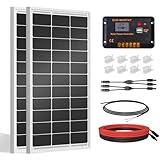
- [Wide Application]: Daily Output 800wh/day under 4 hours full sunshine condition. Perfect for RV, Caravan, Marine, Camper, Electric scooter, Golf Carts, Power wheels, Trolling motor, Tool trailer, Backup power supply for cabin shed home etc.
- [Excellent Performance]: ECO-WORTHY solar panels use high-performance monocrystalline solar cells, which can provide up to 21.5% higher efficiency sufficient light conditions.size:35.2*23.1.37in
- [Durable]: Corrosion-resistant aluminum alloy frame, so that the panel can be used for decades, and can withstand strong wind (2400Pa) and snow load (5400Pa), with a long service life. Ip65 rated junction box provides complete protection.:
- [Complete and Easy]: The back of the pre-drilled and plug-and-play cables allow quick installation, the kit can be connected in series (24V) or parallel (12V) if you need. What you will get: 2 pcs 100W mono solar panel + 2 set of Z mounting brackets + 30A solar controller + 1 pair of 16.4ft 10 awg solar cables + 1 pair of 2-in-1 connectors + 1 pair of 4.92ft tray cable.
- [Support]: 1 year with 24/7 tech support, if any problems or questions about the product,please do not hesitate to let us know through Amazon or call ECO-WORHTY hotline for solution.
Heat pumps
Tesla modeled heat pumps as replacements for many gas- and oil-fired heating systems. It estimated that heat pumps could use roughly three times less energy than gas furnaces in relevant applications.
The comparison depends on the equipment, climate, building envelope, refrigerant cycle, electricity source, and outdoor temperature. Heat-pump performance can decline in extreme cold, and a building may require supplemental heating or efficiency upgrades. Tesla’s estimate is therefore a model assumption for relevant applications, not a universal result for every home or commercial building.
Industrial heat
The paper divides industrial heat into lower-temperature processes that may be served by heat pumps and higher-temperature processes that may require electric resistance heating, electric arc furnaces, thermal storage, hydrogen, or other technologies.
Tesla modeled high-temperature process heat above 200°C as requiring substantial additional electricity because it assumed heat-delivery efficiency comparable to existing fossil systems. That assumption avoids claiming that electrification automatically makes every industrial process more efficient.
Do these 3 things before closing this tab:
1Fix the driver behind crashes, sound loss and screen glitches2Clear out junk files and repair common Windows errors3Scan for outdated or missing drivers - takes under a minuteHydrogen
Hydrogen appears in the plan as an industrial input, a possible source of seasonal energy storage, and a fuel for applications that are difficult to electrify directly. Tesla included electrolyzers and geological hydrogen storage in the model. The presence of hydrogen is important because Part 3 does not imply that batteries are the answer for every energy use.
Planes and ships
Tesla modeled a mixed solution for aviation and shipping. Ships would require substantial battery capacity in the scenario, while aviation would rely more heavily on sustainable fuels. The paper includes limited battery-electric aviation for narrow-body aircraft rather than assuming that the entire aviation sector can operate on batteries.
How Tesla built the model
The model’s methodology is as important as its headline numbers. Tesla’s researchers modeled the U.S. energy economy using high-resolution Energy Information Administration data from 2019 through 2022. They divided the country into four regions—Texas, Pacific, Midwest, and Eastern—and examined hourly demand, weather, renewable-resource availability, and transmission constraints.
Tesla then scaled the U.S. results globally using a six-times factor, with 2019 energy consumption as the basis for the scaling. Tesla acknowledged that this is a significant simplification: countries differ in climate, industrial structure, energy mix, population, infrastructure, economic development, and expected energy demand.
What’s actually slowing this PC down?
Pick the symptom - the matching free tool is one click away.
This U.S.-to-global step does not make the entire model useless. It provides a quantitative scenario and a way to test whether a combination of generation and storage can work under stated conditions. But it does mean the global result should not be read as a detailed country-by-country deployment plan.
Storage technologies included
Tesla evaluated storage technologies it described as deployed at scale, including:
- Lithium-ion batteries
- Pumped hydro
- Seasonal hydro
- Hydrogen in geological storage
- Thermal storage
The paper did not include emerging technologies such as metal-air and sodium-ion storage because Tesla considered them insufficiently deployed at commercial scale when the analysis was conducted. Future breakthroughs could change the mix, but they were not needed for Tesla’s modeled scenario.
How nuclear power was treated
The U.S. generation model included solar, onshore wind, offshore wind, hydro, geothermal, and existing nuclear generation. Because the results specifically identify existing nuclear, readers should not infer that Tesla modeled a large new nuclear-build program. At the same time, the choice should be described as a modeling assumption—not as proof that Tesla believes nuclear power is unnecessary in every future energy system.
Materials, mining, and the resource question
Tesla estimated that its proposed system—including 30 TW of generation, 240 TWh of storage, and approximately 60 million transmission miles—would require about:
- 12.815 billion metric tons of material in total
- 444 million metric tons per year
The paper used third-party assumptions for material requirements in solar, wind, and transmission. Tesla used internal estimates for battery-material intensity. That distinction matters when assessing the confidence of the total.
Rank #4

- [ Package Content ] 5PC 5Voltage 200mA Polycrystalline Solar Panels with Wire
- [ Dimension] 110mmx60mm/4.33"x 2.36" (L*W); Thickness: 2.5mm/0.1"
- [ DIY Your Own Model ] Suitable for home lighting and different kinds of low-power DC appliances, for science projects, for solar powered water pump, small solar power system, etc.
- [ High Quality ] High quality epoxy resin, unique technology to make the components beautiful and strong, anti-wind and snow, increase the service life of solar panels.
Tesla concluded that there were no “insurmountable” global resource challenges under its assumptions. That does not mean the plan requires no mining, has no ecological impact, or faces no supply-chain bottlenecks. The transition would require extensive mining, refining, manufacturing, recycling, transmission construction, permitting, and workforce expansion.
Tesla’s narrower argument was that the material requirement is manageable relative to estimated global resources and may compare favorably with the extraction associated with continuing the fossil-fuel system. That conclusion depends on assumptions about material intensity, recycling rates, ore grades, technology improvements, deployment speed, and the availability of investment and infrastructure.
PC Slower Than It Used to Be?
A free scan shows the junk files, broken settings and background clutter dragging Windows down - then fixes them in one click.Free scan · Windows 10 & 11Crashes, No Sound, or Screen Glitches?
Random freezes, missing sound and display glitches usually trace back to one bad driver. Find and replace yours safely.Free scan · under a minuteWhat was genuinely new for Tesla investors
Although the event did not produce a fully specified low-cost car, it did provide several Tesla-specific disclosures:
- A claimed path to cut next-generation vehicle assembly costs by approximately half
- A lower-footprint manufacturing process
- A planned Gigafactory in Mexico
- A next-generation drive unit that Tesla said would use no rare-earth materials
- A claimed 75% reduction in silicon-carbide use in the next powertrain
- Additional energy-storage and charging plans
- Continued emphasis on scaling production toward Tesla’s previously stated long-term volume ambitions
The Mexico facility also needs careful framing. Mexico’s government had publicly announced the planned facility before Investor Day. Musk reiterated the factory plan during Tesla’s Q&A rather than revealing the project from nothing. The Mexican government’s announcement provides the official context.
The event’s broader agenda included vehicle design, powertrain, software, Full Self-Driving, Optimus, charging, supply chain, manufacturing, energy, and financial impact. Those subjects were relevant to Tesla’s strategy, but they should not all be folded into the six-step global energy model.
Independent reader supportYour contribution helps us test, update, and keep practical guides available for everyone.How credible was Master Plan Part 3?
The most useful assessment separates several questions that are often treated as one.
1. Is the transition technically possible?
Tesla’s paper argues that a combination of renewable generation, storage, electrification, hydrogen, and sustainable fuels can provide the world’s energy services without an insurmountable physical resource barrier. That is a claim about technical possibility.
It is narrower than saying the transition is already cheap, politically easy, commercially mature, or ready to execute at global scale. Technical feasibility does not settle questions about permitting, grid reliability, construction speed, consumer adoption, financing, or international coordination.
2. How robust is the model?
The main issues for an analyst to examine are the U.S.-to-global scaling method, the use of 2019 baseline energy consumption, future technology-cost assumptions, internal battery-material estimates, assumed vehicle pack sizes, treatment of nuclear power, and the extent to which transmission, permitting, and demand growth are represented.
Tesla’s own acknowledgment that global scaling is a simplification is important. The model should be read as a scenario, not as a precise forecast with a narrow range of likely outcomes.
Free tools Windows power users keep installed
One-click scans. No signup required.
3. What does the economic estimate cover?
The $10 trillion figure is not a complete bill for every consequence of the transition. It is Tesla’s estimate of manufacturing-related investment under its model. A real-world transition could also require substantial spending on grid upgrades, interconnection, land, permitting, maintenance, financing, workforce training, replacement of working fossil equipment, and consumer-facing infrastructure.
4. Can the world execute it?
Part 3 did not provide a complete timetable for global renewable deployment, vehicle replacement, heat-pump adoption, hydrogen infrastructure, aircraft and ship conversion, manufacturing expansion, or Tesla’s own investment share. That makes execution the largest gap between the vision and an investable corporate plan.
5. How much of the opportunity belongs to Tesla?
The plan does not commit Tesla to supply all 30 TW of renewable generation, all 240 TWh of storage, or all of the vehicles and industrial equipment in the scenario. It is a system-level requirement, not a Tesla revenue forecast or market-share projection.
For investors, this distinction is fundamental: a very large addressable transition market does not automatically become Tesla revenue, earnings, free cash flow, or shareholder returns. Those outcomes would depend on Tesla’s products, prices, production capacity, competition, margins, capital needs, and ability to execute.
Best Value

- System Components:Delivers up to 10kW power output with 120V/240V single-phase split-phase support, making it suitable for smoothly running common household appliances. The system includes 5 × 590W solar panels with a total PV capacity of 2950W, capable of generating up to 11.8 kWh per day under optimal conditions, along with one 48V 314Ah portable LiFePO₄ battery offering 16.1 kWh of energy storage. Complete with necessary cables, this all-in-one solar solution is designed for convenient setup and reliable home power support.
- Upgraded Integrated Battery:ECO-WORTHY 48V 314Ah lithium battery combines advanced safety, high capacity, and smart system compatibility. It features a PACE 200A Battery Management System with multi-layer protection and dual breakers for reliable circuit safety. With a 16.076 kWh energy capacity and support for up to 15 units in parallel (up to 241 kWh), it delivers scalable and dependable power. A 7-inch full-color display, along with Bluetooth, Wi-Fi, and PC connectivity, enables convenient real-time monitoring. Designed to work seamlessly with mainstream inverters via RS485 and CAN communication, the battery also includes built-in wheels and handles for easy installation and mobility
- Keep Home Running 10kW:ECO-WORTHY 10kW AIO solar charge inverter features 48V DC pure sine wave output with 120V or 120V/240V split-phase support, delivering 10,000W continuous power and up to 20,000W peak output. Equipped with dual MPPT controllers, up to 200A battery charging, built-in WiFi monitoring, multiple charging and output modes, time-slot energy management, and comprehensive protection functions, it is compatible with AGM, Gel, Flooded, and lithium batteries, supports battery-free operation, and allows parallel connection of up to six units
- High Power Solar Panel:590W Mono-crystalline Solar Panel (Black). Low power loss in cell connection compared to conventional modules. Improved shading tolerance. Lower internal current, lower hot spot temperature. Heat-strengthened glass minimizes micro-crack impact.
- Shipping Notice: Due to its large size and weight, the 5pcs 590W solar panel/1pc 48V 314Ah battery is securely packed and shipped on a pallet using a truck to ensure safe transportation. Please ensure your delivery address can accommodate truck deliveries.
What Tesla did not disclose
The missing information explains why the event disappointed some investors despite its ambitious scope. Tesla did not provide:
- A production-ready affordable vehicle
- A confirmed retail price for the anticipated lower-cost model
- A specific launch or delivery date
- A detailed schedule for the next-generation vehicle platform
- A Tesla-specific capital budget for the global transition
- A stated Tesla market share of the 30-TW, 240-TWh system
- A dated implementation plan for heat pumps, hydrogen, sustainable fuels, aircraft, or ships
Those omissions do not disprove the technical scenario. They do mean that Part 3 cannot be used by itself as a conventional valuation forecast.
Common mistakes when reading the plan
- Confusing TW and TWh: 30 TW refers to renewable generation capacity; 240 TWh refers to storage capacity.
- Treating $10 trillion as Tesla’s check: It is a modeled estimate of manufacturing infrastructure across multiple sectors.
- Calling 0.21% the entire land footprint: It is a direct solar-and-wind land-area estimate, not the full ecological or infrastructure footprint.
- Calling the plan mining-free: Tesla’s own paper estimates more than 12.8 billion metric tons of material.
- Assuming every aircraft becomes battery-electric: The model relies substantially on sustainable fuels for aviation.
- Calling a veiled vehicle a new production model: No affordable Tesla received a confirmed price, launch date, or production specification at the event.
- Assuming Tesla will build the entire system: The paper models a global transition, not Tesla’s exact role in it.
- Treating the paper as proven consensus: It is a Tesla-produced proposal based partly on internal assumptions, not an independently validated implementation plan.
- Calling Part 3 Tesla’s current plan: Tesla published Master Plan Part IV in September 2025.
What happened afterward—and how to frame Part 3 now
Part 3 should be read as Tesla’s 2023 energy-transition plan, not as a current announcement. Tesla later published Master Plan Part IV on September 1, 2025, shifting the emphasis toward AI, autonomy, humanoid robots, and sustainable abundance.
That change in emphasis does not by itself prove that Part 3 was completed, abandoned, or disproven. The individual targets—30 TW of renewables, 240 TWh of storage, $10 trillion of manufacturing investment, or the modeled vehicle fleet—would require separate implementation scorecards. The safest conclusion is that Part 3 remains a documented proposal and analytical scenario from 2023, while Part IV is Tesla’s later master-plan document.
How investors should interpret Master Plan Part 3
For a Tesla investor, the plan is most useful as a statement of strategic ambition and a map of potential markets. It identifies areas where Tesla could compete: electric vehicles, batteries, grid storage, power electronics, charging, manufacturing automation, software, and perhaps equipment connected with the wider energy transition.
It is less useful as a standalone financial forecast. To convert the vision into an investment thesis, an analyst would need to connect it to measurable evidence:
- Product evidence: Which vehicles, batteries, software products, or energy systems are actually available?
- Manufacturing evidence: Are the promised factory-footprint and assembly-cost reductions being demonstrated at commercial scale?
- Financial evidence: What capital expenditure, gross margin, operating cash flow, and return on invested capital would be required?
- Market evidence: How much demand exists, and how intense is competition from automakers, battery companies, utilities, and energy developers?
- Execution evidence: Are there dates, permits, contracts, production milestones, and delivery data?
This framework separates a compelling physical possibility from a bankable corporate plan. Part 3 made the first case more clearly than the second.
Frequently Asked Questions
Did Tesla unveil an affordable new car at Investor Day 2023?
No. Tesla showed veiled vehicles and described a next-generation manufacturing process, but it did not confirm a production model, retail price, launch date, or delivery timetable for an affordable Tesla at the event.
What’s actually slowing this PC down?
Pick the symptom - the matching free tool is one click away.
Is the $10 trillion figure money Tesla promised to spend?
No. Tesla estimated approximately $10 trillion in manufacturing-related investment for a global sustainable-energy transition involving many industries. It was not a Tesla corporate spending commitment, annual budget, or complete estimate of every transition cost.
Does Master Plan Part 3 require batteries for all transportation?
No. The model includes battery-electric road vehicles, but it also uses hydrogen and sustainable fuels. Tesla modeled limited battery-electric aviation and relied more heavily on sustainable fuels for aircraft, while ships received a mixed treatment.
Is Master Plan Part 3 still Tesla’s current master plan?
No. Part 3 describes Tesla’s 2023 energy-transition proposal. Tesla published Master Plan Part IV on September 1, 2025, with greater emphasis on AI, autonomy, humanoid robots, and sustainable abundance.
The Bottom Line
Tesla Master Plan Part 3 was Tesla’s most detailed attempt to quantify a global shift away from fossil fuels. Its central proposal was technically broad: build roughly 30 TW of renewable generation, 240 TWh of storage, electrified transport and heating, hydrogen and sustainable fuels, and the manufacturing capacity to support them.
Quick wins for a faster PC:
Scan for outdated or missing drivers - takes under a minuteDriver Scan →Clear out junk files and repair common Windows errorsFree Scan →But the plan was a global feasibility proposal, not a dated, funded, Tesla-specific execution roadmap. The $10 trillion was not Tesla’s spending commitment, the 0.21% land figure was not the transition’s full footprint, and the resource analysis did not eliminate mining or supply-chain risk. For investors, Part 3 is best treated as a statement of ambition and a framework for judging Tesla’s future opportunities—not as proof of future revenue or shareholder returns.
Quick Recap
Product prices and availability are accurate as of the date/time indicated and are subject to change. Any price and availability information displayed on Amazon at the time of purchase will apply.




