Outdated Drivers Are Slowing You Down
One free scan finds every outdated or missing driver and matches the right update for your exact hardware.Free scan · exact hardware matchPC Slower Than It Used to Be?
A free scan shows the junk files, broken settings and background clutter dragging Windows down - then fixes them in one click.Free scan · Windows 10 & 11Taara became an independent company after leaving X, Google’s Moonshot Factory, in March 2025. That makes it no longer an X project, but the announcement does not establish that Google or Alphabet has ended every financial or other connection. And while Taara can compete with satellite internet on some network links, it is not currently a Starlink-style service you can order for your home: Taara says it sells infrastructure through partners, not directly to consumers.
What does Taara’s departure from Google’s X mean?
On March 17, 2025, Taara CEO Mahesh Krishnaswamy announced that the team was “graduating from The Moonshot Factory to become an independent company.” X said the separation came alongside a funding round led by Series X Capital to help deploy and scale the technology. X’s announcement supports describing Taara as an independent company and no longer an X project. It does not, by itself, settle whether Google or its parent, Alphabet, retains an investment or other involvement.
For readers, the key distinction is between organizational independence and a complete break in ownership or financial ties. The announcement confirms the former; it does not provide enough information to claim the latter.
Is Taara a Starlink competitor?
Only in a qualified sense. Taara builds optical links that can carry high-capacity traffic between two points; Starlink uses satellites to provide connectivity over broad geographic areas and can serve customers directly. A telecom operator might use Taara instead of a difficult fiber link, while satellite service could connect a remote location without that terrestrial infrastructure. Taara may therefore compete for particular network needs or complement satellite and fiber systems, but its role is not equivalent to Starlink’s consumer broadband offering. Taara’s FAQ describes the distinction between its point-to-point links and satellite connectivity.
Recommended Free Tools
#1 Best Overall

- Applications: explore custom apps for purpose-built email, weather, or industry-specific requirements to provide more cost-effective, efficient use of the Iridium Certus 100 midband service.
- Messaging Apps: WhatsApp, Viber, Line, Signal, Telegram, Outlook, Gmail, Yahoo, Facebook, and Twitter.
- Web Browsing: Firefox, Opera.
- 24/7 SOS Monitoring: support is available through registration with the International Emergency Response Coordination Center (IERCC).
- Built-in Speakerphone: enjoy cellphone-quality voice communications.
| Comparison | Taara | Starlink-style satellite service |
|---|---|---|
| Network role | Point-to-point optical backhaul that can feed a local network | Broad-area satellite connectivity; may serve consumers directly |
| Signal path | Light beam through air between aligned terminals | Radio link between a ground terminal and satellites |
| Typical buyer or use | Telecom operators, ISPs, governments, community organizations, and enterprise networks | Consumers, businesses, or organizations seeking satellite coverage |
| Deployment fit | Useful where a clear path between suitable terminal sites can bridge a river, dense area, or terrain gap | Useful where satellite service coverage can reach a location without terrestrial network access |
| Key constraint | Needs suitable placement and line of sight; visibility and weather can impair the link | Assess service-area, capacity, and terminal details for the specific service; Taara’s FAQ does not establish a full technical ranking |
How does Taara internet work?
Taara uses free-space optical communications: its terminals send data as narrow, invisible beams of light through the air. Unlike fiber, the signal does not travel inside a cable. A pair of terminals can bridge locations where laying fiber is difficult, costly, or unsafe, including across rivers, rugged terrain, or built-up areas. The link is a piece of network infrastructure; local providers can distribute its capacity onward to homes and businesses.
Lightbridge: the earlier system
Taara Lightbridge uses mirrors, sensors, precision optics, and software to align two terminals. X’s project page gives a specification of up to 20 Gbps over distances up to 20 km; Taara’s FAQ describes the throughput as bidirectional and notes that relay systems can extend effective range. These are company-published specifications, not results from an independent comparative test.
Rank #2

- SURFACE CHECK BEFORE ORDERING — Designed for clean, flat, smooth glass or hard plastic. Suction cups may not seal correctly on textured dashboards, fabric, leather, curved panels or porous surfaces. Check your mounting area before ordering.
- TAB-LOCK X-FRAME FOR STARLINK MINI — Two lower tabs fit into the rear slots of Starlink Mini while the surrounding arms provide additional containment. This mechanical frame holds the device without loose trays or straps. Compatible with Starlink Mini only; device not included.
- DUAL LEVER-LOCK VACUUM CUPS — Clean and dry the mounting surface, press both cups firmly, then push each cam lever down until fully locked. Check both seals before every drive. Lift the lever and clear pull tab to release without adhesive residue.
- INDEPENDENT FORWARD/BACK TILT — Loosen each hand knob to adjust the forward or backward angle, then tighten both knobs firmly before driving. The two sides adjust independently. This mount does not provide left/right swivel.
- TWO CORRECT MOUNTING MODES — Use nearly horizontal on a sufficiently flat, smooth dashboard or upright at the lower corner of the front or rear windshield. Do not install on the upper windshield or sunroof. Includes one X-frame, two suction cup modules and one manual.
Taara Beam: the newer photonics platform
Taara’s CEO announced Beam on February 23, 2026, describing a silicon photonic optical phased array and solid-state beam steering rather than Lightbridge’s bulky moving alignment system. The company reports up to 25 Gbps bidirectional throughput over distances up to 10 km. It names rooftops, poles, enterprise campuses, data-center clusters, and event venues among the intended settings. These figures and applications are Taara’s announcements, not independent measurements. Read Taara’s Beam announcement.
Don’t confuse the chip test with product specifications
In a February 28, 2025 announcement, X reported a lab test using two Taara chips that transmitted 10 Gbps over 1 km outdoors. That experimental result is separate from Lightbridge’s product specification and Beam’s later company-announced specification. X’s chip announcement describes the test; it should not be read as a specification for either product.
Rank #3

- Package contents: Contains 20pcs RG6 compression connectors to meet your daily needs.
- Material: Durable, made of copper plated material, providing an excellent compression experience, excellent waterproofing, and corrosion resistance.
- Wide application: RG6 compression connectors are universally compatible and suitable for RG6 standard shielded cables ranging in size from 6.8 to RG6 quad shielded 7.4 mm, providing up to 50 pounds of pull out force.
- Easy to use: Compression connectors are designed with internal conductive gaskets that provide uninterrupted conductivity and are easy to use.
- Customer service: If you have any questions about our products, please feel free to contact us.
Can I get Taara internet at home?
Not as a direct Taara consumer service, according to the company’s support FAQ: “Taara does not offer a direct to consumer product or service today.” Taara’s stated model is to work with telecom companies, internet service providers, governments, community organizations, and enterprise customers. A provider could use a Taara link as part of the network serving a community, but the reviewed company materials do not describe a household Taara subscription, retail plan, or consumer purchasing route.
Where is Taara deployed?
X says Taara has deployed hundreds of links in more than a dozen countries. Its project page names T-Mobile for backhaul at U.S. events, Airtel in Indian urban areas where fiber is difficult to deploy, and Liquid Intelligent Technologies for deployments serving communities in seven African countries. Taara’s 2026 Beam announcement also names SoftBank among Lightbridge partners. These are company-reported deployment and partner claims; the cited materials do not provide an independent audit of the totals or performance.
Rank #4

- Battery Type = NONE
- Modem Capable = NONE
- Talk Time = NONE
- 100% satisfaction
What can affect a Taara link?
A free-space optical link depends on a usable path through the air, so terminal placement and atmospheric visibility matter. Taara’s FAQ says visibility should generally be at least as great as the link distance for Lightbridge to close a link comfortably, with reserve margin for reduced visibility. It identifies fog, smog, dust, wind, and heavy rain as potential impairments. That makes a site-specific assessment important; the company’s materials do not support describing the links as weather-proof or universally available.
Independent reader supportYour contribution helps us test, update, and keep practical guides available for everyone.What the announcement does—and does not—tell you
Taara’s spinout is significant because it puts a specialized connectivity technology into an independent company rather than an X project. Its optical links have a distinct infrastructure role: they can connect network points where fiber is challenging, while local providers handle onward distribution. But “independent” should not be inflated into a claim that all Google or Alphabet ties have ended, and “Starlink competitor” should not be mistaken for a claim that Taara sells home broadband directly. The official materials reviewed establish neither a direct consumer offer nor an independent head-to-head performance comparison with Starlink.
Free tools Windows power users keep installed
One-click scans. No signup required.
Quick Recap
Best Value
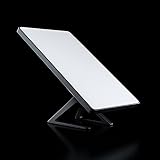
- PORTABLE 4TH GEN DESIGN – Compact satellite internet antenna with the latest 4th generation technology, built for easy transport, quick setup, and reliable mobile connectivity. Ideal for travelers, RVs, remote work, rural homes, and Starlink-compatible portable internet solutions.
- HIGH-SPEED, LOW-LATENCY CONNECTIVITY – Advanced satellite internet system that delivers fast download speeds, smooth streaming, and low-lag online gaming from virtually anywhere. Stay connected whether you’re in rural areas, remote job sites, or traveling, with reliable Starlink-compatible performance.
- COMPLETE SATELLITE INTERNET KIT – Comes with a mini satellite dish antenna, mounting hardware, and essential cables for quick, hassle-free installation. Get set up in minutes and enjoy instant internet access with this Starlink-compatible portable satellite system.
- VERSATILE INTERNET SOLUTION – Perfect for remote work, travel, RVs, camping, off-grid living, or as a backup internet option in areas with limited or unreliable connectivity. Stay connected anywhere with this portable, Starlink-compatible satellite system.
- LATEST GENERATION TECHNOLOGY – Equipped with 4th gen satellite hardware that offers enhanced signal reception, stronger connectivity, and a streamlined, portable design. Engineered for greater reliability and performance, making it ideal for Starlink-compatible internet access anywhere.
Product prices and availability are accurate as of the date/time indicated and are subject to change. Any price and availability information displayed on Amazon at the time of purchase will apply.




