The Tool Desk
Outbyte PC Repair FREERepair Windows errors before they cause bigger problemsFix Now →Outbyte Driver Updater FREEScan for outdated or missing drivers - takes under a minuteDriver Scan →On September 10, 2024, Steve Ballmer joined Jon Stewart on The Daily Show for a conversation about government spending and how to judge whether policy works. The discussion ranged from federal spending priorities and health care to labor costs, corporate taxes, democracy, and capitalism. Ballmer described USAFacts, his nonprofit civic data initiative, as a way to put government revenue, spending, and outcomes into context; the interview offered a framework for asking questions, not a definitive audit of government performance.
What Ballmer and Stewart discussed
The appearance aired on the same night as the September 10, 2024 presidential debate, according to GeekWire’s September 11 report. Its summary describes an exchange about federal spending priorities, including Social Security, Medicare, the military, interest on the national debt, Medicaid, and veterans’ benefits. The conversation also touched on health care, labor costs, and corporate taxes.
| # | Preview | Product | Price | |
|---|---|---|---|---|
| 1 |

|
A Primer on Government Spending | $3.52 | Buy on Amazon |
| 2 |
|
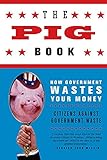
The Pig Book: How Government Wastes Your Money | $13.65 | Buy on Amazon |
| 3 |

|
Evaluating government spending | $13.32 | Buy on Amazon |
| 4 |

|
Understanding Money: An Informative Introduction to Bank Accounts, Taxes, Government Spending, and... | $12.00 | Buy on Amazon |
The transcript records a broader discussion of democracy, capitalism, and checks and balances. Those subjects connect to a practical personal-finance question: how government raises and spends public money, and how to assess the results. The interview’s categories and claims should be understood in their 2024 context rather than treated as current budget rankings.
How Ballmer says USAFacts approaches government data
Asked how USAFacts decides what information to include, Ballmer described looking at government in its totality: what it spends, what revenue it raises, and what outcomes it gets. That is Ballmer’s explanation of the initiative’s approach, not independent confirmation that every dataset is complete, timely, or directly comparable.
#1 Best Overall
USAFacts describes itself as “a not-for-profit, nonpartisan civic initiative making government data easy for all” on its Just the Facts page. The page features explanatory material on topics such as health care, budgets, debt, and taxes; its catalog can change. Ballmer had described a similar goal in a 2017 GeekWire interview, saying the project aimed to simplify information about government revenue, expenditures, goals, and outcomes using government numbers and actuals. That historical account explains the initiative’s pitch, but does not establish the quality or comparability of a particular figure.
How to evaluate a government spending or policy claim
A number in an interview can be a useful prompt for further inquiry, but it is not, by itself, proof of what government currently spends or whether a policy succeeds. The transcript is a record of what was said, not independent verification of each assertion. For a current comparison, check the original government data and keep the scope consistent.
Rank #2
- Fix the time period. Identify the fiscal or calendar year and whether a figure is an annual amount, a multi-year total, or a projection.
- Keep levels of government separate. Federal spending is not the same as combined federal, state, and local spending. Do not compare a federal program figure with an all-government total as if they share a scope.
- Identify the funding source. A program may be financed through different revenues, transfers, or borrowing; a spending figure alone does not explain who ultimately funds it.
- Define the population and intended outcome. Clarify who a policy serves and what result it is designed to achieve before judging its effectiveness.
- Choose an outcome measure that fits the claim. Spending levels describe resources used; they do not, on their own, show whether a policy achieved its goal.
These checks matter across the themes discussed on the show. A statement about health care, labor costs, or corporate taxes needs its own definition, timeframe, and relevant measure; no single spending breakdown answers all of those questions.
Independent reader supportYour contribution helps us test, update, and keep practical guides available for everyone.What the interview does—and does not—establish
The exchange is best read as a discussion about how to examine government activity and policy efficacy, not as a settled verdict on government performance. GeekWire reported Stewart’s closing reaction: “It’s an incredibly complex conversation.” In the transcript, Stewart also praised USAFacts, calling it “a phenomenal site” and saying it was “so necessary” to provide data from reputable sources. Those remarks convey Stewart’s view; they are not an independent evaluation of USAFacts’ methods.
Rank #3
Neither a category mentioned in the conversation nor a percentage spoken by a participant should be carried forward as a present-day fact without checking the underlying primary data. Definitions, government scope, and reporting periods can change what a number means. The useful takeaway for a reader managing personal finances is to ask what a public-money claim measures, for whom, and over what period before drawing a conclusion about its effect.
Quick Recap
Product prices and availability are accurate as of the date/time indicated and are subject to change. Any price and availability information displayed on Amazon at the time of purchase will apply.




